Plans to weaken the United Kingdom’s electric vehicle targets could undermine the country’s automotive industry, increase costs for consumers and slow progress towards reducing carbon emissions, campaigners and industry experts have warned. Their concerns come ahead of an expected intervention by the Climate Change Committee (CCC), which is due to write to government ministers on Wednesday about the potential consequences of changing the country’s zero-emission vehicle mandate.
The debate has become increasingly important as the government considers how quickly Britain should transition away from petrol and diesel-powered vehicles. While ministers have repeatedly reaffirmed their commitment to cleaner transport, reports that Labour could reduce some of the existing electric vehicle sales requirements have raised questions about the future direction of the policy.

Under the current zero-emission vehicle mandate, 80 per cent of new cars sold in the UK must be electric by 2030, rising to 100 per cent by 2035. The framework is designed to encourage manufacturers to expand their electric vehicle production, accelerate investment in battery technology and gradually reduce the number of new petrol and diesel cars entering the market.
However, some car manufacturers have argued that the requirements are too demanding given current consumer demand and the challenges involved in expanding electric vehicle sales. They say the industry is investing billions of pounds in the transition but faces difficulties persuading enough customers to switch from conventional vehicles. The government has therefore come under pressure to reconsider the pace and structure of the mandate.
Campaigners and analysts, however, argue that weakening the targets could create greater problems for the industry in the longer term. They believe consistent government policy is essential to encourage investment, strengthen the domestic supply chain and help manufacturers compete in an international market increasingly focused on electric mobility.
The Climate Change Committee’s forthcoming letter is expected to examine how changes to the mandate could affect household finances and Britain’s legally binding climate commitments. Although the committee has not publicly disclosed its conclusions, its intervention could make it more difficult for ministers to justify a significant reduction in the targets.
The committee is chaired by Nigel Topping, who has extensive experience in the automotive sector and has spent much of his career advocating faster adoption of electric vehicles. He has previously argued that electric cars are more energy-efficient and cheaper to operate than petrol and diesel alternatives, while producing less air pollution and carbon dioxide during use.
Topping has also consistently promoted British innovation and engineering as important drivers of economic development. He believes the country’s commitment to achieving net-zero greenhouse gas emissions by 2050 can encourage industrial investment, create employment opportunities and strengthen the competitiveness of British businesses.
His position reflects a wider argument that climate policy should not be viewed only as an environmental responsibility. Supporters of the transition say the development of electric vehicles, battery manufacturing and associated technologies could help Britain establish a stronger position in industries expected to expand over the coming decades.
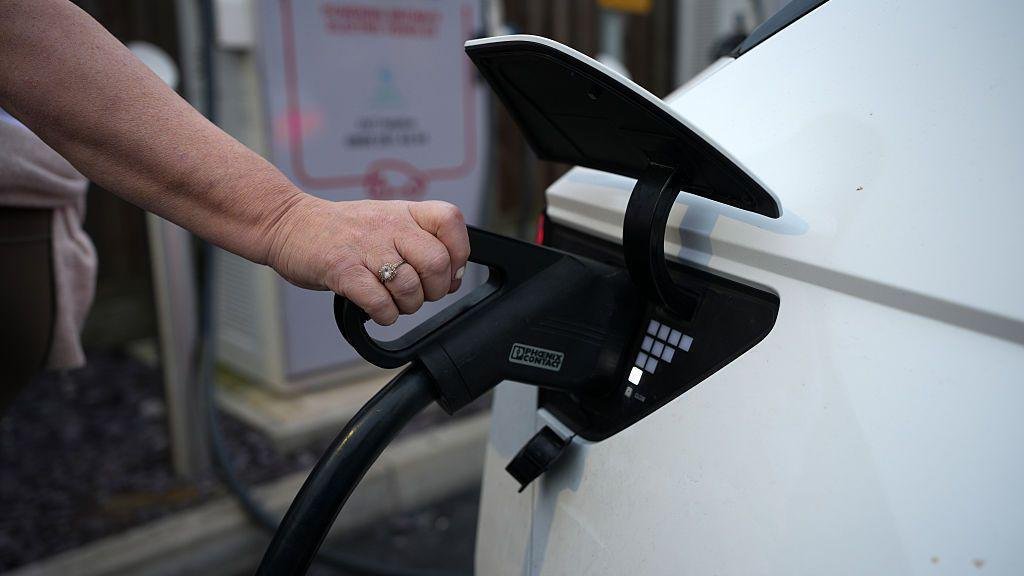
The potential impact on household finances has become one of the strongest arguments against weakening the targets. Electric vehicles generally cost less to run than conventional petrol and diesel cars, particularly when owners have access to affordable home charging. Analysts and campaigners point out that filling a petrol-powered vehicle can currently cost more than £100, while charging an electric car fully may cost less than £10 under favourable charging arrangements.
Actual costs vary according to battery capacity, electricity tariffs, vehicle efficiency and charging location. Public rapid charging can be significantly more expensive than charging at home. Nevertheless, supporters argue that wider adoption of electric vehicles could provide substantial savings for many households over time.
A slower transition could also delay the development of a more competitive electric vehicle market. Higher production volumes, increased competition and improvements in battery technology can help reduce manufacturing costs and make electric cars more affordable. If manufacturers face less pressure to expand electric sales, investment and innovation could potentially slow, limiting the benefits available to consumers.
Ami McCarthy, head of politics at Greenpeace UK, strongly criticised the possibility of reducing the existing sales targets. She compared weakening the requirements to driving with the handbrake on, arguing that the UK had an opportunity to accelerate electrification but risked losing momentum if the government changed direction.
McCarthy also referred to Prime Minister Andy Burnham’s remarks at the COP31 United Nations climate summit, where he called on businesses and industries to contribute to the transition towards a cleaner economy. She argued that maintaining ambitious electric vehicle targets would support that objective and help Britain demonstrate leadership in the development of low-emission transport.
The automotive industry, however, has presented a different assessment of the situation. Manufacturers say the current requirements do not fully reflect consumer purchasing behaviour and the practical difficulties of expanding electric vehicle sales. They have warned that meeting the targets can require significant discounts and other commercial measures, placing additional pressure on manufacturers’ finances.
Mike Hawes, chief executive of the Society of Motor Manufacturers and Traders, said manufacturers were investing billions of pounds in zero-emission vehicle development, but consumer demand remained below the levels required by the targets.
He argued that regulation should not undermine the competitiveness of British manufacturers or slow the wider transition. Hawes called for fundamental changes to the targets, supported by stronger government assistance for consumers. He also highlighted the importance of financial incentives, affordable charging infrastructure and action to remove factors discouraging people from purchasing electric vehicles.
His comments reflect concerns about the financial and operational pressures facing carmakers as they attempt to manage the transition while maintaining sales and protecting employment. Manufacturers must invest in new production facilities, battery technology and supply chains while continuing to sell conventional vehicles during the transition period.
However, some experts have challenged the industry’s argument that the targets are excessively difficult to meet. They have pointed out that electric vehicle sales in the UK are reportedly exceeding the current requirements by a significant margin. If manufacturers were genuinely struggling to meet the mandate, critics argue, sales would be much closer to the minimum required level.
One analyst questioned claims that heavy discounting demonstrated the failure of the policy. The expert argued that strong sales suggested the market was already moving towards electric vehicles and that manufacturers should be preparing more aggressively for the changing direction of the industry.
International competition is another important consideration. A large proportion of vehicles manufactured in the UK are sold overseas, making access to major export markets essential for the future of the domestic automotive sector. Electric vehicle sales are increasing strongly in the European Union, which remains a major destination for British manufacturers.
The analyst suggested that Britain could gain a competitive advantage by moving more decisively towards electric vehicle production. With Chinese manufacturers facing tariffs in the EU, British companies could potentially benefit from stronger domestic capabilities and a clearer strategy for developing zero-emission vehicles.
Recent sales figures have added weight to arguments that the market is continuing to expand. Sales of battery-electric vehicles in the UK reportedly increased by around 50 per cent last month compared with the same period a year earlier. The growth indicates rising consumer interest, although the long-term pace of adoption will depend on affordability, charging access and confidence in the technology.
McCarthy also welcomed the government’s reported progress in expanding electric vehicle sales. She referred to comments by minister Katie White celebrating the fact that an electric vehicle was being sold in Britain approximately every 52 seconds.
She argued that the UK had an opportunity to move ahead while other European markets reconsidered aspects of their transition policies. Maintaining ambitious targets, she said, could benefit British manufacturers and households while improving energy security and supporting national climate objectives.
Energy security has become an increasingly important part of the debate. Greater use of electric vehicles could reduce Britain’s dependence on imported oil for road transport, although the overall benefits would depend on the electricity supply, charging infrastructure and domestic energy production. Supporters say expanding renewable electricity generation alongside electric transport could strengthen the country’s long-term resilience to international fuel price fluctuations.
The government has sought to reassure both sides that its wider commitments remain unchanged. A spokesperson said the administration was still committed to ending sales of new cars relying solely on petrol and diesel engines by 2030, alongside achieving 100 per cent zero-emission sales of new cars and vans by 2035.
The spokesperson also confirmed that the government’s consultation on the mandate would not change those commitments and was intended to ensure a pragmatic and balanced approach to the transition.
The forthcoming assessment by the Climate Change Committee could therefore become an important moment in the debate. Ministers will need to consider the concerns of manufacturers while examining the potential consequences for consumers, investment, employment and the country’s climate obligations.

Ultimately, the future of the UK electric vehicle mandate will involve more than deciding how quickly manufacturers must increase sales. It will also determine the level of certainty available to businesses planning long-term investments and the extent to which households can benefit from cheaper transport options.
As Britain seeks to maintain its position in the global automotive market, the government faces a difficult choice between adjusting regulatory pressure in response to industry concerns and preserving ambitious targets intended to accelerate technological change. The decision could shape the country’s automotive competitiveness, household transport costs and progress towards its net-zero ambitions for years to come.
Related News:
 Drax Datacentre Faces Major Carbon Emissions Concerns
 UK Warned Over Dangerous Dependence on China for Minerals
 Heavier SUVs Accelerate Britain’s Pothole Crisis
 Reform UK funding: mystery billionaire revealed
 UK rejects EV charging VAT cut amid Treasury clash
 UK firms accused of ‘AI washing’ boom
 UK Risks Falling Behind in AI Race
 London Launches First Self-Driving Taxis
 Tom Watson Takes Senior Role at Palantir
 Norfolk Broads Housing Levy Faces Environmental Criticism
 Bank Chief Calls for Power to Intervene in AI
 UK Water Firms Earn Millions From Industrial Wastewater
 UK Must Build Its Own AI to Protect National Security
 Healey Pledges Major AI Investment for UK Security
 Britain Seeks Emergency Power as Wind Generation Falls
 AI Boom Drives UK Economy to Fastest Growth in Two Years
 UN Climate Talks Renew Push for Carbon Removal Technology
 North Sea oil workers must lose weight or face job loss
 UK Taskforce Unveils Plan to Streamline Nuclear Reactor Rules
 MPs warn AI financial risks threaten UK stability
 AI job losses UK: Britain faces sharper employment shock
 UK New Car Discounts Near £6,000 as Prices Are Slashed
 Aberdeen Chosen for GB Energy HQ at Marischal Square
 UK Pushes NHS and MoD to Buy British Tech
 UK Energy Reform Could Cut Bills by £200
 London’s 2026 ‘Great Stink’ Raises Sewer Concerns
 Burnham unveils £65m drought aid for farmers
 Gen Z turns to BirdTok for a gentler digital escape
 UK Subsidence Claims Surge After Record-Breaking Summer
 McLaren to Create 1,000 UK Jobs in £450m Investment
 Nats Boss Summoned as UK Flight Chaos Continues
 AI CEOs Call for Slower Development
 Thames Water Revises Oxfordshire Mega-Reservoir Plan
 Heathrow Expansion Faces New Climate Conditions Over CO₂
 UK Heatwaves Set to Worsen Pothole Damage, RAC Warns
 Nvidia chief rejects AI extinction fears
 UK Funds Gene Editing to Protect Threatened Wildlife
 Australia Renewables Reach Record 80% Grid Demand
 UK Unveils Centre to Counter Foreign Disinformation
 AI Takes Centre Stage in Trump-Xi Talks
 UK Plans New Centre to Counter Information Warfare
 Trump gives Xi red-carpet welcome as trade truce extends
 Chinese Hybrid Car Surge Raises EU Auto Industry Concerns
 Xi urges Trump to avoid US-China military conflict
 TalkTalk Races to Sell Arms as Administration Looms
 Most Popular UK Hybrids Miss Rapid Charging
 Sheikh Tahnoon and the UAE’s AI Ambitions
 Smart Cars Raise New Vehicle Spyware Concerns
 Edinburgh Glasshouses Reopen After Major Restoration
 BBC Three and Scotland Face Online-Only Future
 BT Broadband Pauses Raise Digital Switchover Concerns
 Anti-AI protests grow as campaigners turn to direct action
 Ofcom Probes Meta Over Instagram Instants Safety
 Samsung Heads for Record Profit as AI Chip Demand Surges
 Norway Fjord Faces Fresh Mine Waste Dumping
 Bendy Elm Named UK Tree of the Year
 Britons Demand Greater Honesty on Climate Crisis
 Parking Apps Push UK Drivers’ Costs Up by 40%
 UK Shoppers Urged to Avoid Hake and Coley
 Nvidia Pledges $250m to Boost UK AI Safety Research
 Aardman Cuts Losses but Fails to Return to Profit
 NHS Trusts Reject Palantir’s £330m Patient Data Platform
 UN Warns World Must Cut Emissions by 18% by 2030
 Meta Faces Election Bias Claims Ahead of Brazil Runoff
 China’s AI Ambitions Hit $2.4 Trillion Market Setback
 US Bans BYD Vehicles at Japan Military Base
 Anthropic IPO Reveals AI Boom’s Huge Costs and Risks
 UK Land Registry Plan Faces Opposition From Landowners
 UK Chancellor Moves to Scrap Gas Standing Charges
 North Korea Linked to Record $6.3bn Binance Crypto Heist
 Elon Musk’s $446m Midterm Gamble Ends in Defeat
 Zelenskyy Seeks Urgent Help as Russia Hits Ukraine’s Power Grid
 Australia Faces Political Risks After US Midterm Shift
 Paris Climate Agreement Faces a Critical Test After 10 Years
 Nvidia and Jensen Huang Face Shareholder Lawsuit
 UK Civil Service Chief Vows Radical Whitehall Reform
 AI Crisis Forces UK Universities to Rethink Exams
 Megaspeed Mystery Deepens After Nvidia CEO Resigns
 Microsoft Outage Sparks Billion-Dollar Fears in Australia
 Elon Musk Leads 165,000 Calls to Reinstate Nvidia CEO