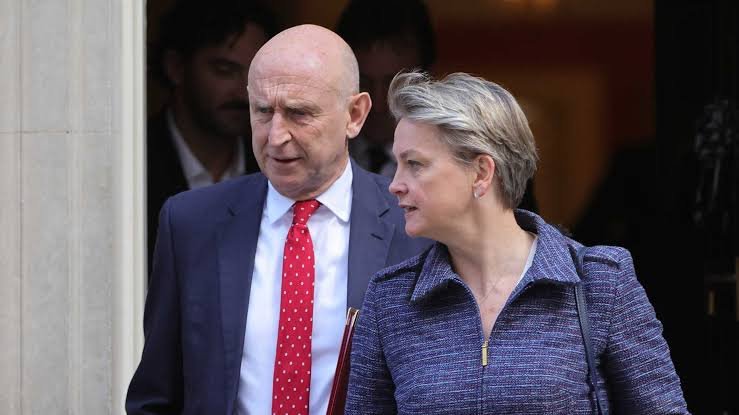
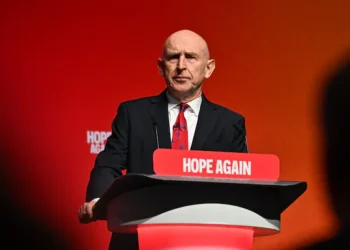
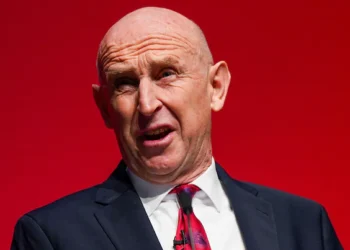
The UK government borrowed less than economists had predicted in October, offering an unexpected financial boost to Chancellor John Healey as Britain continues to face economic pressure from the conflict in the Middle East, rising energy prices and higher government debt costs. Official figures showed that the gap between public spending and income was approximately £17bn, around £1bn below market expectations, suggesting that stronger tax receipts are helping to contain the government’s borrowing requirements.
The latest figures from the Office for National Statistics (ONS) showed public sector net borrowing reached £17bn in October. Although the amount was approximately £800m higher than the figure recorded in October last year, it remained below the £18bn forecast by economists in the City of London. The outcome offered some reassurance to the Treasury at a time when financial markets are closely monitoring Britain’s public finances and the government’s ability to meet its fiscal commitments.

The figures also revealed that borrowing during the financial year so far stood at £111.3bn, approximately £7.3bn lower than during the same period a year earlier. Stronger tax receipts have played an important role in reducing the government’s financing requirement, with income-related taxes recording particularly strong growth.
Grant Fitzner, chief economist at the ONS, said borrowing during the current financial year remained below the level recorded in the corresponding period last year because government receipts were increasing faster than expenditure. He highlighted the strength of income-related tax revenues but noted that monthly borrowing had risen compared with October 2025, partly because of higher debt interest payments.
The improvement in the overall borrowing position comes alongside a significant increase in the cost of servicing Britain’s national debt. Government debt interest payments reached £11.2bn in October, representing an increase of £2.8bn compared with the same month last year. It was the highest October figure since monthly records began in 1997, underlining the growing financial pressure created by rising borrowing costs and inflation.
One important factor behind the increase is the structure of some UK government bonds, which are linked directly to the Retail Prices Index (RPI) measure of inflation. Payments on these inflation-linked securities rise when the relevant price index increases, meaning that higher inflation can quickly translate into greater costs for the government.
The recent rise in energy prices following the Iran war has contributed to renewed inflationary pressure. As energy costs increase, the impact can spread across household bills, transport, production and other areas of the economy. This creates additional pressure on public finances, particularly when inflation-linked government debt becomes more expensive to service.
Britain’s public sector net debt also continued to rise. The ONS reported that total net debt reached approximately £3.1tn, equivalent to 95.8 per cent of gross domestic product. This was 1.9 percentage points higher than the level recorded a year earlier and represented a proportion of national economic output last seen in the early 1960s.
The figures illustrate the difficult position facing the Treasury. Although borrowing has been lower than expected over the financial year so far, the overall stock of government debt remains substantial, while interest payments are consuming an increasing share of public resources. The challenge for Healey is to maintain control over borrowing without undermining investment, public services or economic growth.
Chief Secretary to the Treasury Emma Reynolds described Britain’s economic performance as evidence of resilience despite the international consequences of the conflict in Iran. She said the country had reduced borrowing faster than any other G20 economy during the current year and indicated that the government intended to continue improving its financial position through reductions in waste and bureaucracy.
Reynolds also pointed to the potential role of artificial intelligence in making public services more efficient. The government plans to reprioritise spending and use technology to improve productivity, although the extent to which these measures can deliver significant and sustained savings remains an important question for future spending decisions.
The broader economic picture has so far remained more resilient than some forecasts suggested. Britain’s economy has continued to record one of the strongest growth performances among G7 countries, supported in part by investment in artificial intelligence and continued household spending. However, the latest borrowing figures do not remove the risks created by the Middle East conflict, which has pushed up energy costs and increased uncertainty across international markets.
In last month’s budget, Healey announced higher taxes on banks as part of measures intended to help finance support for households affected by the energy shock. The government has sought to balance assistance for families facing higher living costs with its commitment to maintaining fiscal discipline.
The Chancellor also retained the government’s fiscal rules despite the uncertain international environment. However, the financial headroom available to meet those rules was reduced to £15bn, compared with the £23.6bn buffer left by his predecessor, Rachel Reeves. The smaller margin leaves the Treasury with less room to absorb unexpected economic shocks or changes in borrowing costs.
The decision to maintain a relatively limited financial buffer has attracted scrutiny from economists, particularly as the government prepares for another major spending review next year. The pressure is expected to be especially difficult for departments that have not received the same level of protection as priority areas such as health and defence.
The Institute for Fiscal Studies has warned that avoiding a return to austerity for unprotected departments could require an additional £17bn in funding for the 2030-31 financial year. That estimate does not include a further £11bn that could be needed to support the government’s commitment to increase defence spending to 3 per cent of GDP.
Such requirements could create a difficult political and financial choice for the Chancellor. Providing additional funding without raising taxes or increasing borrowing would require substantial savings elsewhere. Yet further spending reductions could prove politically sensitive, particularly if public services are already facing pressure from rising demand and operating costs.
Inflation remains another major concern. Official figures released earlier in the week showed that UK inflation increased to 3.6 per cent in October, reflecting the impact of higher energy prices linked to the Iran conflict. Economists expect further upward pressure, with the Bank of England forecasting that inflation could approach 5 per cent next year.
The rise in inflation has also influenced monetary policy. The Bank of England increased interest rates from 3.75 per cent to 4 per cent earlier this month and warned that additional increases could be necessary if inflationary pressures continue. Financial markets have anticipated three further quarter-point increases before the end of next year, although the eventual decisions will depend on economic developments and the inflation outlook.
Higher interest rates can make borrowing more expensive for households and businesses, potentially slowing investment and consumer spending. They can also increase the government’s financing costs as debt is refinanced at higher rates. This creates a difficult combination for the Treasury: inflation raises the cost of public borrowing, while efforts to control it through higher interest rates can further increase financial pressure.
Rob Wood, chief UK economist at Pantheon Macroeconomics, warned that the October budget had done little to address the deeper challenges facing public finances. He said there were continuing doubts about the government’s ability to deliver its planned fiscal targets, pointing to the possibility of higher borrowing in the coming years.
The latest figures therefore offer a welcome but limited improvement for Healey. Lower-than-expected borrowing in October and stronger tax receipts provide some evidence that the government’s finances are performing better than anticipated in the short term. However, record October debt interest payments, rising national debt, inflationary pressures and substantial future spending demands continue to pose serious challenges.

For the Chancellor, the immediate task will be to preserve the improvement in borrowing while responding to the economic consequences of the Iran war. The government’s ability to control expenditure, maintain public services and support households will be closely watched as it approaches the next spending review.
Although October’s figures provide a temporary boost to the Treasury, they do not remove the underlying risks. Britain’s financial position remains vulnerable to changes in energy prices, interest rates and international economic conditions. Whether the government can turn the latest improvement into a lasting recovery in the public finances will depend on its ability to manage these pressures without weakening the country’s longer-term economic prospects.
Related News:
 UK House Prices Fall as Mortgage Rates Rise
 Oil nears $100 as Saudi attacks shake markets
 Thames Water Revises Oxfordshire Mega-Reservoir Plan
 UK Retail Sales Rebound as Consumers Spend More
 UK Borrowing Hits £18.3bn Ahead of Budget
 Thinktank Calls for Abolition of UK State Pension
 MPs Defend UK Economic Watchdog Against Critics
 UK Trade Losses Grow Without EU Product Deal
 Should Savers Lock Into 5.25% Fixed Rates?
 UK Diesel Prices Hit Record High Amid Iran Conflict
 Poundland Rescue Bid Could Protect 11,000 Jobs
 UK house price growth slows as mortgage rates rise
 UK borrowing costs surge as global bond sell-off deepens
 UK Assures Public Over Diesel Supply
 UK Diesel Reaches £2 as Inflation Surges Across Europe
 Minister Rejects Fears of UK Diesel Shortage
 Informa Agrees £2.24bn Deal to Buy Clarion
 Google Maps Brings Live Fuel Prices to UK Drivers
 IFS Warns UK Budget Faces £35bn Spending Gap
 UK Van Drivers Face £2.5bn Diesel Cost Surge
 IMF Warns Global Economy Is Nearing Its Limits
IMF Raises UK Growth Forecast Ahead of Healey’s Budget
 Healey Plans £1bn Online Marketplace Tax Crackdown
 Business Chief Urges Burnham to Fix Brexit Damage
 UK Unemployment Falls to 4.7% as Vacancies Decline
UK Borrowing Hits £24.5bn Ahead of Healey’s Budget
 Healey Set to Scrap Planned Cut to Cash ISA Allowance
 BP Profits Surge as Middle East Conflict Lifts Margins
 UK House Price Growth Slows to Two-Year Low
 London Luxury Homes Face Deeper Price Declines
 UK Mortgage Holders Face Fresh Payment Shock
 UK House Prices Suffer Sharpest Fall in Three Years
 UK Inflation Climbs to 3.6% as Fuel Prices Surge
 UK rejects EV charging VAT cut amid Treasury clash
 Europe Faces Winter Gas Supply Anxiety
 UK Cost Squeeze Deepens as Mortgages and Gas Rise
 Billionaire Chris Rokos poised to leave UK
 JPMorgan Boss Warns Against UK Bank Tax Rise
 John Lewis Losses Widen to £124m as Confidence Falls
 UK Pay Growth Slows to 3.9% as Rate Decision Nears
 Bank Urged to Slow Bond Sales as UK Costs Rise
 UK Productivity Improves as Bank Weighs Interest Rates
 UK Rent Gap Puts Low-Income Families Under Pressure
 Calls Grow to Expand UK National Wealth Fund
 Chinese Hybrid Car Surge Raises EU Auto Industry Concerns
 AO Acquires Jessops in Camera Retail Expansion
 Saudi intercepts Houthi missiles as oil fears grow
 Healey urged to act as UK energy bills rise 4%
 Boots Sale Nears as Weston Family Eyes $9bn Deal
 French Debt Fears Put Euro Markets Under Pressure
 North Sea Strike Threatens UK Fuel Supplies
 UK Weighs Chinese Car Tariffs Amid EU Trade Push
 BT Agrees £400m TalkTalk Rescue Deal
 EU-China Talks Target Surge in Hybrid Car Imports
 UK house prices stall as mortgage costs rise
 IMF Warns Governments Over Rising Debt Burdens
 Tesco Raises Profit Forecast as Consumer Confidence Holds
 Ministers Push ATO to Reconsider Credit Card Ban
 Oil Shock Sends Markets Lower as Middle East Risks Grow
 Hall and Woodford Win Nobel Economics Prize
 UK Could Rejoin EU Through a Switzerland Plus Deal
 UK Inflation Hits 3.5% as Middle East War Drives Fuel Costs
 Tax Online Sales to Save High Street, Burnham Urged
 UK Consumer Confidence Plunges at Fastest Rate Since Brexit Vote
 Labour MPs Urge Burnham to Lead UK Reindustrialisation
 China’s AI Ambitions Hit $2.4 Trillion Market Setback
 UK Chancellor Moves to Scrap Gas Standing Charges
 Fed Expected to Hold Rates Steady Ahead of US Midterms
 UK Budget Leaves Households Facing Higher Energy Bills
 Avanti West Coast Faces £70m Refund Bill
 Australia Faces Deeper Economic Slowdown
 Ryanair Weighs Pay Freezes as Fuel Costs Surge
 Australia Raises Interest Rates to 18-Year High
 Poundland Remains Vulnerable as Rescue Talks Continue
 Australian Mortgage Confidence Hits 32-Year Low
 UK Youth Face Jobs Crisis as Economy Loses Momentum
 Australian Property Investor Lending Suffers Record Fall
 UK Unemployment Falls to 4.6% Amid Youth Jobs Crisis
 Bank of England Faces £160m Renovation Challenge
 EDF Expands UK Market With 1.3m Utilita Accounts