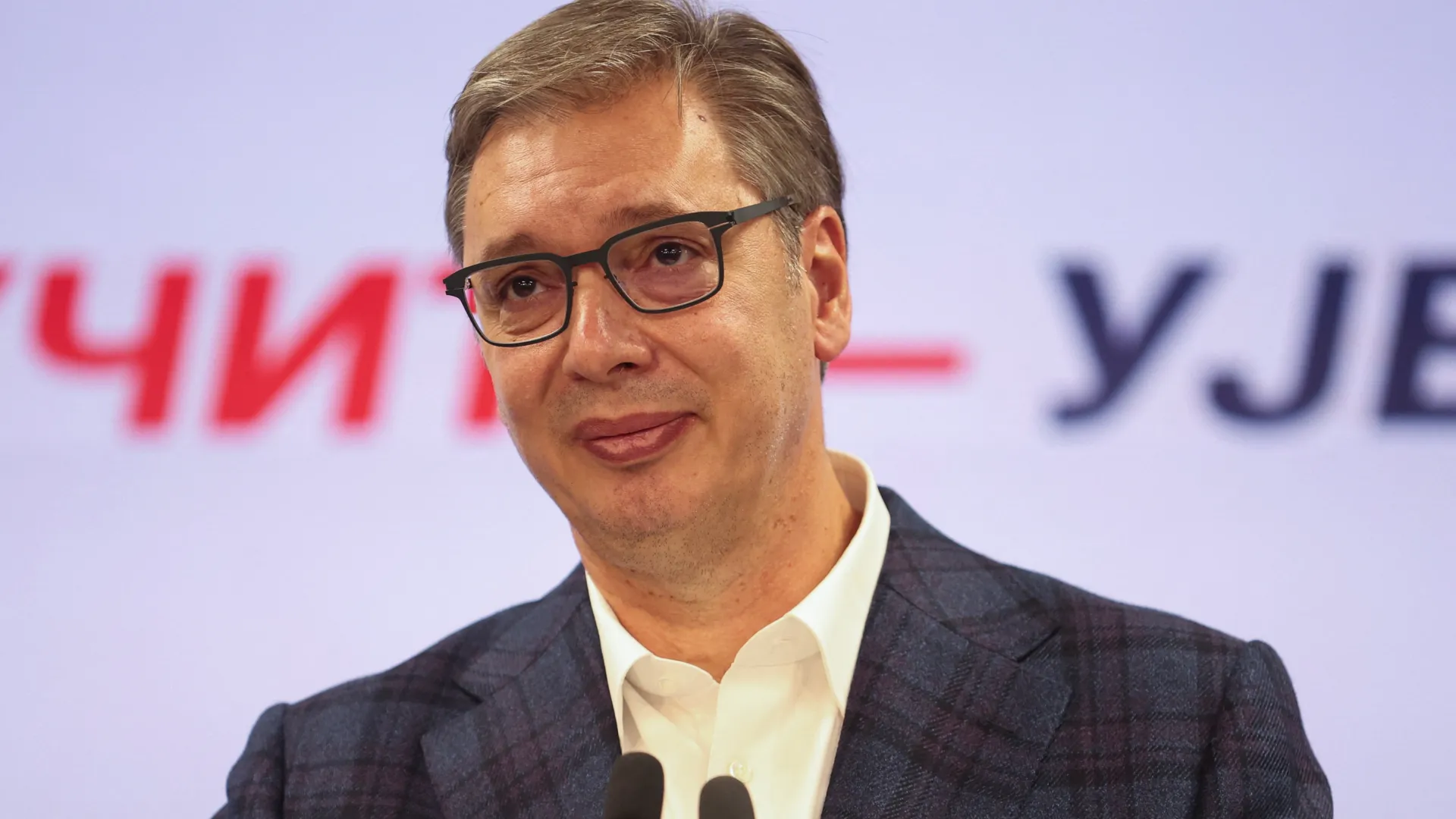
Hundreds of thousands of people have taken to the streets of Belgrade and other Serbian cities to celebrate a historic election victory by the student-led opposition movement, marking a dramatic turning point in the Balkan country’s political landscape. The defeat of long-serving leader Aleksandar Vučić has brought renewed hopes for democratic reform, greater press freedom and an end to years of political tensions, although the challenges facing the country’s incoming political leadership remain substantial.
The celebrations erupted after Vučić conceded defeat in a fiercely contested parliamentary election, acknowledging that the opposition’s Students’ List movement had secured a decisive breakthrough. For many Serbians who had participated in nearly two years of protests, the outcome represented far more than a change in parliamentary power. It was a moment of relief after months of demonstrations, confrontations with security forces and growing public frustration over allegations of corruption and the concentration of political authority.
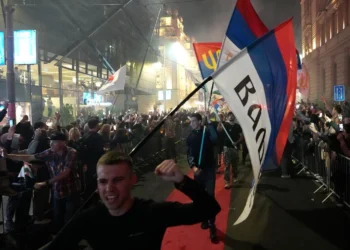
In Belgrade, the streets that had previously witnessed clashes between demonstrators and police became the setting for scenes of jubilation. Crowds gathered along major boulevards, waving national flags, embracing friends and strangers, chanting slogans and celebrating late into the night. Car horns echoed throughout the city, while flares illuminated the streets as people attempted to absorb the significance of the political transformation unfolding around them.

For many demonstrators, the emotional impact was heightened by memories of the treatment they had experienced during earlier protests. Sara, a 24-year-old participant in the celebrations, described the extraordinary feeling of standing in places where protesters had repeatedly faced police beatings and been forced to retreat from security personnel.
She said it was difficult to believe that the same streets where demonstrators had struggled to make their voices heard had become places of celebration following the electoral defeat of the government they opposed. Her experience reflected the broader emotions of a generation that had spent months demanding political accountability and meaningful change.
The celebrations were particularly significant because the student-led movement had emerged from a tragedy in Novi Sad in November 2024. A deadly collapse of the roof at the city’s railway station triggered public outrage and helped ignite demonstrations that gradually expanded into a nationwide campaign against the authorities. The disaster became a focal point for wider concerns about public safety, institutional accountability and alleged corruption.
What began as protests connected to the tragedy developed into a broader movement questioning the direction of Serbia’s political system. Students, academics, professionals and ordinary citizens joined demonstrations demanding transparency, responsibility and changes to the way the country was governed. The movement gained momentum as dissatisfaction spread beyond university campuses and into communities across Serbia.
The parliamentary election became the decisive test of whether that mobilisation could translate into political power. According to preliminary figures cited by Vučić, the Students’ List movement was expected to win between 135 and 140 seats in the 250-seat parliament, while his Serbian Progressive Party, known as the SNS, was projected to secure 105 seats. The figures indicated a substantial shift in the balance of power, although the final composition of parliament and the practical arrangements for forming a government would remain important to the country’s political transition.
In Novi Sad, thousands gathered to celebrate the result, reflecting the city’s central role in the protest movement. In Belgrade, the scale of the celebrations demonstrated how deeply the election outcome had resonated with people who had spent months demanding change. The gatherings brought together people from different backgrounds who shared a belief that the election had opened an opportunity to reshape Serbia’s future.
Tamara, 35, who joined the celebrations in Belgrade, described herself as overwhelmed with happiness and excitement. She viewed the outcome as an opportunity for Serbia to move towards greater freedom and a more hopeful future. However, she also recognised that the transition would not be easy and that the incoming political leadership would face difficult decisions.
Her cautious optimism reflected an important reality surrounding the election. Removing a long-established political leadership does not automatically eliminate the institutional problems, economic pressures and social divisions that have accumulated over many years. The student-led movement will now have to demonstrate that it can transform public expectations into effective governance.
The task facing the Students’ List is considerable. Its proposed parliamentary group consists of 250 candidates drawn from a range of professional and social backgrounds. The list reportedly includes more than 160 people holding doctoral degrees, alongside farmers, athletes and other representatives of society. Its diverse composition has helped the movement present itself as an alternative to the established political class.
However, diversity alone will not guarantee success. The movement must build a functioning political administration, establish clear priorities and address the practical concerns of citizens who expect improvements in public services, government transparency and economic opportunities. It will also need to maintain public confidence while navigating a political system in which institutions and administrative structures may remain influenced by figures associated with the outgoing leadership.
One of the most complicated questions concerns Serbia’s future relationship with the European Union. Although the election has attracted attention as a victory for pro-democracy forces, the student-led movement’s policy platform has reportedly left the question of future EU membership to a referendum. This approach reflects the sensitivity of European integration within Serbian politics and the difficulty of reaching agreement on the country’s long-term international direction.
Kosovo presents another major challenge. Serbia continues to claim Kosovo as an integral part of its territory, while Kosovo declared independence in 2008. The issue remains one of the most sensitive subjects in Serbian domestic politics and regional diplomacy. Any incoming government will have to consider how to manage the dispute without deepening internal divisions or increasing tensions in the wider Balkans.
For many people celebrating on Sunday, however, the immediate priority was the departure of a government they believed had become increasingly authoritarian. Critics of Vučić’s administration had repeatedly raised concerns about pressure on opponents, threats against journalists and the erosion of media freedom. The election result offered supporters of the student movement an opportunity to express their expectations for a political system that would provide stronger protections for dissent and public accountability.
Nebojsa Cosic, who joined the celebrations, declared that the people had defeated a dictator and would now lead Serbia. His comments captured the determination of demonstrators who viewed the election as a rejection of concentrated political power. Such statements reflected the mood of the crowds, although the country’s democratic progress will ultimately depend on how the new parliamentary majority exercises its authority and protects the rights of all citizens.
Another striking moment occurred in a central Belgrade park where supporters of Vučić had maintained a camp for more than a year. Following the election result, celebrating crowds moved into the area and tore down fences and tents that had restricted public access. The scenes carried symbolic significance for people who viewed the encampment as a visible representation of the political divisions that had dominated the capital.
Duško Suvajac, 52, described the result as a symbol for Europe and the wider world. He argued that the election demonstrated how people could challenge entrenched political power through collective action. His comments reflected a broader interpretation of the Serbian vote as part of an international debate over democracy, political accountability and the rise of authoritarian tendencies.
The outcome comes at a time when several countries are confronting intense political contests between established power structures and movements promising democratic renewal. Serbia’s experience may therefore attract attention from political observers across Europe, particularly those examining the role of young people, universities and grassroots organisations in challenging governments that have held power for extended periods.
The student-led campaign also highlights the potential influence of sustained civic mobilisation. Rather than relying solely on traditional political organisations, the movement built support through protests and public engagement, drawing attention to concerns that many citizens believed had not received adequate responses from the authorities. Its electoral breakthrough suggests that such mobilisation can become a significant political force when it maintains public participation and translates its demands into an electoral strategy.
Nevertheless, the celebrations should not obscure the uncertainty ahead. The incoming leadership will need to establish its governing priorities, address allegations of corruption through lawful and transparent procedures, protect the independence of public institutions and ensure that political competition remains peaceful. It must also demonstrate that the promise of change can benefit people beyond the movement’s core supporters.
For Serbia’s young generation, the election represents a particularly important moment. Students who once gathered in the streets to demand accountability now face the possibility of influencing the country’s political direction. Their challenge will be to preserve the public engagement that brought the movement to power while developing the experience and institutional capacity required to govern effectively.

As celebrations continued across Belgrade and Novi Sad, the sense of relief was unmistakable. People embraced, cried, danced traditional Serbian folk dances and celebrated the possibility of a different political future. For those who had endured repeated demonstrations and confrontations with security forces, the election result offered a moment they had once struggled to imagine.
Sara described the victory as the realisation of a dream and said the moment would remain in her memory for the rest of her life. Her words captured the personal significance of a political event that had transformed the atmosphere of the streets where the protest movement first confronted the authorities.
Serbia now faces the difficult transition from electoral victory to lasting democratic reform. The student-led movement has secured a historic breakthrough, but the long-term significance of its achievement will depend on its ability to strengthen institutions, confront corruption, protect civil liberties and respond to the concerns of a divided society. For the hundreds of thousands celebrating in the streets, the election has opened a new chapter filled with hope. Whether that hope becomes lasting change will be determined by the decisions made in the months and years ahead.
Related News:
 EU weighs response amid Greenland tariff crisis with Trump
 EU Says US Ties Have Suffered ‘Big Blow’ After Greenland Crisis
 Italian Town Buys Mussolini Villa to Keep Away Fascist Fans
 Hungary election: Orbán faces biggest test amid scandal
 Global order shifts amid Trump-era turmoil
 Ceasefire Standoff Deepens in Ukraine War
 France Faces Record Presidential Crowded Race Amid Far-Right Surge
 Norway Doubles Down on Oil and Gas for Europe Energy Security
 Putin Declares Russia Victory at Scaled Victory Day Parade
 Zelenskyy warns over Oreshnik threat as Kyiv hit
 Former ICC prosecutor condemns US sanctions
 Irish Gangland Figure Fails in Dublin Election Bid
 Deadly Russian Air Raids Strike Across Ukraine
 Le Pen to Run for President Despite Embezzlement Conviction
 Russian Missiles Intensify Pressure on Kyiv
 Ukraine Villagers Demand Answers After Deadly Arms Depot Strike
 Bayeux Tapestry Revives Franco-British Ties
 AfD election surge leaves Magdeburg residents deeply uneasy
 Europe’s democracies face a growing far-right threat
 Sweden Election Hangs on Far-Right Breakthrough
 Germany’s Far Right Surge Puts Merz Under Pressure
 Macron and Carney deepen France-Canada ties
 Elif Eralp Emerges as Berlin’s Next Political Force
 Russia Targets Ukraine’s Digital Economy With Strikes
 National Rally makes historic gains in French Senate
 Madrid Tent Camp Grows as Spain Housing Crisis Deepens
 French Student Protests Escalate Into Violent Clashes
 Ukraine’s New FP-7 Missile Makes Combat Debut
 French School Protests Escalate as 400 Schools Close
 Bosnia’s Young People Look Beyond Election Hope
 Germany Pledges €1bn Military Aid to Ukraine
 Spain Sets Snap Election as Housing Crisis Deepens
 Ukraine claims strikes have crippled Russia’s oil refining
 Lithuania Offers to Fund Permanent US Military Base
 Former German Intelligence Chief Arrested Over Espionage
 France Schools Protests Draw 250,000 as Police Clash
 EU-China Talks Target Surge in Hybrid Car Imports
 Tanker Ablaze After Drone Strike Near Sochi
 France Suspends Stun Grenades After Student Injury
 France Urges UK to Consider Returning to EU
 French Student Protests Grow Despite Government Pledge
 France Promises 3,000 Teachers as Student Protests Grow
 EU Divisions Deepen Over Israel Policy
 France Faces Debt Crisis as Protests and Markets Clash
 French Students Protest Poor Conditions in Paris Suburbs
 Glucksmann Urges French Left to Fight Far Right
 Greta Thunberg Backs French Students in School Protests
 Ukrainian Soldier Faces Trial Over Nord Stream Blast
 Trump Slams Ukraine Strikes as Russia Ceasefire Collapses
 Macron Condemns Violence as France Faces 2,400 Arrests
 Milan Luxury Stores Shut as Italy Plans Troop Deployment
 Massive Student-Led Movement Marches in Belgrade Ahead of Serbian Vote
 Milan Braces for Unrest as Debate Intensifies Over Lost Generation
 France to Deploy 70,000 Police Amid Unrest Fears
 Spain Deepfake Ad Sparks Election Outrage
 BBC to Apologise Over Edited Trump Speech Amid Backlash
 Britain deploys RAF specialists to assist Belgium with drone threats
 Greene Pushes Epstein Files Amid Trump Fallout
 December Run-Off in Chile as Election Produces No Winner
 Shadow Fleet at Sea: Europe’s Battle Against Illicit Oil Shipping
 Georgians Defy Government Crackdown After Year of Protests
 Pentagon Signals Reduced Role in Deterring North Korea
 UK and US Drop in Global Corruption Index Rankings
 Canberra Poster Seizure Sparks Free Speech Row
 Evo Morales Returns After Mysterious Absence
 Jacinda Ardern Moves To Australia Following Her US Fellowships
 Jacinda Ardern Move Sparks Kiwi Reflection
 Nick Greiner Warns Over Election Review Fallout
 Injured Mojtaba Khamenei Elevated as Iran Leader
 Gordon Brown urges court for crimes against children
 Air Canada CEO Faces Outcry Over Recent Language Misstep
 Relationship with Trump may be beyond repair, Starmer warned
 Trump Announces 3-Day Russia–Ukraine Ceasefire Deal
 Meta Under Fire: The Battle Over Addictive Social Media Design
 England and Norway Fans Turn Miami Into World Cup Carnival
 Republican Senator Questions Trump Ad Spending
 Lula Warns of Bolsonaro Family Return as Brazil Votes
 South Korea Probes Fuel Shipments to Russia
 Trump Names Katie Zachariah as Next White House Press Secretary
 Lula Supporters Make Final Push Ahead of Brazil Runoff