Published: 23 September 2026. The English Chronicle Desk. The English Chronicle Online.
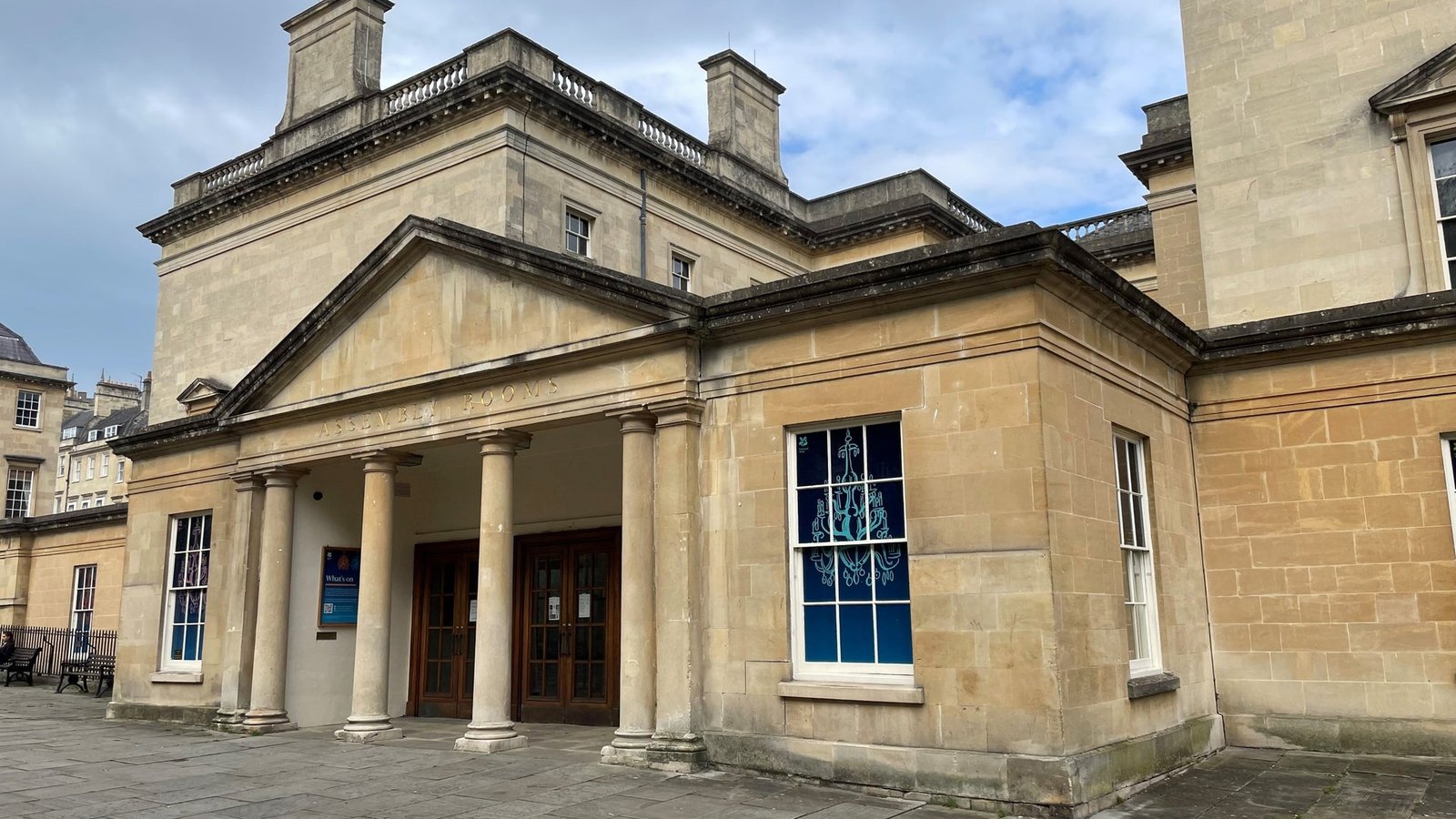
Archaeological discoveries beneath Bath Assembly Rooms have opened a rare window into everyday life in Roman-era Bath, revealing evidence of ordinary residents who lived beyond the city’s celebrated baths and monumental centre. The unexpected finds were uncovered during restoration work at the historic Georgian building and include pottery, coins, glassware, animal bones, roof tiles and a fragment of a Roman military helmet.
The discoveries are significant because they help archaeologists extend their understanding of how far Roman settlement spread across Bath. For decades, much of the archaeological attention in the city has focused on the famous Roman baths and the surrounding areas, while comparatively little evidence had emerged from the northern part of the city. The solid Georgian buildings and streets that dominate modern Bath have limited opportunities for archaeological excavation, leaving important questions about the city’s suburban communities unanswered.
The discovery beneath Bath Assembly Rooms is therefore being regarded as an important addition to the archaeological record. Researchers believe the remains suggest that Roman occupation extended further into the northern part of Bath than previously established. They also believe that further evidence could remain preserved beneath nearby streets and Georgian properties, where relatively few modern construction projects have penetrated the ground deeply enough to reach ancient layers.
Marek Lewcun of Wessex Archaeology said the findings help address a significant gap in knowledge about Roman Bath. The remains provide evidence not simply of major public buildings or wealthy residents, but of the people who formed the everyday population of the settlement. Their lives would have been connected to the commercial, social and religious activity that made Roman Bath an important centre.

The archaeological evidence points towards a community that may have resembled a modern suburban population more closely than the grand image often associated with Roman cities. Small-scale traders and craftspeople are thought to have lived in the area, supplying goods and services to people living nearby. Pottery, food and other everyday necessities would have been part of the local economy, creating a neighbourhood in which ordinary families lived and worked alongside people connected to the wider Roman world.
Almost 60 fragments of Roman pottery were recovered during the investigation. Archaeologists also found pieces of glass vessels, animal bones, roof tiles and Roman coins. One particularly intriguing object was a limestone tessera, a small piece of stone that may once have formed part of a mosaic floor. Although a single fragment cannot reveal the complete appearance of a building, the object suggests that at least some structures in the area could have had decorative features associated with more comfortable Roman homes.
A slot for a wooden beam was also identified, providing evidence that a Roman building once stood at the site. The discovery is particularly useful because it moves the evidence beyond isolated objects and suggests the presence of an organised structure within the settlement. Together with the other remains, it indicates that this part of Bath was not simply open countryside but formed part of a developed Roman landscape.
Perhaps the most striking discovery was a fragment of a Roman military helmet. Its presence has attracted particular interest because it could provide further evidence of military involvement in the development of the settlement. Archaeologists already know that the Roman world relied heavily on military organisation, engineering and infrastructure during the expansion of Roman Britain. The helmet fragment adds another small piece to the picture of how communities such as Bath were established and developed.
The settlement itself emerged around the mineral-rich hot springs that later gave Bath its name. Following the Roman conquest of Britain and the defeat of the forces associated with the British queen Boudica in AD60 and 61, the Romans developed the area around the springs. The settlement became known as Aquae Sulis, reflecting its connection with the goddess Sulis.
The hot springs became an important religious and cultural destination. People travelled to the site seeking the healing properties of the naturally heated waters, while the settlement grew into a place where people from different parts of the Roman Empire could meet. The archaeological evidence from beneath the Assembly Rooms offers a more personal perspective on that history by suggesting what life may have looked like for people living outside the best-known monumental areas.
The contrast between the different social groups who occupied Roman Bath is also becoming clearer. Wealthier residents and people of higher status may have lived in villas further up the surrounding hills, while people with more modest means occupied suburban areas closer to the developing town. Some retired military personnel and other affluent residents could have enjoyed larger properties, reflecting the social divisions that existed throughout the Roman Empire.
For archaeologists, the importance of the latest discoveries lies partly in this ability to reconstruct a broader picture of Roman society. The Roman baths are among the best-preserved ancient sites in northern Europe and attract large numbers of visitors, but monumental remains can tell only part of a city’s story. Everyday objects can reveal how ordinary people ate, traded, travelled, built homes and interacted with the wider community.
The survival of the Roman remains beneath the Assembly Rooms was helped by an unexpected feature of the Georgian building. When Bath Assembly Rooms was constructed in the late 18th century, its builders did not need to establish exceptionally deep foundations because the thick clay beneath the site provided sufficient support. As a result, the construction did not destroy the Roman ditches beneath the building, allowing them to survive for centuries.
That unusual combination of ancient construction and later Georgian development has created a remarkable archaeological record. Bath Assembly Rooms itself is one of the city’s important historic buildings and is strongly associated with the social life of Georgian Bath. Jane Austen lived in the city during the early 19th century and visited the Assembly Rooms, where fashionable visitors gathered for dancing, coffee, billiards and gambling.
The current restoration project has already revealed numerous objects connected with the Georgian period, including beauty products, wig curlers, wine bottles and tobacco pipes. Those discoveries have helped researchers understand the people who used the building during its social heyday. The Roman remains, however, provide an unexpected connection to a much earlier chapter in Bath’s history.
Tatjana LeBoff, the National Trust project curator at Bath Assembly Rooms, described the Roman discoveries as significant, particularly because they were found beneath a building associated so strongly with the Georgian period. The findings demonstrate how different historical layers can exist almost directly on top of one another, with a Roman settlement surviving beneath a building that became a centre of fashionable Georgian society more than 1,500 years later.
The wider restoration of Bath Assembly Rooms is a major project intended to secure the future of the historic building. The work includes refurbishment of upper rooms that were badly damaged during bombing in the Second World War, as well as conservation of the building’s original Georgian chandeliers. The Assembly Rooms are expected to reopen in 2027 with a new visitor experience focused on Georgian life and a renewed role as a public gathering place.

For Bath, the Roman discoveries add another dimension to that future visitor experience. The city is already known internationally for its Georgian architecture and Roman baths, but the archaeological evidence beneath the Assembly Rooms demonstrates that its history is even more layered than its famous landmarks suggest.
The objects recovered from the Roman ditches are modest compared with the grand structures that attract visitors to Bath, yet they may ultimately provide one of the clearest insights into the people who lived around them. Coins, broken pottery, glass fragments, animal remains and a piece of a military helmet are small traces of lives that disappeared almost two thousand years ago.
Together, they offer evidence of a changing community in which local inhabitants became increasingly connected to the Roman Empire and its culture. The discoveries also raise the possibility that more of this hidden suburban landscape remains beneath the modern city. As restoration and carefully planned archaeological investigations continue, Bath may yet reveal further evidence of the ordinary residents who helped shape one of Roman Britain’s most distinctive settlements.
Related News:
 Storm Dave Disrupts Travel but Conditions Set to Ease
 Sycamore Gap Artwork Chosen After Public Vote
 London Tube Heat Reaches Dangerous Levels
 Queue row erupts on Wales’ highest mountain
 British Museum Faces Questions Over Peter Thiel’s Private Bayeux Viewing
 Millions of Enslaved Records Open New Family History Path
 Rolling Hills and Heritage: A Car-Free Break in Leicestershire
 UK Banks Maintain £100 Contactless Limit Despite FCA Rule Change
 Rising Costs Force Families to Rethink Days Out
 Glasgow Central Set for Full Reopening After Fire
 UK Aviation Watchdog Clips Heathrow’s Fee Hike Wings
 EU Biometric Border Checks Delayed for UK Travellers
 Archbishop Prays for Middle East Peace in First Easter Sermon
 Exhibition Revisits Life of 18th-Century Black Court Figure
 Kezia Dugdale Warns of Possible Reversal of Equal Rights Gains
 Synagogue Arson Attempt Sparks Security Fears
 NHS Safety Fears as Nurses Cover Doctor Gaps
 Walsall Rapist Jailed After Hate-Filled Online Trail
 Two Children Die in Wolverhampton House Fire Tragedy
 Reform UK funding: mystery billionaire revealed
 Unveiling Hidden Masters: Female Artists Take Centre Stage
 Two Dead in Adelaide Airport Plane Crash Fire
 John Terry Faces Backlash Over Political Posts
 Greens Face Internal Row Over Antisemitism Claims
 Koh-i-noor Diamond Row Reignites Colonial Debate
 Barrister Criticises Trial After Suicide Case Verdict
 Tractor Breakdown Tests Lincolnshire Farmers
 Labour Members Turn Against Starmer Leadership
 Britons Build Emergency Supplies Amid Rising Fears
 Whistler’s Mother and why its fame frustrated artist
 Victim says non-custodial rape sentence ‘rock in my face’
 Farage and Reform UK Reshape British Politics
 Starmer Leadership Under Pressure After Setbacks
 Thailand Tightens Visa Rules to Curb Tourist Misbehavior
 UK Nations Brace for Potential Breakup Amid Reform Surge
 Cornwall Van Dwellers Face Eviction in Housing Crisis
 British Teens in EU Face Soaring UK University Fees
 Dreyfus Statue Finally Gets Permanent Paris Home
 England and Norway Fans Turn Miami Into World Cup Carnival
 UK Schools Struggle as Classrooms Top 40C
 Italy’s Beach Lunch Ban Sparks Holiday Backlash
 EasyJet Takeover Sparks Fears Over Passengers’ Future
 Olympus Awaits Unesco Heritage Recognition
 Three-Quarters of England’s Riverbanks Still Off Limits
 Westminster Council Threatens Charing Cross Soup Kitchen
 BBC Warned About Missing Clothes of Murder Victim
 Cambridge Professor Jason Arday Found Dead at Home
 London’s 2026 ‘Great Stink’ Raises Sewer Concerns
 Burnham unveils £65m drought aid for farmers
 Australia Races to Find Tourists Missing in Nepal
 RAF Barnham Protests Fuel Tensions in Norfolk Town
 UK Households Could Save £173 on Fixed Energy Deals
 London Launches First Self-Driving Taxis
 Internal Exclusions Surge in England’s Schools
 Green Leader Targets Starmer’s Former Seat
 Bayeux Tapestry Revives Franco-British Ties
 UK Subsidence Claims Surge After Record-Breaking Summer
 Masked Protesters Bring Dover Port Traffic to Standstill
 UK House Prices Fall as Mortgage Rates Rise
 Councils spend £125m on illegal children’s care
 Nats Boss Summoned as UK Flight Chaos Continues
 Iceland to Open First UK High Street Store in Falklands
 Patriot Platform Raises Concern Across Britain
 Reform UK Receives Record £36m Donation From Crypto Billionaire
 Thames Water Revises Oxfordshire Mega-Reservoir Plan
 Election Candidate Abuse Raises Alarm in England
 UK Retailers Accused of Breaking Refund Laws
 UK Heatwaves Set to Worsen Pothole Damage, RAC Warns
 English Heritage Revives Traditional Scything Skills
 Mahmood Warns Far Right Over Asylum Protests
 Disabled Travellers Seek Fairer UK Care Rules
 NHS Breast Care Review Finds Serious Patient Harm
 UK Rent Gap Puts Low-Income Families Under Pressure
 Lib Dems Prepare for Election Amid Reform Challenge
 Headteachers Warn New Ofsted System Is Harming Wellbeing
 Labour Apprenticeship Scheme Faces Slow Start
 UK Flights Hit by Fresh Air Traffic Control Fault
 Briton Faces Cyprus Court Over Son’s Fatal Fall
 UK Reviews Hague Child Abduction Cases Involving Abuse
 King Refers Jamaica Slavery Petition to Privy Council