Published: 06 October 2026. The English Chronicle Desk. The English Chronicle Online.
Plans for a major datacentre at Drax’s North Yorkshire power station have come under renewed environmental scrutiny after campaigners estimated that the facility could be responsible for around 8.6 million tonnes of carbon dioxide emissions each year if it operates at its proposed scale.
The analysis suggests the planned project could generate almost twice the annual carbon emissions associated with all flights operating from Gatwick airport, raising fresh questions about how the UK intends to reconcile its rapidly expanding artificial intelligence infrastructure with legally binding climate targets.
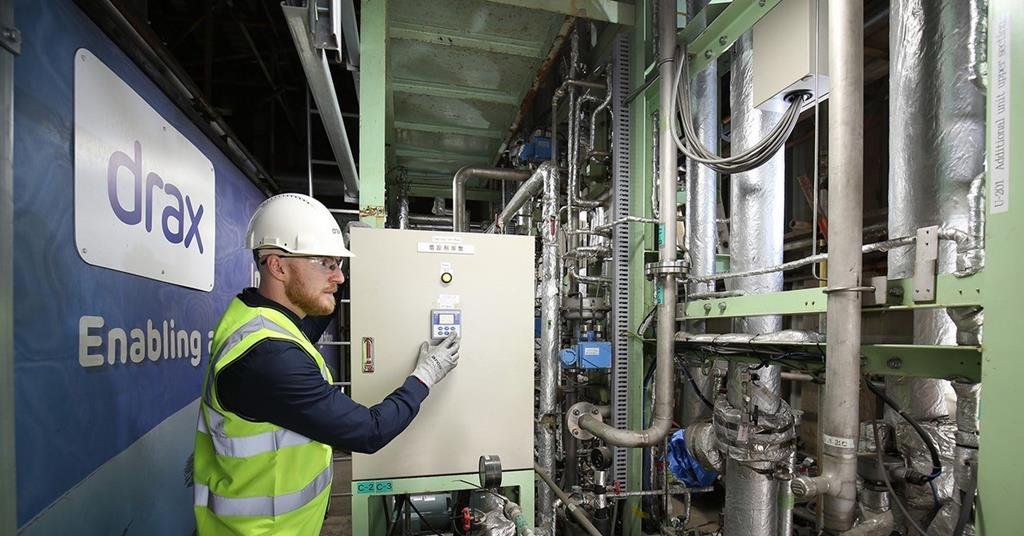
The proposed datacentre is part of Drax’s plans to respond to the rapidly increasing demand for computing capacity driven by artificial intelligence and other energy-intensive digital technologies. The company has been developing options to convert part of its North Yorkshire power complex into a facility capable of providing up to 1.2 gigawatts of power.

Under the plans outlined by Drax, around 100 megawatts of electricity would come from the national grid, while the majority of the power required by the datacentre would be supplied by the existing power station.
The scale of the proposed operation has attracted particular attention because Drax’s power station generates electricity by burning biomass, principally wood pellets. The company has long argued that biomass can form part of a lower-carbon energy system because trees used for fuel can be replanted and growing forests can subsequently absorb carbon dioxide from the atmosphere.
Environmental campaigners and a number of scientists have strongly challenged that argument, particularly when emissions from burning wood are considered alongside the time required for replacement forests to absorb the carbon released into the atmosphere.
The latest analysis by the Natural Resources Defense Council estimates that operating the proposed datacentre at its planned capacity would require approximately 4.9 million tonnes of wood each year. Based on that estimate, the campaign group calculated that the resulting emissions could reach 8.6 million tonnes of carbon dioxide annually.
The calculation assumes that the facility operates continuously throughout the year at a constant level of demand. Actual emissions could differ depending on how much electricity the datacentre uses, how efficiently its systems operate and how its energy supply is ultimately structured.
Even with those qualifications, the figures have intensified debate over the environmental consequences of Britain’s expanding datacentre industry.
The proposed Drax facility would be one of a growing number of large-scale computing projects being considered across the UK. Datacentres are increasingly viewed as critical infrastructure because they provide the computing power required for artificial intelligence, cloud services, digital platforms and other online technologies.
However, they are also among the most electricity-intensive types of modern infrastructure. Servers must operate continuously, while substantial amounts of energy are required to cool equipment and maintain the wider facility.
The demand created by the sector is already placing significant pressure on Britain’s electricity system. Hundreds of proposed datacentres are reportedly waiting to connect to the national grid, collectively representing tens of gigawatts of potential electricity demand. The scale of those projects has prompted concerns about whether the UK has sufficient renewable generation, grid capacity and environmental safeguards to accommodate the expansion.
For environmental campaigners, the Drax proposal illustrates the conflict particularly clearly. They argue that using large quantities of wood to generate electricity for an AI-focused datacentre risks undermining efforts to reduce greenhouse gas emissions, regardless of how biomass is treated under existing accounting rules.
Matt Williams of the Natural Resources Defense Council described the potential facility as potentially among the most polluting datacentres in operation. He argued that the UK government should establish minimum environmental standards for datacentres and prevent facilities from relying on what campaigners consider high-emission forms of energy generation.
Oliver Hayes of Global Action Plan also criticised the proposal, arguing that using millions of tonnes of wood to power large server facilities was difficult to justify at a time when governments were attempting to reduce emissions and protect natural ecosystems.
The disagreement highlights a broader dispute over how biomass energy should be assessed. Under established greenhouse gas accounting systems, emissions from burning biomass can be treated differently from fossil fuel emissions, partly because carbon absorbed by growing trees is accounted for separately.
Supporters of biomass argue that sustainably managed forests can provide a renewable source of energy and that carbon released during combustion can eventually be recaptured by new growth.
Critics counter that the climate benefit depends heavily on how forests are managed, where the biomass comes from and how long it takes for new vegetation to absorb the released carbon. They argue that burning mature trees can create an immediate increase in atmospheric carbon dioxide, while replacement growth may take decades or even longer to offset the emissions.
Previous research cited in the debate has suggested that some biomass systems could take many decades before becoming effectively carbon negative. That time lag has become increasingly important as governments face pressure to reduce emissions rapidly rather than relying on long-term carbon absorption.
The Drax datacentre has not yet entered the formal planning process, meaning several important details remain unresolved. The company has indicated that the facility could potentially be operational from 2031 if the necessary planning and other regulatory approvals are secured.
That leaves considerable scope for the final design, energy mix and environmental arrangements to change before construction begins.
Drax strongly disputes the campaigners’ assessment. The company has argued that the analysis is inaccurate and has not been independently verified. It also says the campaign group has made fundamental errors in applying international greenhouse gas accounting standards to biomass and bioenergy.
The company has presented the proposed datacentre as an opportunity to support economic growth, industrial renewal and the development of Britain’s artificial intelligence capabilities. It believes the project could contribute to the government’s ambitions for strengthening domestic digital infrastructure while bringing investment and employment to North Yorkshire.
The economic argument is central to the wider debate. Artificial intelligence is expected to require substantially greater computing capacity, and governments around the world are competing to attract investment in datacentres and related technology infrastructure.
Britain is seeking to establish itself as an important location for AI development and digital industries. Large datacentres can bring construction work, infrastructure investment and highly skilled employment, while also providing the computing resources needed by businesses and research institutions.
Yet the rapid growth of the sector has raised concerns that economic ambitions could move faster than environmental planning. Campaigners argue that decisions about where datacentres are built and how they are powered should be made within a coordinated national framework rather than through individual projects.
Toby Perkins, the Labour MP who chairs the Commons Environmental Audit Committee, has previously warned that datacentres could pose a serious threat to the UK’s climate objectives if appropriate safeguards are not introduced.
The issue has also prompted calls for greater transparency over the number of datacentres Britain actually needs, the services they will provide and the environmental impact associated with their operation.
Some campaigners have gone further and called for a temporary halt on new datacentre projects until the government develops a comprehensive strategy. They argue that basic questions about energy use, pollution, land requirements and climate compatibility need to be answered before further expansion is permitted.
The government has rejected calls for a nationwide moratorium, maintaining that stopping new projects could discourage investment and send valuable jobs and technological development overseas.
The debate is taking different forms across the UK. In Scotland, lawmakers recently voted to pause new datacentre planning applications for a limited period while a national strategy is developed.
The contrasting approaches demonstrate the political challenge facing policymakers. Governments want to attract investment in AI and other emerging technologies, but they must also ensure that new infrastructure does not undermine commitments to cut greenhouse gas emissions.
For North Yorkshire, the Drax proposal carries an additional local dimension. The project could bring significant investment to the area and help transform an existing industrial site, potentially supporting employment and the region’s economic development.
At the same time, the environmental footprint could extend far beyond the site itself because of the amount of energy and biomass required to keep a facility of this scale operating.

The controversy is therefore unlikely to disappear simply through the planning process. As AI demand continues to grow, the UK will have to decide how much computing infrastructure it wants, where it should be located and what energy sources should be considered acceptable.
The Drax project has brought those questions into sharp focus. Its final environmental impact will depend on the eventual design and power mix, but the campaigners’ calculations have already intensified scrutiny of whether biomass-powered datacentres can genuinely fit within Britain’s long-term climate strategy.
With the project potentially targeting operation from 2031, there is still time for regulators, local authorities, environmental groups and the company to debate the proposal in detail. But the scale of the estimated emissions means that the decision is likely to become an important test of how Britain balances AI ambitions, economic development and its commitment to reaching net zero.
Related News:
 Norfolk Broads Housing Levy Faces Environmental Criticism
 Heavier SUVs Accelerate Britain’s Pothole Crisis
 Reform UK funding: mystery billionaire revealed
 UK rejects EV charging VAT cut amid Treasury clash
 UK firms accused of ‘AI washing’ boom
 Battery Fires Cost UK Recycling Industry £1bn
 UK Risks Falling Behind in AI Race
 London Launches First Self-Driving Taxis
 Heathrow Expansion Faces New Climate Conditions Over CO₂
 Tom Watson Takes Senior Role at Palantir
 Bank Chief Calls for Power to Intervene in AI
 Edinburgh Glasshouses Reopen After Major Restoration
 North Sea Strike Threatens UK Fuel Supplies
 North Sea oil workers must lose weight or face job loss
 UK Taskforce Unveils Plan to Streamline Nuclear Reactor Rules
 UK Car Sales Pass 2 Million as Chinese Brands Surge
 MPs warn AI financial risks threaten UK stability
 MPs warn AI financial risks threaten UK stability
 AI job losses UK: Britain faces sharper employment shock
 UK New Car Discounts Near £6,000 as Prices Are Slashed
 Aberdeen Chosen for GB Energy HQ at Marischal Square
 Scotland’s Climate Plans Face Scrutiny Over ‘Science Fiction’ Targets
 Ocean Warming Drives Massive Marine Life Loss, Study Warns
 Yorkshire Water Funding Sparks Debate Amid Fines and Pay Row
 UK Pushes NHS and MoD to Buy British Tech
 New £10bn rescue plan offered for Thames Water
 UK Energy Reform Could Cut Bills by £200
 UK Records Earliest Spring as Nature Awakens Fast
 OpenAI Halts Stargate UK Project Amid Energy Crisis
 Capitalism ‘Suicidal’, Warns Petro at Climate Summit
 Record May Heat to Cold Front in Eastern Australia
 UK Faces Mass Water Shortages by 2055, Lords Warn
 Whitehall Steps In: The Battle Over Thames Water Deepens
 UK Seas Face Extreme Heatwave as Global Temperatures Surge
 Three-Quarters of England’s Riverbanks Still Off Limits
 London’s 2026 ‘Great Stink’ Raises Sewer Concerns
 Burnham unveils £65m drought aid for farmers
 Gen Z turns to BirdTok for a gentler digital escape
 UN Warns Record El Niño Could Supercharge Global Heat
 UK Subsidence Claims Surge After Record-Breaking Summer
 Australia gives users control over social media algorithms
 McLaren to Create 1,000 UK Jobs in £450m Investment
 Nats Boss Summoned as UK Flight Chaos Continues
 AI Reshapes Jobs for UK Graduates
 AI CEOs Call for Slower Development
 Thames Water Revises Oxfordshire Mega-Reservoir Plan
 AI Boom Drives ‘Tidal Wave’ of PFAS Production
 Louise Haigh Urges UK to Heed AI Safety Warnings
 North Sea Firms Urge Early End to Windfall Tax
 UK Heatwaves Set to Worsen Pothole Damage, RAC Warns
 Horse Hill Oil Site Sold for £1m as Drilling Bid Returns
 Europe Faces Climate Reckoning After Extreme Summer
 Nvidia chief rejects AI extinction fears
 UK Funds Gene Editing to Protect Threatened Wildlife
 Australia Renewables Reach Record 80% Grid Demand
 UK Unveils Centre to Counter Foreign Disinformation
 AI Takes Centre Stage in Trump-Xi Talks
 Super El Niño Threatens Hundreds of Thousands of Lives
 UK Plans New Centre to Counter Information Warfare
 Trump gives Xi red-carpet welcome as trade truce extends
 Chinese Hybrid Car Surge Raises EU Auto Industry Concerns
 Xi urges Trump to avoid US-China military conflict
 TalkTalk Races to Sell Arms as Administration Looms
 Most Popular UK Hybrids Miss Rapid Charging
 UK Diesel Prices Hit Record High Amid Iran Conflict
 New UK Homes in Flood Zones Face Insurance Risk
 Swiss Glaciers Lose Nearly One-Fifth of Ice in Five Years
 Sheikh Tahnoon and the UAE’s AI Ambitions
 Smart Cars Raise New Vehicle Spyware Concerns
 Berlin App Helps Residents Protect City Trees
 BBC Three and Scotland Face Online-Only Future
 Palantir Lobbyist Had Role in Burnham Campaign
 UK Diesel Reaches £2 as Inflation Surges Across Europe
 Minister Rejects Fears of UK Diesel Shortage
 Polanski Says Leadership Not Tied to By-election Result
 BT Broadband Pauses Raise Digital Switchover Concerns
 Greens Call for Immediate Water Nationalisation
 Anti-AI protests grow as campaigners turn to direct action
 Ofcom Probes Meta Over Instagram Instants Safety
 Asos Investigates Hack Claims After Customer Alerts