Published: 07 October 2026. The English Chronicle Desk. The English Chronicle Online.
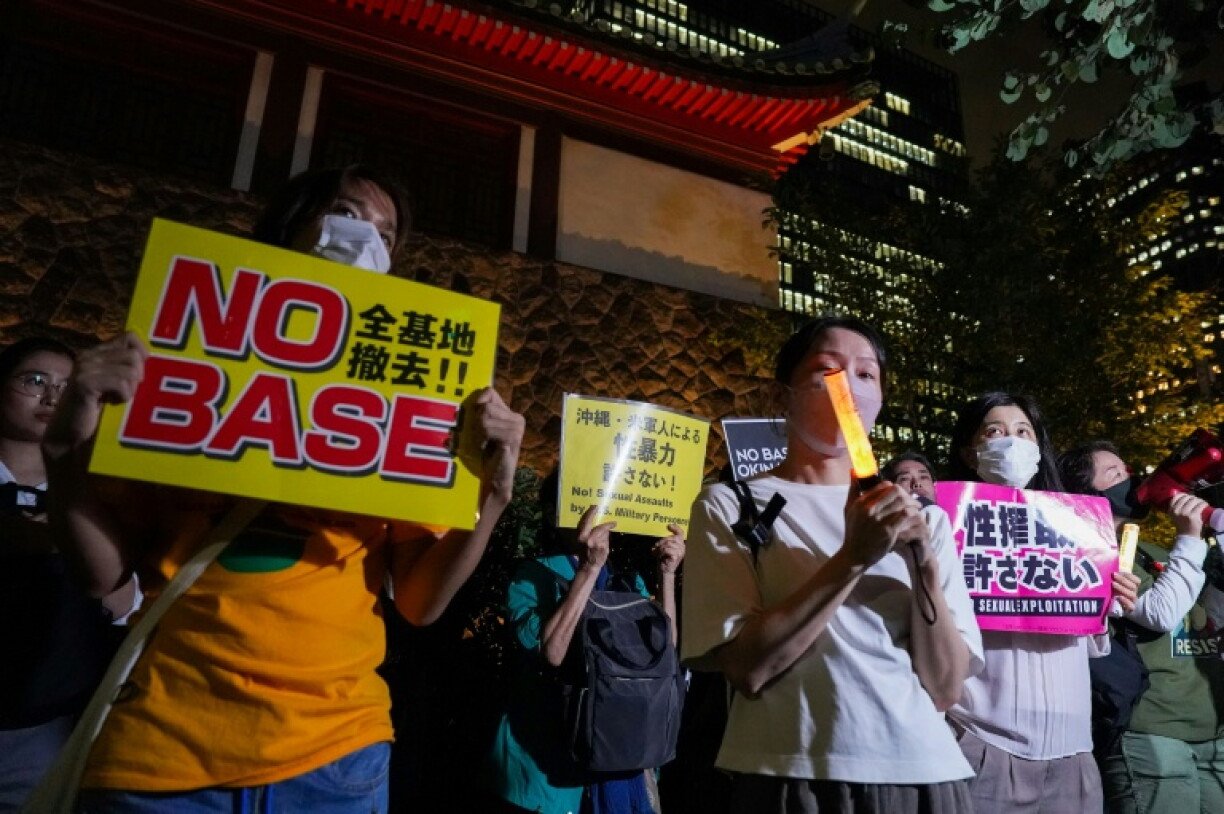
US military personnel stationed on Japan’s Okinawa island have been placed under a month-long curfew and temporarily prohibited from consuming alcohol following a murder case involving a local woman. The measures were announced as the US military launched disciplinary and conduct training aimed at preventing further incidents and rebuilding trust with the local community.
The restrictions come at a sensitive time for relations between the American military presence and residents of Okinawa, where public concern over the large number of US troops has persisted for decades. The latest case has renewed questions about the responsibilities of foreign military personnel and the broader security arrangements that make Okinawa a strategically important part of the US-Japan alliance.
Japanese police suspect 20-year-old US Marine Devin Jacob Ballard in the death of 39-year-old Anna Yagi. The woman was reportedly found unconscious in a hotel in Naha, the capital of Okinawa prefecture, after failing to check out at the expected time. Police allege that Ballard entered the hotel with Yagi and later left with her wallet and backpack.
Ballard has denied the allegations, according to police.

Authorities have been investigating the circumstances surrounding the woman’s death, while reports indicate that investigators examined hotel security footage showing a man entering the building with Yagi. A large police search was subsequently conducted as authorities sought information about the suspect and the events leading to the death.
Police have also reportedly told a military newspaper that investigators suspect Yagi died after pressure was applied to her neck, causing her to stop breathing. The circumstances remain part of an ongoing investigation, and the allegations against Ballard have not been established in court.
The case has nevertheless generated significant political and public concern in Japan. Japanese Prime Minister Sanae Takaichi described the incident as extremely serious and said Tokyo had lodged a strong protest with the United States.
The Japanese government has also called for measures to prevent similar incidents from happening again.
In response, Lieutenant General Benjamin Watson ordered a series of immediate restrictions and training measures for US military personnel in Okinawa. Under the measures, service members will face a curfew for one month, while alcohol consumption has been prohibited during the period of disciplinary training.
All US military activities in Okinawa were also suspended for 48 hours as part of the response. The suspension was intended to provide an opportunity for personnel to reflect on standards of conduct, discipline and their responsibilities towards the surrounding community.
Watson emphasised that the relationship between military personnel and local residents depends heavily on trust. He warned that every interaction between service members and their neighbours can either strengthen or damage confidence in the military presence.
The message comes against a long history of tension in Okinawa. Although the US military presence is considered strategically important to Japan and the wider region, many residents have complained about the consequences of hosting such a large concentration of foreign troops.
Concerns have included aircraft noise, accidents involving military aircraft and alleged misconduct by service members. For some Okinawans, these issues have created a sense that the social costs of the military presence are disproportionately carried by local communities.
One of the most painful incidents occurred in 1995, when three US service members were convicted of raping a 12-year-old Okinawan girl. The incident triggered enormous protests and became a turning point in public opposition to the US military presence on the island.
The latest murder case is therefore being viewed against a much longer and complicated history. While the vast majority of US service members are not involved in criminal activity, incidents involving American personnel can have consequences far beyond the individuals directly involved, particularly when they reinforce existing concerns among local residents.
Okinawa hosts a substantial proportion of US military facilities in Japan and is home to most of the roughly 18,000 US Marines stationed in the country. Japan hosts one of the largest concentrations of American forces outside the United States, reflecting its importance to Washington’s military strategy in the Indo-Pacific.
Okinawa’s strategic value has increased further because of its geographical position. Parts of the island chain are located close to Taiwan, placing them near one of the most sensitive potential flashpoints in East Asia.
Tokyo and Washington view the region as critical to deterring possible Chinese military action. US forces based on Okinawa provide logistical, air and maritime capabilities that could become particularly important during a regional crisis.
That strategic importance creates a difficult balance for Japanese authorities. The government wants to maintain a strong alliance with the United States while also responding to Okinawan concerns about the military burden.
The latest incident could complicate those efforts.
Okinawa Governor Genta Koza was expected to meet Prime Minister Takaichi to discuss the case and possible next steps. Local officials face pressure to demand stronger safeguards and accountability, while the national government must consider the wider implications for the US-Japan security relationship.
Takaichi is already attempting to address some of the longstanding controversy surrounding US military facilities. Her government has supported efforts to relocate some Marines from the heavily populated Futenma air base to the more remote Henoko area.
Opponents of the relocation plan, however, argue that moving troops within Okinawa does not adequately address the underlying problem. They have called instead for a reduction or removal of US military forces from the prefecture altogether.
The disagreement illustrates the political complexity surrounding the issue. Tokyo regards the US military presence as essential to national defence, particularly given growing tensions involving China, Taiwan and North Korea. Many Okinawans, meanwhile, believe their communities have carried too much of the burden of maintaining that security arrangement.
The murder case has brought those competing perspectives back into public debate.
For the US military, the immediate priority is to demonstrate that disciplinary measures are being taken seriously. The curfew and alcohol ban are intended to reduce the risk of further incidents while reminding service members that their behaviour can have implications for the entire alliance.
Military leaders also face the challenge of ensuring that disciplinary measures do not appear merely symbolic. For local residents, confidence will depend not only on restrictions imposed within military communities but also on how allegations are investigated and how accountability is handled.
The case also highlights the unusual legal and political circumstances surrounding US forces stationed overseas. American personnel operate under agreements governing the presence of US troops in Japan, while criminal investigations involving service members can become matters of intense public and diplomatic interest.
Any perception that foreign military personnel are treated differently from local residents can quickly deepen public distrust.
The wider strategic relationship between Japan and the United States makes the issue particularly sensitive. Both governments regard their alliance as a cornerstone of regional security, especially as China expands its military capabilities and tensions around Taiwan remain high.
Okinawa is geographically positioned at the centre of that strategic environment. Its islands stretch across waters connecting Japan to Taiwan and the broader East Asian region, giving the US military significant operational advantages.
Yet the strategic importance of the prefecture cannot erase the concerns of the people living alongside military bases.
The latest restrictions are therefore more than an internal disciplinary response. They represent an attempt by US military leadership to prevent one criminal investigation from causing further damage to an already fragile relationship with the surrounding population.

For Japan, the challenge is equally difficult. The government must reassure Okinawan residents that their safety and dignity are being protected while preserving the military cooperation it considers vital to national security.
As investigators continue examining the death of Anna Yagi, the legal process will determine responsibility for the alleged crime. Until then, the accusations against Ballard remain allegations, and he is entitled to due process.
But regardless of the eventual outcome, the incident has once again exposed the tension at the heart of Okinawa’s role in East Asian security.
The island is indispensable to the strategic partnership between Tokyo and Washington, yet the alliance depends on maintaining public confidence among the communities that host its forces. For US military leaders, the coming weeks will therefore be about more than enforcing a curfew or banning alcohol. They will be a test of whether stronger discipline and greater sensitivity can help rebuild trust in a place where the relationship between local residents and foreign troops has been under strain for generations.
Related News:
 China mine blast death toll rises to 90
 Gunman Killed After White House Security Shootout
 Japan PM Backs International Criminal Court
 Trump Asked Xi About Buying US Weapons
 Israel-bound Plane Lands in Saudi Arabia After Cockpit Fight
 Latin America women fear rollback of rights
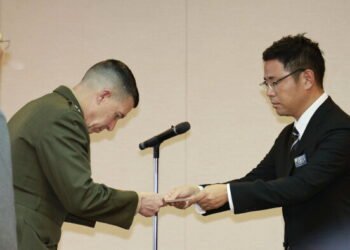 Japan PM condemns alleged killing by US Marine
 Lithuania Offers to Fund Permanent US Military Base
 Just Stop Oil Protesters Convicted Amid Climate Defence Row
 British Grandmother to Return Home After Death Sentence in Bali
 Oklahoma Governor Grants Last-Minute Clemency to Death Row Inmate
 Teens ‘Ran Amok’ at Ex-MP’s Covid Testing Firm
 Two National Guard Soldiers Critically Injured Near White House
 US Defence Chief on Drug Boat Strike: “Did Not See Survivors”
 American Mother Extradited From UK to U.S. on Murder Charges
 Thousands Protest ICE Operations in Nationwide US Day of Action
 UK Prepares Aircraft Carrier for Middle East Crisis
 North Korea Fires Missiles Amid US-South Korea Drills
 California fireworks blast: murder charges filed in case
 Ben Roberts-Smith Denies War Crime Allegations in First Statement
 Learner Driver Charged After Expo Tragedy
 Harmeet Dhillon Faces Scrutiny in DOJ Role Debate
 OpenAI CEO Apologizes After Canada Shooting Case
 FBI Links Brown University Shooting to Long-Term Grievances
 US Court Ruling Reshapes Voting Rights Landscape
 Cartel crackdown raises fears of fresh violence
 US states redraw maps after voting rights ruling
 Trump orders US troop pullout from Germany
 Judge halts deportation of Yemeni refugees in US
 China Fireworks Factory Blast Kills 21 in Hunan
 Trump warns Iran as Middle East tensions surge again
 US ‘Narco Boat’ Strikes Draw Global Outcry
 US Awaits Iran Reply on New Ceasefire Proposal
 Hormuz Talks Near Critical Stage
 Ebola outbreak in DRC overwhelms health system as cases surge
 Discontent grows around Putin amid war strain
 Former ICC prosecutor condemns US sanctions
 Irish Gangland Figure Fails in Dublin Election Bid
 New Footage Revives Peter Falconio Mystery
 Mystery Grows Over Mitch McConnell’s Health
 Houthis Strike Saudi Arabia as Middle East Tensions Rise
 Pradhan Resigns Amid Protests
 Israeli Strike in Southern Lebanon Kills Seven
 Argentina Orders Return of Nazi-Looted Painting
 UN expert urges UK to rethink Israel policy
 Miliband Rejects Chief Rabbi’s West Bank Warning
 Israel Accused of Undermining Palestinian Life
 Saudi Pact Raises Risk of Pakistan Entering War
 Patrick Clancy speaks publicly about children’s deaths
 Middle powers seek new alliances amid Trump era
 British Columbia Sues OpenAI Over School Shooting
 US Networks Suspend Trump White House Pool Coverage
 Clancy Defense Seeks Inquiry Into Lone Juror
 Briton Faces Cyprus Court Over Son’s Fatal Fall
 Democrat Says ICE Restricted Detention Camp Oversight
 King Refers Jamaica Slavery Petition to Privy Council
 AI Takes Centre Stage in Trump-Xi Talks
 Sri Lanka Easter Bombings: 15 Get Long Prison Terms
 Trump gives Xi red-carpet welcome as trade truce extends
 Ukraine and Russia Escalate Long-Range Drone War
 Xi urges Trump to avoid US-China military conflict
 Elizabeth Holmes Set for Halfway House Transfer
 Republican Senator Questions Trump Ad Spending
 Tennessee Set to Execute Woman After Clemency Denied
 Cornell Fraternity Assault Investigation Reopened
 South Korea demands apology over DMZ mine blast
 French Student Protests Escalate Into Violent Clashes
 Tennessee Execution Fails After Two Lethal Doses
 US Sends Third Carrier to Middle East
 Trump Immigration Policy Faces New Legal Tests
 Pilot Recalls Fight to Save Flydubai Passengers
 Calls Grow to Halt US Executions After Pike Failure
 French School Protests Escalate as 400 Schools Close
 New Prosecutor Takes Over Cornell Assault Case
 Russian Strikes Disrupt Kyiv Bridge Traffic
Questions Grow Over Tennessee Execution Failures
Russian Strikes Disrupt Kyiv Bridge Traffic
Questions Grow Over Tennessee Execution Failures
 Germany Pledges €1bn Military Aid to Ukraine
 Flydubai Co-Pilot Studied in Australia Before Attack
 Canadian Veterans Condemn Trump Allies’ Military Remarks
Christa Pike Awake After Failed Tennessee Execution
Canadian Veterans Condemn Trump Allies’ Military Remarks
Christa Pike Awake After Failed Tennessee Execution