Published: 09 October 2026. The English Chronicle Desk. The English Chronicle Online
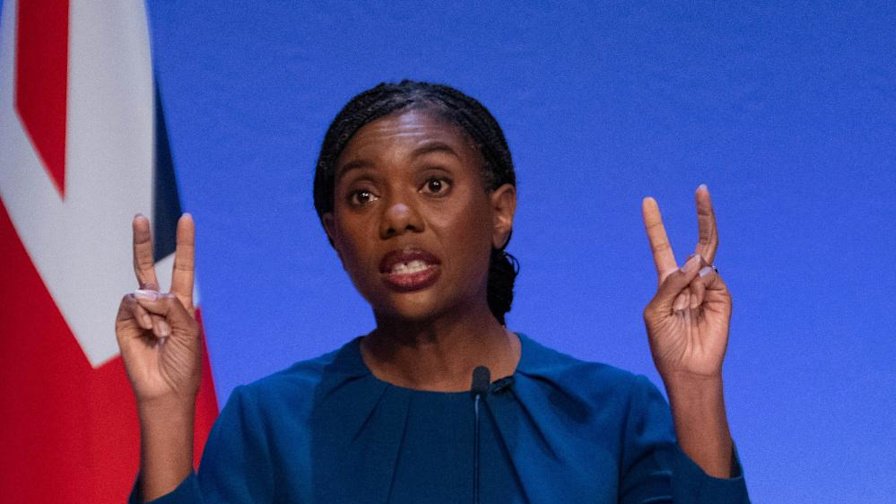
The UK Conservative Party has come under scrutiny after a major policy document promoted by its leader, Kemi Badenoch, appeared to overstate the estimated cost of achieving net zero emissions by nearly £500 billion. The discrepancy, which appears to have resulted from a spreadsheet calculation error, has raised questions about the accuracy of the figures underpinning the party’s climate policy arguments and its proposal to abandon the country’s 2050 net zero target.
The error was identified in *The Right Way*, a 100-page policy document prepared for the Conservative Party’s annual conference in Birmingham. The report sets out the party’s assessment of Britain’s economic and political challenges and outlines policy changes intended to shape its future direction. Among its central arguments is the claim that the financial burden of reaching net zero has been substantially underestimated, providing grounds for reconsidering the existing climate strategy.
However, an examination of the figures attributed to the Climate Change Committee (CCC), the independent body advising the UK government on climate policy, suggests that the document cited a cost estimate almost twice the amount supported by the underlying data.

The Conservative report stated that the CCC estimated in 2020 that its pathway to net zero would cost £957 billion. It explained that the figure represented gross economic costs of approximately £1.4 trillion, reduced to £957 billion after accounting for anticipated savings. Yet the figures in the original CCC data appear to total approximately £478 billion, suggesting that the Conservative document overstated the amount by around £479 billion.
The apparent discrepancy is significant because the cost of reaching net zero has become a central point of political debate in Britain. Conservative politicians have increasingly questioned whether the economic consequences of the transition justify maintaining the current target, particularly amid concerns about household energy bills, industrial competitiveness, public spending and the financial pressures facing businesses.
Badenoch has made the argument against the existing net zero framework an important part of her political programme. By challenging the financial assumptions behind the policy, the Conservatives have sought to present themselves as advocating a more economically realistic approach to energy, industry and environmental regulation.
Nevertheless, the apparent calculation error raises questions about the reliability of one of the report’s central numerical claims. If the figure was produced by double-counting entries in a spreadsheet, it would mean that a substantial overstatement entered the party’s published policy analysis before being used to support its argument about the economic consequences of climate action.
The discrepancy appears to have originated in a spreadsheet containing the CCC’s data for its Sixth Carbon Budget, published in 2020. The spreadsheet included individual cost figures alongside rows showing the totals for the relevant columns. According to the analysis that identified the error, the calculation appears to have included both the individual entries and their existing totals, effectively counting the same figures twice.
Such an error can occur when spreadsheet data are combined without properly distinguishing between individual values and summary calculations. Although the mistake may be technical rather than intentional, its consequences can be considerable when the resulting number is used in a high-profile political document to support a major policy decision.
The Climate Change Committee has distanced itself from the £957 billion figure cited in the Conservative report. A spokesperson for the committee said it did not recognise the number and reiterated that it had previously offered to meet Badenoch to explain its advice. The spokesperson added that the offer remained open.
The committee’s position highlights the importance of interpreting its estimates accurately. Assessing the cost of net zero involves several different economic factors, including investment in low-carbon technologies, changes to transport and heating systems, energy efficiency improvements and savings that may arise as the transition progresses. The overall result depends on the assumptions used, the period being assessed and the distinction between gross costs and net economic effects.
The CCC’s more recent analysis places the expected cost of achieving net zero by 2050 at approximately £110 billion, equivalent to around £4 billion annually, or 0.2 per cent of the UK’s gross domestic product. This estimate provides a substantially different picture from the nearly £1 trillion figure presented in the Conservative document.
However, the figures should not be treated as directly interchangeable without examining the underlying methodologies, time periods and assumptions. Estimates prepared at different times can change as technology costs, energy prices, economic conditions and government policies evolve. The key issue in the current controversy is that the Conservative report attributed a specific figure to the CCC that does not appear to match the source data cited in support of it.
The error was identified by Carbon Brief, a publication specialising in climate and energy analysis, which subsequently informed the Guardian. Its examination drew attention to the discrepancy between the Conservative document and the committee’s original spreadsheet.
There are also questions about how the disputed figure entered the Conservative report. The same £957 billion estimate appears to have been published previously in a report by the Institute of Economic Affairs, a right-leaning thinktank, and in an article published by The Spectator. It is therefore possible that the Conservative authors adopted a figure already circulating in political and policy discussions without independently checking the underlying calculations.
The available information does not establish who introduced the figure into the Conservative document or whether the party knowingly accepted an inaccurate estimate. Nor does the apparent spreadsheet error, by itself, demonstrate deliberate deception. Establishing responsibility would require a clearer account of how the report was researched, drafted and fact-checked.
Nevertheless, the episode presents a challenge for a party seeking to establish its economic credibility. The Conservatives have positioned *The Right Way* as a serious assessment of Britain’s difficulties, intended to provide a foundation for future policies. The document draws inspiration in part from *The Right Approach*, a policy publication produced by Margaret Thatcher’s Conservative Party in 1976, which helped frame economic arguments that became influential in the run-up to the 1979 general election.
The historical comparison gives the new report additional political significance. Badenoch and her colleagues are attempting to define a distinctive Conservative response to Britain’s economic problems, including questions about taxation, public services, regulation, energy and the country’s long-term growth prospects.
In the report’s foreword, Badenoch refers to her background as an engineer and stresses the importance of diagnosing problems accurately before attempting to solve them. Elsewhere, the document states that an accurate understanding of a problem is necessary to address its causes effectively.
Those principles have become particularly relevant following the discovery of the disputed climate cost estimate. When a party bases a major policy argument on financial calculations, the accuracy of the evidence is essential not only for public confidence but also for meaningful scrutiny of the alternatives being proposed.
The controversy also illustrates the difficulties involved in translating complex climate economics into political messaging. The net zero transition requires substantial changes to the energy system, buildings, transport and industrial production. These changes can impose upfront costs on households, companies and government, while also offering potential savings, investment opportunities and reductions in exposure to fossil-fuel price fluctuations.
Supporters of the existing target argue that abandoning it could create uncertainty for businesses investing in clean energy and other low-carbon technologies. They also emphasise the importance of maintaining a predictable policy framework for meeting the UK’s climate commitments. Critics, meanwhile, contend that climate policies must be assessed against their affordability, practical feasibility and effects on living standards.
Accurate and transparent cost estimates are therefore central to the debate. Inflated figures can distort public understanding of the financial challenge, just as overly optimistic projections can understate the burden of necessary investment. Policymakers need to explain both the costs and potential benefits, while making clear which assumptions underpin their calculations.
The Conservatives’ challenge is to demonstrate that their proposed alternative rests on robust evidence rather than an inaccurate reading of existing analysis. The party may continue to argue that the current net zero framework requires significant changes, but that argument must be evaluated separately from the apparent error in the £957 billion figure.
Badenoch’s office and the Conservative Party were contacted for comment on the discrepancy. No response was included in the information available at the time of reporting.
The immediate question is how the figure was calculated and whether the party will correct or clarify its published analysis. A clear explanation could help establish whether the mistake arose during the original research, the transfer of figures between documents or the final preparation of the report.

Beyond the political dispute, the episode reinforces a broader lesson about evidence-based policymaking. Climate targets have long-term consequences for investment, infrastructure, energy security and household finances. Decisions of this scale require reliable data, transparent assumptions and careful scrutiny of competing estimates.
The apparent overstatement does not settle the wider argument over how Britain should pursue net zero or what the transition will ultimately cost. It does, however, underline why the numbers used in that debate must be accurate. For a political party seeking to persuade voters that it can diagnose the country’s problems and offer credible solutions, ensuring that its calculations withstand scrutiny is an essential starting point.
Related News:
 Badenoch Raises Prospect of 2027 UK Election
 Scotland’s Climate Plans Face Scrutiny Over ‘Science Fiction’ Targets
 UK Doubles Steel Tariffs to 50% to Protect Domestic Plants
 Unions Raise Concerns Over Doctors’ Pay Dispute
 Starmer would have blocked Mandelson role, says Lammy
 Richard Tice Faces £100k Tax Controversy
 Crackdown Backfires on UK Climate Protesters
 BBC News Faces Deep Cuts in 2,000 Job Plan
 UK Pushes for New EU Goods Trade Deal
 Reeves Fights to Keep Treasury Role Amid Labour Turmoil
 UK rejects EV charging VAT cut amid Treasury clash
 Essex valley emerges as rising English wine hub
 Murder Probe Continues After Arrest Release
 Labour MPs Urge Burnham to Revive UK Aid Target
 Three-Quarters of England’s Riverbanks Still Off Limits
 Burnham unveils £65m drought aid for farmers
 RAF Barnham Protests Fuel Tensions in Norfolk Town
 Burnham Faces Mounting Budget Challenges
 Daughter Finds Bones in Parents’ Burned-Out Car
 Reform Faces Fresh Financial Controversy
 Europe’s democracies face a growing far-right threat
 Patriot Platform Raises Concern Across Britain
 Reform UK Receives Record £36m Donation From Crypto Billionaire
 Thames Water Revises Oxfordshire Mega-Reservoir Plan
 Election Candidate Abuse Raises Alarm in England
 North Sea Firms Urge Early End to Windfall Tax
 Mayors Could Gain Greater Powers Over Water Firms
 Lib Dems Prepare for Election Amid Reform Challenge
 Burnham Leaves Door Open to Future Brexit Reversal
 UK Unveils Centre to Counter Foreign Disinformation
 Thinktank Calls for Abolition of UK State Pension
 MPs Defend UK Economic Watchdog Against Critics
 UK Plans New Centre to Counter Information Warfare
 GP List Policy Risks Cutting Off Vulnerable Patients
 UK Pauses Chagos Deal Amid US Opposition
 Elif Eralp Emerges as Berlin’s Next Political Force
 Tony Blair Calls for Britain to Rejoin EU Within a Decade
 Free Speech Emerges as Key UK Election Issue
 Burnham Opens Debate on Pension Triple Lock for Care
 New UK Homes in Flood Zones Face Insurance Risk
 Dale Vince Plans New London-Wide News Operation
 Burnham Opens Door to Possible UK Return to EU
 Drumcree Talks Falter as Legal Challenge Deepens
 UK-France Returns Deal Faces Expiry as Talks Stall
 Green Party faces dispute over Zionism motion
 Hundreds of UK prisoners released early amid overcrowding
 Drumcree Talks End Without Agreement Ahead of Appeal
 Palantir Lobbyist Had Role in Burnham Campaign
 Polanski Says Leadership Not Tied to By-election Result
 London Council Warns of 150% Council Tax Rise
 US bombers leave RAF Fairford after terror threat
 Informa Agrees £2.24bn Deal to Buy Clarion
 Badenoch to unveil Conservative inheritance tax cut
 Badenoch Warns of Spending Fight in UK Politics
 Report Urges UK to Rethink Overseas Military Spending
 Royal Navy Sailor Charged With Alleged Spying
 Luton Residents Reject Claims of ‘No-Go Zones’
 France Urges UK to Consider Returning to EU
 Trump’s UK Ambassador Urges North Sea Drilling to Strengthen US Ties
 Millionaires group urge Reeves to introduce wealth tax to ‘lift kids out of poverty’
 Reeves rejects £1bn plea for NHS redundancy payouts
 PM Condemns Leaks, Vows Loyalty to Ministers and Stability
 Starmer Says Labour’s Economic Plan Needs Years to Deliver
 Artificial intelligence will cost jobs, admits Liz Kendall
 Wales Approves Assisted Dying Bill Consent
 Asylum Seekers to Work After Year-Long Wait
 Inquiry into HMRC child benefit errors launched by NAO
 Relationship with Trump may be beyond repair, Starmer warned
 UK Government Poised to Revive Stalled Hillsborough Law
 Silent Tracks: Rail Line Without Passengers
 Major test for Labour as polls open in Great Britain
 Keir Starmer Struggles to Secure His Grip on Downing Street
 Farage Faces Standards Probe Over Cash Property Purchase
 Makerfield Voters Demand Real Change as Election Looms
 Burnham Pledges New Era of Open Debate for Labour MPs
 Tom Watson Takes Senior Role at Palantir
 The Tests Awaiting Andy Burnham After Labour Conference
 London Facial Recognition Trial Ends With False Alert
 Healey urged to act as UK energy bills rise 4%
 Ministers Push ATO to Reconsider Credit Card Ban