Published: 10 October 2026. The English Chronicle Desk. The English Chronicle Online.
US President Donald Trump has triggered a fresh confrontation with Ukrainian President Volodymyr Zelenskyy and several European allies after announcing an agreement with Russian President Vladimir Putin to purchase large quantities of diesel fuel from Russia. The move represents a dramatic shift from years of US and Western efforts to restrict Russian energy revenues and increase economic pressure on Moscow over its war against Ukraine.
Trump defended the agreement as a necessary measure to bring down sharply rising fuel prices in the United States, particularly the cost of diesel, which has become a major political concern ahead of November’s midterm elections. But the decision has immediately raised questions about Washington’s commitment to Ukraine, the effectiveness of sanctions against Russia and the broader unity of the Nato alliance.
Zelenskyy responded angrily to the announcement, describing the agreement as deeply troubling and warning that it could provide Russia with additional resources to continue its military campaign. He said the arrangement was neither fair nor honest and argued that money flowing to Moscow through energy sales could ultimately help finance further attacks on Ukraine.

Trump announced the agreement after a conversation with Putin, saying Russia would immediately supply more than 300,000 tons of diesel to the American and global markets. According to Trump’s announcement, another 500,000 tons would be delivered during November, followed by 1 million tons shortly afterwards. He also said Russia could provide another 3 million tons within a relatively short period, depending on the condition and capacity of its refineries.
The president presented the agreement primarily as an economic measure designed to ease pressure on American consumers. He argued that lower diesel prices would be particularly important for farmers, ranchers and truck drivers, whose operations are heavily dependent on diesel-powered machinery and transportation.
The announcement comes at a particularly sensitive moment for the American economy. Fuel prices have risen substantially following the closure of the Strait of Hormuz during the conflict involving Iran and the United States. The strategically important waterway had previously carried a significant share of global oil supplies, meaning disruption in the region has had consequences far beyond the immediate battlefield.
For American motorists, gasoline prices have also climbed, but diesel has become an even more serious concern. Diesel is essential to the movement of goods across the country and is widely used by freight companies, agricultural businesses, construction firms and other industries. Higher diesel costs can therefore spread through the economy, increasing transportation expenses and eventually pushing up the prices consumers pay for food and other products.
The political pressure on Trump has intensified as the midterm elections approach. Republicans face the consequences of rising household and business costs, while Democrats have seized on fuel prices as evidence that the administration’s economic policies have failed to deliver the lower costs promised to voters.
The Russian diesel agreement has also created a political contradiction for the Trump administration. Only weeks earlier, Trump signed legislation authorising a broad range of sanctions against Russian banks, officials and tankers. The legislation also included provisions aimed at imposing steep tariffs on major importers of Russian oil and natural gas. Although the law gives the president considerable discretion to make exceptions, critics argue that directly purchasing Russian fuel undermines the broader purpose of the sanctions regime.
Senior Democrats sharply criticised the agreement, accusing Trump of helping finance Russia while claiming to be seeking an end to the war in Ukraine. Senate Democratic Leader Chuck Schumer, along with other senior Democrats, said the decision represented a failure to protect American interests and to follow the direction established by Congress.
Republican criticism has also emerged, demonstrating that opposition to the agreement is not confined to Democrats. Congressman Don Bacon argued that supporting Russia’s war economy was morally wrong while Moscow continued to attack Ukrainian cities. He said American policy toward both Russia and Ukraine required greater clarity rather than contradictory signals.
For Zelenskyy, however, the agreement carries an even more direct and personal significance. The Ukrainian president has repeatedly urged Western governments to maintain economic pressure on Russia and has warned that Russian energy revenues can contribute to Moscow’s ability to sustain the war.
Zelenskyy described the agreement as an investment in a war that should be brought to an end rather than prolonged. He warned that Russia could use the additional resources to continue military operations, launch further attacks and cause greater destruction.
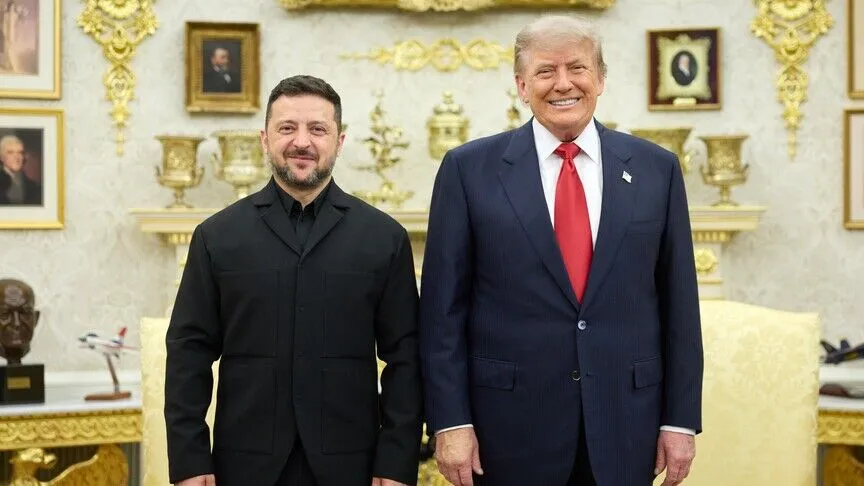
The Ukrainian president was particularly critical of the timing of Trump’s announcement. At the same time Trump was reaching the diesel agreement with Putin, his representatives Steve Witkoff and Jared Kushner were meeting Ukrainian and European officials in Miami to discuss possible proposals for ending the war.
Zelenskyy suggested that Ukrainian negotiators had effectively been used as a cover for the separate agreement with Moscow. From Kyiv’s perspective, the simultaneous diplomatic meetings and energy deal created the impression that Washington was pursuing a relationship with Russia that could come at Ukraine’s expense.
The disagreement also comes after a recent dispute over Ukrainian attacks on Russian diesel refineries. Trump has criticised Ukraine for targeting Russian energy facilities and has urged Zelenskyy to select alternative targets. Zelenskyy has resisted that demand, arguing that Ukraine should not be expected to restrain attacks on Russian infrastructure while Moscow continues striking Ukraine’s energy system.
Kyiv has instead pushed for reciprocal de-escalation, under which Russia would also halt attacks on Ukrainian energy infrastructure. The lack of agreement over the issue has added another layer of tension between the Trump administration and the Ukrainian government.
The latest development could further damage an already difficult relationship between Trump and Zelenskyy. Their relationship has been strained since a highly confrontational meeting at the White House last year, when Trump and Vice-President JD Vance sharply challenged the Ukrainian leader over his approach to negotiations with Russia.
Since then, Trump has at times expressed frustration with Putin as well, particularly over the Russian leader’s failure to reach a broader agreement to end the war. That disappointment had raised expectations in Kyiv and several European capitals that Washington might adopt a tougher approach toward Moscow.
The diesel agreement now complicates that assumption. While Trump appears primarily motivated by the need to reduce fuel costs inside the United States, the decision inevitably has wider geopolitical consequences. European governments that have supported Ukraine and participated in sanctions against Russia may see the arrangement as evidence of an increasingly transactional American approach to the conflict.
The situation is particularly sensitive because tensions between Russia and Nato countries have also been rising. European governments have expressed concerns about Moscow’s intentions and the possibility that Russia could attempt to test the alliance’s political and military resolve.
Another complication is Russia’s relationship with Iran. Moscow has supported Tehran during the ongoing conflict with the United States, with Russia reportedly providing intelligence and surveillance information concerning American military positions, ships, aircraft and bases. Russia has also been accused of supplying drone components and ammunition to Iran.
That makes Trump’s decision to purchase Russian diesel especially politically controversial. Critics argue that Washington is effectively providing economic benefits to a government that is simultaneously supporting one of America’s major adversaries.
For Trump, however, the calculation appears to be straightforward: American consumers are facing an immediate fuel-price problem, and the president believes Russian diesel can increase supply and bring prices down. Whether that strategy succeeds economically remains uncertain, but its diplomatic consequences are already becoming clear.
The agreement has placed the White House in a difficult position between domestic economic pressures and its wider foreign-policy commitments. Trump must now balance the demand from American farmers, truckers and consumers for cheaper fuel against criticism from lawmakers, Ukraine and European allies who fear that purchases from Russia could strengthen Moscow’s ability to continue the war.

For Zelenskyy, the central concern is that every new source of Russian revenue could make peace more difficult to achieve. For Trump’s administration, the priority is lowering costs at home. The clash between those objectives could become one of the most significant points of tension between Washington and Kyiv as efforts to end the war continue.
The Russian diesel agreement therefore extends far beyond the price of fuel. It has reopened questions about the future of US policy toward Moscow, the durability of Western support for Ukraine and the ability of Washington and its European allies to maintain a common strategy toward Russia. As the war enters another critical phase, the consequences of Trump’s decision may be felt not only at American fuel stations but also across the wider diplomatic landscape surrounding the conflict.
Related News:
 US Awaits Iran Reply on New Ceasefire Proposal
 Hormuz Talks Near Critical Stage
 Xi urges Trump to avoid US-China military conflict
 Tanker Attacked Near Qatar as Hormuz Tensions Escalate
 Southeast Asia Turns to Russia Amid Energy Crisis
 Trump approval plunges amid Iran war fears
 Trump Threatens UN Budget Cuts as US Pushes ‘Trade Over Aid’ Agenda
 Houthis Strike Saudi Arabia as Middle East Tensions Rise
 Trump announces major US oil deal with Venezuela
 Trump Hardens Canada Trade Stance as Talks Stall
 Trump Calls Iran War ‘Small Potatoes’ Despite US Deaths
 Trump Pledges $5,000 if Republicans Win Midterms
 Saudi Arabia Shuts Oil Pipeline After Drone Attack
 South Korea Rules Out Military Role in Iran War
 Middle powers seek new alliances amid Trump era
 Macron and Carney deepen France-Canada ties
 Trump Eyes Major Belarus Fertiliser Deal Amid Canada Trade Dispute
 AI Takes Centre Stage in Trump-Xi Talks
 Iran Rejects Claims of Shift in US Talks
 Trump gives Xi red-carpet welcome as trade truce extends
 Lula accuses Trump of seeking control over Brazil
 Saudi intercepts Houthi missiles as oil fears grow
 Trump Asked Xi About Buying US Weapons
 Trump Ads Trigger Fight Over Taxpayer Money
 Japan PM condemns alleged killing by US Marine
 South Korea Probes Fuel Shipments to Russia
 Houthi Missile Claim Sparks Riyadh Airport Disruption
 Turkey Rules Out Troops in Saudi Arabia’s Houthi Conflict
 Trump Rules Out Iran Attack Before US Elections
 Canada Passes Carney’s First Budget in Tight Parliamentary Vote
 India’s Labour Law Overhaul Sparks Fierce Debate
 Greenland Faces Pivotal Summit Over Arctic Power Struggle
 Government Unveils Northern Powerhouse Rail Plans
 Trump Fed bid heads to Supreme Court
 Thousands Protest ICE Operations in Nationwide US Day of Action
 Epstein Files Reveal Trump Officials’ Emails with Financier
 Thousands Protest ICE in New York Against Trump Deportation Campaign
 Clinton Testimony Erupts in Fiery Exchange
 Trump to Deploy “God Squad” Over Gulf Wildlife Protections
 Trump Slams UK Ties and Threatens To Rewrite Trade Deal
 Trump Faces Crisis as Iran Reopens Hormuz Tensions
 UK Stands Firm on Falklands Amid US Rift
 Capitalism ‘Suicidal’, Warns Petro at Climate Summit
 Oil Prices Surge Above $120 Amid Iran Blockade Fears
 Trump orders US troop pullout from Germany
 Judge halts deportation of Yemeni refugees in US
 Ohio’s Battle for Trust: Democrats Vying to Flip the Buckeye State
 US ‘Narco Boat’ Strikes Draw Global Outcry
 Ohio Primaries Set Stage for Crucial Midterms
 Afghan Families Left in Limbo Face Risk of Deportation
 Tensions Emerge in Netanyahu-Trump Alliance
 Kevin Warsh sworn in as Fed chair amid economic backlash
 Discontent grows around Putin amid war strain
 House Curbs Trump’s War Powers in Rare Rebellion
 Ukraine Creates Long-Range Strike Command
 Trump Refuses to Sign Housing Bill, But Law Takes Effect
 Swedish Mining Push Puts Sami Land Rights Under Pressure
 UK plans tougher Israel stance with settlement trade ban
 US Networks Suspend Trump White House Pool Coverage
 Trump and Mamdani Hold Cordial Gracie Mansion Meeting
 Japan PM Backs International Criminal Court
 Republican Senator Questions Trump Ad Spending
 Economic growth and political strain reshape Benin
 Burnham Opens Door to Possible UK Return to EU
 New Maps Reveal Gaza’s Vast Destruction
 US Sends Third Carrier to Middle East
 Brazil Election Draws Religion Into Final Campaign
 Lula Warns of Bolsonaro Family Return as Brazil Votes
 Families Await USS Abraham Lincoln Homecoming
 Germany Pledges €1bn Military Aid to Ukraine
 Quebec separatists return to power without majority
 Canadian Veterans Condemn Trump Allies’ Military Remarks
 Argentina Protesters Resist Milei’s Land Sale Drive
 Okinawa US Troops Face Curfew After Murder Case
 Vance Demands Iran Cut Nuclear Enrichment
 Israel Marks Three Years Since October 7 Attack
 Trump Says He Deserves Nobel Peace Prize
 USS Lincoln Ends Record 265-Day Deployment
 Israel Promotes Film Challenging Controversial Gaza Documentary
 Gaza War Deepens India’s Strategic Ties With Israel