Published: 12 October 2026. The English Chronicle Desk. The English Chronicle Online
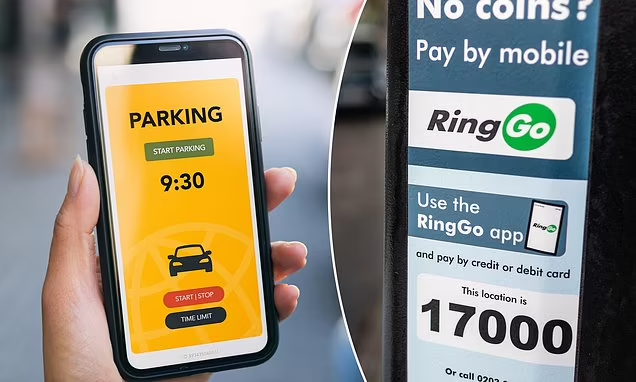
Motorists across England are facing unexpectedly higher parking costs as councils increasingly replace traditional pay-and-display machines with mobile payment applications, with additional service charges pushing some parking bills up by as much as 40%. Although the move towards digital payments is helping local authorities reduce the expense of installing and maintaining ticket machines, drivers are increasingly being asked to cover the cost of using the technology.
The change is creating concerns about price transparency, consumer choice and the growing financial burden on motorists who may have little alternative to paying through an app. While many councils promote digital payments as a convenient way to avoid queues and simplify parking, the additional fees are not always clearly displayed on car park signs or immediately visible during the payment process.
For drivers who expect to pay only the advertised parking tariff, even a relatively small surcharge can make a substantial difference. The impact is particularly noticeable where parking charges are low, because a service fee of just 20p or 30p can represent a significant proportion of the original price.

In Harrogate, North Yorkshire, motorists parking in the town centre face a mandatory 30p service charge when paying through an app, added to an advertised parking tariff of 80p for an hour. This increases the total cost to £1.10, representing a rise of 37.5%, or approximately 38%, compared with the original tariff.
A similar situation exists at Christleton Road car park in Chester. The advertised charge for two hours of parking is 50p, but a 20p convenience fee raises the total to 70p. The additional payment represents a 40% increase over the original parking price.
These examples illustrate how digital payment charges can have a disproportionate effect on inexpensive parking. A fee that might appear modest when considered in isolation can significantly change the final amount paid by motorists, particularly those who park regularly for short periods.
The expansion of app-based parking is part of a wider effort by local authorities to modernise public services and reduce operating costs. Maintaining physical ticket machines can involve installation expenses, repairs, servicing and the handling of payment equipment. Mobile applications offer an alternative that can reduce some of these responsibilities, while allowing motorists to pay without returning to their vehicles or displaying a paper ticket.
However, the financial benefits for councils do not necessarily translate into lower costs for drivers. Some local authorities pay application providers directly, while others allow providers to recover some or all of their charges through convenience or service fees imposed on customers.
These fees commonly range from 10p to 30p per transaction. Additional charges may apply when motorists choose text-message services that confirm a booking or warn them when their parking session is about to expire. Such alerts can be useful for drivers who want to avoid overstaying, but they may introduce further costs that are not immediately obvious when a parking session begins.
The difficulty is not simply the existence of an additional charge, but the way it is communicated. An advertised tariff on a car park sign may give motorists the impression that the stated amount represents the complete cost of parking. If the final payment includes another fee, drivers may discover the difference only after downloading an application, entering their vehicle registration and selecting a parking duration.
An examination of several parking applications found that service charges were not clearly presented at the beginning of the payment process. In some cases, the additional amount appeared only on the final payment screen. Elsewhere, motorists had to select a small information symbol or open a pricing link to understand why the total had increased.
The RingGo application, for example, added a 20p convenience fee to a £2 parking tariff at Kings Yard in Lancaster. The fee was available to view through a small pricing link and was also explained through an information symbol beside the final amount. However, customers could overlook the information if they proceeded through the booking process without opening those details.
At Dudley Street car park in Birmingham, PayByPhone added a 15p service fee to a £5.10 parking charge. The additional cost was not explained until the payment stage, with the relevant information positioned in a way that could be missed by customers moving through the screen.
JustPark also displayed a transaction fee that required motorists to select a small, pale-grey information symbol beside the final price. At Charmouth Road car park in Lyme Regis, Dorset, the fee added 12p to a £3.50 parking charge.
MiPermit presented a 10p convenience fee above the final price at the end of the booking process. The charge was applied to a £1.90 parking tariff in Littlehampton, West Sussex.
Although the amounts differ between providers and locations, the examples highlight a common concern: motorists may find it difficult to establish the full cost before committing to a parking session. The lack of consistency also makes it harder for drivers to compare prices between car parks or predict the amount they will ultimately pay.
The situation raises questions about the responsibilities of councils and private application providers. Motorists enter into an arrangement with the local authority when they accept the car park’s terms and park their vehicles. However, choosing to pay through an application can also involve a separate agreement with the technology provider.
That distinction may affect how charges are presented. According to the Advertising Standards Authority’s general approach to pricing, mandatory fees should be included in quoted prices where applicable. However, the relationship between a council’s advertised parking tariff and a separate fee imposed by an application provider can complicate the question of where the full price must be displayed.
Because agreements between councils and app providers vary, there is no single service charge that applies across all locations. The fee may depend on the provider, the local authority and the payment options selected by the customer. Consequently, motorists may not know whether a surcharge applies until they begin the booking process.
RingGo’s parent company, Arrive, said its convenience fee helps fund the service it provides and that decisions about displaying the charge on car park signs rest with the councils it works with. The company maintained that additional fees are shown wherever pricing information appears within its application.
JustPark said mandatory fees were included in the price displayed during payment and that no additional amount was introduced at the final payment stage. It explained that an information icon allowed motorists to see how the overall price was calculated.
PayByPhone also defended its approach, stating that the costs associated with parking, text-message options and service fees were presented before payment confirmation. The company said relevant pricing information was available through its website and application. MiPermit was approached for comment.
The Local Government Association, which represents councils in England and Wales, said responsibility for making fees clear and upfront rested with application providers. The Department for Transport said parking tariffs and surcharges were matters for individual councils, while emphasising that motorists should be able to see clearly what they would be charged before paying.
The AA expressed concern that drivers should not be confronted with unexpected charges after relying on the price advertised at a car park. Its position reflects a broader consumer expectation that the amount shown prominently on a sign should accurately communicate the cost of using the facility, particularly where motorists have limited payment alternatives.
The issue also has implications for drivers who do not own smartphones, have limited mobile data or are uncomfortable using digital payment services. When traditional ticket machines are removed, or become unavailable because of technical faults, motorists may be left with little choice but to use an application. For some, downloading an app and navigating its payment process can be inconvenient; for others, the additional cost and need to provide payment details may create a more substantial barrier.
Digital parking services can offer genuine advantages, including faster payments, remote extensions and reminders about expiring sessions. Yet those benefits depend on clear information and meaningful choice. A system that saves money for local authorities while transferring less visible costs to motorists risks undermining public confidence in the transition to digital services.

Clearer signage, prominent disclosure of mandatory charges and a straightforward presentation of the final price would help drivers understand their obligations before they pay. Councils could also review whether app-only arrangements provide a fair experience for motorists, especially when no practical alternative is available.
As more authorities move away from physical ticket machines, the central question is whether digital convenience should come with additional costs that drivers struggle to identify in advance. For motorists, transparency means knowing the complete price before beginning a transaction, rather than discovering that a seemingly inexpensive parking space costs considerably more at the point of payment.
The growing use of parking applications is unlikely to reverse the wider shift towards digital public services. However, the experience of drivers in several English towns suggests that modernisation must be accompanied by clear pricing, accountability and fair access. Without those safeguards, small convenience fees could continue to turn routine parking into an unexpectedly expensive experience.
Related News:
 UK rejects EV charging VAT cut amid Treasury clash
 TalkTalk Races to Sell Arms as Administration Looms
 Bank Chief Calls for Power to Intervene in AI
 BBC Three and Scotland Face Online-Only Future
 Feeld Founders Receive Record Dividend as Sales Rise
 Asos Investigates Hack Claims After Customer Alerts
 North Sea oil workers must lose weight or face job loss
 UK Taskforce Unveils Plan to Streamline Nuclear Reactor Rules
 UK Car Sales Pass 2 Million as Chinese Brands Surge
 MPs warn AI financial risks threaten UK stability
 MPs warn AI financial risks threaten UK stability
 AI job losses UK: Britain faces sharper employment shock
 UK New Car Discounts Near £6,000 as Prices Are Slashed
 Wealthy Britons Flee Gulf War but Avoid UK Taxes
 Oil and Gas Prices Surge Amid Iran-Israel Attacks on Gasfields
 OpenAI Halts Stargate UK Project Amid Energy Crisis
 Heavier SUVs Accelerate Britain’s Pothole Crisis
 Student Loan Interest May Rise Despite 6% Cap
 Carmakers Face £3bn Gap in UK Loan Payout Scandal
 Reform UK funding: mystery billionaire revealed
 BBC News Faces Deep Cuts in 2,000 Job Plan
 Reeves Fights to Keep Treasury Role Amid Labour Turmoil
 UK firms accused of ‘AI washing’ boom
 EasyJet Takeover Sparks Fears Over Passengers’ Future
 Weight-Loss Drugs Offer Food Savings Mainly to High Earners
 UK Risks Falling Behind in AI Race
 UK Households Could Save £173 on Fixed Energy Deals
 Burnham Faces Mounting Budget Challenges
 London Launches First Self-Driving Taxis
 UK Subsidence Claims Surge After Record-Breaking Summer
 Reform Faces Fresh Financial Controversy
 UK House Prices Fall as Mortgage Rates Rise
 Billionaire Chris Rokos poised to leave UK
 Oil nears $100 as Saudi attacks shake markets
 McLaren to Create 1,000 UK Jobs in £450m Investment
 Nats Boss Summoned as UK Flight Chaos Continues
 JPMorgan Boss Warns Against UK Bank Tax Rise
 John Lewis Losses Widen to £124m as Confidence Falls
 Thames Water Revises Oxfordshire Mega-Reservoir Plan
 UK Retailers Accused of Breaking Refund Laws
 Next Raises Profit Forecast After Strong Summer Sales
 UK Productivity Improves as Bank Weighs Interest Rates
 Trump Threatens EU Over Canada Partnership Proposal
 Tom Watson Takes Senior Role at Palantir
 UK Retail Sales Rebound as Consumers Spend More
 UK Rent Gap Puts Low-Income Families Under Pressure
 Reform UK Faces Internal Debate Over £72m Spending
 Calls Grow to Expand UK National Wealth Fund
 UK Borrowing Hits £18.3bn Ahead of Budget
 MPs Defend UK Economic Watchdog Against Critics
 Chinese Hybrid Car Surge Raises EU Auto Industry Concerns
 Tony Blair Calls for Britain to Rejoin EU Within a Decade
 Norfolk Broads Housing Levy Faces Environmental Criticism
 UK Trade Losses Grow Without EU Product Deal
 AO Acquires Jessops in Camera Retail Expansion
 Should Savers Lock Into 5.25% Fixed Rates?
 Beaverbrooks Boss Calls for Relief on Business Costs
 UK Diesel Prices Hit Record High Amid Iran Conflict
 New UK Homes in Flood Zones Face Insurance Risk
 Poundland Rescue Bid Could Protect 11,000 Jobs
 Healey urged to act as UK energy bills rise 4%
 UK house price growth slows as mortgage rates rise
 UK borrowing costs surge as global bond sell-off deepens
 UK Bookmakers Linked to Offshore Casino Deal
 Boots Sale Nears as Weston Family Eyes $9bn Deal
 UK Assures Public Over Diesel Supply
 Palantir Lobbyist Had Role in Burnham Campaign
 UK Diesel Reaches £2 as Inflation Surges Across Europe
 Minister Rejects Fears of UK Diesel Shortage
 BT Broadband Pauses Raise Digital Switchover Concerns
 UK Faces Calls to Review Bank Failure Bets
 BT Agrees £400m TalkTalk Rescue Deal
 Informa Agrees £2.24bn Deal to Buy Clarion
 Drax Datacentre Faces Major Carbon Emissions Concerns
 Google Maps Brings Live Fuel Prices to UK Drivers
 UK Water Firms Earn Millions From Industrial Wastewater
 UK Savers Face Uncertainty as Rates Rise Above 5%
 Labour Fears Budget Will Fail to Lift Living Standards
 UK Must Build Its Own AI to Protect National Security
 IFS Warns UK Budget Faces £35bn Spending Gap