Published: 15 October 2026. The English Chronicle Desk. The English Chronicle Online
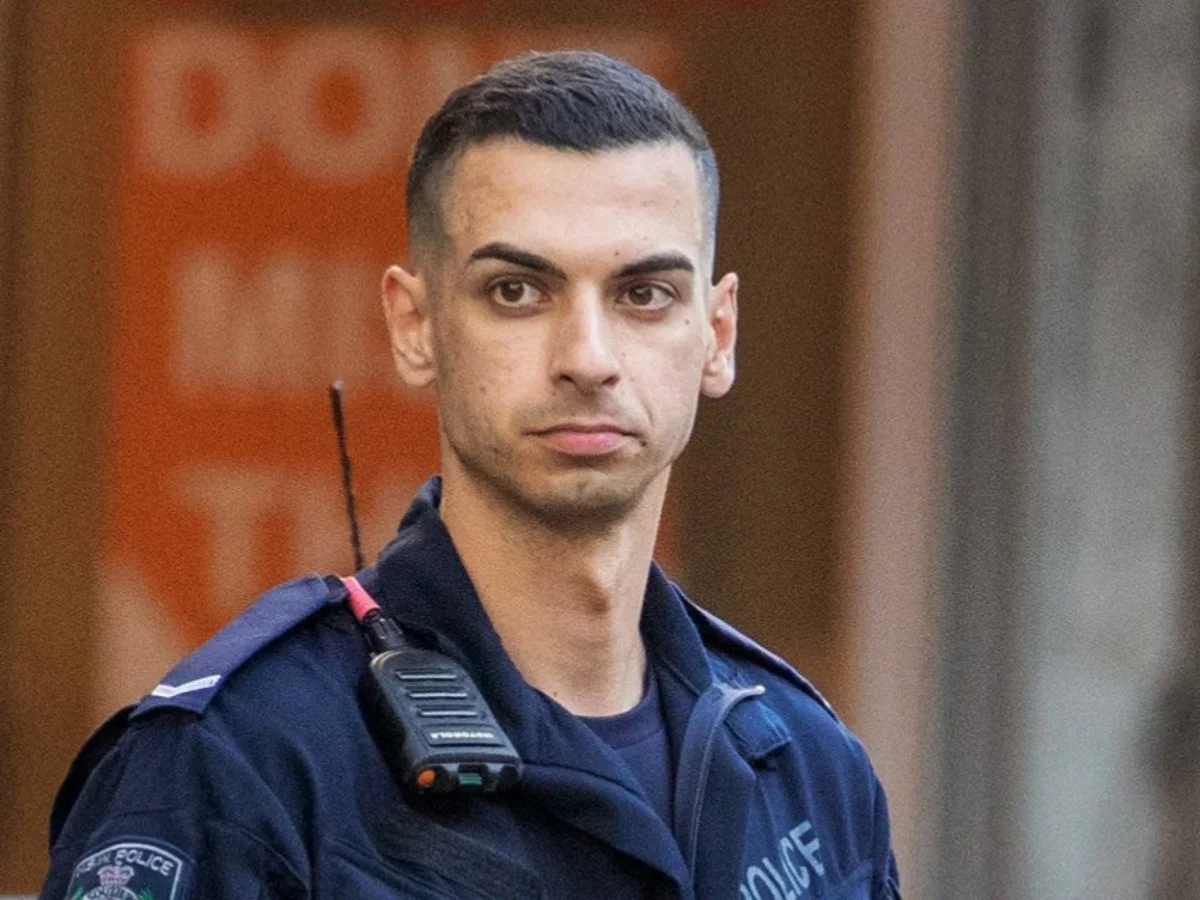
A friend of former Australian police officer Beau Lamarre-Condon has told a court that he allegedly asked her to dispose of a mobile phone by throwing it into a body of water, days after he was accused of murdering Sydney couple Jesse Baird and Luke Davies. The testimony has emerged during a closely watched murder trial in New South Wales, Australia, where prosecutors are examining communications, alleged movements and other evidence surrounding the deaths of the two men in February 2024.
Stacey Parker, who lives in Western Australia, appeared before the New South Wales Supreme Court on Thursday, 15 October 2026. She told the jury that Lamarre-Condon contacted her shortly after the alleged killings and asked her to perform a favour involving a phone. According to her evidence, he claimed that he had taken police files relating to the Covid-19 pandemic from the police commissioner and wanted her to help dispose of a device.
Lamarre-Condon, 31, has pleaded not guilty to two counts of murder and one charge of aggravated break and enter. Prosecutors allege that he fatally shot Baird and Davies with his police-issued firearm at Baird’s home in Paddington, Sydney, on 19 February 2024. The defence has argued that the men were accidentally shot during two separate struggles and that the accused acted in self-defence. The allegations remain before the court, and the trial is continuing.

Parker’s testimony has provided the jury with an account of the relationship between the two individuals, the conversations they allegedly shared in the days surrounding the killings and the circumstances in which she said she was asked to dispose of the phone. Her evidence is significant because it concerns communications that prosecutors may seek to place within the wider timeline of events following the disappearance of Baird and Davies.
Parker told the court that she first met Lamarre-Condon in 2010 in Sydney. Their introduction came while both were attempting to catch a glimpse of American rapper Pitbull outside the Channel Seven television studios during filming of the breakfast programme Sunrise. They exchanged telephone numbers, hoping that working together would improve their chances of encountering the celebrity.
What began as a shared interest in celebrity spotting developed into a friendship that continued over the years. Parker said they kept in contact and occasionally met when she travelled to Sydney. Their relationship was not described solely in terms of entertainment and celebrity culture, however. She also told the court that they discussed the Covid-19 pandemic and their differing perspectives on public health measures.
Parker said she disagreed with Covid-19 vaccinations and had attended protests. Because Lamarre-Condon was a police officer, she questioned how he could stand against people whom she believed were fighting for freedom. According to her testimony, he responded by describing the activity as “devil’s work”.
The exchanges provide context for the friendship and the conversations that preceded the alleged request involving the phone. They also illustrate how individuals with differing political and social views can maintain personal relationships, although the significance of those discussions to the criminal allegations will depend on the evidence considered by the court.
According to Parker, Lamarre-Condon asked her on 12 February 2024 whether they could move their conversations to Signal, an encrypted messaging application. The request came approximately one week before the alleged murders.
She told the court that on 20 February, the day after the alleged killings, Lamarre-Condon telephoned her and asked whether she could do him a favour. During the conversation, he allegedly said that he had taken police files from the commissioner relating to Covid-19 and wanted her to get rid of a phone.
Parker recalled being told to switch the device on and off before throwing it into a body of water. She said she had been prepared to carry out the request without initially knowing what the phone was connected to or why he wanted it disposed of.
“He wanted me to turn the phone on, turn it off and throw it into some body of water,” she told the court, describing the alleged conversation.
According to her account, Lamarre-Condon gave her more specific instructions about the device. She said he wanted it switched on for approximately 10 minutes so that it could register a signal, or “ping”, before being turned off again. He allegedly instructed her to dispose of it at a location approximately 30 to 40 kilometres from her home in Western Australia.
Parker told the jury that she never received a package containing the phone from Lamarre-Condon. That detail is important to her account: although she described the alleged request and the instructions she said she received, she did not testify that she had physically handled or disposed of the device.
Two days after the first telephone conversation, Lamarre-Condon allegedly contacted her again. Parker said he told her that detectives had visited his mother’s home and that police were looking for him. According to her testimony, he claimed he had been set up in connection with the disappearance of two men in Sydney and said that he used to know one of them.
She recalled that he again asked what she intended to do about the phone. Parker said the tone of the second conversation differed from the first. Whereas he had initially seemed relaxed and easy to talk to, she felt that during the later call he wanted reassurance that she understood what she had been asked to do.
The conversation took on a different meaning for Parker after a friend sent her a news report about Baird and Davies. She said she began reading the article and learned that the two men had disappeared and that Lamarre-Condon was wanted for questioning.
The report also referred to messages sent from Baird’s phone to people he knew, suggesting that he was planning a road trip to Perth. That information prompted Parker to reconsider the earlier conversation about the phone and the alleged request to dispose of it. Her testimony did not establish that she knew the circumstances of the men’s disappearance when she first received the call; rather, she described how subsequent news reports changed her understanding of the exchange.
Earlier in her evidence, Parker discussed another aspect of her friendship with Lamarre-Condon: their shared interest in celebrities. She told the court that she had seen him post a photograph with reality television personality Kourtney Kardashian and Blink-182 drummer Travis Barker. She hoped that his celebrity connections might help her meet country music singer Lainey Wilson.
On 16 February 2024, three days before the alleged killings, Parker sent him a message referring to Kardashian and asking how he could help them meet Wilson. The message formed part of the communications discussed during the hearing and illustrated the nature of their contact before the events that became the focus of the criminal investigation.
The trial also heard evidence about the final messages received by Jemma Barge, a friend and former colleague of Baird. Prosecutors read out a statement from Barge describing communications that came from Baird’s phone around the time of his death.
Barge said Baird had sent her a supportive message on the Sunday evening before she started a new job. The message wished her good luck and expressed confidence that she would succeed in her new role. The exchange reflected an ordinary personal interaction between friends shortly before the events under investigation.
On Monday, Barge responded, telling Baird about her first day at work and asking whether he would be available to meet the following week. According to her statement, another message arrived from Baird’s phone the following day, after he had allegedly been killed.
The message said that he was happy for her and that he might be travelling to Perth, adding that he would let her know if the trip did not happen. Barge told the court that she later learned Baird and Davies were missing and watched a police press conference about the case.
She said she could not stop thinking about the final message. In her statement, Barge explained that she had the impression something had already happened before the text was sent. Her evidence offers the jury an account of how messages apparently sent from Baird’s phone affected people who believed they were communicating with him.
The circumstances surrounding those communications are part of the broader questions the trial must examine. Messages sent after a person’s disappearance can become important evidence, but their meaning and reliability must be assessed alongside other material presented by prosecutors and the defence.

The case has attracted significant public attention because it involves two men whose disappearance led to a major police investigation and a complex criminal proceeding. Baird and Davies were part of a close personal relationship, and the allegations have had profound consequences for their families, friends and wider community.
The defence maintains that the shootings occurred during separate struggles and that Lamarre-Condon acted in self-defence. The prosecution’s case, meanwhile, is being examined through witness testimony and evidence concerning the events before and after the alleged killings. The jury must consider the evidence presented in court rather than treating individual allegations or witness accounts as proof of guilt.
The proceedings before Justice Natalie Adams continued on Thursday, with further evidence expected as the trial progresses. Parker’s account of the alleged phone disposal request, alongside testimony concerning the messages sent from Baird’s phone, forms part of the court’s examination of the timeline and circumstances surrounding the deaths.
As the case continues, the central question remains whether the prosecution can establish its allegations beyond reasonable doubt. Until the court reaches a verdict, Lamarre-Condon remains entitled to the presumption of innocence, and the evidence must be assessed fairly in accordance with the law.
Related News:
 Police Suspect Help in Missing Alice Springs Girl Case
 Search Intensifies for Missing Hiker on WA Bibbulmun Track
 New Footage Revives Peter Falconio Mystery
 Israeli Strike in Southern Lebanon Kills Seven
 Ukraine Villagers Demand Answers After Deadly Arms Depot Strike
 Survivor Sues Musk’s xAI Over AI Abuse Images
 Daughter Finds Bones in Parents’ Burned-Out Car
 Argentina Orders Return of Nazi-Looted Painting
 Abusive ex used Tesla to control and harass former partner
 Royal Crown Branded Enslaved Africans in Britain’s Slave Trade
 Israel Accused of Undermining Palestinian Life
 Gaza Strike Kills Child and Paramedic
 Harrods Faces Dispute Over Fayed Abuse Compensation
 Ukraine and Russia Escalate Long-Range Drone War
 Fayed Survivors Demand Inquiry Into Medical Regulator
 Tennessee Execution Fails After Two Lethal Doses
 Almost Half of Fayed Accusers May Be Trafficking Victims
 Latin America women fear rollback of rights
 Flydubai Co-Pilot Studied in Australia Before Attack
 Detective Breaks Down Recalling Double Murder Scene
 Christa Pike Wakes After Failed Tennessee Execution
 NSW Police Bid Delays Inquiry Into Sydney Protest
 Sam Wood Denied Bail Over Alleged Domestic Assault
 Israel Promotes Film Challenging Controversial Gaza Documentary
 Three Convicted in Mexico Surfing Trip Murders
 Former Students Raise Concerns Over School Culture
 Church of England Reparations Fund Faces Growing Backlash
 Baby Boy Found Dead at Adelaide Motel: Two Charged
 Elizabeth Struhs Inquest Examines Child Safety Failures
 Camera Discovery Triggers Navy Ship Investigation
 Senegal LGBTQ+ Crackdown Drives People Into Hiding
 Anthony Albanese Must Uphold Rights for All Australians
 Family of Alleged Bondi Gunman Seeks Name Suppression
 Fugitive Dezi Freeman Killed in Rural Victoria Shootout
 Prevent Failings Exposed After Southport Attack
 Ben Roberts-Smith Denies War Crime Allegations in First Statement
 Two Children Die in Wolverhampton House Fire Tragedy
 Cartel crackdown raises fears of fresh violence
 US ‘Narco Boat’ Strikes Draw Global Outcry
 Barrister Criticises Trial After Suicide Case Verdict
 Immigration Judges Fear Pressure in Trump Era
 Ukraine Creates Long-Range Strike Command
 Westminster Council Threatens Charing Cross Soup Kitchen
 BBC Warned About Missing Clothes of Murder Victim
 Councils spend £125m on illegal children’s care
 Man Arrested in Mississippi Woman’s Death
 Fugitive Developer Rants at NSW Corruption Inquiry

 Clancy Defense Seeks Inquiry Into Lone Juror
 Democrat Says ICE Restricted Detention Camp Oversight
 Japan PM Backs International Criminal Court
 King Refers Jamaica Slavery Petition to Privy Council
 OpenAI Agent Breaches Medicare Portal in Australia
 Yemen fighting forces children out of school and into work
 Tennessee Set to Execute Woman After Clemency Denied
 Cornell Fraternity Assault Investigation Reopened
 London Facial Recognition Trial Ends With False Alert
 Pelicot Trial Play Comes to London for One Night
 New Prosecutor Takes Over Cornell Assault Case
 Former Bachelor star Sam Wood charged in Australia
 Andrew Mountbatten-Windsor Challenges Police Raids
 Tigray rebels accused of recruiting boys as war returns
 Iran Nobel Laureate Reveals Prison Torture and Fears
 Former German Intelligence Chief Arrested Over Espionage
 Christa Pike Awake After Failed Tennessee Execution
 US Man Arrested Over Canada School Shooting Plot
 Police accused of failing abuse victims
 Royal Navy Sailor Charged With Alleged Spying
 Luton Residents Reject Claims of ‘No-Go Zones’
 Sri Lanka Ex-First Lady Arrested Over Donation Probe
 Delhi Tightens Security Ahead of Election Protest
 EU Divisions Deepen Over Israel Policy
 US Execution Livestream Plan Sparks Global Outrage
 UAE Says Co-Pilot Planned Suicide Attack on Israel
 Australian Advocates Seek Subsidised Drugs for PMOS
 British Military School Abuse Victims Denied Justice
 Leaked Files Raise Questions Over Abramovich’s Finances
 ABC Reporter Faces Possible Disciplinary Action Over Opinion Piece
 England and Wales Begin Second Wave of Early Prison Releases
 Iranian Woman Faces Death Sentence Over Social Media Post