Published: 16 October 2026. The English Chronicle Desk. The English Chronicle Online
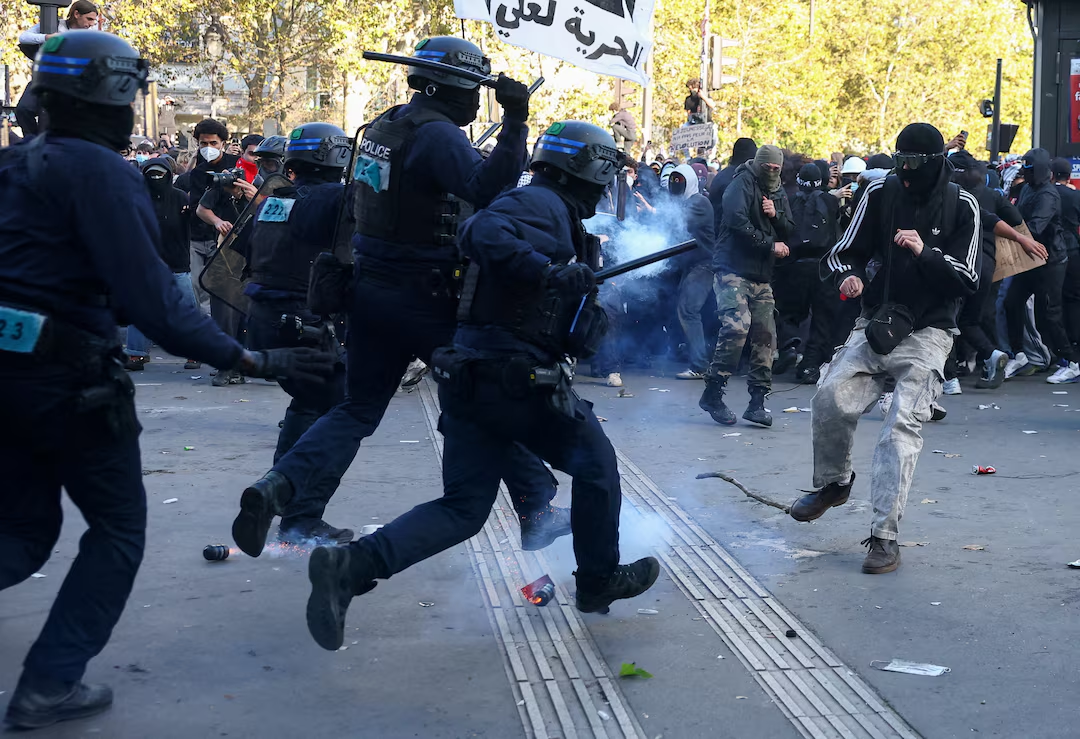
French police are facing mounting scrutiny after several teenagers sustained severe injuries during school protests, prompting lawyers and human rights organisations to question the use of police weapons, the treatment of detained children and the authorities’ response to a growing youth movement. The allegations have intensified a national debate over the right to protest, police accountability and the deteriorating conditions in parts of France’s education system.
The controversy comes as France enters the fourth week of a major student protest movement, with hundreds of secondary schools reportedly affected by blockades and demonstrations. Students have taken to the streets to demand improvements to school buildings, the replacement of absent teachers and greater government attention to what they describe as long-standing failures in public education.
Although the protests have included confrontations between demonstrators and police, lawyers representing injured teenagers argue that some of the injuries reported during the demonstrations raise serious questions about whether the force used by officers was proportionate. Rights groups have also expressed concern about the number of minors taken into police custody and allegations of physical violence, humiliation and discriminatory language during arrests.

According to Interior Minister Laurent Nuñez, police have opened internal investigations into 36 allegations of officer violence against demonstrators. The complaints include four cases involving children who were allegedly mutilated by explosive weapons, six cases involving significant injuries and other allegations concerning physical assaults, insults and sexual misconduct.
The allegations have placed the conduct of French law enforcement under renewed scrutiny, particularly because several of the reported victims are teenagers who say they were attending school or attempting to leave the area when they encountered the demonstrations.
One of the most serious cases involves Evan, a 15-year-old vocational student studying carpentry, who suffered devastating injuries during a protest outside a school in Lens, northern France, on 5 October.
According to his lawyer, Bertrand Wattez, Evan had gone to school intending to attend his classes but discovered that a protest was taking place. The lawyer maintains that the teenager had not participated in violence and disputes the assertion by prosecutors in Béthune that the grenade involved in the incident had been picked up from the ground.
When a police stun grenade exploded, Evan lost his left hand and several fingers on his right hand. He also sustained injuries to other parts of his body and remained hospitalised in what his lawyer described as a very difficult condition. His family subsequently filed a criminal complaint, seeking an investigation into the circumstances surrounding the explosion.
Wattez said the extent of the teenager’s injuries resembled those associated with warfare, highlighting the potentially devastating consequences of explosive weapons being used in environments where children and other civilians may be present.
The case has become a particularly disturbing example of the risks associated with confrontations around school protests. For Evan and his family, the immediate priority remains his recovery and the possibility of adapting to life after the loss of a hand, while the legal process will determine the circumstances and responsibility surrounding the incident.
Another case has raised similar concerns about the use of police weapons against minors. Eden, a 14-year-old boy who was near a school protest in Saint-Ouen-l’Aumône, north-west of Paris, sustained extensive facial injuries after allegedly being struck by a projectile fired from a grenade launcher.
His lawyer, Elsa Marcel, said the teenager suffered two fractures to his jaw, lost his lower teeth and had all his upper teeth broken. She alleged that the weapon was fired from approximately 1.5 metres away, a distance she described as dangerously close.
Eden’s family has filed a legal complaint alleging attempted murder. The complaint represents an allegation that must be examined through the judicial process, rather than a final determination of criminal responsibility.
According to his parents, Eden had gone to school but found the building blockaded and wanted to return home. Video footage reportedly showed him facing three riot police officers. One officer appeared to swing a truncheon in his direction, while the teenager kicked towards the police before a grenade projectile was fired.
The footage has become relevant to the investigation into the incident. An officer has been suspended and placed under formal investigation, although the full circumstances and legal responsibility remain matters for the authorities to establish.
A further case emerged in the western city of Tours, where a police officer was charged with aggravated battery after Maël, a 16-year-old vocational student, allegedly lost the use of an eye following a shot from a weapon designed to fire rubber projectiles. The officer denies the charges.
Maël’s family, through its lawyer, has maintained that the teenager was not involved in a violent confrontation with police and was merely present during a school protest. The family has expressed a sense of injustice over the incident, which has added to concerns about the potential long-term consequences of police weapons being used during demonstrations involving young people.
The cases have revived memories of earlier controversies surrounding French policing. During the 2018–2019 yellow vest demonstrations, police use of explosive devices and other crowd-control weapons drew widespread criticism after protesters suffered serious injuries, including reported eye injuries and the loss or mutilation of hands and feet.
Those earlier incidents generated a broader discussion about the safety of crowd-control tactics, the accountability of officers and the need to balance public order with fundamental civil liberties. The latest allegations suggest that these questions remain unresolved, particularly when police operations take place around schools and involve young people.
Alongside the injuries, the scale of arrests during the current student movement has become a major source of concern. France’s justice ministry reported that 6,773 people under the age of 18 had been taken into police custody after arrests since the school protests began in mid-September.
The figures indicate that the response has extended far beyond a small number of high-profile confrontations. More than 1,000 of the detained children faced no charges, while 2,190 were subject to legal proceedings. Almost 2,000 received alternative measures, including citizenship courses, without their cases proceeding to trial or resulting in convictions.
The remaining cases were not fully detailed in the reported figures. Nevertheless, the number of minors detained has prompted lawyers to question whether arrests have been proportionate and whether all those taken into custody were reasonably suspected of committing offences.
Reported accusations against young people have included gathering with violent intent, assaulting police officers and damaging property. Authorities are responsible for investigating such allegations, but lawyers argue that the existence of a protest or a person’s presence near a blockade should not automatically be treated as evidence of criminal conduct.
Nathalie Tehio, president of the French Human Rights League, said the number of arrests and the fact that only a minority of cases were expected to reach a judge raised questions about the basis for some police actions. She argued that arrests without sufficiently substantial evidence could discourage young people from exercising their right to demonstrate.
Tehio also reported receiving accounts of alleged racist remarks, physical mistreatment and humiliating treatment during arrests. She said lawyers had relayed complaints from young clients who claimed they had been pushed, verbally abused or subjected to violence.
Romain Boulet, co-president of France’s Association of Criminal Lawyers, expressed concern that police powers might be used in ways that discourage minors from participating in demonstrations. His comments reflected a wider debate about the relationship between public security measures and the protection of democratic freedoms.
Mohamed Jaite, who leads the Paris branch of the Syndicat des Avocats de France, said he had represented several teenagers detained in Paris and surrounding areas. He described encountering a young person limping inside a police station and said some detainees had reported humiliation and racist or sexist insults.
Other lawyers have alleged that teenagers were slapped, kicked or punched during arrests. Prisca Ancion, a lawyer associated with the Collectif d’Action Judiciaire, also reported allegations of racist, homophobic and sexist remarks, as well as inappropriate sexual touching. The group has encouraged families to file formal complaints so that the allegations can be investigated.
One 16-year-old student described being arrested approximately 100 metres from his school during a blockade in late September. He said he had intended to attend classes but discovered the protest after arriving. Speaking through his lawyer, the teenager alleged that he was held for more than 12 hours in a cell with two other people and was struck with a truncheon and punched.
He also alleged that an officer told him to remain silent and made a remark he interpreted as racist. He was eventually released after prosecutors directed him towards a citizenship course as an alternative to further legal action.
The interior and justice ministries did not comment on the reported allegations of violence and verbal abuse in police custody. Their responses, and the findings of the various investigations, will be important in establishing whether misconduct occurred and whether existing safeguards were properly followed.
Nuñez has rejected claims that police operations amount to excessive force or systematic repression. However, he suspended the use of stun grenades at school demonstrations following the reported injuries, a decision that signals official concern about the risks associated with those weapons in such settings.
Audrey Bailleul, a magistrate and national representative of the Union Syndicale des Magistrats, cautioned against reaching conclusions before the facts had been fully established. She said there was not yet evidence demonstrating a deliberate, widespread intention to disregard legal procedures.
Her remarks underline the need for independent and thorough investigations that examine both the conduct of officers and the circumstances of individual confrontations. Allegations of police misconduct must be taken seriously, while the legal process must also protect the rights of those accused of wrongdoing.
Beyond the immediate legal cases, the protests reflect a deeper frustration among students over school conditions, staffing shortages and the perceived failure to address their concerns. When educational grievances lead to repeated confrontations with police, the consequences can extend beyond public order, affecting young people’s trust in institutions and their sense of security in everyday life.

For the teenagers who have suffered severe injuries, the consequences may last for years. Families must confront medical treatment, rehabilitation and uncertainty, while investigations seek answers about how the incidents occurred. For other students, reports of arrests and alleged mistreatment may shape their willingness to participate in future demonstrations.
The coming weeks are likely to test the French government’s ability to respond to the education crisis while ensuring that public-order operations comply with legal safeguards. Transparent investigations, accountability where misconduct is established and meaningful engagement with students could help reduce tensions.
The central challenge for France is not simply to restore access to schools or prevent violence during demonstrations. It is also to ensure that children can express legitimate grievances without facing disproportionate risks to their safety and fundamental rights. As investigations continue, the treatment of injured teenagers and detained minors will remain a crucial measure of the authorities’ commitment to protecting both public order and civil liberties.
Related News:
 French Student Protests Escalate Into Violent Clashes
 French School Protests Escalate as 400 Schools Close
 Cambridge Professor Jason Arday Found Dead at Home
 Councils spend £125m on illegal children’s care
 Cornell Fraternity Assault Investigation Reopened
 New Prosecutor Takes Over Cornell Assault Case
 Latin America women fear rollback of rights
 France Promises 3,000 Teachers as Student Protests Grow
 UAE Says Co-Pilot Planned Suicide Attack on Israel
 French Students Protest Poor Conditions in Paris Suburbs
 Greta Thunberg Backs French Students in School Protests
 Albania’s Rama Defies Calls to Quit Amid Student Protests
 Undercover officer deceived women with ‘grotesque and cruel’ lies, spycops inquiry told
 Ben Roberts-Smith Denies War Crime Allegations in First Statement
 Police Suspect Help in Missing Alice Springs Girl Case
 FBI Links Brown University Shooting to Long-Term Grievances
 Cartel crackdown raises fears of fresh violence
 Barrister Criticises Trial After Suicide Case Verdict
 Irish Gangland Figure Fails in Dublin Election Bid
 New Footage Revives Peter Falconio Mystery
 Teen Charged After Layla Jeffery Found Dead
 Westminster Council Threatens Charing Cross Soup Kitchen
 BBC Warned About Missing Clothes of Murder Victim
 Ukraine Villagers Demand Answers After Deadly Arms Depot Strike
 British Man Faces Deportation Threat in Sweden
 Internal Exclusions Surge in England’s Schools
 Argentina Orders Return of Nazi-Looted Painting
 British widow says deportation from Sweden feels like a death sentence
 Patriot Platform Raises Concern Across Britain
 Israel Accused of Undermining Palestinian Life
 Iran School Strike Raises War Crimes Questions, UN Says
 Gaza Strike Kills Child and Paramedic
 Briton Faces Cyprus Court Over Son’s Fatal Fall
 Democrat Says ICE Restricted Detention Camp Oversight
 King Refers Jamaica Slavery Petition to Privy Council
 Paris child pickpocketing gang leader jailed for eight years
 Elif Eralp Emerges as Berlin’s Next Political Force
 Fayed Survivors Demand Inquiry Into Medical Regulator
 London Facial Recognition Trial Ends With False Alert
 Israel-bound Plane Lands in Saudi Arabia After Cockpit Fight
 UK University Strikes Spread as Financial Pressure Grows
 Drumcree Talks Falter as Legal Challenge Deepens
 UK-France Returns Deal Faces Expiry as Talks Stall
 Hundreds of UK prisoners released early amid overcrowding
 Drumcree Talks End Without Agreement Ahead of Appeal
 Almost Half of Fayed Accusers May Be Trafficking Victims
 Former German Intelligence Chief Arrested Over Espionage
 France Braces for Major Student Protest Mobilisation
 France Suspends Stun Grenades After Student Injury
 Christa Pike Wakes After Failed Tennessee Execution
 NSW Police Bid Delays Inquiry Into Sydney Protest
 Sam Wood Denied Bail Over Alleged Domestic Assault
 French Student Protests Grow Despite Government Pledge
 ICE Agent Shoots Man in New York as Child Escapes Harm
 EU Divisions Deepen Over Israel Policy
 Navi Pillay Wins Nobel Peace Prize for Justice
 Three Convicted in Mexico Surfing Trip Murders
 Controversial Vaccine Trial Approved in Guinea-Bissau
 Premier League Faces a Crisis of Trust After City Verdict
 Trump Attacks Norway After Nobel Peace Prize Snub
 Delhi Braces for Youth Protests Over Voter Roll Dispute
 British Military School Abuse Victims Denied Justice
 Former Students Raise Concerns Over School Culture
 Baby Boy Found Dead at Adelaide Motel: Two Charged
 Elizabeth Struhs Inquest Examines Child Safety Failures
 Ohio Airports Become Key Hubs for ICE Deportation Flights
 England and Wales Begin Second Wave of Early Prison Releases
 Farage Rejects Claims Reform Would Let Troops Shoot Migrants
 Ukrainian Soldier Faces Trial Over Nord Stream Blast
 Camera Discovery Triggers Navy Ship Investigation
 Pakistan School Roof Collapse Kills 27 Students
 Senegal LGBTQ+ Crackdown Drives People Into Hiding
 Gadi Eisenkot: Israel’s Anti-Netanyahu Challenger
 England and Norway Fans Turn Miami Into World Cup Carnival
 Man Arrested in Mississippi Woman’s Death
 British Columbia Sues OpenAI Over School Shooting
 Republican Senator Questions Trump Ad Spending
 Badenoch Raises Prospect of 2027 UK Election
 France Schools Protests Draw 250,000 as Police Clash
 South Africa Withdraws Directive on Asylum Applications