Published: 16 October 2026. The English Chronicle Desk. The English Chronicle Online
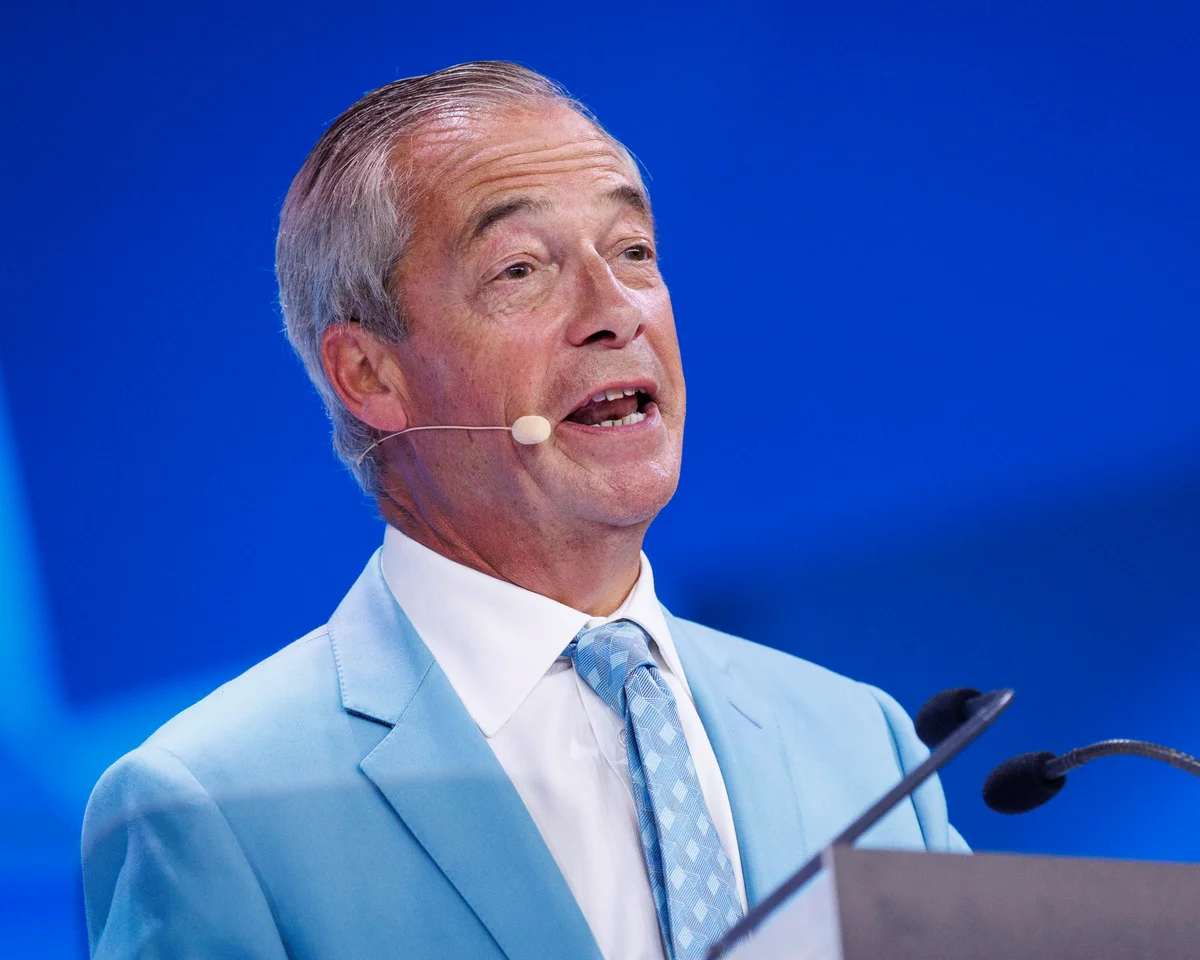
Reform UK MP Robert Jenrick has strongly defended party leader Nigel Farage amid renewed allegations that the party has struggled to prevent extremist and racist views among some of its representatives. Jenrick said Farage had “probably done more than almost anybody” to oppose racism and the far right, after undercover footage appeared to show the Reform leader being challenged by a senior party official over his handling of a mayoral candidate accused of making racist remarks about former Labour deputy prime minister David Lammy.
The comments come as Reform UK faces renewed scrutiny following an undercover investigation that has recorded councillors, candidates and party figures making allegations and comments described as racist, Islamophobic, misogynistic or supportive of extreme violence. The revelations have placed additional pressure on Farage, who has repeatedly promised to remove extremists and “bigots” from the party and introduce stronger vetting procedures.
The latest footage has focused particular attention on the way Reform handled Chris Parry, a retired rear admiral who was selected as the party’s candidate for the Hampshire and Solent mayoral election. Parry became controversial after comments emerged in which he reportedly told Lammy to “go home to the Caribbean” and questioned the loyalty of a number of politicians from minority ethnic backgrounds.

According to the footage, Farage faced criticism from Ed Sumner, Reform’s head of communications, who argued that the party should take stronger action against Parry. Sumner had previously described Parry as clearly racist in a discussion with another party official.
In a conversation recorded by an undercover reporter, Farage insisted that Parry should apologise to Lammy. The Reform leader said the candidate needed to issue an apology and move forward, while Sumner accused him of protecting Parry.
The exchange has raised questions over whether Reform’s leadership was sufficiently willing to act quickly when allegations against prominent candidates emerged. Although Farage eventually agreed that Parry should apologise, the conversation suggested there were disagreements within the party about whether the candidate should be removed.
Parry remained supported by Reform for several months after the controversy first emerged. The party eventually suspended him in March after further remarks were reported, adding to the scrutiny surrounding its candidate-selection process.
The controversy has been particularly damaging because Farage has made party vetting a central part of his response to previous accusations that Reform attracts extremists. He has repeatedly pledged to prevent individuals with racist or extremist views from standing under the Reform banner.
The party maintains that it carries out checks on people seeking to represent it in elections and has argued that it has strengthened those procedures. Jenrick used the issue to defend the organisation during an appearance on the BBC Radio 4 Today programme, insisting that Reform had robust vetting mechanisms.
Jenrick also sought to shift the focus towards other political parties, arguing that all organisations contain individuals who behave inappropriately. He referred to Alan Feeney, a Reform councillor and former deputy mayor of Solihull who was filmed making racist remarks about Asian homeowners and expressing a view that no more than 1% of Britain’s population should be non-white.
Jenrick pointed out that Feeney had previously been a Conservative councillor for a longer period than he had been associated with Reform. He used that history to argue that political parties can inherit individuals whose views do not necessarily reflect the official position of the organisation.
However, the argument has not removed questions about Reform’s own responsibility for selecting and monitoring candidates. The party has built its political identity around a strong challenge to the established political system, and its growing electoral presence means its candidate-selection processes are receiving increasing public attention.
The latest investigation has therefore created a difficult situation for Farage. On one side, he has attempted to present Reform as a serious political force that rejects racism and extremism. On the other, undercover recordings have provided evidence of individuals associated with the party expressing views that have generated significant public criticism.
Jenrick’s defence of Farage was unusually emphatic. He described Farage as one of the most heavily scrutinised politicians in Britain and argued that the documentary had failed to damage the party leader’s personal character. According to Jenrick, Farage had spent much of his political career opposing racism and the far right.
The statement appears intended to separate Farage himself from the conduct of individual councillors and candidates. Reform’s leadership has repeatedly argued that unacceptable behaviour by individual members should not automatically be interpreted as evidence of the party’s overall position.
The latest controversy involving Parry complicates that argument because the issue was not simply about an individual making controversial remarks. The undercover footage appeared to show an internal disagreement over how the party leadership should respond after those remarks became public.
Farage’s comments about Parry suggest that he wanted the candidate to issue an apology and move beyond the controversy rather than immediately removing him. His statement that Parry’s position as a retired rear admiral created difficulties for the party has also attracted attention because it suggests that the candidate’s background and status influenced the internal discussion.
For critics, the episode raises questions about whether political considerations can sometimes take precedence over a clear response to allegations of racism. Reform supporters, however, may interpret the incident differently, arguing that Farage ultimately required an apology and that the candidate was later suspended when additional information emerged.
Sarah Pochin, one of Reform’s female MPs, has also appeared in the latest undercover material. In the footage, she reportedly complained about the treatment of women within the party, describing some officials as chauvinistic and saying women could be excluded from internal discussions.
Her remarks have added another dimension to the investigation, which has already generated questions about the culture within Reform. While the party’s most prominent controversy has concerned racism and extremism, allegations concerning sexism and internal treatment of women could further challenge its claim to represent a broad section of the electorate.
The political consequences could be significant as Reform attempts to expand beyond its existing support base. A party seeking to become a major force in Westminster must demonstrate not only electoral popularity but also effective systems for selecting candidates, managing members and responding to unacceptable behaviour.
Jenrick insisted that Reform’s vetting system is strong and improving. He contrasted it with what he described as a lack of central vetting for local councillors in the Conservative party, drawing on his own experience as a former Conservative politician.
His comments reflect a broader political battle over standards within British political parties. Parties regularly face criticism when members or candidates make offensive statements, but the level of responsibility attributed to national leadership often depends on how quickly and decisively the organisation responds.
For Reform, the issue is especially sensitive because Farage has repeatedly promised to prevent extremists from gaining influence. The party’s rapid growth has meant that a large number of new candidates and representatives have entered politics under its banner, creating challenges around recruitment and oversight.
The undercover investigation has consequently placed the party’s internal procedures under renewed examination. Supporters may argue that controversial individuals can exist within any large political organisation, while critics are likely to question whether Reform’s rapid expansion has outpaced its ability to vet and supervise candidates effectively.
Farage’s defenders also point to the eventual suspension of Parry as evidence that the party is willing to act when allegations become serious enough. Critics, however, are likely to focus on the months during which the party continued to support him and the internal pressure reportedly required before stronger action was taken.
The debate is unlikely to end with the latest footage. Reform’s political future depends partly on whether it can persuade voters that it is capable of operating as a disciplined national political organisation rather than simply as a vehicle for protest against the established parties.
For Jenrick, defending Farage is also an attempt to reinforce that distinction. His argument is that the actions of individual councillors or candidates should not obscure Farage’s broader political record or Reform’s stated commitment to vetting.
The controversy nevertheless leaves the party facing a difficult test. As its influence grows, the expectations placed on its leadership will also increase. Voters will ultimately judge not only what candidates say but how quickly party leaders respond when allegations of racism, extremism or discrimination emerge.

The latest dispute therefore goes beyond the question of Farage’s personal views. It raises broader questions about political accountability, candidate selection and the ability of a rapidly expanding party to maintain standards across its organisation.
With Reform continuing to position itself as a serious alternative to Britain’s established political parties, its handling of controversial candidates is likely to remain under intense scrutiny. Jenrick’s defence may reassure Reform supporters, but the party will face continued pressure to demonstrate through its actions that its promises to reject racism and extremism are matched by effective internal safeguards.
Related News:
 Patriot Platform Raises Concern Across Britain
 Hundreds of UK prisoners released early amid overcrowding
 Drumcree Talks End Without Agreement Ahead of Appeal
 Luton Residents Reject Claims of ‘No-Go Zones’
 England and Wales Begin Second Wave of Early Prison Releases
 Undercover officer deceived women with ‘grotesque and cruel’ lies, spycops inquiry told
 NHS Safety Fears as Nurses Cover Doctor Gaps
 Walsall Rapist Jailed After Hate-Filled Online Trail
 Two Children Die in Wolverhampton House Fire Tragedy
 Barrister Criticises Trial After Suicide Case Verdict
 Murder Probe Continues After Arrest Release
 Westminster Council Threatens Charing Cross Soup Kitchen
 BBC Warned About Missing Clothes of Murder Victim
 Cambridge Professor Jason Arday Found Dead at Home
 RAF Barnham Protests Fuel Tensions in Norfolk Town
 Marina Hyde Finds Hope Amid Political Chaos
 Masked Protesters Bring Dover Port Traffic to Standstill
 Ministers Condemn Far-Right Unrest in Portsmouth
 Councils spend £125m on illegal children’s care
 Reform UK Receives Record £36m Donation From Crypto Billionaire
 Election Candidate Abuse Raises Alarm in England
 Piddington Votes for Symbolic Independence Over Asylum Plan
 Mahmood Warns Far Right Over Asylum Protests
 Lib Dems Prepare for Election Amid Reform Challenge
 UK Reviews Hague Child Abduction Cases Involving Abuse
 Democrat Says ICE Restricted Detention Camp Oversight
 King Refers Jamaica Slavery Petition to Privy Council
 Far-Right Activist Slashes Dinghy in Channel
 Elif Eralp Emerges as Berlin’s Next Political Force
 Far-Right Activist Arrested After Channel Dinghy Incident
 Portadown protest ends after tense Orange Order standoff
 Free Speech Emerges as Key UK Election Issue
 Three Die in Channel Crossing Attempt Near France
 Fayed Survivors Demand Inquiry Into Medical Regulator
 Dale Vince Plans New London-Wide News Operation
 London Facial Recognition Trial Ends With False Alert
 Drumcree Talks Falter as Legal Challenge Deepens
 UK-France Returns Deal Faces Expiry as Talks Stall
 Green Party faces dispute over Zionism motion
 Almost Half of Fayed Accusers May Be Trafficking Victims
 Badenoch Raises Prospect of 2027 UK Election
 Latin America women fear rollback of rights
 Gosport Protesters Clash With Police Over Migrant Rescue
 Holborn and St Pancras Vote Tests Labour and Greens
 Royal Navy Sailor Charged With Alleged Spying
 NSW Police Bid Delays Inquiry Into Sydney Protest
 ICE Agent Shoots Man in New York as Child Escapes Harm
 Labour Wins Key London By-election as Greens Fall Short
 Burnham Rises as Farage and Polanski Face Setbacks
 Labour Beats Greens in Crucial London By-election
 UK Gaza Refugee Route Criticised Over False Hope Claims
 Recruitment Boss Accused of Leading Doxxing Campaign
 British Military School Abuse Victims Denied Justice
 UK Greens Face Crisis Over Zionism and Extremism Row
 Church of England Reparations Fund Faces Growing Backlash
 Farage Rejects Claims Reform Would Let Troops Shoot Migrants
 Camera Discovery Triggers Navy Ship Investigation
 UK Bill Faces Warning Over Fayed Trafficking Victims
 French Taxi Driver Cleared in David Lammy Theft Case After Fare Dispute
 Most Tories Expect to Support a Farage-Led Government
 US ‘Narco Boat’ Strikes Draw Global Outcry
 Farage and Reform UK Reshape British Politics
 Starmer Leadership Under Pressure After Setbacks
 Burnham unveils £65m drought aid for farmers
 Ghent Professors Questioned Cofnas Appointment
 British Museum Faces Questions Over Peter Thiel’s Private Bayeux Viewing
 Ukraine Villagers Demand Answers After Deadly Arms Depot Strike
 Man Arrested in Mississippi Woman’s Death
 Royal Crown Branded Enslaved Africans in Britain’s Slave Trade
 Harrods Faces Dispute Over Fayed Abuse Compensation
 Pelicot Trial Play Comes to London for One Night
 UK University Strikes Spread as Financial Pressure Grows
 Burnham Opens Door to Possible UK Return to EU
 French School Protests Escalate as 400 Schools Close
 US bombers leave RAF Fairford after terror threat
 Andrew Mountbatten-Windsor Challenges Police Raids
 Palace Rejects Funding Andrew’s Police Legal Challenge
 South Africa Withdraws Directive on Asylum Applications
 Elizabeth Struhs Inquest Examines Child Safety Failures
 Senegal LGBTQ+ Crackdown Drives People Into Hiding