Fresh figures from the Australian Bureau of Statistics show that inflation accelerated from 4% to 4.3%, with a sharp increase in fuel costs contributing significantly to the rise. Petrol and diesel prices were, on average, 24% higher than a year earlier, while fuel costs jumped 9.4% in September.
The figures have intensified concerns about household budgets, business expenses and the Reserve Bank of Australia’s efforts to bring inflation back towards its target. Economists are increasingly concerned that external shocks are complicating an already difficult economic situation, while the government’s spending decisions have become a central point of political debate.

With another interest rate increase widely anticipated, mortgage holders could face further financial strain just as families prepare for the Christmas period. The latest developments are also creating a political challenge for the Albanese government, which must explain why inflation remains elevated despite its efforts to address the cost of living.
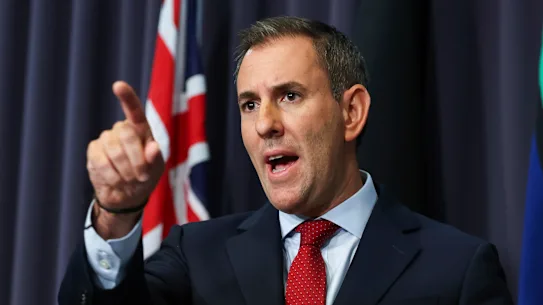
Chalmers has argued that the worsening conflict involving Iran and the United States is contributing to Australia’s inflation difficulties. The disruption and uncertainty surrounding international energy markets have pushed fuel prices higher, increasing costs for households and businesses.
Australia remains exposed to movements in global commodity markets, meaning international conflicts can affect domestic petrol and diesel prices even when the fighting takes place thousands of kilometres away.
Higher fuel prices also have consequences beyond the cost of filling a car. Transport companies face increased operating expenses, businesses may pay more to move goods, and higher distribution costs can eventually feed into the prices consumers pay for groceries and other everyday essentials.
For households already struggling with mortgages, rent, utilities and food expenses, these additional costs can leave less money available for discretionary spending.
The treasurer’s argument that the international conflict is partly responsible for the latest inflation increase has an economic basis. A sharp rise in oil prices can create an inflationary shock that domestic policymakers cannot easily eliminate through conventional budget measures alone.
However, the political difficulty lies in persuading voters that external circumstances are responsible for a substantial share of the pressure they are experiencing.
Many households judge economic performance through their weekly expenses rather than through explanations of international market movements. When fuel prices rise and mortgage repayments increase, the distinction between global causes and domestic policy decisions may become less important to voters than the immediate effect on their finances.
The result is a growing challenge for the government as it attempts to explain the limits of its control over inflation while maintaining public confidence in its economic management.
Although international energy prices have contributed to the latest inflation figures, government spending has emerged as another important part of the debate.
The latest Essential poll cited in the report found that nearly one-third of respondents considered government spending the leading cause of rising living costs. By comparison, 24% identified overseas developments, including the global oil shock, while 19% blamed supermarket price gouging.
The figures suggest that voters have several competing explanations for the economic pressure they face. They also indicate that the government’s account of the inflation surge has not fully persuaded the public.
Economists have raised concerns about the level of public expenditure and its potential contribution to inflationary pressures. Chris Richardson, a prominent Australian budget analyst, has argued that government spending is too high and is not helping the effort to bring inflation down.
When public spending increases demand across an economy that is already operating near its productive limits, businesses may struggle to meet additional demand without raising prices. The effect depends on the type of spending, the economy’s available capacity and whether expenditure expands productive output or primarily adds to short-term demand.
Government expenditure as a share of Australia’s economy is reported to be around record levels, adding to questions about whether fiscal policy is working in harmony with the Reserve Bank’s efforts to control inflation.
The issue is politically sensitive because government spending can support essential services, infrastructure, employment and household assistance. Cutting expenditure too aggressively could create other economic and social problems, while maintaining high spending during an inflationary period could make monetary policy more difficult.
The challenge for Chalmers will be to demonstrate that the government’s budget decisions are consistent with its stated objective of easing cost-of-living pressures.
The Reserve Bank of Australia is confronting a complicated economic environment in which inflation remains elevated even as unemployment rises.
Governor Michele Bullock has warned that international developments are making the task of bringing inflation back to the bank’s target more difficult. The RBA aims to maintain inflation within a target range of 2% to 3%, with policymakers seeking a sustainable return towards the midpoint of 2.5%.
The latest figures show that inflation increased to 4.3% in the year to September, while the bank’s preferred underlying inflation measure rose from 3.6% to 3.7%.
Underlying inflation attempts to provide a clearer picture of persistent price pressures by reducing the influence of unusually large movements in individual prices. Its increase suggests that the inflation challenge extends beyond the immediate rise in fuel costs.
This creates a dilemma for policymakers. Raising interest rates can reduce borrowing and spending, helping to cool demand and limit inflation. However, higher rates also increase mortgage repayments for many households, raise financing costs for businesses and can weaken economic activity.
Keeping rates unchanged, meanwhile, risks allowing inflation to remain elevated for longer if demand continues to exceed the economy’s capacity.
According to the supplied report, financial markets and economic observers widely expect another rate increase at the Reserve Bank’s next meeting on Melbourne Cup day.
If the anticipated increase takes the cash rate to 4.85%, it would mark the highest level since the global financial crisis. The decision would place additional pressure on mortgage holders who have already faced substantial increases in borrowing costs over recent years.
The RBA’s task is further complicated by the fact that higher interest rates cannot directly resolve supply disruptions caused by an international conflict. Monetary policy can influence domestic demand, but it cannot independently restore disrupted oil supplies or end hostilities.
For Australian households carrying mortgages, the prospect of another interest rate increase represents a particularly serious concern.
Higher borrowing costs can reduce disposable income, forcing families to reconsider spending on holidays, dining, household purchases and other non-essential expenses. Some households may also have to draw on savings or reduce spending on necessities to keep up with repayments.
The impact is unlikely to be evenly distributed. Families with large mortgages, limited savings or variable-rate loans may be more exposed than households with smaller debts or greater financial flexibility.
Rising petrol prices add another layer of pressure, particularly for people who depend on cars to travel to work, transport children or access essential services.
The combination of higher interest rates and expensive fuel could make the coming summer especially difficult for families already dealing with elevated food and housing costs.
The timing is also politically significant. As Christmas approaches, households may be particularly sensitive to the cost of travel, food, gifts and family gatherings.
For the government, these pressures create a direct connection between economic statistics and public perceptions of leadership. Even when international developments contribute substantially to inflation, voters may still expect ministers to demonstrate that domestic policy is making their situation better rather than worse.
Australia’s inflation problem is developing alongside signs of weakness in the labour market.
Unemployment has recently reached a five-year high, according to the supplied report. This creates a difficult balance for the Reserve Bank, which must contain inflation without unnecessarily damaging employment and economic activity.
During Senate estimates, Reserve Bank officials reportedly indicated that they were more concerned about inflation becoming entrenched than about the recent increase in unemployment.
That position reflects the risks associated with allowing persistent price increases to become embedded in wage negotiations, business decisions and household expectations. If businesses and workers begin to anticipate continuing high inflation, price and wage adjustments can make it harder to restore stability.
However, further interest rate increases could also weaken hiring and investment if businesses respond to higher financing costs by delaying expansion or reducing expenditure.
Sarah Hunter, the RBA’s chief economist, has offered some reassurance, saying there were no signs that the economy was in or approaching a recession in the near term.
Nevertheless, the combination of rising unemployment, elevated inflation and tighter monetary policy points to a period of uncertainty for households and businesses.
The challenge will be to bring inflation under control without creating an unnecessarily severe slowdown in employment or economic growth.
The economic debate is unfolding against a backdrop of declining public confidence in Australia’s direction.
The latest Essential poll found that 61% of Australians believed the country was heading in the wrong direction, while only 25% expressed the opposite view.
These figures indicate widespread dissatisfaction, although they do not establish that inflation alone is responsible for the change in public sentiment.
The cost of living has become a major political concern because it affects households across income groups, from mortgage holders and renters to commuters and small-business owners.
For the Albanese government, the challenge is not simply to explain the causes of inflation. It must also convince voters that its policies can improve living standards and provide a credible path towards greater economic stability.
Chalmers faces pressure to demonstrate that the government recognises the impact of higher prices and has a practical plan to address the underlying problems.
The treasurer is expected to face particular scrutiny ahead of the mid-year budget update in December. That process could provide an opportunity to explain the government’s spending priorities, outline its economic forecasts and respond to concerns about inflation.
However, the options available to policymakers are limited. Additional household support may ease immediate financial pressure but could also increase demand if it is not carefully designed. Spending cuts could reduce some inflationary pressure but may affect public services and investment.
Any strategy will need to account for the possibility that global energy prices remain elevated while domestic inflation continues to exceed the Reserve Bank’s target.
The latest inflation figures highlight the difficulty of separating global economic shocks from domestic policy challenges.
The conflict involving Iran and the United States has contributed to uncertainty in energy markets, while the rapid expansion of data centres is creating additional demand for workers, construction materials and other resources.
The data-centre boom is driven by technology companies investing in infrastructure to support artificial intelligence. Although this investment may generate long-term productivity benefits, it can also place pressure on limited construction capacity and compete with other projects, including housing and transport infrastructure.
When labour and materials are scarce, strong investment demand can contribute to rising costs unless supply expands sufficiently.
These pressures complicate the government’s efforts to explain inflation and the Reserve Bank’s attempts to control it. Neither international energy shocks nor domestic capacity constraints can be resolved through a single policy measure.
Australia’s economic outlook will therefore depend on a combination of global developments, domestic demand, government spending decisions, productivity growth and the response of monetary policymakers.
An easing of tensions in the Middle East could reduce some of the immediate pressure on fuel prices, although the timing and extent of any relief would remain uncertain. Domestic inflation could also take time to respond even if energy markets stabilise.
For households, the immediate concern is whether wages and available income can keep pace with prices, borrowing costs and essential expenses.
For the government, the political test will be whether it can offer credible explanations alongside practical measures that improve the economic outlook.
Chalmers is correct to point out that global events can have a substantial impact on Australia’s economy. The latest fuel figures demonstrate how quickly an international conflict can translate into higher domestic prices.
But voters are also concerned about the contribution of government expenditure, persistent underlying inflation and the effectiveness of economic management.
The distinction between explaining inflation and resolving it is becoming increasingly important. External events may explain part of the problem, but the government remains responsible for its own budget decisions and for communicating how its policies will support economic stability.

The prospect of another interest rate increase will test public patience further, particularly among families facing expensive mortgages, higher fuel bills and uncertainty about employment.
The December budget update may offer Chalmers an opportunity to reset the economic debate, but rebuilding confidence will require more than attributing rising prices to international developments.
Ultimately, Australia’s ability to ease the cost-of-living squeeze will depend on reducing persistent domestic inflation, managing public spending carefully, improving productive capacity and responding to the consequences of global shocks.
For now, one conclusion appears difficult to dispute: a reduction in conflict across the Middle East would be welcome news for energy markets and households alike. Yet ending the war would not automatically solve Australia’s broader economic challenges.
The government will still need to convince Australians that it can manage the pressures within its control while protecting households from those it cannot.
Related News:
 Ministers Push ATO to Reconsider Credit Card Ban
 Australia Delays Tax Credit Card Payment Ban After Backlash
 Dutch Bank Moves 86 Tonnes of Gold to London
 UK House Prices Fall as Mortgage Rates Rise
 Oil nears $100 as Saudi attacks shake markets
 Thames Water Revises Oxfordshire Mega-Reservoir Plan
 Japan Raises Rates to 31-Year High
 UK Retail Sales Rebound as Consumers Spend More
 UK Borrowing Hits £18.3bn Ahead of Budget
 Thinktank Calls for Abolition of UK State Pension
 MPs Defend UK Economic Watchdog Against Critics
 Chinese Hybrid Car Surge Raises EU Auto Industry Concerns
 UK Trade Losses Grow Without EU Product Deal
 Saudi intercepts Houthi missiles as oil fears grow
 Should Savers Lock Into 5.25% Fixed Rates?
 Why Americans Feel Ripped Off by Rising Prices
 UK Diesel Prices Hit Record High Amid Iran Conflict
 Ukraine Faces $45m Hourly Cost From Missile Alerts
 Poundland Rescue Bid Could Protect 11,000 Jobs
 UK house price growth slows as mortgage rates rise
 UK borrowing costs surge as global bond sell-off deepens
 French Debt Fears Put Euro Markets Under Pressure
 UK Assures Public Over Diesel Supply
 UK Diesel Reaches £2 as Inflation Surges Across Europe
 Minister Rejects Fears of UK Diesel Shortage
 Informa Agrees £2.24bn Deal to Buy Clarion
 EU-China Talks Target Surge in Hybrid Car Imports
 IMF Warns Governments Over Rising Debt Burdens
 Google Maps Brings Live Fuel Prices to UK Drivers
 Tesco Raises Profit Forecast as Consumer Confidence Holds
 Oil Shock Sends Markets Lower as Middle East Risks Grow
 Firmus Abandons Major ASX Listing Amid Investor Doubts
 France Faces Debt Crisis as Protests and Markets Clash
 IFS Warns UK Budget Faces £35bn Spending Gap
 UK Van Drivers Face £2.5bn Diesel Cost Surge
 EU Caps Chinese Hybrid Car Imports at 350,000
 Hall and Woodford Win Nobel Economics Prize
 IMF Warns Global Economy Is Nearing Its Limits
IMF Raises UK Growth Forecast Ahead of Healey’s Budget
 Healey Plans £1bn Online Marketplace Tax Crackdown
 Business Chief Urges Burnham to Fix Brexit Damage
 Australian Mortgages Now Cheaper Than Rent in Some Suburbs
 Cormann Warns Australia Against Populist Migration Caps
 UK Unemployment Falls to 4.7% as Vacancies Decline
UK Borrowing Hits £24.5bn Ahead of Healey’s Budget
 China’s AI Ambitions Hit $2.4 Trillion Market Setback
 Albanese Rejects Gas Export Tax Push
 UK rejects EV charging VAT cut amid Treasury clash
 Weight-Loss Drugs Transform Fashion Shopping Habits
 Canada to Match Trump’s 50% Tariffs Dollar for Dollar
 US CEOs Earn 614 Times More Than Workers
 Europe Faces Winter Gas Supply Anxiety
 Trump Hardens Canada Trade Stance as Talks Stall
 UK Cost Squeeze Deepens as Mortgages and Gas Rise
 Billionaire Chris Rokos poised to leave UK
 JPMorgan Boss Warns Against UK Bank Tax Rise
 John Lewis Losses Widen to £124m as Confidence Falls
 UK Pay Growth Slows to 3.9% as Rate Decision Nears
 Bank Urged to Slow Bond Sales as UK Costs Rise
 UK Productivity Improves as Bank Weighs Interest Rates
 UK Rent Gap Puts Low-Income Families Under Pressure
 Calls Grow to Expand UK National Wealth Fund
 Australia Renewables Reach Record 80% Grid Demand
 Trump Eyes Major Belarus Fertiliser Deal Amid Canada Trade Dispute
 Iran Rejects Claims of Shift in US Talks
 AO Acquires Jessops in Camera Retail Expansion
 Healey urged to act as UK energy bills rise 4%
 Boots Sale Nears as Weston Family Eyes $9bn Deal
 North Sea Strike Threatens UK Fuel Supplies
 UK Weighs Chinese Car Tariffs Amid EU Trade Push
 BT Agrees £400m TalkTalk Rescue Deal
 UK house prices stall as mortgage costs rise
 Shell Refineries Set for Record Refining Profits
 Japan Beer Giants Face Cartel Probe
 UK Could Rejoin EU Through a Switzerland Plus Deal
 UK Inflation Hits 3.5% as Middle East War Drives Fuel Costs
 Sainsbury’s Warns of Tough Christmas Ahead
 Tax Online Sales to Save High Street, Burnham Urged
 UK Consumer Confidence Plunges at Fastest Rate Since Brexit Vote
 Labour MPs Urge Burnham to Lead UK Reindustrialisation