Published: 31 October 2026. The English Chronicle Desk. The English Chronicle Online
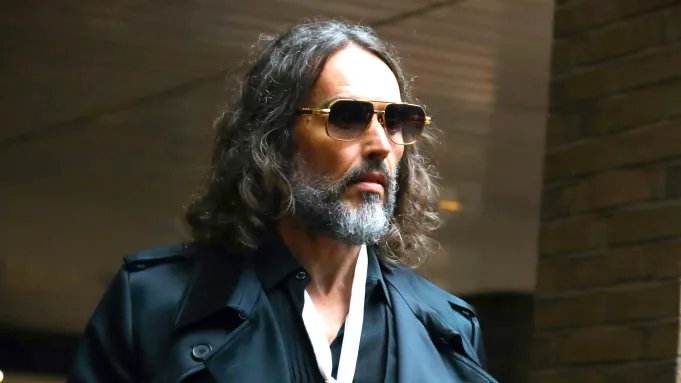
The third week of Russell Brand’s rape and sexual assault trial at Southwark Crown Court has brought the jury closer to the central questions at the heart of the case, with the former comedian giving evidence himself and his wife, Laura Brand, appearing as a witness. Brand denies all seven charges against him, which relate to allegations made by six women over a period spanning a decade from 1999.
The trial, which began on 12 October, has examined the accounts of the women who have accused Brand, alongside his own public statements, writings and recollections of his relationships and sexual behaviour. This week provided jurors with an opportunity to hear directly from Brand as he responded to allegations and faced detailed questioning from the prosecution.
Brand, 51, spent around four hours in the witness box on Wednesday. He described the criminal proceedings as a deeply traumatic period in his life and spoke about the consequences of the allegations that became public in 2023 following media investigations into claims of sexual misconduct.

During his evidence, Brand said the publicity surrounding the allegations had dramatically changed his life and career. He referred to the extent of his previous fame and said that his public reputation had subsequently collapsed. Prosecutor Riel Karmy-Jones KC challenged that characterisation, arguing that Brand continued to have a substantial online following and remained active in public life.
A central issue in the prosecution’s questioning was Brand’s understanding of consent. Brand rejected the suggestion that consent had not been a fundamental consideration in his sexual relationships during the period covered by the allegations. He repeatedly told the court that consent was essential and described himself as innocent of the charges.
At the same time, Brand acknowledged that he had previously used his fame and professional success to facilitate sexual relationships. He accepted that he had been in a position of influence and said he had selfishly misused that position.
The admission formed an important part of his evidence because the prosecution has sought to examine not only the specific allegations but also Brand’s wider attitudes towards relationships, sex and his own celebrity status.
The jury also heard evidence from Brand’s wife, Laura Brand, who began giving evidence on Thursday. She confirmed details of her family background and explained the history of her relationship with the defendant.
Laura Brand said she first met Brand in 2006 and that the pair fell in love. Their relationship was complicated by Brand’s infidelity, she told the court, and the couple separated in 2007 before eventually reconnecting years later.
They resumed their relationship in 2015 and married in 2017. Laura Brand described her husband in strongly positive terms, portraying him as a loving father and attentive husband. She told jurors that their marriage was based on frank and honest communication.
Her evidence was not limited to their family life. During cross-examination, the prosecution questioned her about Brand’s activities in recent years, including his political appearances, his online broadcasting work and his conversion to Christianity. Brand was baptised in early 2024, after allegations of sexual misconduct against him had become public.
Brand’s behaviour inside the courtroom also attracted attention during the week. Throughout much of the proceedings he has appeared relatively restrained, but he became visibly more animated while his wife was giving evidence. He was seen smiling and laughing at various points and appeared to react to parts of her testimony.
His demeanour changed again when he entered the witness box himself. At the beginning of his evidence, he answered questions confidently and in a loud voice. The judge, Mr Justice Bennathan, even commented on the volume of his responses.
Brand also used unusually elaborate vocabulary during his testimony, employing words such as “badinage”, “loquacious” and “coquettishness”. But the confident tone became less consistent once the prosecution began cross-examining him.
Some questions were followed by lengthy pauses. One particularly notable moment came when the prosecution asked Brand whether he blamed the 2023 Dispatches investigation for the collapse of his public reputation. A prolonged silence followed the question, and another pause came when the prosecutor repeated it.
The prosecution also confronted Brand with statements from his own past writings and media appearances. Among the material placed before the jury were passages from his 2007 autobiography, My Booky Wook.
Karmy-Jones used excerpts from the book to examine how Brand had described his own sexuality, relationships and pursuit of women more than a decade before the current allegations became public.
One passage concerned his presentation of himself as gay or effeminate as a strategy for attracting women. The prosecution suggested that this was relevant to the account given by the first woman to allege rape, who had told the court that she initially believed Brand was gay and therefore felt comfortable allowing him into her hotel room after meeting him at a Labour party conference fringe event in 1999.
Other passages from the book presented Brand as someone intensely focused on sexual relationships. The prosecution highlighted language in which he described his determination to pursue women and his willingness to remove obstacles between himself and what he wanted.
Another passage portrayed Brand in highly sexualised terms, with the comedian describing himself as an exceptionally intense sexual personality.
The prosecution’s use of Brand’s own words allowed jurors to compare his historical public persona with the evidence and allegations they have heard during the trial. The defence position, however, remains that Brand is not guilty of the charges and that the evidence must be assessed in relation to the specific allegations before the court.
The third week ended with the prosecution beginning its closing argument. Karmy-Jones told the jury that the six women who had accused Brand did not know each other and had no obvious reason to coordinate their accounts.
She argued that the women had little to gain from coming forward and giving evidence about events that allegedly occurred many years ago. According to the prosecution, their decision to participate in the trial was motivated by a desire to tell their accounts and seek a sense of closure.
Karmy-Jones urged jurors to consider the experiences described by the complainants collectively while assessing each allegation individually. She said the women had discovered that they were not alone and had found the courage to speak about experiences they had carried for years.
The prosecution’s closing speech marked another significant stage in a trial that has attracted considerable public attention because of Brand’s former status as a major comedian, broadcaster and celebrity.
The case has also highlighted the difficulties faced by courts when allegations concern events alleged to have occurred many years earlier. Jurors must assess testimony, documentary evidence, previous statements and the defendant’s own account while determining whether the prosecution has proved the charges to the required legal standard.

Brand has consistently denied the allegations and maintains that sexual activity involving the complainants was consensual. His defence team is expected to deliver its closing speech when proceedings resume on Monday.
After the defence closing argument, the judge will guide the jury on the law and the principles they must apply before deliberations begin. The final outcome will depend on the jury’s assessment of the evidence presented during the trial.
The proceedings have therefore reached a critical point. Brand’s own testimony has provided jurors with his direct response to the allegations, while evidence from his wife has offered the defence an account of his character and private life within their relationship. The prosecution, meanwhile, has sought to place his evidence alongside his historical public statements and the accounts of the six women.
As the trial enters its final stages, the central question for the jury will be whether the prosecution has established the charges beyond reasonable doubt. Until the jury reaches its verdict, Brand remains legally innocent of the allegations.
Related News:
 Undercover officer deceived women with ‘grotesque and cruel’ lies, spycops inquiry told
 Barrister Criticises Trial After Suicide Case Verdict
 Westminster Council Threatens Charing Cross Soup Kitchen
 BBC Warned About Missing Clothes of Murder Victim
 Cambridge Professor Jason Arday Found Dead at Home
 Councils spend £125m on illegal children’s care
 Patriot Platform Raises Concern Across Britain
 Fayed Survivors Demand Inquiry Into Medical Regulator
 London Facial Recognition Trial Ends With False Alert
 Hundreds of UK prisoners released early amid overcrowding
 Drumcree Talks End Without Agreement Ahead of Appeal
 Almost Half of Fayed Accusers May Be Trafficking Victims
 British Military School Abuse Victims Denied Justice
 England and Wales Begin Second Wave of Early Prison Releases
 UK Bill Faces Warning Over Fayed Trafficking Victims
 Prevent Failings Exposed After Southport Attack
 Walsall Rapist Jailed After Hate-Filled Online Trail
 Two Children Die in Wolverhampton House Fire Tragedy
 Police Suspect Help in Missing Alice Springs Girl Case
 Victim says non-custodial rape sentence ‘rock in my face’
 Murder Probe Continues After Arrest Release
 Internal Exclusions Surge in England’s Schools
 Ministers Condemn Far-Right Unrest in Portsmouth
 Reform UK Receives Record £36m Donation From Crypto Billionaire
 Election Candidate Abuse Raises Alarm in England
 Piddington Votes for Symbolic Independence Over Asylum Plan
 Mahmood Warns Far Right Over Asylum Protests
 NHS Breast Care Review Finds Serious Patient Harm
 Harrods Faces Dispute Over Fayed Abuse Compensation
 Briton Faces Cyprus Court Over Son’s Fatal Fall
 UK Reviews Hague Child Abduction Cases Involving Abuse
 Democrat Says ICE Restricted Detention Camp Oversight
 King Refers Jamaica Slavery Petition to Privy Council
 Court Says Judge Should Not Have Heard Case From Bed
 Far-Right Activist Arrested After Channel Dinghy Incident
 Portadown protest ends after tense Orange Order standoff
 Free Speech Emerges as Key UK Election Issue
 Cornell Fraternity Assault Investigation Reopened
 UK University Strikes Spread as Financial Pressure Grows
 Drumcree Talks Falter as Legal Challenge Deepens
 UK-France Returns Deal Faces Expiry as Talks Stall
 Early Prison Releases Raise Homelessness Concerns
 Banned Health Coach Faces UK Events Criticism
 Badenoch Raises Prospect of 2027 UK Election
 New Prosecutor Takes Over Cornell Assault Case
 Latin America women fear rollback of rights
 Gosport Protesters Clash With Police Over Migrant Rescue
 Andrew Mountbatten-Windsor Challenges Police Raids
 Police accused of failing abuse victims
 Christa Pike Wakes After Failed Tennessee Execution
 Royal Navy Sailor Charged With Alleged Spying
 Luton Residents Reject Claims of ‘No-Go Zones’
 NSW Police Bid Delays Inquiry Into Sydney Protest
 Sam Wood Denied Bail Over Alleged Domestic Assault
 ICE Agent Shoots Man in New York as Child Escapes Harm
 UAE Says Co-Pilot Planned Suicide Attack on Israel
 Recruitment Boss Accused of Leading Doxxing Campaign
 Baby Boy Found Dead at Adelaide Motel: Two Charged
 Elizabeth Struhs Inquest Examines Child Safety Failures
 Farage Rejects Claims Reform Would Let Troops Shoot Migrants
 Camera Discovery Triggers Navy Ship Investigation
 Senegal LGBTQ+ Crackdown Drives People Into Hiding
 French Police Face Scrutiny Over Injured Teenagers
 Jenrick Defends Farage Amid Fresh Reform Racism Claims
 UK Family Linked to Offshore Gambling Licence Controversy
 Jess Phillips Urges Supreme Court to Reverse Abuse Ruling
 US Military Failed to Notify UK Police Over Airman Crime
 Detective Raped by David Carrick Demands Met Police Chief Resign
 Former RAAF Pilot Accused of Murdering Wife
 Serbia’s Student Victory Sparks a ‘Smell of Freedom’
 Trump’s Midterm Campaign Faces Racism and Political Backlash
 Erin Patterson Faces Life in Prison After Appeal Loss
 Ministers Clash Over Mahmood’s Migration Reforms
 Ben Roberts-Smith Denies War Crime Allegations in First Statement
 British Museum Faces Questions Over Peter Thiel’s Private Bayeux Viewing
 Man Arrested in Mississippi Woman’s Death
 South Africa Withdraws Directive on Asylum Applications
 Pakistan School Roof Collapse Kills 27 Students
 UK Visa Refusal Threatens Baby’s Family Christmas
 UK Land Registry Plan Faces Opposition From Landowners