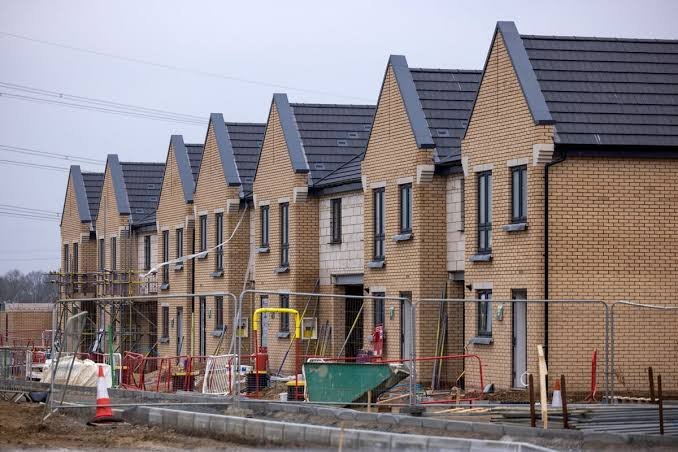
The United Kingdom’s housebuilding industry is facing an increasingly difficult period, with construction projects being delayed, developers scaling back investment and major companies warning of weaker financial performance. Rising construction costs, expensive borrowing, declining consumer confidence and uncertainty over property prices are combining to create a challenging environment for a sector that plays a crucial role in the country’s economic growth and housing supply.
The difficulties are particularly visible in London, where several major developments have been delayed or reconsidered. One prominent example is the proposed redevelopment of a shopping centre in Lewisham, south-east London. The existing 1980s red-brick shopping centre was expected to be demolished and replaced with a modern retail complex and more than 1,000 apartments. However, the project has now been put on hold, creating another setback for efforts to increase the capital’s housing supply.
The delay followed a disagreement between the development company Landsec, which owns the shopping centre, and Lewisham Council. The council’s new Green administration, which came to power in May, called for a greater proportion of affordable housing in the redevelopment than had been included in plans agreed with Labour officials the previous year. Landsec said the council’s demands, alongside exceptionally difficult economic conditions, had forced it to reconsider the project.

The development’s suspension is particularly concerning for London Mayor Sadiq Khan, who has been attempting to accelerate housebuilding across the capital. The city faces substantial pressure to provide more homes as population growth, high housing costs and limited affordable accommodation continue to affect residents.
Although London’s housing figures have recently improved, the recovery remains fragile. Around 4,100 homes were started across the capital in 2025, representing an exceptionally low level of activity. Registrations subsequently increased to 16,290 in the year ending June 2026, marking a 298 per cent rise compared with the previous year. However, the improvement largely reflects a recovery from an unusually weak starting point. The figure remains below the 21,660 housing starts recorded in 2022-23 and indicates that the market has yet to return to its previous level of activity.
The situation is particularly difficult for private-sector developers. Property consultancy Molior estimates that private housing construction in London has fallen by 84 per cent since 2015, despite the capital requiring approximately 88,000 additional homes every year. The gap between housing demand and actual construction highlights the scale of the challenge facing policymakers and developers.
The industry is also dealing with additional financial and regulatory pressures. Developers must account for a building safety levy expected to raise £3.4bn over 10 years. The levy forms part of wider efforts to address building safety following the 2017 Grenfell Tower disaster. New requirements governing the construction and insulation of high-rise buildings have also increased the complexity and cost of development.
Although the regulations are intended to improve safety and prevent future tragedies, developers argue that additional costs and administrative requirements are making some projects more difficult to deliver, particularly when combined with weak demand and expensive financing.
The slowdown is not limited to London. Several other regions have also experienced declining construction activity. In the West Midlands, housing completions fell by 7 per cent in the year to June, while north-west England recorded a 4 per cent decline over the same period. The figures suggest that the problems facing the industry are widespread rather than confined to individual cities or regional markets.
Recent financial warnings from major property companies have further intensified concerns. Henry Boot, a property and land development group with substantial operations in northern England, warned that its performance for the year would be significantly below market expectations. The company expects to record an underlying loss of as much as £10m, citing weak confidence among both consumers and businesses.
Its shares fell by approximately 20 per cent following the announcement, reaching their lowest level in 13 years. The development has raised questions about the financial health of companies that depend on land purchases, residential construction and commercial property investment.
Investment analysts have pointed to the wider weakness in the housing market as a major factor behind the company’s difficulties. When developers become uncertain about future sales, they often reduce land purchases and postpone new projects. This can create additional pressure for companies that own large land portfolios, particularly when the estimated value of those assets needs to be reassessed.
Crest Nicholson has also warned about weak demand and the possibility of reducing the value assigned to its land holdings. The company reported an annual loss estimated at between £30m and £40m, reflecting expensive remedial work at some developments and declining profit margins on newly built homes.
Taylor Wimpey has reduced its profit forecasts and warned that the industry-wide slowdown in sales is likely to continue well into 2027. Meanwhile, Barratt Redrow, Britain’s largest housebuilder, has experienced a substantial decline in its share price. Its shares, which traded above 500p for much of 2024, were around 317p this week. Persimmon has also struggled to recover its previous market value following earlier financial pressures.
Official housing figures reinforce the concerns. Data from the Ministry of Housing, Communities and Local Government show that new-build completions in England declined from nearly 43,000 in the second quarter of 2024 to fewer than 36,000 in the same period of 2026. Annual completions also fell from approximately 212,000 in 2022-23 to 190,000 in 2024-25.
The decline creates a significant obstacle for the government’s ambition to build 1.5 million homes during the current parliamentary term. Although the target remains officially in place, analysts increasingly doubt whether it can be achieved by the 2029 deadline. Some estimates suggest the country could fall short by approximately 500,000 homes.
The private sector is particularly important to the government’s ambitions because private developers are responsible for around 60 per cent of new-build housing. If major companies continue to reduce construction activity, public-sector investment alone may struggle to compensate for the shortfall.
Construction industry data provider Glenigan has also warned that the outlook remains difficult. Its chief economist, Allan Willen, says private construction activity, including housing, infrastructure and commercial office developments, has suffered over the past year. High building costs, tighter lending conditions and weaker demand have forced numerous projects to be redesigned, delayed or cancelled.
The financial consequences are extending beyond individual developers. Around 3,800 construction businesses entered insolvency during the 12 months covered by the figures, more than in any other UK industry sector. Smaller contractors and suppliers are particularly vulnerable when large developments are postponed, as they may lose expected work and struggle to cover operating expenses.
The wider economic impact is also becoming increasingly visible. Construction represents approximately 6 per cent of the UK economy, but its influence extends across manufacturing, transport, building materials, professional services and employment. A prolonged decline in construction can therefore affect numerous other industries. The building sector contracted by 0.7 per cent in the three months to the end of September, even as the broader economy expanded by 0.7 per cent.
Economic uncertainty has played an important role in weakening the market. When Labour entered government in 2024, the property industry had hoped that political stability and reforms to planning regulations would encourage investment and unlock stalled developments. After years of ministerial changes under the previous Conservative administration, developers expected a more predictable policy environment.
However, the government’s first budget increased employment-related taxes, adding pressure to businesses already facing higher operating expenses. The subsequent Iran war further unsettled economic expectations and weakened confidence. These developments have made companies more cautious about committing substantial funds to projects that may take several years to complete.
Property prices are another concern. Emily Williams, residential research director at Savills, expects average UK house prices to fall by approximately 1.5 per cent in 2027 after recording no growth in 2026. Lower prices could improve affordability for some prospective buyers, but falling property values can also make developers less willing to launch new projects.
Borrowing costs are adding to the uncertainty. Policymakers at the Bank of England are expected to consider raising interest rates to 4.25 per cent next month, with the possibility of another increase by March 2027. Higher interest rates would make mortgages more expensive for buyers while increasing financing costs for developers.
For households, the combination of expensive borrowing, uncertain property values and high living costs can make purchasing a home feel financially risky. At the same time, landlords facing higher borrowing expenses may increase rents, placing additional pressure on tenants. This creates a difficult situation in which buying and renting can both become increasingly expensive.
Despite the gloomy outlook, there are some areas of potential recovery. Regional differences in property prices and demand mean that the entire UK housing market is not experiencing the same level of weakness. Simon Rubinsohn, chief economist at the Royal Institution of Chartered Surveyors, expects property prices in northern England and Scotland to demonstrate greater resilience. However, areas where prices have already fallen more sharply than the national average may experience further weakness during 2027.
The public sector could also provide some support. Glenigan’s Allan Willen expects a modest recovery in public-sector housebuilding next year as local authorities and housing associations increase spending. One approach involves councils and housing associations purchasing completed but unsold properties from private developers. They may also agree to purchase homes for affordable rent before construction begins.
Such arrangements could help developers secure buyers earlier, reduce the financial risks associated with unsold properties and release working capital for future projects. Local authorities would also gain access to additional affordable housing without having to finance every stage of development themselves.
Damien Sharkey, managing director of the urban property developer Hub, says some local authorities are becoming more capable of purchasing affordable homes directly from developers. He believes this support is increasingly important at a time when private-sector companies are struggling to find buyers.
Hub recently completed a 270-home development in White City, west London, working with Women’s Pioneer Housing, a charity that owned the land. The project included the charity’s headquarters and 60 rental flats under its control, intended to provide accommodation for vulnerable women.

The development demonstrates how cooperation between private developers and housing organisations can deliver homes while addressing wider social needs. It also illustrates an alternative approach to the traditional model, in which developers depend almost entirely on private buyers to make projects financially viable.
For the UK housing industry, 2027 is likely to remain a difficult year. High construction costs, weak consumer confidence, uncertain property prices and expensive borrowing continue to threaten investment. Nevertheless, stronger public-sector participation, affordable housing partnerships and regional demand could provide opportunities for recovery.
The central challenge for the government will be turning its housing ambitions into projects that developers can realistically afford to deliver. Without improved market confidence and a more sustainable balance between construction costs, financing and housing affordability, the country’s ambitious building target will remain increasingly difficult to achieve.
Related News:
 Thames Water Revises Oxfordshire Mega-Reservoir Plan
 UK Retailers Accused of Breaking Refund Laws
 Thinktank Calls for Abolition of UK State Pension
 Dale Vince Plans New London-Wide News Operation
 Poundland Rescue Bid Could Protect 11,000 Jobs
 Feeld Founders Receive Record Dividend as Sales Rise
 Informa Agrees £2.24bn Deal to Buy Clarion
 Labour Fears Budget Will Fail to Lift Living Standards
 UK Water Firms Face £107m Bill Reduction Penalties
 Labour MPs Urge Burnham to Lead UK Reindustrialisation
 Burnham Admits First Budget Fell Short of His Ambitions
 Starbucks to Create 7,500 UK Jobs in Major Expansion
 Badenoch Unveils £36bn Tory Welfare Cuts Plan
 Tories Face Pension Age Rise Beyond 70, Labour Warns
 Bank of England Faces £160m Renovation Challenge
 Capita CEO Quits as Shares Plunge 67% Over Pension Crisis
 Burnham unveils £65m drought aid for farmers
 UK Subsidence Claims Surge After Record-Breaking Summer
 Reform Faces Fresh Financial Controversy
 UK House Prices Fall as Mortgage Rates Rise
 Billionaire Chris Rokos poised to leave UK
 Oil nears $100 as Saudi attacks shake markets
 JPMorgan Boss Warns Against UK Bank Tax Rise
 John Lewis Losses Widen to £124m as Confidence Falls
 Farage Threatens Union Funding Ban Over Reform Donations
 UK Pay Growth Slows to 3.9% as Rate Decision Nears
 Bank Urged to Slow Bond Sales as UK Costs Rise
 JLR Eyes NATO Market With New Defender Military Vehicle
 Mayors Could Gain Greater Powers Over Water Firms
 Entain Plans 400 Job Cuts After Profit Update
 UK Rent Gap Puts Low-Income Families Under Pressure
 Reform UK Faces Internal Debate Over £72m Spending
 MPs Defend UK Economic Watchdog Against Critics
 AO Acquires Jessops in Camera Retail Expansion
 TalkTalk Races to Sell Arms as Administration Looms
 Avanti West Coast Set for Public Ownership in March
 Beaverbrooks Boss Calls for Relief on Business Costs
 Burnham Opens Door to Possible UK Return to EU
 Bank Chief Calls for Power to Intervene in AI
 Healey urged to act as UK energy bills rise 4%
 UK Bookmakers Linked to Offshore Casino Deal
 Boots Sale Nears as Weston Family Eyes $9bn Deal
 Badenoch Raises Prospect of 2027 UK Election
 UK Diesel Reaches £2 as Inflation Surges Across Europe
 Minister Rejects Fears of UK Diesel Shortage
 BT Broadband Pauses Raise Digital Switchover Concerns
 BT Agrees £400m TalkTalk Rescue Deal
 EU-China Talks Target Surge in Hybrid Car Imports
 Ministers Push ATO to Reconsider Credit Card Ban
 UK Water Firms Earn Millions From Industrial Wastewater
 Milburn Proposes Pre-Apprenticeship Route for Young People
 IFS Warns UK Budget Faces £35bn Spending Gap
 Healey Plans £1bn Online Marketplace Tax Crackdown
UK Borrowing Hits £24.5bn Ahead of Healey’s Budget
 Middleton Revitalisation Blueprint for UK Towns
Tax Online Sales to Save High Street, Burnham Urged
 UK Land Registry Plan Faces Opposition From Landowners
 UK Chancellor Moves to Scrap Gas Standing Charges
 UK Budget Leaves Households Facing Higher Energy Bills
 MPs Urge UK to Write Off Most British Council Debt
 Avanti West Coast Faces £70m Refund Bill
 Ryanair Weighs Pay Freezes as Fuel Costs Surge
 Australia Reviews UK Visa Rules Amid Worker Influx
 Poundland Remains Vulnerable as Rescue Talks Continue
 UK Employers to Be Forced to Publish Job Salaries
 Burnham’s Christmas Homelessness Pledge Faces Uncertainty
 TUC Chief Urges Major Investment to Tackle UK Youth Jobs Crisis
 UK Youth Face Jobs Crisis as Economy Loses Momentum
 UK Civil Service Chief Vows Radical Whitehall Reform
 Burnham Unveils Major Plan to Tackle Youth Unemployment
 Minor No-Fault Accident Sends Car Insurance Quote Soaring
 UK Unemployment Falls to 4.6% Amid Youth Jobs Crisis
 Burnham Weighs Tax Cuts to Boost Youth Employment
 EDF Expands UK Market With 1.3m Utilita Accounts
 BAE Systems to Cut 1,070 Jobs Amid Order Uncertainty
 UK Retail Sales Surge as Families Stockpile Emergency Supplies
 MPs Press Miliband to End Offshore Company Secrecy
 UK Rents Set to Rise Twice as Fast as House Prices
 Trump, Nvidia and the Fight Against Tech Oligarchs
 M&G Chief Warns Over London Stock Market Exodus