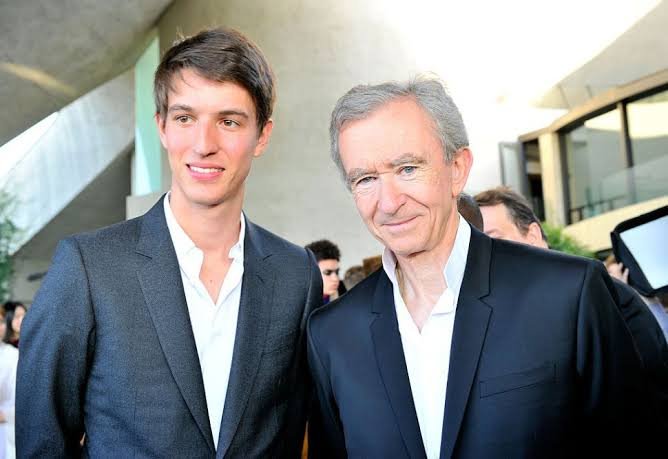
France’s wealthiest family is facing growing speculation over the future leadership of its luxury goods empire, LVMH, as questions emerge about which of billionaire Bernard Arnault’s five children could eventually succeed him. The family, whose influence extends across fashion, jewellery, cosmetics, champagne and the wider French business establishment, has increasingly become the subject of public attention over its long-term succession plans.
Bernard Arnault, 77, has spent decades building LVMH into the world’s largest luxury goods group, bringing together some of the most recognisable international brands, including Louis Vuitton, Christian Dior and Tiffany & Co. His business achievements have made him one of the world’s richest individuals, with a personal fortune estimated at more than $100bn. However, as the question of succession becomes increasingly relevant, speculation about possible competition among his children has attracted attention across France.
The latest developments suggest that Arnault has no immediate intention of stepping away from his business responsibilities. A new filing has reportedly extended the age limit for his leadership of the family’s holding company to 95, giving him the possibility of remaining in control for many more years. The decision comes after the maximum age for his chief executive position at LVMH was raised to 85 last year.

Arnault has previously joked about continuing to lead the business until the age of 100, reflecting his determination to remain closely involved in the organisation he has built. His continued leadership could postpone an immediate succession decision, but it has not eliminated questions about who will eventually inherit responsibility for the group’s global operations.
The succession debate is particularly important because LVMH is not simply a private family business. The group has more than 75 brands operating across fashion, leather goods, perfumes, jewellery, watches, wines and spirits. It is a major employer in France and plays a significant role in the country’s international commercial influence.
Any major leadership transition could therefore have implications beyond the Arnault family, potentially affecting employees, investors, suppliers, luxury markets and France’s wider economy.
The family has sometimes been described as modern-day French royalty because of its extraordinary wealth, influence and close connections to the country’s political and business establishment. Arnault has cultivated relationships with international political leaders and prominent business figures, while his family regularly appears at major cultural and state occasions.
His influence also extends into the French media landscape. Arnault controls major business and economic publications, as well as the newspaper Le Parisien and the celebrity magazine Paris Match. His presence at the inauguration of US President Donald Trump and at official French state dinners has further demonstrated his position within influential international circles.
Against this background, the question of succession has become a subject of national interest.
Recent attention has been fuelled by a book written by French journalist Émilie Lanez, titled Monsieur et les siens. The publication examines the personal relationships, family dynamics and potential tensions surrounding the future of the Arnault business empire.
Lanez’s account draws on hours of conversations with people familiar with the family. She describes an environment in which business, family relationships and public influence are closely connected, comparing the Arnaults to a powerful dynasty surrounded by advisers and influential associates.
She has also suggested that the younger members of the family, particularly the three sons from Arnault’s second marriage, have been raised with the expectation of continuing the business empire.
Arnault’s personal involvement in his children’s education and professional development is a recurring theme in the book. His approach to family upbringing appears closely connected to his own childhood experiences and the importance he places on education, discipline and business knowledge.
Born in Roubaix, in northern France, Arnault initially took over his family’s construction business before moving into property development and eventually establishing his position in the luxury goods industry. His transformation from a businessman with regional roots into the head of a global luxury empire remains central to the family’s story.
The book also describes how he took a direct interest in his children’s academic development. When his eldest daughter, Delphine, was young, he personally helped teach her to read. Education was important to him from childhood, and he reportedly demonstrated the significance he attached to academic achievement through a deeply personal gesture at his grandfather’s funeral, placing a school report card in his grandfather’s hands.
Today, Delphine Arnault, 51, occupies one of the most influential positions within the group as chief executive of Christian Dior Couture. Her professional responsibilities place her at the centre of the luxury fashion business and make her one of the most prominent potential figures in discussions about the family’s future leadership.
Her younger brother Antoine Arnault, 49, also holds an important position within LVMH. He oversees the group’s image and environmental strategy and plays a significant role in managing its public reputation and communications.
Arnault’s second marriage to classical pianist Hélène Mercier-Arnault brought three more sons into the family. All three have professional responsibilities within the luxury group.
Alexandre Arnault, 34, serves as deputy chief executive of Moët Hennessy, the group’s wines and spirits division. Frédéric Arnault, 32, leads the luxury fashion house Loro Piana, while the youngest son, Jean Arnault, 28, works as watch director at Louis Vuitton.
Their professional positions have encouraged speculation about the future distribution of leadership responsibilities. Each has gained experience within different parts of the business, creating a family structure in which several members possess relevant executive experience.
According to Lanez, Arnault took a particularly active role in preparing his younger sons for their professional lives. He reportedly selected tutors personally and arranged additional evening lessons after their regular school classes. The boys would study from 8pm until 11pm before discussing mathematical problems and other academic subjects with their father.
The family has repeatedly rejected suggestions that rivalry or serious divisions threaten its unity. Arnault’s wife has also publicly sought to reassure observers that the five children maintain positive relationships.
This year, Mercier-Arnault undertook a series of media interviews while promoting her latest classical music recording. Her appearances were partly interpreted as an effort to address speculation surrounding family relationships.
Nevertheless, the family’s enormous wealth and influence have made its private affairs a matter of public debate. In France, where economic inequality and the growing power of billionaires remain politically sensitive subjects, the concentration of business influence within a single family has attracted scrutiny.
Mercier-Arnault herself faced controversy after French media reported that an edited radio interview had included comments suggesting homelessness could be considered a lifestyle choice. The remarks generated criticism, prompting her to explain that her words had been misunderstood and had been connected to her personal experience supporting her late sister, a violinist who had bipolar disorder and died by suicide.
She subsequently expressed regret over the controversy and told the newspaper Libération that she was deeply sorry.
The wider Arnault family also includes another influential French billionaire, Xavier Niel, the telecommunications entrepreneur and life-partner of Delphine Arnault. The couple have two children, adding another prominent business figure to the family’s extended circle.
Lanez has described Niel’s arrival in the family as resembling a theatrical storyline, reflecting the extraordinary combination of wealth, influence and personalities surrounding the Arnault dynasty.
Despite the growing attention, the precise arrangements for the eventual transfer of leadership remain unclear. LVMH declined to comment when approached about the book and speculation surrounding possible competition among the siblings.
Arnault himself has previously addressed comparisons between his family and royalty. In July, responding to a series about his succession published by Le Monde, he joked that such comparisons were beneficial for Dior’s sales.
He also rejected suggestions that his children were divided by rivalry, saying that five strong personalities could work within the same company without turning their relationships into an Italian opera.
His comments reflect an effort to present the family as united and professionally focused. However, the scale of the business means that succession planning will remain an important issue regardless of whether internal disagreements exist.

The future leadership of LVMH will ultimately involve more than deciding which child takes the most prominent position. The next generation will have to preserve the group’s global reputation, manage its extensive portfolio of luxury brands and respond to changing consumer expectations, international economic conditions and competition across the luxury market.
For now, Bernard Arnault remains firmly at the centre of the empire he created. His decision to extend the potential duration of his leadership suggests that he intends to retain control for as long as possible.
Yet the succession question continues to attract attention in France and internationally. With five children already holding significant responsibilities within the business, the eventual transition could become one of the most closely watched family leadership changes in the global luxury industry.
Related News:
 EU-China Talks Target Surge in Hybrid Car Imports
 Shein targets $27bn valuation in Hong Kong debut
 Oil nears $100 as Saudi attacks shake markets
 Ukraine Faces $45m Hourly Cost From Missile Alerts
 French Debt Fears Put Euro Markets Under Pressure
 UK Diesel Reaches £2 as Inflation Surges Across Europe
 Minister Rejects Fears of UK Diesel Shortage
 Asos Investigates Hack Claims After Customer Alerts
 Shell Refineries Set for Record Refining Profits
 France Faces Debt Crisis as Protests and Markets Clash
 China’s AI Ambitions Hit $2.4 Trillion Market Setback
 Norway Doubles Down on Oil and Gas for Europe Energy Security
 US Awaits Iran Reply on New Ceasefire Proposal
 Severn Trent CEO Reward Package Doubled Despite Public Anger
 Europe Weighs Hormuz Navigation Fee Plan
 Canada to Match Trump’s 50% Tariffs Dollar for Dollar
 Firms on both sides fear damage from US-Canada trade war
 Europe Faces Winter Gas Supply Anxiety
 Dutch Bank Moves 86 Tonnes of Gold to London
 Trump Hardens Canada Trade Stance as Talks Stall
 Ukraine Moves to Seize Water Company
 Swedish Mining Push Puts Sami Land Rights Under Pressure
 Billionaire Chris Rokos poised to leave UK
 JPMorgan Boss Warns Against UK Bank Tax Rise
 Iceland to Open First UK High Street Store in Falklands
 Saudi Arabia Shuts Oil Pipeline After Drone Attack
 Oil Prices Surge as Saudi Pipeline Closure Deepens Crisis
 Thames Water Revises Oxfordshire Mega-Reservoir Plan
 Japan Raises Rates to 31-Year High
 Macron and Carney deepen France-Canada ties
 Trump Eyes Major Belarus Fertiliser Deal Amid Canada Trade Dispute
 Iran Rejects Claims of Shift in US Talks
 Trump gives Xi red-carpet welcome as trade truce extends
 Chinese Hybrid Car Surge Raises EU Auto Industry Concerns
 Saudi intercepts Houthi missiles as oil fears grow
 Poundland Rescue Bid Could Protect 11,000 Jobs
 Boots Sale Nears as Weston Family Eyes $9bn Deal
 UK Faces Calls to Review Bank Failure Bets
 Spain Sets Snap Election as Housing Crisis Deepens
 UK Weighs Chinese Car Tariffs Amid EU Trade Push
 Informa Agrees £2.24bn Deal to Buy Clarion
 Tanker Attacked Near Qatar as Hormuz Tensions Escalate
 South Korea Probes Fuel Shipments to Russia
 Japan Beer Giants Face Cartel Probe
 Tesco Raises Profit Forecast as Consumer Confidence Holds
 France Urges UK to Consider Returning to EU
 Ministers Push ATO to Reconsider Credit Card Ban
 Oil Shock Sends Markets Lower as Middle East Risks Grow
 Australia Delays Tax Credit Card Payment Ban After Backlash
 UK Pharmacy Body Drops Teva After Ethical Concerns
 Trader Wins Unfair Dismissal Case After Overseas Work
 EU Caps Chinese Hybrid Car Imports at 350,000
 Hall and Woodford Win Nobel Economics Prize
 IMF Warns Global Economy Is Nearing Its Limits
 Healey Plans £1bn Online Marketplace Tax Crackdown
 UK Could Rejoin EU Through a Switzerland Plus Deal
 Milan Luxury Stores Shut as Italy Plans Troop Deployment
 US Bans BYD Vehicles at Japan Military Base
 Anthropic IPO Reveals AI Boom’s Huge Costs and Risks
 Fed Expected to Hold Rates Steady Ahead of US Midterms
 Hello Kitty Maker Ends Japanese Drama Partnership
 BP Profits Surge as Middle East Conflict Lifts Margins
 Australia Faces Deeper Economic Slowdown
 Ryanair Weighs Pay Freezes as Fuel Costs Surge
 Australia Raises Interest Rates to 18-Year High
 David Jones Faces Administration After Talks Collapse
 M&S Challenges John Lewis With Its Playful Christmas Ad
 Paris Climate Agreement Faces a Critical Test After 10 Years
 Nvidia and Jensen Huang Face Shareholder Lawsuit
 EU Manufacturers Face Growing Chinese Competition
 Megaspeed Mystery Deepens After Nvidia CEO Resigns
 Canada May Turn to Chinese Automakers if US Talks Fail
 Elon Musk Leads 165,000 Calls to Reinstate Nvidia CEO
 UK Retail Sales Surge as Families Stockpile Emergency Supplies
 Global Markets Plunge as AI Sell-Off Intensifies
 Indonesia Factory Fire Kills 24, Dozens Missing
 Burnham Maintains Ambition for Closer UK-EU Ties
 Capita CEO Quits as Shares Plunge 67% Over Pension Crisis
 Trump, Nvidia and the Fight Against Tech Oligarchs
 M&G Chief Warns Over London Stock Market Exodus