Published: 24 September 2026. The English Chronicle Desk. The English Chronicle Online.
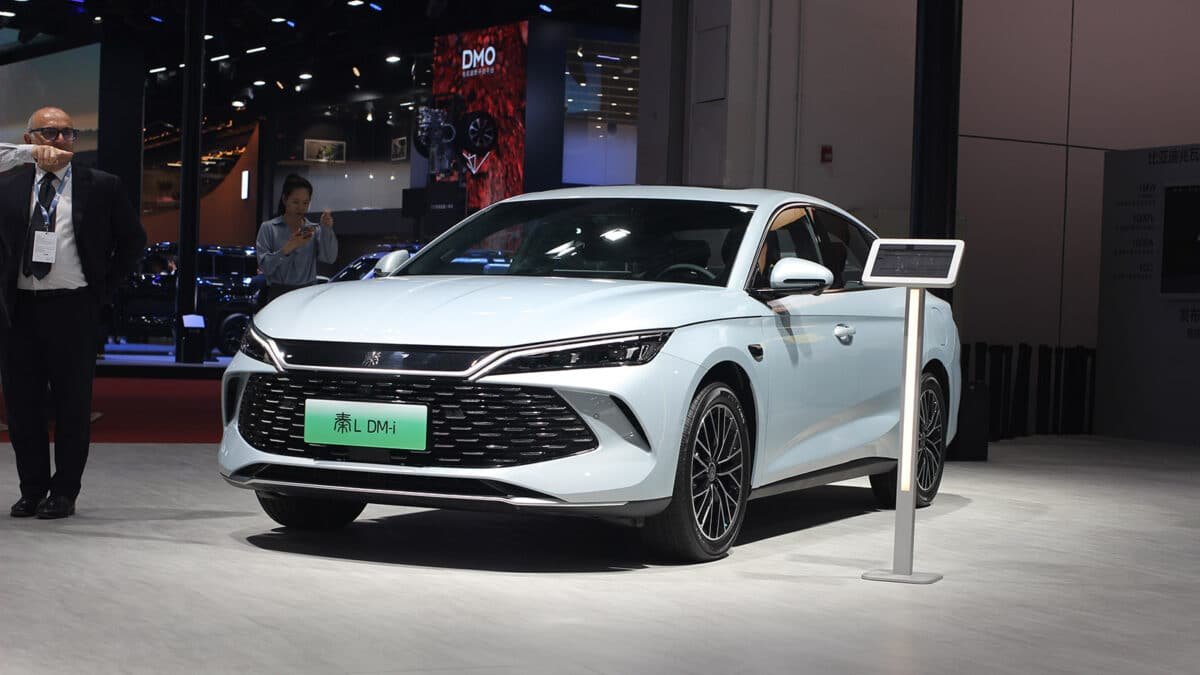
Brussels is facing growing pressure over the rapid expansion of Chinese-made hybrid vehicles across the European Union, as a sharp increase in imports raises fresh questions about the future competitiveness of European car manufacturers. New trade and automotive data show that Chinese hybrid models have expanded particularly quickly since the European Union introduced additional duties on battery-powered electric vehicles from China in 2024, while hybrid vehicles remained outside the scope of those measures.
The change has become increasingly visible in European markets. In 2022, only 659 Chinese-made fully hybrid vehicles were sold in the EU. By the first seven months of 2026, the number had risen to 160,662. Chinese-made plug-in hybrid vehicles have experienced a similar surge, with sales increasing from 56,706 units in 2022 to 217,764 between January and July this year. The figures indicate that hybrid technology has become an important route for Chinese manufacturers seeking to expand their presence in Europe.
The development has attracted the attention of European policymakers because the tariff structure created a significant difference between battery-electric and hybrid vehicles. The EU imposed anti-subsidy measures on Chinese battery-electric vehicles after an investigation, with additional duties applying to different manufacturers. The investigation did not cover hybrid vehicles, meaning the measures could not simply be extended to those products without a separate trade-defence process.
European officials are now considering how to respond to the growing volume of hybrid imports without escalating tensions with Beijing into a wider trade confrontation. Brussels has sought a voluntary reduction in Chinese hybrid exports to the European market, while warning that stronger safeguard measures could become necessary if an agreement cannot be reached. Discussions between the EU and China are taking place against the background of a much broader dispute over trade imbalances, market access, industrial competition and Chinese exports.

China, however, has rejected the idea of voluntarily restricting its hybrid vehicle exports to Europe. Chinese officials have argued that such restrictions would conflict with World Trade Organization rules and the principles of fair competition and a market economy. Beijing has said that any solution reached with the EU should take account of the interests of industries on both sides and comply with international trade rules.
The dispute is significant because hybrid vehicles occupy an increasingly important position in Europe’s wider transition away from conventional petrol and diesel cars. According to figures from the European Automobile Manufacturers’ Association, hybrid vehicles account for almost 37% of the EU automobile market, while fully electric cars represent slightly more than 21%. That means the hybrid segment is no longer a niche part of the European market. It has become one of the central areas of competition between established European manufacturers and rapidly expanding Chinese companies.
Chinese manufacturers have been using that opening to build their European presence. BYD, Chery and Leapmotor have recorded particularly strong growth, while Geely has continued to expand at a more measured pace. Geely remains one of the largest Chinese automotive groups operating in Europe, with around 205,000 vehicles sold during the first eight months of the year. Its wider portfolio includes Volvo and Polestar, giving the group an established connection to the European automotive market.
BYD has been expanding particularly rapidly. Its sales in the EU rose by 163% year on year, reaching about 177,000 vehicles. Together with other Chinese manufacturers, including SAIC, the company has moved ahead of Tesla in European sales during the period covered by the latest figures. Tesla recorded about 142,000 sales across the bloc in the first seven months of the year.
The expansion of Chinese brands does not mean European manufacturers have lost their dominant position. Volkswagen Group, for example, sold about two million vehicles during the first eight months of the year and remains substantially larger than any individual Chinese competitor. Nevertheless, the speed at which Chinese companies are increasing their market share has become an important issue for policymakers and the European automotive industry.
The concern extends beyond the number of vehicles being sold. European car manufacturers are undergoing an expensive transformation as they invest in electric technology, battery production and new manufacturing systems while facing weaker demand in some markets and intense international competition. Chinese companies have developed strong positions in battery technology and electric and hybrid vehicle manufacturing, allowing them to compete on price as well as technology.
European industry representatives have therefore been calling for greater attention to what they regard as uneven competitive conditions. German officials have also raised concerns about Chinese hybrid imports. Germany’s Vice Chancellor and Finance Minister Lars Klingbeil has called for stronger EU action, including consideration of tariffs on imported plug-in hybrid vehicles. The debate is particularly important for Germany because its economy remains closely linked to automobile manufacturing and major producers such as Volkswagen are undergoing substantial restructuring.
At the same time, the European automotive market itself is undergoing significant change. Electric vehicle sales have been increasing rapidly in several countries. Germany recorded a 75% increase in electric vehicle sales in August, while France reported growth of 112%. Slovenia recorded an even larger increase. In Britain, electric vehicle sales rose by 27% in August, while Ireland recorded a more modest increase of 7%.
The figures illustrate that the European market is not simply shifting from petrol and diesel vehicles to Chinese hybrids. Consumers are adopting several forms of electrified transport at different speeds, influenced by vehicle prices, charging infrastructure, government incentives, driving distances and consumer preferences. Plug-in hybrids in particular can appeal to drivers who want electric driving for shorter journeys but still require an internal combustion engine for longer trips.
That combination has helped Chinese manufacturers gain access to consumers who may not yet be ready to purchase fully electric vehicles. It has also made hybrids a politically sensitive part of Europe’s industrial transition.
The issue is becoming more important because of the wider EU-China trade relationship. European Commission President Ursula von der Leyen has described the bloc’s rapidly expanding trade deficit with China as having reached a critical point. Recent figures indicate that the EU’s goods trade deficit with China has continued to widen, while Brussels has been seeking greater access for European companies to the Chinese market and measures to address what European officials describe as an imbalance in trade.
The European Commission has set October as an important deadline for achieving concrete progress in discussions with Beijing. EU Trade Commissioner Maroš Šefčovič and Chinese Commerce Minister Wang Wentao are expected to meet on 8 and 9 October as part of continuing efforts to address trade and investment issues. The discussions cover not only automobiles but also other areas in which the EU has raised concerns about the growth of Chinese exports and access to the Chinese market.
Automobiles are likely to remain one of the most sensitive areas of those negotiations because the industry combines trade, employment, industrial policy and technological competition. European governments are under pressure to protect manufacturing capacity while also encouraging consumers to adopt cleaner vehicles. Restricting Chinese imports could give European producers additional room in the market, but such measures could also raise the price of vehicles and provoke retaliation from China against European exporters.
Beijing has meanwhile signalled that it wants greater cooperation and investment rather than restrictions on its manufacturers. Chinese Commerce Minister Wang Wentao has said China supports Chinese automobile companies investing in Europe, including through local manufacturing. Chinese officials have also argued that deeper cooperation between European and Chinese manufacturers could help address some of the tensions surrounding trade.
The possibility of Chinese companies producing more vehicles inside Europe could therefore become an important part of the debate. Local production could reduce the political pressure created by rising imports while allowing Chinese manufacturers to remain active in the European market. For European policymakers, however, questions would remain over supply chains, technology, employment, investment and the extent to which locally produced vehicles should qualify for European industrial incentives.
The immediate question is whether Brussels and Beijing can find a negotiated arrangement before the dispute escalates. The EU has indicated that it prefers dialogue but has also made clear that additional trade measures remain available. China has rejected voluntary export restrictions, creating uncertainty over how the issue will develop during the coming months.

For Europe’s car industry, the rapid rise of Chinese hybrids represents a broader challenge than a single trade dispute. It reflects the changing structure of the global automobile industry, in which established manufacturers are confronting new competitors with strong positions in batteries, electric drivetrains and increasingly sophisticated hybrid technology.
European companies continue to hold a substantial share of their home market, but the rapid growth of Chinese brands has changed the competitive landscape. The coming EU-China discussions will therefore be closely watched not only by governments but also by manufacturers, workers, investors and consumers across the bloc.
The outcome could influence how Europe balances open trade with industrial protection, how quickly Chinese manufacturers expand in the region and how European carmakers respond to the accelerating transition towards electrified transport. For now, the surge in Chinese hybrid sales has ensured that automobiles will remain at the centre of a much wider debate over Europe’s industrial future and its economic relationship with China.
Related News:
 Thames Water Revises Oxfordshire Mega-Reservoir Plan
 UK rejects EV charging VAT cut amid Treasury clash
 Oil nears $100 as Saudi attacks shake markets
 UK Productivity Improves as Bank Weighs Interest Rates
 Shein targets $27bn valuation in Hong Kong debut
 Firms on both sides fear damage from US-Canada trade war
 Dutch Bank Moves 86 Tonnes of Gold to London
 UK House Prices Fall as Mortgage Rates Rise
 Billionaire Chris Rokos poised to leave UK
 JPMorgan Boss Warns Against UK Bank Tax Rise
 John Lewis Losses Widen to £124m as Confidence Falls
 Oil Prices Surge as Saudi Pipeline Closure Deepens Crisis
 Next Raises Profit Forecast After Strong Summer Sales
 Japan Raises Rates to 31-Year High
 UK Retail Sales Rebound as Consumers Spend More
 Australia Renewables Reach Record 80% Grid Demand
 UK Borrowing Hits £18.3bn Ahead of Budget
 Thinktank Calls for Abolition of UK State Pension
 MPs Defend UK Economic Watchdog Against Critics
 Iran Rejects Claims of Shift in US Talks
 Trump gives Xi red-carpet welcome as trade truce extends
 Wealthy Britons Flee Gulf War but Avoid UK Taxes
 UK Wage Growth Slows as Jobs Market Holds Firm
 Heavier SUVs Accelerate Britain’s Pothole Crisis
 Europe EV Demand Surges as Fuel Prices Rise
 Albanese Rejects Gas Export Tax Push
 BBC News Faces Deep Cuts in 2,000 Job Plan
 Spirit Airlines shuts down after 34 years amid crisis
 New UK advice scheme to boost savings and investing
 US Awaits Iran Reply on New Ceasefire Proposal
 Reeves Fights to Keep Treasury Role Amid Labour Turmoil
 China mine blast death toll rises to 90
 UK firms accused of ‘AI washing’ boom
 Essex valley emerges as rising English wine hub
 Severn Trent CEO Reward Package Doubled Despite Public Anger
 Weight-Loss Drugs Transform Fashion Shopping Habits
 EasyJet Takeover Sparks Fears Over Passengers’ Future
 Weight-Loss Drugs Offer Food Savings Mainly to High Earners
 Canada to Match Trump’s 50% Tariffs Dollar for Dollar
 Pubs and Hotels Face Business Rates Reform Review
 US CEOs Earn 614 Times More Than Workers
 UK Risks Falling Behind in AI Race
 Europe Faces Winter Gas Supply Anxiety
 UK Households Could Save £173 on Fixed Energy Deals
 Burnham Faces Mounting Budget Challenges
 Turkmenistan Begins Fixing Major Methane Mega-Leaks
 Trump Hardens Canada Trade Stance as Talks Stall
 UK Subsidence Claims Surge After Record-Breaking Summer
 UK Cost Squeeze Deepens as Mortgages and Gas Rise
 Swedish Mining Push Puts Sami Land Rights Under Pressure
 Spire Healthcare Agrees £1bn Takeover by Toscafund
 McLaren to Create 1,000 UK Jobs in £450m Investment
 Nats Boss Summoned as UK Flight Chaos Continues
 Saudi Arabia Shuts Oil Pipeline After Drone Attack
 AI CEOs Call for Slower Development
 UK Retailers Accused of Breaking Refund Laws
 UK State Pension Set to Rise 3.9% as Triple Lock Holds
 UK Parents Cut School Uniform Costs as Prices Rise
 North Sea Firms Urge Early End to Windfall Tax
 UK Pay Growth Slows to 3.9% as Rate Decision Nears
 Bank Urged to Slow Bond Sales as UK Costs Rise
 UK Inflation Hits 3.1% as Household Pressure Grows
 Mayors Could Gain Greater Powers Over Water Firms
 Anthropic Backs $31.9bn Queensland Data Centre
 Horse Hill Oil Site Sold for £1m as Drilling Bid Returns
 Entain Plans 400 Job Cuts After Profit Update
 Trump Threatens EU Over Canada Partnership Proposal
 Barclays Staff Push Back Against Office Return Plan
 Indonesia Receives First Aircraft Carrier
 UK Rent Gap Puts Low-Income Families Under Pressure
 Nvidia chief rejects AI extinction fears
 Calls Grow to Expand UK National Wealth Fund
 Trump Eyes Major Belarus Fertiliser Deal Amid Canada Trade Dispute
 AI Takes Centre Stage in Trump-Xi Talks
 BT Names New Openreach Chief Amid Major Fibre Expansion
 Trump Faces Backlash Over $2bn Earnings Since Return
 Apollo Launches £5.7bn Bid for Aviation Giant easyJet
 Powerful 7.7-Magnitude Earthquake Hits Eastern Indonesia
 Heathrow Expansion Faces New Climate Conditions Over CO₂
 Tom Watson Takes Senior Role at Palantir