Published: 24 September 2026. The English Chronicle Desk. The English Chronicle Online.
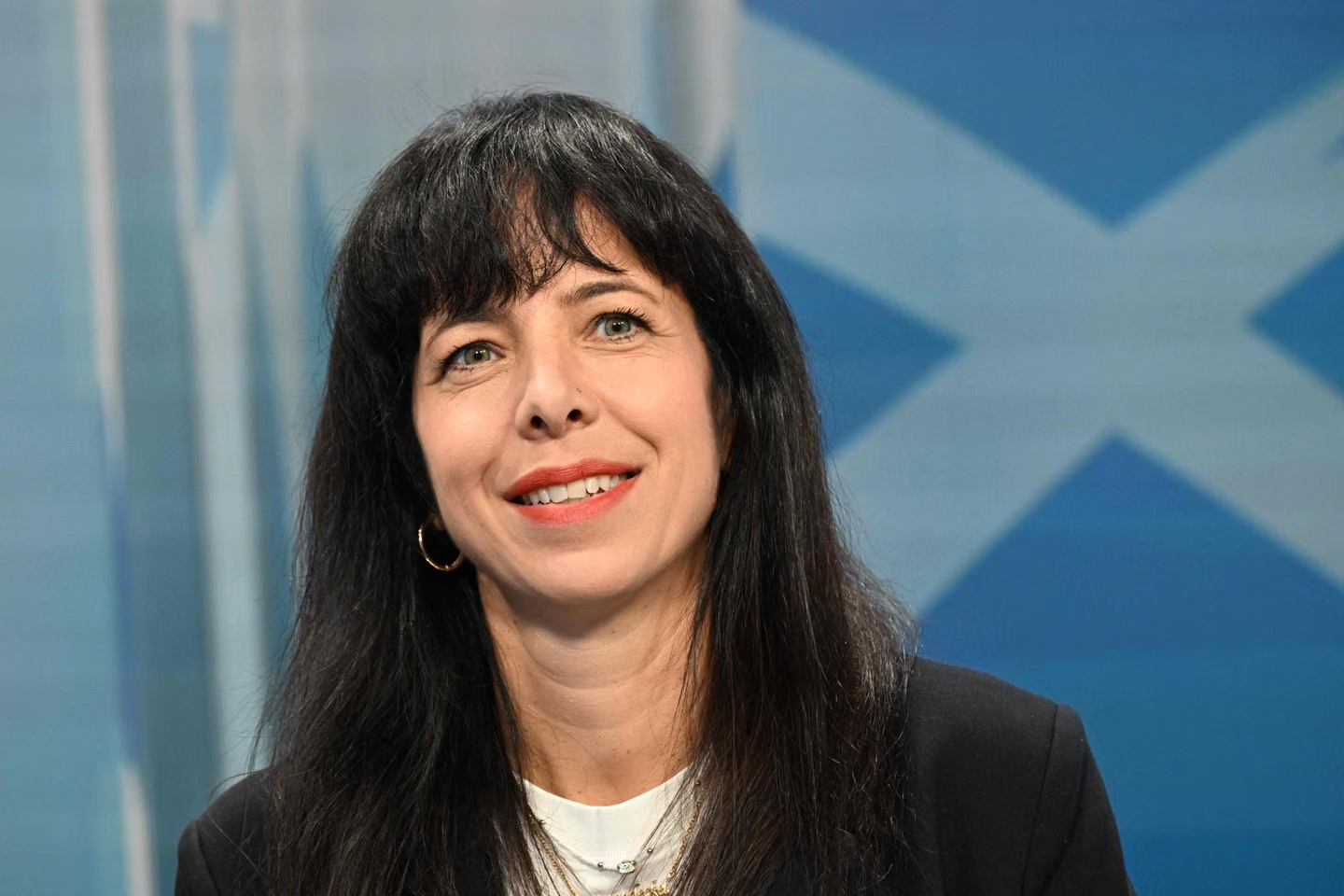
Elif Eralp’s rapid rise from a Berlin state parliamentarian to a potential governing mayor has become one of the most closely watched developments in German politics after Die Linke emerged as the strongest party in the capital’s latest state election. For Eralp, a 45-year-old lawyer born to political migrants from Turkey, the result has transformed a campaign built around housing, social equality and migrant representation into a serious attempt to lead one of Europe’s most prominent cities.
Die Linke secured about 25.7% of the vote in the Berlin election, more than doubling its result from the previous state election and finishing ahead of the parties that have traditionally dominated the city’s government. The result has put Eralp in a position to seek the leadership of a coalition government, although becoming Berlin’s governing mayor is not automatic and will depend on coalition negotiations and the ability of potential partners to reach agreement on policy and political concerns.
The election has also brought unusual attention to Eralp’s personal background. If she ultimately takes office, she would become Berlin’s first governing mayor of Turkish descent, giving symbolic significance to a political career that has been closely connected to migration, social inequality and the experiences of families who arrived in Germany for political rather than economic reasons.
Eralp has described her own candidacy as a challenge to assumptions about who can occupy Germany’s highest municipal political offices. Her parents were Turkish trade unionists and socialists who left Turkey following imprisonment connected to their political activities after a military coup. Her mother, Hülya, was a feminist activist who was released from prison while pregnant with Eralp, while her father, Selçuk, was a doctor. The family eventually settled in Germany, where Eralp was born in Munich in 1981.

Her childhood was shaped by the family’s complicated experience of asylum and integration. Eralp has spoken publicly about encountering racism and discrimination and about watching her mother spend years trying to have her professional qualifications recognised in Germany. Her parents also provided accommodation to asylum seekers, exposing Eralp from an early age to the difficulties faced by migrants navigating German institutions.
Those experiences later became central to her political outlook. As a child, she established an environmental club with friends, and as a teenager became involved in the anti-nuclear movement. She studied law at the University of Hamburg before moving to Berlin, where she completed her legal training and became involved with Die Linke’s parliamentary work. She eventually entered Berlin state politics.
Her decision to join Die Linke in 2017 came as the Alternative for Germany, or AfD, entered the Bundestag for the first time. Two years later, Eralp helped establish Links*kanax, an initiative involving party members and supporters from migrant and refugee backgrounds that sought greater visibility for migrant voices within the party and wider political debate.
Her campaign for the 2026 Berlin election was built around issues that have become increasingly important to residents, particularly the cost of housing. Berlin has experienced substantial increases in rents and housing costs over recent years, creating political pressure over affordability in a city long associated with relatively accessible housing compared with other major European capitals.
Eralp made housing one of the defining issues of her campaign, arguing that Berlin should become affordable for people who live and work there. Her proposals include taking substantial numbers of housing units controlled by large private landlords into public ownership. The proposal concerns roughly 200,000 to 220,000 homes and is connected to a wider debate that has been taking place in Berlin since a 2021 referendum on the socialisation of large housing companies.
The proposal has already produced a direct political confrontation with Chancellor Friedrich Merz and the Christian Democratic Union. Merz has opposed the expropriation plan and has argued that such a policy could have serious economic consequences. He has also indicated that the federal government could seek measures to prevent Berlin from implementing such a programme.
For Eralp, however, the housing question is closely connected to the broader question of who Berlin is intended to serve. Her campaign portrayed the city as a place where ordinary residents should have greater influence over housing and urban development, rather than leaving those decisions primarily to property investors and large corporate landlords.
Her campaign also differed from conventional party politics in its emphasis on direct contact with voters. Door-to-door campaigning, social media and efforts to reach people who had previously not voted helped bring Eralp greater visibility, particularly among younger voters. Reporting on the election indicated especially strong support among younger Berliners.
Her political style has drawn comparisons with Zohran Mamdani, the democratic socialist mayor of New York, particularly because of the emphasis on housing affordability, youth mobilisation and grassroots campaigning. Eralp’s campaign also took inspiration from the political methods associated with US senator Bernie Sanders. One of Mamdani’s advisers was reportedly brought to Berlin during the campaign period, adding to the comparisons between the two political movements.
Yet Eralp’s path to the Rotes Rathaus, Berlin’s red-brick city hall, is not guaranteed. Die Linke’s election victory gives it a strong negotiating position, but the party still needs potential coalition partners to agree to a government arrangement. The Social Democrats and Greens have emerged as possible partners, but questions surrounding Die Linke have complicated those discussions.
Critics have raised allegations concerning antisemitism within parts of the party and claims about relationships between individual party figures and criminal or extremist networks. Die Linke’s leadership has rejected such allegations as a general characterisation of the party and has said it will act against antisemitism. One Berlin member of parliament facing allegations about links to criminal gangs and a pro-Hamas organisation was announced as having suspended parliamentary duties while the issues were addressed.
Eralp has sought to draw a clear line between her political programme and any tolerance of violence or terrorism. She has said that glorifying or minimising violence is unacceptable and has emphasised that protection for Jewish residents should apply equally alongside protection for Muslims, Christians and other communities in Berlin. Her comments came as coalition discussions began to take shape and as potential partners assessed whether they could work with Die Linke.
The issue is particularly significant in a city as diverse and politically active as Berlin. Eralp herself lives in Kreuzberg, one of the capital’s most diverse districts and an area with a large Turkish community. She lives with her husband and two children in a rented apartment and has largely kept her family away from the public spotlight. Much of her campaigning in the neighbourhood was conducted in Turkish, reflecting the multilingual character of her constituency.
Her story has therefore become closely associated with questions about representation as well as policy. The possibility of a Turkish-origin woman leading Berlin has attracted attention beyond Germany, particularly because her biography reflects a generation of Germans whose families arrived as migrants, refugees or political exiles and whose children have subsequently entered the country’s political institutions.
The election result also illustrates a wider shift within Berlin politics. Die Linke, once viewed largely as an eastern German political force, made significant gains across both the former eastern and western parts of the city. According to preliminary election data, the party received 27.8% in the former eastern districts and 24.1% in the former western areas, suggesting that its support was not confined to its traditional geographical base.

For Eralp, the next stage will be considerably more complicated than winning votes. She must now help determine whether Die Linke can construct a governing coalition, reconcile differences with potential partners and turn ambitious campaign promises into policies that can operate within Germany’s legal, financial and political structures.
Her housing proposals are likely to remain at the centre of those negotiations. So too will questions about antisemitism, relations with different communities and the responsibilities of governing a city of more than three million people with competing political expectations.
Eralp has often described her political journey as an extension of a childhood ambition. At the age of 12, she says, she wanted to become a human rights lawyer because she wanted to challenge injustices she had witnessed. Decades later, she has reached a different kind of courtroom-free political arena, where the decisions concern housing, public services, migration, security and the future direction of Berlin.
Whether she ultimately becomes governing mayor will depend on negotiations that are only beginning. But the election has already established Eralp as a central figure in Berlin’s political landscape and placed issues of housing affordability, migrant representation and the future of the city’s left-wing politics at the heart of the next government’s agenda.
Related News:
 Europe’s democracies face a growing far-right threat
 Lib Dems Prepare for Election Amid Reform Challenge
 Ceasefire Standoff Deepens in Ukraine War
 France Faces Record Presidential Crowded Race Amid Far-Right Surge
 Farage and Reform UK Reshape British Politics
 Starmer Leadership Under Pressure After Setbacks
 Deadly Russian Air Raids Strike Across Ukraine
 UK Nations Brace for Potential Breakup Amid Reform Surge
 Is America Ready for an AOC Presidential Run?
 Five Years of Taliban Rule Leave Afghanistan in Crisis
 Ghent Professors Questioned Cofnas Appointment
 RAF Barnham Protests Fuel Tensions in Norfolk Town
 Ukraine Villagers Demand Answers After Deadly Arms Depot Strike
 British Man Faces Deportation Threat in Sweden
 Green Leader Targets Starmer’s Former Seat
 Bayeux Tapestry Revives Franco-British Ties
 Reform Faces Fresh Financial Controversy
 Masked Protesters Bring Dover Port Traffic to Standstill
 British widow says deportation from Sweden feels like a death sentence
 Pavlohrad Strike Kills Five, Injures 67
 Patriot Platform Raises Concern Across Britain
 Reform UK Receives Record £36m Donation From Crypto Billionaire
 Election Candidate Abuse Raises Alarm in England
 Slave-Trade Wealth Embedded in Britain’s Financial System
 New Evidence Deepens Church of England Slavery Reckoning
 King Refers Jamaica Slavery Petition to Privy Council
 UK Plans New Centre to Counter Information Warfare
 UK Pauses Chagos Deal Amid US Opposition
 Greece Pushes for Parthenon Marbles Reunification
 British Woman in Iran ‘Losing Hope’ Amid Ongoing Detention
 BBC Journalist Held and Interrogated in Vietnam
 Rama Rebukes Mahmood for Targeting Albanian Families
 UK and EU Signal Fresh Push for Defence Cooperation Talks
 Starmer Condemns ‘Depraved’ Russian Strikes on Ukraine
 Trump Tariffs Threat Spark UK and EU Alarm
 Gordon Brown urges court for crimes against children
 Yvette Cooper: UK Must Follow Principles, Not US Pressure
 UK Minister Denies Iran Missile Threat to Britain
 Army Probes Apache Flyover at Kid Rock’s Nashville Estate
 Relationship with Trump may be beyond repair, Starmer warned
 Italian Town Buys Mussolini Villa to Keep Away Fascist Fans
 Hungary election: Orbán faces biggest test amid scandal
 Iran Crisis Tests Trump’s Global Leadership
 Kezia Dugdale Warns of Possible Reversal of Equal Rights Gains
 UK Stands Firm on Falklands Amid US Rift
 John Terry Faces Backlash Over Political Posts
 US ‘Narco Boat’ Strikes Draw Global Outcry
 Barrister Criticises Trial After Suicide Case Verdict
 Immigration Judges Fear Pressure in Trump Era
 Pope Meets Families in Italy Toxic Waste Zone
 New South Wales Premier Chris Minns Signals Tough Road Ahead for Labor
 Le Pen to Run for President Despite Embezzlement Conviction
 Le Pen’s Popularity Holds Despite Conviction
 England and Norway Fans Turn Miami Into World Cup Carnival
 Three-Quarters of England’s Riverbanks Still Off Limits
 Westminster Council Threatens Charing Cross Soup Kitchen
 BBC Warned About Missing Clothes of Murder Victim
 Israeli Strike in Southern Lebanon Kills Seven
 Burnham unveils £65m drought aid for farmers
 Russian Missiles Intensify Pressure on Kyiv
 Former Diplomats Urge UK and France to Act on Palestine
 British Museum Faces Questions Over Peter Thiel’s Private Bayeux Viewing
 Internal Exclusions Surge in England’s Schools
 Trump Calls Iran War ‘Small Potatoes’ Despite US Deaths
 Nepal Tunnel Rescue Offers Hope Amid Flood Devastation
 UK plans tougher Israel stance with settlement trade ban
 Councils spend £125m on illegal children’s care
 Sweden Election Hangs on Far-Right Breakthrough
 Royal Crown Branded Enslaved Africans in Britain’s Slave Trade
 Israel Accused of Undermining Palestinian Life
 Amnesty Finds Coordinated Abuses in Iran Protest Crackdown
 Turkey LGBTQ Crackdown Expands With New Arrests
 Yemen War Displaces 125,000 as Fighting Intensifies
 Mahmood Warns Far Right Over Asylum Protests
 Disabled Travellers Seek Fairer UK Care Rules
 NHS Breast Care Review Finds Serious Patient Harm
 US Networks Suspend Trump White House Pool Coverage
 Democrat Says ICE Restricted Detention Camp Oversight
 UK Unveils Centre to Counter Foreign Disinformation
 GP List Policy Risks Cutting Off Vulnerable Patients