Published: 02 October 2026. The English Chronicle Desk. The English Chronicle Online
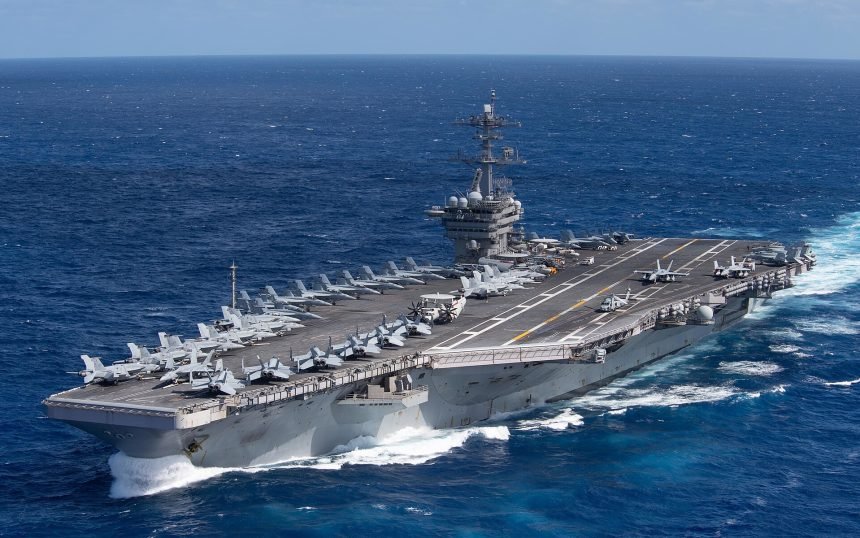
The United States is moving a third aircraft carrier strike group toward the Middle East as the conflict with Iran enters a more uncertain phase, with President Donald Trump indicating that further American military action against Tehran remains possible after the November midterm elections. The deployment adds thousands of sailors and Marines to an already substantial US military presence in the region and comes as diplomatic efforts to halt the fighting remain unresolved.
The force being sent includes the USS Theodore Roosevelt carrier strike group and the USS Makin Island amphibious readiness group, accompanied by amphibious ships and thousands of military personnel. More than 7,000 sailors and about 2,000 Marines are aboard the groups now moving toward the region, according to US officials cited in reports. If the deployment proceeds as planned, three American aircraft carrier strike groups could be operating in the Middle East by late October.
The scale of the movement reflects the changing military situation surrounding the Iran conflict. The United States already has the USS George H.W. Bush and USS George Washington in the region, together with the USS Boxer amphibious readiness group. The arrival of the Theodore Roosevelt would therefore create an unusually large concentration of American naval power in and around the Middle East.

Such a concentration of forces gives US commanders additional operational flexibility at a time when the future direction of the war remains unclear. Aircraft carriers provide mobile air power, while amphibious forces can support a range of military and evacuation missions. However, the deployment itself does not establish that new attacks have been ordered. US officials have described the movement in terms of military positioning, while Trump has separately indicated that future strikes remain under consideration.
The development is closely connected to Trump’s recent comments about the possibility of renewed bombing of Iran. In an interview with Time magazine published on Thursday, the president said it was “possible” that the United States could increase its bombing campaign after the 3 November midterm elections. He declined to provide details about potential targets or a specific military timetable.
Trump’s comments came as Washington and Tehran remained divided over the terms of a possible ceasefire. Iran had proposed a temporary arrangement involving the reopening of the Strait of Hormuz and a return to negotiations, but Trump said he considered the proposal insufficient. He argued that conditions he might have accepted earlier in the conflict were no longer acceptable after months of fighting.
The Strait of Hormuz has become one of the central issues in the confrontation. The narrow waterway between Iran and Oman is one of the world’s most important energy shipping routes, and any prolonged disruption would have consequences for oil and fuel markets far beyond the region. Washington has therefore treated the security of the waterway as an important part of its wider strategic objectives during the conflict.
The dispute over Hormuz has also complicated international efforts to reduce the economic consequences of the war. Global energy markets have already faced additional pressure from the conflict, while European governments have been discussing emergency fuel reserves and supplies. Any further military escalation around the waterway could increase uncertainty for shipping companies, energy traders and governments that rely on Middle Eastern oil and petroleum products.
The American military buildup also comes after months of sustained operations. The current conflict began with major US and Israeli attacks against Iran in February, followed by continued military confrontation and regional instability. The campaign has affected Iran’s military infrastructure and economy while also creating risks for American forces and US partners across the Middle East.
Iran has meanwhile indicated that it is preparing for a stronger response if the United States resumes major attacks. Iranian officials have discussed possible retaliation against American interests and regional allies, according to recent reporting, while Tehran has continued to maintain a diplomatic channel through intermediaries. This combination of military preparation and negotiations has left the possibility of renewed fighting alongside the possibility of further talks.
The deployment therefore carries significance beyond the number of ships involved. Moving another carrier strike group into the region can provide Washington with additional aircraft, defensive systems and logistical capacity without necessarily committing the administration to an immediate expansion of the war. At the same time, the presence of more forces could increase the potential consequences of any confrontation involving American, Iranian or allied forces.
There is also a broader question surrounding the strain placed on the US Navy. Maintaining multiple carrier strike groups in one region requires extensive personnel, aircraft, support ships and logistical resources. The United States previously maintained three carrier strike groups in the Middle East in April, the first time that level of carrier concentration had occurred there since 2003. The latest movement would represent another major commitment at a time when American naval forces are also expected to maintain responsibilities in other parts of the world.
The USS George Washington’s presence in the region is particularly notable because the carrier is normally associated with US operations in the Pacific. It was moved toward the Middle East to replace the USS Abraham Lincoln after that carrier completed an exceptionally long deployment. Once the Theodore Roosevelt arrives, Washington could potentially return toward the western Pacific, depending on broader US military requirements.
For the Trump administration, the timing of the deployment is also politically significant because the US midterm elections are approaching. Trump has acknowledged that the war could have political consequences, while arguing that preventing Iran from obtaining a nuclear weapon is an objective broadly supported by the American public. The White House has continued to present the confrontation primarily through the issue of Iran’s nuclear capabilities and US national security
The political implications, however, remain separate from the military facts on the ground. The deployment of additional forces does not by itself determine how voters will respond to the conflict, nor does it establish what decision the administration will ultimately take after the elections. What it does demonstrate is that Washington is maintaining the military capacity to respond quickly if negotiations fail or if the president orders another phase of operations.
For civilians across the region, the uncertainty is particularly significant. A renewed American bombing campaign could produce further casualties and displacement while increasing pressure on neighbouring countries hosting US forces or exposed to Iranian retaliation. It could also threaten commercial shipping and energy infrastructure, potentially extending the effects of the conflict into the global economy.

Diplomatic efforts therefore remain important even as military preparations continue. Iran’s proposals, Washington’s demands and the future of its nuclear programme remain central to any potential agreement. The positions of both sides have hardened during months of conflict, making a comprehensive settlement difficult, while the concentration of American military forces creates a powerful reminder of the consequences should negotiations break down.
For now, the Theodore Roosevelt and Makin Island groups are moving toward the Middle East while the United States keeps its options open. The arrival of a third carrier strike group would give American commanders a level of naval capability not seen in the region since the major concentration earlier this year. Whether that capability is used for deterrence, defence, negotiations or renewed combat will depend on decisions still to come.
The immediate picture is therefore one of military preparation alongside diplomatic uncertainty. Washington is positioning substantial forces, Tehran is preparing for the possibility of further confrontation while keeping negotiations alive, and the Strait of Hormuz remains a crucial point of international concern. With the US midterm elections approaching and the future of the Iran war unresolved, the next stage of the conflict could have consequences extending well beyond the Middle East.
Related News:
 UK Prepares Aircraft Carrier for Middle East Crisis
 Houthis Strike Saudi Arabia as Middle East Tensions Rise
 Trump Asked Xi About Buying US Weapons
 Thousands Protest Iran Strikes Outside US Embassy London
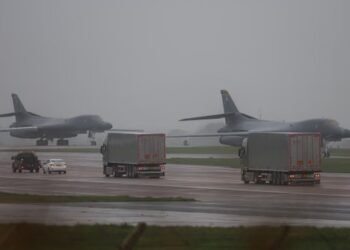 US Bombers Arrive at RAF Base Amid Rising Iran Tensions
 Trump likens US Navy actions to ‘pirates’
 Trump dismisses concerns over 250-day carrier deployment
 Trump Calls Strait of Hormuz ‘American Territory’
 Trump Faces Iran War Crisis Before Midterm Vote
 Saudi Pact Raises Risk of Pakistan Entering War
 Netanyahu faces protests and pressure at UN
 New Maps Reveal Gaza’s Vast Destruction
 Ukraine war briefing: Zelenskyy offers help to Saudi Crown prince on combatting Iranian drones
 USS Gerald R Ford Ends Record Naval Deployment
 Trump orders US troop pullout from Germany
 Middle East Crisis Escalates as Oil Routes Shake Markets
 Tensions Emerge in Netanyahu-Trump Alliance
 US Awaits Iran Reply on New Ceasefire Proposal
 Putin Declares Russia Victory at Scaled Victory Day Parade
 Hormuz Talks Near Critical Stage
 Discontent grows around Putin amid war strain
 Former ICC prosecutor condemns US sanctions
 Trump Claims Iran Peace Deal Near Completion
 Millions Gather for Khamenei’s Six-Day State Funeral
 Taliban global ties grow as rights fears mount
 Israeli Strike in Southern Lebanon Kills Seven
 Russian Missiles Intensify Pressure on Kyiv
 Trump Calls Iran War ‘Small Potatoes’ Despite US Deaths
 North Korea Expands Uranium Facility at Yongbyon
 Saudi Arabia Shuts Oil Pipeline After Drone Attack
 Nearly 50,000 Flee as Houthis Advance in Yemen
 South Korea Rules Out Military Role in Iran War
 Middle powers seek new alliances amid Trump era
 Xi urges Trump to avoid US-China military conflict
 Saudi intercepts Houthi missiles as oil fears grow
 Iran Awaits Trump Response on Seven-Day Hormuz Plan
 South Korea-Ukraine Row Erupts Over North Korean POWs
 South Korea demands apology over DMZ mine blast
 Hegseth Announces 20% Cut in Senior Military Posts
 Ukraine’s New FP-7 Missile Makes Combat Debut
 US National Guard Member Killed in DC Shooting
 Trump press secretary attacks reporter over ICE question
 Kyrsten Sinema Faces High-Profile Lawsuit Over Marriage Interference
 Trump Fed bid heads to Supreme Court
 Partial US Government Shutdown Hits Homeland Security Funding
 Thousands Protest ICE Operations in Nationwide US Day of Action
 Sinema payment row deepens after $9,000 transfer claim
 Nurses’ families fear breakup under UK immigration crackdown
 California Democrats Vow Trump Reckoning
 Trump’s Surgeon General Pick Evades Vaccine Questions
 Adelaide University Faces Backlash Over Event Cancellation
 Iran Defiance Grows Amid US-Israel War Pressure
 Injured Mojtaba Khamenei Elevated as Iran Leader
 Trump Signals Hope for New Iran Talks as Ceasefire Fades
 UK Stands Firm on Falklands Amid US Rift
 Investigation Into Anti-Trump Motives After Gala Shooting
 Trump Defiant After Washington Hotel Shooting
 Identity Revealed: Suspected Washington Gunman Named
 White House Security Case Sparks Political Firestorm
 Trump approval plunges amid Iran war fears
 Ohio’s Battle for Trust: Democrats Vying to Flip the Buckeye State
 US ‘Narco Boat’ Strikes Draw Global Outcry
 Afghan Families Left in Limbo Face Risk of Deportation
 Trump Announces 3-Day Russia–Ukraine Ceasefire Deal
 Kevin Warsh sworn in as Fed chair amid economic backlash
 US green card applicants must apply from abroad, DHS says
 DeSantis’s ‘Alligator Alcatraz’ Faces Final Shutdown
 AOC Backs El-Sayed in Tight Michigan Senate Primary
 US Courts Back Trump on Park Signage Removals
 Trump’s Mount Rushmore Speech: A Divisive Anniversary
 Former Diplomats Urge UK and France to Act on Palestine
 Trump Hardens Canada Trade Stance as Talks Stall
 Trump gives $45,000 holiday gifts to White House aides
 New Mexico Takes Facebook to Trial Over Data Scandal
 US Networks Suspend Trump White House Pool Coverage
 Democrat Says ICE Restricted Detention Camp Oversight
 Japan PM Backs International Criminal Court
 Trump gives Xi red-carpet welcome as trade truce extends
 Republican Senator Questions Trump Ad Spending
 Pilot and Passengers Help Save Flydubai Flight