Published: 03 October 2026. The English Chronicle Desk. The English Chronicle Online
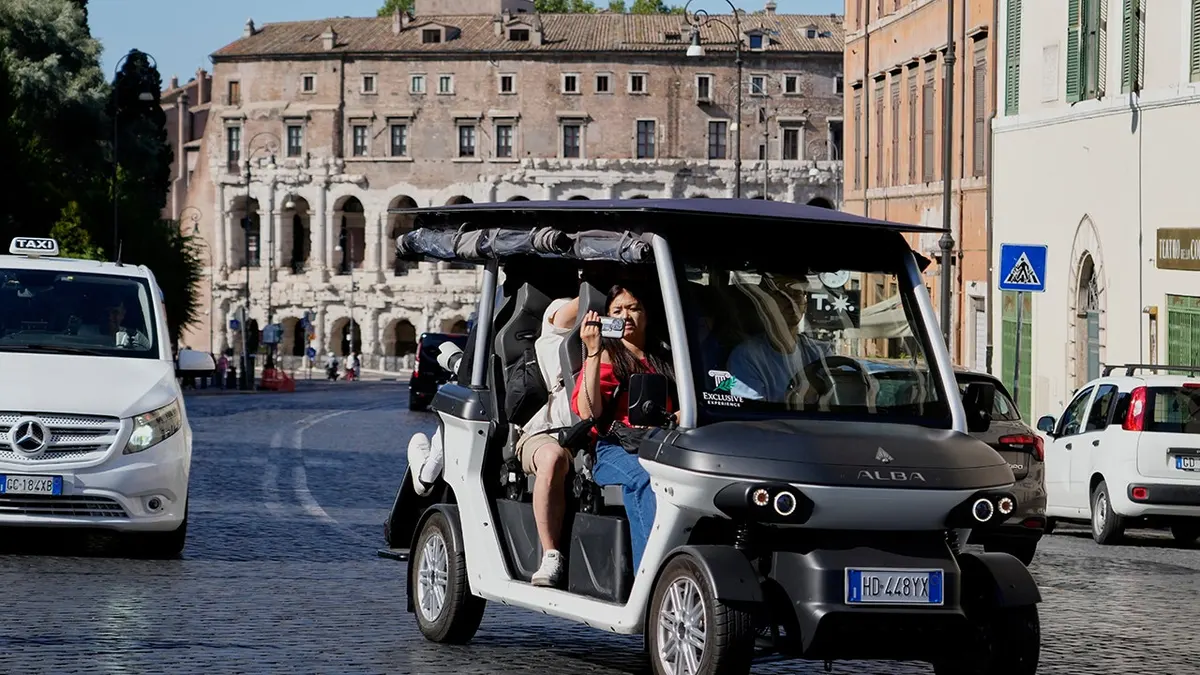
Rome is facing a new tourism headache as the rapid growth of golf cart tours prompts complaints from residents, taxi drivers and city officials, who say the vehicles are increasingly adding to congestion in the historic centre.
For visitors, the small electric vehicles can appear to offer an easy way to explore one of the world’s most crowded tourist destinations. They provide a break from Rome’s heat, uneven streets and long walks between famous landmarks. For residents, however, the growing number of carts has become another obstacle on already congested streets and a visible symbol of the pressures created by mass tourism.
The dispute has intensified as authorities increase enforcement against operators who fail to comply with regulations. Police checks have been stepped up across some of the city’s busiest tourist areas, including Piazza Navona, the Pantheon, Circo Massimo and the Spanish Steps.
During recent operations, authorities stopped 131 golf carts and issued fines totalling about €38,000 for a range of alleged offences, including operating without the necessary authorisation and illegal parking.

The enforcement campaign follows reports that a large proportion of the estimated 500 golf carts circulating around Rome may not have the required permissions. City officials have warned that without stronger regulation, the growing trade could become increasingly difficult to control.
The controversy reflects a familiar problem for Rome. The Italian capital welcomes millions of visitors every year, creating enormous economic benefits but also placing intense pressure on its roads, pavements, public spaces and historic centre.
For some tourists, golf carts have become an attractive alternative to walking or using conventional taxis. Visitors can book private tours that take them between major landmarks while allowing them to avoid some of the physical demands of navigating the city on foot.
One American couple visiting Rome experienced that convenience firsthand. After spending several days walking through the city and enduring long waits and crowded routes around major attractions, they decided to use a golf cart to give their feet a rest.
The couple described the experience as unexpectedly enjoyable, particularly because of the breeze created while travelling through the city’s streets. The cost, however, can be significant. Prices depend on the length and type of tour, with some experiences costing several hundred euros. The couple paid €310 for a three-hour trip.
For visitors unfamiliar with Rome, the appeal is easy to understand. The city’s historic centre contains narrow streets, ancient buildings, crowded pavements and numerous attractions spread across a relatively compact area. During busy periods, walking between landmarks can be exhausting, particularly for older visitors, families with young children and people with mobility difficulties.
Tour operators argue that their services can therefore make the city more accessible.
Leo Pavoncello, a golf cart driver working around Rome’s Jewish Ghetto, defended the industry during the current controversy. He argued that the vehicles are quiet and environmentally friendly and can provide a practical option for people who may struggle with long walks.
He also pointed to the employment opportunities created by the sector, particularly for younger workers.
Pavoncello was among the drivers subjected to police checks and was found to be operating legally. He believes the actions of some operators should not be used to condemn the entire industry.
His argument reflects one of the central disputes surrounding the crackdown. While authorities are seeking to control unregulated activity, legitimate businesses say they should not be treated as though they are responsible for violations committed by others.
Some operators also believe competition from golf carts has intensified tensions with Rome’s established taxi industry.
Taxi drivers have complained that tourist carts are taking passengers away from traditional taxi services. The dispute has added another layer to an already complicated debate about how visitors should move around central Rome.
Residents, meanwhile, are focused less on competition between transport providers and more on the impact the vehicles have on everyday life.
Nora Fahmi, who works at an art photography shop near the Pantheon, said the number of golf carts had become increasingly noticeable. After more than a decade working in the area, she said she had witnessed many changes in the city’s tourism patterns, but described the current golf cart situation as particularly striking.
For local residents such as Elisa Isacco, the problem is not simply the number of vehicles but the way they interact with pedestrians.
She said she frequently finds herself having to move out of the way of golf carts and described the wider environment of central Rome as increasingly chaotic.
Her criticism also raises a broader question about the nature of sightseeing in an historic city. Golf cart tours allow visitors to cover more ground in less time, but some residents question whether travelling rapidly between famous landmarks gives tourists an authentic understanding of Rome’s streets, neighbourhoods and history.
The demand for alternative transport is nevertheless clear. Visitors regularly use a variety of vehicles to explore the capital, including Fiat 500 cars, scooters with sidecars and tuk-tuks. Horse-drawn carriages have also been part of long-running debates about tourism and transport in the city.
Golf carts have attracted particular attention because their numbers have expanded quickly and because they operate in some of the busiest pedestrian areas.
The current controversy is therefore not simply about one type of vehicle. It reflects the wider challenge of managing tourism in a city where residential life, commercial activity and international sightseeing take place within the same narrow streets.
Rome’s historic centre was not designed for today’s combination of millions of visitors, modern traffic, delivery vehicles, scooters and tourism services. The result is frequent competition for limited road and pavement space.
The irony is that Rome has been dealing with traffic for centuries. Historical accounts indicate that Julius Caesar introduced restrictions on private vehicles and commercial carts in parts of the city more than 2,000 years ago. Today’s arguments therefore have a surprisingly familiar precedent.
What has changed is the scale of tourism and the variety of transport options available to visitors.
For authorities, the challenge is finding rules that protect pedestrians and residents without eliminating services that provide genuine benefits to tourists and people with mobility limitations.
The enforcement campaign suggests that city officials are increasingly concerned about maintaining control over the sector. Their objective is not necessarily to eliminate golf cart tours but to ensure that operators comply with licensing, parking and traffic regulations.
For legitimate operators, however, the increased scrutiny has created concerns about whether the industry is being unfairly singled out.
Pavoncello argues that properly regulated golf carts can form part of Rome’s wider transport network rather than being treated as an inherently problematic form of tourism. He also rejects the idea that the vehicles are solely responsible for the city’s traffic problems.
That argument is likely to remain part of the debate as authorities consider how the sector should develop.
The issue is particularly important because Rome’s tourism economy depends on providing visitors with ways to move around the city. At the same time, the capital must remain a functioning home for people who live and work there every day.
The challenge is to find a balance between those competing needs.
Visitors may see golf carts as a convenient way to escape the exhaustion of Rome’s crowded streets. Residents may see the same vehicles as another obstacle in a city already struggling with congestion. Operators see them as a growing business that provides jobs and accessibility, while authorities are concerned about ensuring that the trade does not expand beyond effective regulation.

As Rome continues to attract visitors from around the world, the golf cart dispute highlights a larger question facing many historic tourist cities: how can they accommodate the growing demand for convenient sightseeing without allowing tourism to overwhelm everyday urban life?
For now, police checks and fines are increasing, while operators insist that properly run services should remain part of the city’s tourism landscape. The future of golf cart tours in Rome may ultimately depend on whether authorities can establish clear rules that protect residents and pedestrians while allowing legitimate businesses to operate.
In a city where ancient streets already carry the weight of centuries of history, finding room for another modern form of tourism may prove to be as complicated as navigating Rome itself.
Related News:
 Hybrid village stores fight rural decline
 England and Norway Fans Turn Miami Into World Cup Carnival
 Italy’s Beach Lunch Ban Sparks Holiday Backlash
 Qantas Revamps Loyalty Program Amid $1.46bn Profit Surge
 Rising Costs Force Families to Rethink Days Out
 Glasgow Central Set for Full Reopening After Fire
 UK Aviation Watchdog Clips Heathrow’s Fee Hike Wings
 M&S Demands Urgent Action on Rising Violent Retail Crime
 Storm Dave Disrupts Travel but Conditions Set to Ease
 Harry and Meghan’s Australia Visit Sparks Debate
 Athens Mayor Moves to Tackle Overtourism Crisis
 Reform UK funding: mystery billionaire revealed
 US Labor Department in turmoil after secretary resigns
 Ukraine Urges UK to Seize Russian Oil Tankers
 Two Dead in Adelaide Airport Plane Crash Fire
 Border Chaos: UK Travellers Face Massive EU Delays
 France Faces Record Presidential Crowded Race Amid Far-Right Surge
 Norway Doubles Down on Oil and Gas for Europe Energy Security
 Bad Weather Threatens Hantavirus Cruise Ship Evacuation
 Belfast Approves Pilot Extension of Sunday Trading Hours
 Pope Meets Families in Italy Toxic Waste Zone
 Thailand Tightens Visa Rules to Curb Tourist Misbehavior
 Hungary Targets Oligarchs with Proposed Landmark Wealth Tax
 Public Confidence in University Degrees Plummets in the UK
 Airlines Demand Freeze on EU Border System as Chaos Peak Looms
 UK Nations Brace for Potential Breakup Amid Reform Surge
 Severn Trent CEO Reward Package Doubled Despite Public Anger
 BMA Faces Unprecedented Staff Cuts Amidst Severe Financial Turmoil
 Jet2 Sees Summer Surge Despite Global Tensions
 Weight-Loss Drugs Transform Fashion Shopping Habits
 London Tube Heat Reaches Dangerous Levels
 EasyJet Takeover Sparks Fears Over Passengers’ Future
 Olympus Awaits Unesco Heritage Recognition
 Weight-Loss Drugs Offer Food Savings Mainly to High Earners
 Burnham unveils £65m drought aid for farmers
 Queue row erupts on Wales’ highest mountain
 France Eases Cheese Rules as Drought Hits Farms
 UK Households Could Save £173 on Fixed Energy Deals
 London Launches First Self-Driving Taxis
 Green Leader Targets Starmer’s Former Seat
 UK Subsidence Claims Surge After Record-Breaking Summer
 Reform Faces Fresh Financial Controversy
 UK House Prices Fall as Mortgage Rates Rise
 Councils spend £125m on illegal children’s care
 British widow says deportation from Sweden feels like a death sentence
 Nats Boss Summoned as UK Flight Chaos Continues
 Iceland to Open First UK High Street Store in Falklands
 Thames Water Revises Oxfordshire Mega-Reservoir Plan
 UK Retailers Accused of Breaking Refund Laws
 UK Heatwaves Set to Worsen Pothole Damage, RAC Warns
 UK Rent Gap Puts Low-Income Families Under Pressure
 Macron and Carney deepen France-Canada ties
 Labour Apprenticeship Scheme Faces Slow Start
 UK Flights Hit by Fresh Air Traffic Control Fault
 Trump and Mamdani Hold Cordial Gracie Mansion Meeting
 Roman Finds Reveal Bath’s Suburban Past
 Paris child pickpocketing gang leader jailed for eight years
 Greece Pushes for Parthenon Marbles Reunification
 Elif Eralp Emerges as Berlin’s Next Political Force
 Frome Community Loses Bid for Major Regeneration Site
 Avanti West Coast Set for Public Ownership in March
 Madrid Tent Camp Grows as Spain Housing Crisis Deepens
 New UK Homes in Flood Zones Face Insurance Risk
 Dale Vince Plans New London-Wide News Operation
 French Student Protests Escalate Into Violent Clashes
 Israel-bound Plane Lands in Saudi Arabia After Cockpit Fight
 Ukraine Faces $45m Hourly Cost From Missile Alerts
 UK University Strikes Spread as Financial Pressure Grows
 Burnham Opens Door to Possible UK Return to EU
 Poundland Rescue Bid Could Protect 11,000 Jobs
 Healey urged to act as UK energy bills rise 4%
 Senators warn US childcare policies could raise costs
 Edinburgh Glasshouses Reopen After Major Restoration
 French Debt Fears Put Euro Markets Under Pressure
 Pilot Recalls Fight to Save Flydubai Passengers
 Badenoch Raises Prospect of 2027 UK Election
 French School Protests Escalate as 400 Schools Close
 Salinas Struggles to Keep the American Dream Alive
 Bosnia’s Young People Look Beyond Election Hope
 BT Broadband Pauses Raise Digital Switchover Concerns