Published: 05 October 2026. The English Chronicle Desk. The English Chronicle Online
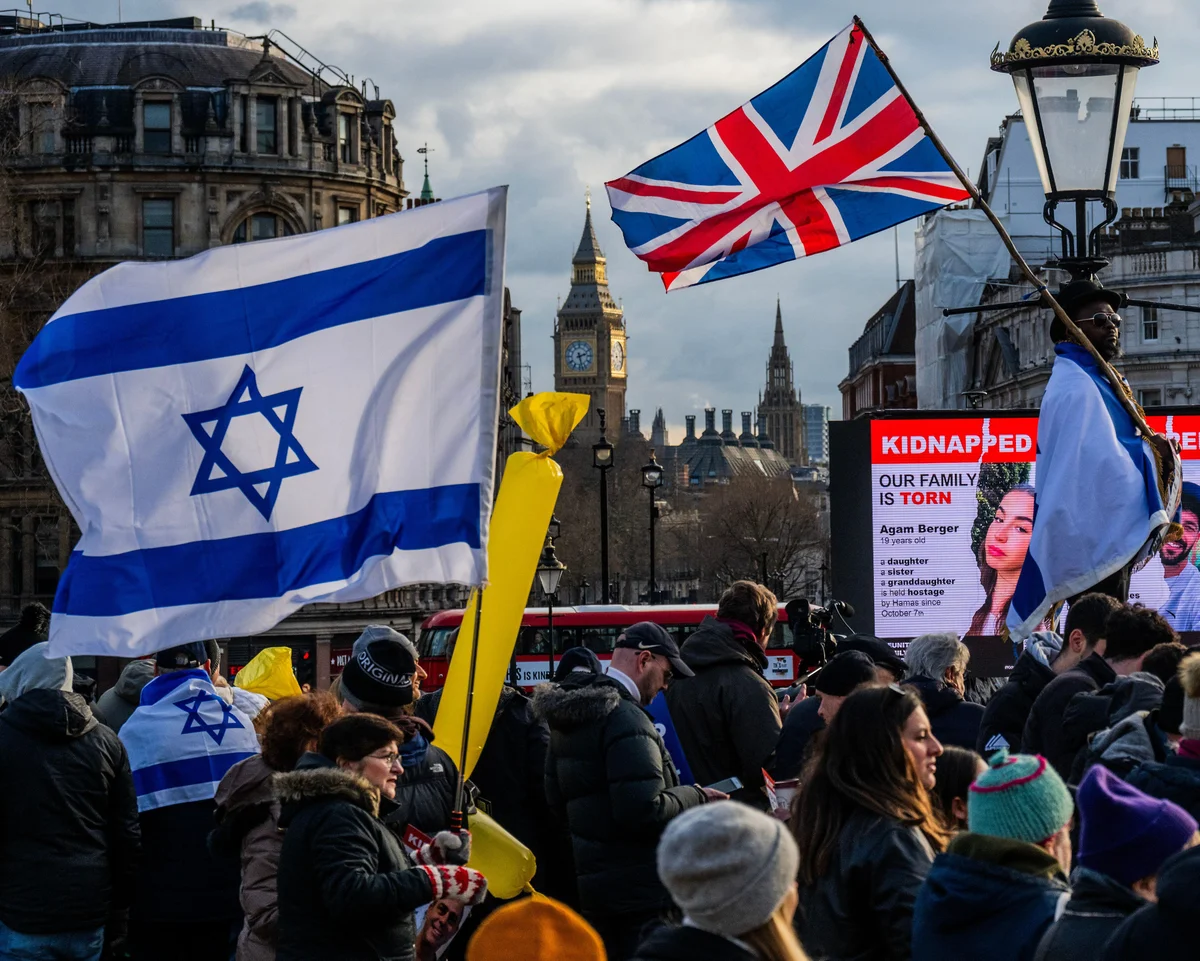
British Jews have become more likely to identify as Zionist and express a strong emotional connection to Israel since the 7 October 2023 attacks, according to new research examining changes in Jewish identity and political attitudes in the United Kingdom.
The study, produced by the Institute for Jewish Policy Research, found that identification with Zionism increased significantly between 2022 and 2025, while concern about antisemitism in Britain also rose sharply. The findings suggest that the events of October 2023 and the subsequent war in Gaza have had a substantial effect on how many British Jews view Israel, their own Jewish identity and questions of security.
According to the research, the proportion of British Jews who described themselves as Zionist increased by seven percentage points, reaching 66 per cent in 2025 compared with 2022. The change occurred against the backdrop of the October 2023 attacks, the continuing conflict in Gaza and growing debate in Britain over Israel’s military actions and the future of the region.

The research also recorded a major increase in concern about antisemitism. By June 2025, half of British Jews surveyed said antisemitism was a “very big problem” in the United Kingdom, roughly three times the level recorded before the Gaza war.
The researchers said the stronger sense of attachment to Israel could not be separated from concerns about security and the experiences of Jewish communities in Britain. The findings indicate that for many British Jews, Israel is viewed not only through the lens of Middle Eastern politics but also as an important part of their understanding of Jewish safety and identity.
The proportion of respondents who said they felt very emotionally attached to Israel reached 51 per cent by June 2025. That represented a rise of 13 percentage points from the period before the war began. At the same time, the share who considered supporting Israel to be very important to their Jewish identity increased by 10 percentage points to 45 per cent.
Researchers found, however, that the trend was not uniform across the British Jewish population. Political affiliation appeared to have a significant influence on attitudes towards Israel, with Jewish supporters of the Green Party showing markedly weaker levels of attachment.
Among Jewish Green Party supporters, the proportion who said they felt very emotionally attached to Israel fell slightly between 2023 and 2024, reaching only 7 per cent. The percentage who said supporting Israel was very important to their Jewish identity declined by eight percentage points to 3 per cent during the same period.
Green voters were also among the least likely to regard antisemitism as a very serious problem in Britain. The proportion holding that view fell by seven percentage points to 7 per cent between 2023 and 2024.
The research found a similar decline in Zionist identification among Green supporters. Between 2022 and 2024, the proportion of Greens describing themselves as Zionist fell by three percentage points to 14 per cent.
Jonathan Boyd, director of the Institute for Jewish Policy Research, suggested that the political and social environment in which Jewish people live can significantly influence their perceptions of Israel. He noted that Jewish Green supporters tended to be more secular and therefore could be more influenced by wider public debates and social attitudes.
The findings also highlighted differences between age groups. Younger British Jews were less likely than some older generations to describe Israel as very important to their Jewish identity. Among those aged 16 to 29, the proportion giving that response fell slightly to 27 per cent in 2024.
Boyd said younger Jews had experienced Israel in a different political context from their parents and grandparents. For many of them, their understanding of Israel has been shaped heavily by the conflict involving Gaza and Hamas rather than by earlier periods in which Israel’s security and the idea of a Jewish homeland may have dominated family discussions.
The study also examined the possibility of British Jews considering migration to Israel. Across the wider Jewish community, the average willingness to consider moving to Israel within the following five years increased from 1.38 before the 7 October attacks to 1.99 on a scale ranging from zero to 10.
The strongest interest was recorded among Haredi Orthodox Jews and people aged between 50 and 59. In contrast, Jewish supporters of the Green Party were the least likely to consider moving to Israel. Their average score fell from 0.7 to 0.2 between 2022 and 2024.
Researchers linked the broader increase in attachment to Israel to both concerns about antisemitism and the country’s symbolic importance as a Jewish homeland. Boyd argued that Israel can represent a sense of security for many Jews, meaning that periods of heightened insecurity may strengthen emotional and political solidarity with the country.
The October 2023 attacks had a particularly direct impact because many British Jews have personal connections to Israel. According to the research, around 70 per cent have close friends or family members living there. The attacks therefore affected not only political perceptions but also personal networks and concerns for relatives and friends.
The research comes at a time when British political debate over Israel and Palestine has become increasingly polarised. The war in Gaza has generated widespread public demonstrations, political disputes and disagreements within several British political parties.
The Green Party has been at the centre of some of those debates. The research was completed before a recent party conference vote on a motion concerning Zionism, meaning that the latest political developments were not reflected in the study’s findings.
The research also predates several significant events that have occurred since the period covered by the study, including a synagogue attack in Manchester, the conflict involving Iran and Israel, and new international measures connected to Israeli settlements.
These developments could further influence attitudes among British Jews, although their impact cannot yet be measured through the research.
The study was based on a sample of approximately 2,500 people drawn from a British Jewish population estimated at around 315,000. Researchers examined attitudes across a wide range of religious and political groups, although supporters of Reform UK were not included in the tracking analysis because the research period preceded the party’s later rise in support.
Political differences were particularly evident among Conservative supporters, who recorded some of the strongest growth in pro-Israel and Zionist sentiment and were also among those most concerned about antisemitism.
The findings point to a complex relationship between Jewish identity, political affiliation, perceptions of security and attitudes towards Israel. While the overall trend since October 2023 has been towards stronger identification with Israel among British Jews, the experience has varied considerably between religious communities, generations and political groups.
The research also suggests that attitudes cannot simply be understood as support or opposition to a particular Israeli government. For many British Jews, Israel carries a deeper personal and cultural meaning connected to family, history, religion and the idea of a Jewish homeland.
At the same time, younger and more politically progressive Jewish communities appear to be developing different perspectives, particularly as the humanitarian consequences of the Gaza conflict have become increasingly prominent in public debate.
The findings are also significant because previous research has shown declining support among British Jews for a two-state solution to the Israeli-Palestinian conflict. Support for that model has fallen to 49 per cent, the lowest level recorded since tracking began.
That shift illustrates the changing nature of political attitudes within Britain’s Jewish community. The same population can show stronger emotional attachment to Israel while becoming less optimistic about established diplomatic solutions to the Israeli-Palestinian conflict.
For British political leaders, the research carries an important message. Policies and rhetoric concerning Israel, Gaza and antisemitism are likely to have consequences beyond foreign policy, affecting how Jewish citizens perceive their security and place within British society.

Boyd has argued that the UK government should continue providing security support to British Jews while also demonstrating a commitment to reducing tensions between Israelis and Palestinians. He warned that political criticism of Israel, if not accompanied by recognition of why Israel remains important to many Jews, could deepen divisions.
The research ultimately presents a picture of a British Jewish community whose relationship with Israel has been reshaped by an extraordinary period of violence, insecurity and political upheaval. The October 2023 attacks and the war that followed appear to have strengthened Israel’s emotional importance for many, while simultaneously creating greater divisions among those with different political and religious outlooks.
As the conflict continues to influence British public life, those differences are likely to remain part of a wider national debate over antisemitism, Israel, Palestine, Jewish identity and Britain’s role in the Middle East. The research makes clear that there is no single British Jewish view of these questions, but it does show that the events since October 2023 have left a significant mark on the community’s relationship with Israel.
Related News:
 New Evidence Deepens Church of England Slavery Reckoning
 King Refers Jamaica Slavery Petition to Privy Council
 Burnham Opens Door to Possible UK Return to EU
 Drumcree Talks Falter as Legal Challenge Deepens
 UK-France Returns Deal Faces Expiry as Talks Stall
 Ministers Accused of Defamation Over Palestine Action Ban and Mass Arrests
 Charlie Kirk Killing Used to Mobilise UK’s Largest Far-Right Rally in Decades
 Jailed Georgian Opposition Leaders Warn UK of Iranian Links to Ruling Party
 Shabana Mahmood Warns Border Failings Are Eroding Trust in States
 Johnson Approved China’s London ‘Super-Embassy’ in 2018
 UK and EU Signal Fresh Push for Defence Cooperation Talks
 Emails Show Epstein Funded Mandelson’s Husband After Jail
 Synagogue Arson Attempt Sparks Security Fears
 MoD Has Lost Track of Veteran Recall List, Says Adviser
 UK may ban protests amid rising antisemitism fears
 Greens Face Internal Row Over Antisemitism Claims
 Trump’s Revenge Drive Deepens GOP Divide
 Farage and Reform UK Reshape British Politics
 Starmer Leadership Under Pressure After Setbacks
 Le Pen’s Popularity Holds Despite Conviction
 Dreyfus Statue Finally Gets Permanent Paris Home
 Ghent Professors Questioned Cofnas Appointment
 Exeter Approves Saudi Military Training Partnership
 British Man Faces Deportation Threat in Sweden
 Green Leader Targets Starmer’s Former Seat
 Masked Protesters Bring Dover Port Traffic to Standstill
 UN expert urges UK to rethink Israel policy
 Ministers Condemn Far-Right Unrest in Portsmouth
 UK plans tougher Israel stance with settlement trade ban
 British widow says deportation from Sweden feels like a death sentence
 Miliband Rejects Chief Rabbi’s West Bank Warning
 Pavlohrad Strike Kills Five, Injures 67
 Patriot Platform Raises Concern Across Britain
 Reform UK Receives Record £36m Donation From Crypto Billionaire
 Election Candidate Abuse Raises Alarm in England
 Slave-Trade Wealth Embedded in Britain’s Financial System
 Lisa Nandy Calls for Tougher Action on Social Media Doxxing
 Piddington Votes for Symbolic Independence Over Asylum Plan
 Amnesty Finds Coordinated Abuses in Iran Protest Crackdown
 Turkey LGBTQ Crackdown Expands With New Arrests
 Lords Call for Tobacco-Style Gambling Ad Ban
 Trump Threatens EU With Tariffs Over Canada Proposal
 Trump Threatens EU Over Canada Partnership Proposal
 Iran School Strike Raises War Crimes Questions, UN Says
 Mahmood Warns Far Right Over Asylum Protests
 Disabled Travellers Seek Fairer UK Care Rules
 Lib Dems Prepare for Election Amid Reform Challenge
 Briton Faces Cyprus Court Over Son’s Fatal Fall
 UK Reviews Hague Child Abduction Cases Involving Abuse
 UK Pauses Chagos Deal Amid US Opposition
 Elif Eralp Emerges as Berlin’s Next Political Force
 Far-Right Activist Arrested After Channel Dinghy Incident
 Portadown protest ends after tense Orange Order standoff
 Free Speech Emerges as Key UK Election Issue
 Five Arrested Near RAF Fairford in Terror Probe
 Three Die in Channel Crossing Attempt Near France
 French Student Protests Escalate Into Violent Clashes
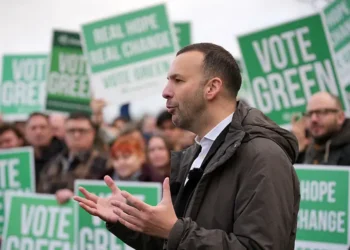 Green Party faces dispute over Zionism motion
 Hundreds of UK prisoners released early amid overcrowding
 Drumcree Talks End Without Agreement Ahead of Appeal
 Badenoch Raises Prospect of 2027 UK Election
 French School Protests Escalate as 400 Schools Close
 Latin America women fear rollback of rights
 UK Must Act with Courage and Clarity on Israel-Palestine Conflict, Says Foreign Affairs Committee Report
 Radioactive Leak at UK’s Nuclear Warhead Base Sparks Outcry Over Safety and Secrecy
 Is the UK Ready to Put Boots on the Ground in Ukraine? Assessing Military Capacity and Challenges
 Tanni Grey-Thompson Faces Abuse Over Opposition to Assisted Dying Bill
 Trump Urges Herzog to Grant Netanyahu Full Pardon
 Major Rent Reform Ends No-Fault Evictions in England
 South Korea Jails Ex-President in Martial Law Ruling
 Gordon Brown urges court for crimes against children
 Relationship with Trump may be beyond repair, Starmer warned
 Burnham unveils £65m drought aid for farmers
 Unions Warn Labour Over Zero-Hours Contract Reforms
 Bayeux Tapestry Revives Franco-British Ties
 Entain Plans 400 Job Cuts After Profit Update
 Democrat Says ICE Restricted Detention Camp Oversight
 Republican Senator Questions Trump Ad Spending
 London Facial Recognition Trial Ends With False Alert
 UK University Strikes Spread as Financial Pressure Grows