Published: 08 October 2026. The English Chronicle Desk. The English Chronicle Online
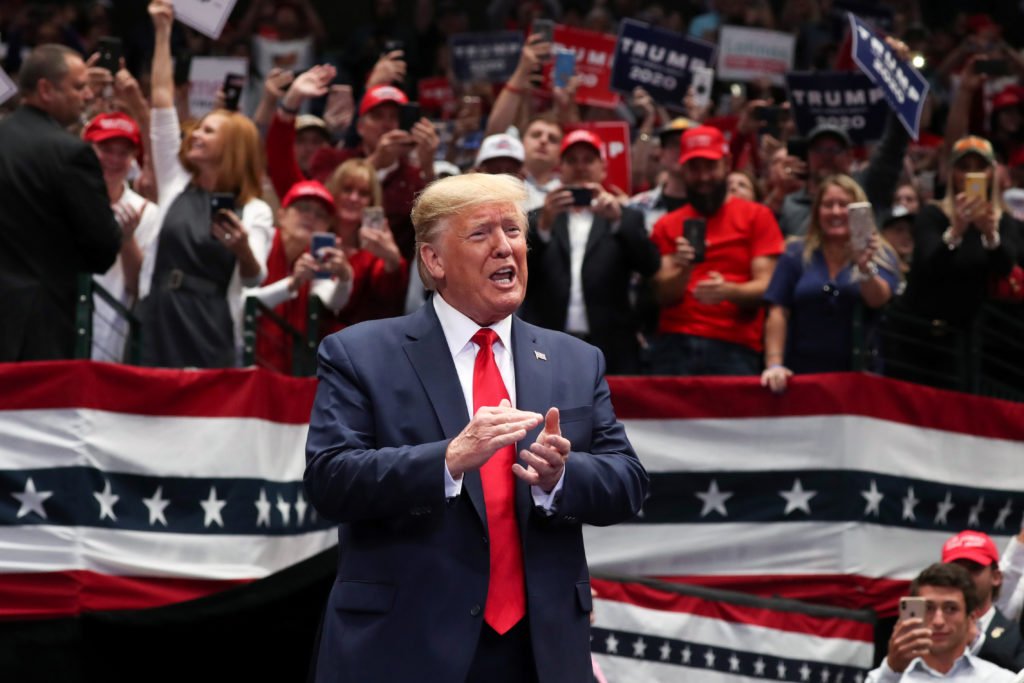
Donald Trump faced a turbulent campaign appearance in Texas on Wednesday as repeated protests interrupted his rally speech, highlighting the growing political pressure surrounding Republican Senate candidate Ken Paxton ahead of November’s midterm elections.
The US president travelled to San Antonio to campaign for Paxton, whom he has strongly backed in the Republican effort to retain control of the Senate. But rather than delivering an uninterrupted show of political strength, Trump’s appearance was repeatedly disrupted by demonstrators, several of whom were removed by police.
At least half a dozen protesters interrupted the president during his remarks. At one point, Trump briefly stepped away from the microphone after a demonstrator appeared to move towards the stage. The man was subsequently removed, prompting Trump to mock him and make a remark about his mother voting for the president.

Other protesters were met with chants from Trump’s supporters, many of whom waved cowboy hats and shouted patriotic slogans in an attempt to drown out the interruptions. Trump told demonstrators to leave and accused them, without presenting evidence, of being paid by opponents of the United States.
The atmosphere reflected the increasingly intense political battle developing in Texas, a state that Republicans have dominated in presidential and Senate elections for decades but where Democrats believe they now have an opportunity to make significant gains.
Trump’s principal purpose at the rally was to strengthen Paxton’s campaign. The former Texas attorney general has received the president’s endorsement, while Democrat James Talarico has emerged as a serious challenger.
The race has become a significant concern for Republicans because Texas has not elected a Democrat to the US Senate since 1988. Trump himself carried the state by almost 14 percentage points in the 2024 presidential election. Yet polling and approval figures suggest that the political landscape has become less comfortable for Republicans.
A recent poll showed Talarico leading Paxton among likely voters, while other figures indicated weakening support for Trump among registered voters. The president’s approval rating was also reported to be substantially below a majority, raising questions about the ability of his personal political influence to guarantee Republican victories in states that were once considered reliably conservative.
Trump responded by attacking Talarico throughout the rally, repeatedly mocking his name and making a series of personal claims about the Democratic candidate. Some of the president’s remarks were unsupported by evidence and appeared designed primarily to energise his supporters.
The president also addressed controversy surrounding recent comments about the possibility of Iranian missile attacks on major American cities. His earlier remarks about Los Angeles and San Diego had generated criticism, with opponents accusing him of speaking irresponsibly about the potential consequences of an international conflict.
At the Texas rally, Trump again discussed the possibility of an attack but attempted to emphasise that the United States would protect its cities and prevent such a scenario. His explanation remained difficult to interpret clearly, adding to the controversy surrounding his previous comments.
The campaign visit came as Republicans have begun directing substantial financial resources towards Texas. More than $300m has reportedly been committed to elections in the state, underlining the importance the party places on maintaining its political dominance.
Paxton thanked Trump for travelling to Texas and supporting his campaign, telling the president that the Republican ticket would win the race. Trump responded with strong praise, describing Paxton as one of the country’s greatest attorneys general and emphasising his loyalty to the administration and its political movement.
Yet the relationship between Trump and Paxton has not always been entirely smooth. Trump recently described Paxton as a difficult political figure at times. The campaign has also faced questions following a leaked recording in which Paxton reportedly expressed frustration over issues including the war in Iran, rising fuel costs and the organisation of his campaign.
Trump chose not to focus on those difficulties during the rally. Instead, he concentrated on portraying Talarico as unacceptable to conservative Texas voters.
The absence of Republican Governor Greg Abbott was another notable feature of the visit. Abbott, a close Trump ally, is himself facing a competitive re-election contest against Democratic state representative Gina Hinojosa. Democrats seized on his decision not to appear alongside Trump at the rally, portraying it as a sign that Republican politicians may be increasingly cautious about being closely associated with the president.
Abbott was scheduled to attend a hospital dedication elsewhere in the state, roughly 330 miles from San Antonio.
The developments come during an aggressive period of campaigning by Trump, who has travelled repeatedly to Republican-leaning states in an effort to strengthen the party ahead of the midterm elections. His campaign schedule has included stops in Oklahoma, Alabama, Ohio and Nebraska, among other states.
The political stakes are particularly high because control of the Senate could determine how effectively the Trump administration advances its legislative programme during the remainder of his term. A Republican loss in Texas would therefore carry significance well beyond the state’s borders.
For Democrats, the emergence of Talarico as a competitive candidate represents an opportunity to challenge a political structure that has long appeared difficult to penetrate. For Republicans, Paxton’s campaign has become a test of whether Trump’s continued ability to mobilise conservative voters can overcome changing voter attitudes and growing dissatisfaction.
Wednesday’s protests added another dimension to the campaign. Demonstrations at presidential rallies are not unusual, but the frequency of interruptions and the confrontation involving a Trump supporter illustrated the heightened political tensions surrounding the election.
The rally also demonstrated Trump’s continued reliance on confrontational political rhetoric. Rather than attempting to avoid controversy, the president repeatedly engaged with protesters and attacked his opponents, a strategy that has long energised his core supporters while provoking criticism from political opponents.
The coming weeks will reveal whether that approach can translate into votes for Paxton. Texas remains a deeply conservative state, but the polling numbers suggest that the Senate contest cannot simply be dismissed as a routine Republican victory.

For Trump, the campaign is also a test of his political influence. His endorsement helped Paxton secure the Republican nomination, but the general election presents a different challenge. Republican voters must now be persuaded to turn out in sufficient numbers, while independent and moderate voters could play a decisive role in a contest that appears increasingly competitive.
As November approaches, the Texas Senate race is likely to attract even greater national attention. What once appeared to be a safe Republican seat has become a major political battleground, and Trump’s repeated appearances underline just how important the contest has become for his party.
Related News:
 Thousands Protest ICE Operations in Nationwide US Day of Action
 US Court Ruling Reshapes Voting Rights Landscape
 US states redraw maps after voting rights ruling
 Judge halts deportation of Yemeni refugees in US
 Trump warns Iran as Middle East tensions surge again
 US Court Restores Abortion Pill Access Temporarily
 Trump’s Revenge Drive Deepens GOP Divide
 Former ICC prosecutor condemns US sanctions
 Gunman Killed After White House Security Shootout
 Mystery Grows Over Mitch McConnell’s Health
 Trump Media Ban Triggers First Amendment Clash
 US Networks Suspend Trump White House Pool Coverage
 Republican Senator Questions Trump Ad Spending
 Trump Ads Trigger Fight Over Taxpayer Money
 Trump Immigration Policy Faces New Legal Tests
 Latin America women fear rollback of rights
 Lithuania Offers to Fund Permanent US Military Base
 US Justice Department Files Lawsuit Against California Over Partisan Voting Maps
 Trump Deploys DHS to Charlotte in Major Arrest Operation
 US National Guard Member Killed in DC Shooting
 Chinese & Japanese Boats Clash Near Disputed Islands
 Trump Escalates Minnesota Immigration Surge Amid Rising Tensions
 Greenland Faces Pivotal Summit Over Arctic Power Struggle
 Trump officials continue false claims after Alex Pretti shooting
 UK and EU Signal Fresh Push for Defence Cooperation Talks
 Partial US Government Shutdown Hits Homeland Security Funding
 Epstein Files Reveal Trump Officials’ Emails with Financier
 Thousands Protest ICE in New York Against Trump Deportation Campaign
 Clinton Testimony Erupts in Fiery Exchange
 Report Says Pezzullo Acted ‘Recklessly’ in Dealings
 Hungary election: Orbán faces biggest test amid scandal
 Suspected Plot Targets Pipeline Before Hungary Vote
 Trump Faces Crisis as Iran Reopens Hormuz Tensions
 UK Stands Firm on Falklands Amid US Rift
 Trump at Press Dinner Sparks Tension
 Trump orders US troop pullout from Germany
 White House Security Case Sparks Political Firestorm
 Trump approval plunges amid Iran war fears
 Ohio’s Battle for Trust: Democrats Vying to Flip the Buckeye State
 US ‘Narco Boat’ Strikes Draw Global Outcry
 Ohio Primaries Set Stage for Crucial Midterms
 Afghan Families Left in Limbo Face Risk of Deportation
 Tensions Emerge in Netanyahu-Trump Alliance
 US Awaits Iran Reply on New Ceasefire Proposal
 Immigration Judges Fear Pressure in Trump Era
 US green card applicants must apply from abroad, DHS says
 Tulsi Gabbard exits after turbulent intelligence tenure
 Hormuz Talks Near Critical Stage
 Prosecutor Proposes Law to Combat Election Deceit
 House Curbs Trump’s War Powers in Rare Rebellion
 Le Pen’s Popularity Holds Despite Conviction
 Trump Refuses to Sign Housing Bill, But Law Takes Effect
 Houthis Strike Saudi Arabia as Middle East Tensions Rise
 Trump Hardens Canada Trade Stance as Talks Stall
 Trump Calls Iran War ‘Small Potatoes’ Despite US Deaths
 UK plans tougher Israel stance with settlement trade ban
 Trump gives $45,000 holiday gifts to White House aides
 New Mexico Takes Facebook to Trial Over Data Scandal
 Israel Accused of Undermining Palestinian Life
 Trump and Mamdani Hold Cordial Gracie Mansion Meeting
 Democrat Says ICE Restricted Detention Camp Oversight
 Japan PM Backs International Criminal Court
 King Refers Jamaica Slavery Petition to Privy Council
 Xi urges Trump to avoid US-China military conflict
 Lula accuses Trump of seeking control over Brazil
 French Student Protests Escalate Into Violent Clashes
 Burnham Opens Door to Possible UK Return to EU
 Drumcree Talks Falter as Legal Challenge Deepens
 UK-France Returns Deal Faces Expiry as Talks Stall
 Brazil Election Draws Religion Into Final Campaign
 French School Protests Escalate as 400 Schools Close
 Lula Warns of Bolsonaro Family Return as Brazil Votes
 DOJ Declines to Reopen Powell Renovation Probe
 Musk’s DOGE Sparks Turmoil Inside US Government
 Families Await USS Abraham Lincoln Homecoming
 Quebec separatists return to power without majority
 Canadian Veterans Condemn Trump Allies’ Military Remarks
 Argentina Protesters Resist Milei’s Land Sale Drive
 Okinawa US Troops Face Curfew After Murder Case
 Vance Demands Iran Cut Nuclear Enrichment