Published: 21 October 2026. The English Chronicle Desk. The English Chronicle Online
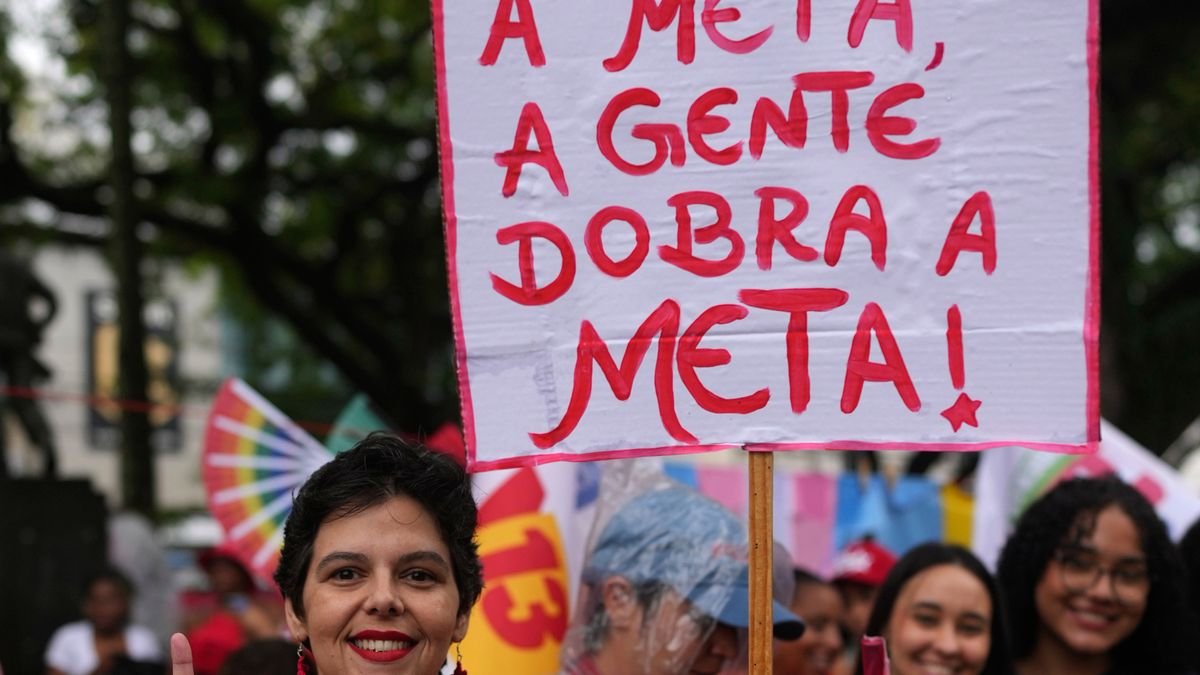
Brazil’s presidential election has become the centre of an escalating dispute over the political influence of social media platforms, with Meta facing mounting allegations that technical restrictions on its services may have disadvantaged leftwing president Luiz Inácio Lula da Silva while benefiting his far-right challenger, Flávio Bolsonaro. The controversy has intensified in the final days before the country’s presidential runoff, raising questions about electoral fairness, digital campaigning and the accountability of powerful technology companies during democratic contests.
The dispute gained momentum after Lula’s campaign experienced difficulties promoting posts on Instagram for almost 24 hours on 9 October, five days after the first round of voting. During that period, Bolsonaro’s campaign was reportedly able to continue promoting its content. Lula’s legal team cited the incident in a submission to Brazil’s electoral authorities and international observers, arguing that unequal access to digital campaigning tools could undermine the fairness of the election.
Meta, which owns Instagram and Facebook as well as WhatsApp, has rejected allegations of political favouritism. The company said the problems were caused by technical incidents affecting advertisers from different political backgrounds and countries. It maintained that its policies apply equally to candidates, parties and political viewpoints, denying that it had deliberately restricted Lula’s campaign or offered preferential treatment to Bolsonaro.

Nevertheless, reports of restricted posts, removed content and difficulties accessing advertising services have spread among Lula supporters. Several watchdog organisations and research groups have also published findings describing potential weaknesses in Meta’s election safeguards. While these reports have not established that the company deliberately intervened to influence the outcome, they have intensified public scrutiny of its handling of political content during a closely contested election.
Brazil’s electoral court has intervened as the dispute has grown. Justice Marco Aurélio Bellizze initially said he had found no evidence of deliberate interference requiring an immediate conclusion that Meta had acted politically. However, he ordered the company to demonstrate that the technical problems affecting Lula’s campaign had been resolved and would not recur.
After determining that Meta had not adequately demonstrated compliance, Bellizze issued a further deadline on Monday. The company responded on Tuesday, again denying political bias and saying it had introduced human review procedures intended to prevent automated systems from imposing inappropriate restrictions on political advertising accounts.
The court’s intervention reflects growing concern about the role of privately operated digital platforms in determining how political messages reach voters. In a modern election, the ability to promote a post, advertise a policy or communicate with supporters online can influence the visibility of a campaign. When one candidate encounters restrictions that do not appear to affect a rival, even temporarily, questions about fairness can quickly become politically significant.
The controversy has also attracted attention from Meta’s Oversight Board, a body designed to review certain company content decisions independently. The board expressed concern about recurring failures in Meta’s election-integrity enforcement, pointing to incidents in both Brazil and the United States.
In Brazil, the board highlighted an episode on 23 September when Lula’s campaign advertising account was disabled for more than an hour. Meta said an automated anti-fraud review had mistakenly classified an advertisement as an attempt to impersonate a government social programme. The company described the restriction as an error rather than a politically motivated decision.
The board also referred to the temporary suspension of the No Kings movement’s Instagram account in the United States during protests connected to efforts to encourage early voting in the upcoming midterm elections. Meta said its anti-fraud systems had wrongly identified activity associated with the account as bot traffic and apologised for the mistake.
According to the board, these cases point to a broader challenge: automated enforcement systems can restrict legitimate political speech when they incorrectly identify activity as fraudulent or suspicious. The board called for greater transparency and consistency, arguing that election-related safeguards should protect democratic participation rather than unintentionally suppress political expression.
Researchers say establishing whether Meta has deliberately favoured one candidate remains difficult because the company controls much of the information needed to investigate its internal decisions. João Victor Archegas, coordinator at the Institute for Technology and Society, said the available evidence consisted of individual incidents that might eventually form a clearer pattern, but that a definitive conclusion was not currently possible because of limited access to internal data.
That uncertainty has not prevented campaign supporters from raising concerns. A report by CTRL+Z, a watchdog founded by a former Meta executive, documented 1,121 reports involving reduced reach, restrictions on reposting, account suspensions and other limitations. The report said many of the affected profiles were associated with leftwing users. Meta dismissed the findings as a collection of individual accounts and perceptions rather than proof of systematic political discrimination.
Another controversy emerged around Meta’s WhatsApp artificial-intelligence assistant. Media reports described an experiment in which the assistant refused to generate campaign artwork featuring Lula’s name and ballot number but complied with a similar request involving Flávio Bolsonaro. The company said the result reflected a specific gap in its safeguards rather than political bias, adding that artwork could be generated using Lula’s first name, Luiz, alongside his ballot number.
The episode has added to concerns about the growing influence of artificial intelligence in political communication. Campaigns increasingly depend on digital tools to create promotional material, communicate with voters and respond quickly to opponents. Inconsistent restrictions or unexplained differences in how these tools handle candidates’ names could create confusion and reinforce suspicions, even when the underlying problem is technical rather than intentional.
The financial significance of the dispute is also considerable. With Google and TikTok not permitting political advertising in this election, Meta’s services have become the principal large-scale channels for paid digital campaigning. The company has reportedly generated approximately £43 million from political advertising during the election period, around 85 per cent more than it earned during Brazil’s previous presidential election.
This concentration of political advertising on one platform has increased scrutiny of its responsibilities. When a company becomes a dominant route through which campaigns purchase online visibility, problems involving its advertising systems can have consequences extending beyond individual accounts. The issue is not simply whether a particular candidate receives favourable treatment, but whether election rules are applied consistently and whether political advertisers can rely on transparent procedures.
Research from NetLab, an internet and social-media research laboratory at the Federal University of Rio de Janeiro, has raised additional concerns about compliance with Brazilian electoral law. Its findings indicated that Meta allowed at least 1,600 election advertisements to be promoted from outside Brazil, despite restrictions on foreign-based political advertising under Brazilian law.
Débora Salles, NetLab’s general coordinator, said researchers had not identified evidence establishing that Meta favoured either side politically. However, she argued that the findings demonstrated repeated failures to ensure compliance with electoral regulations.
The laboratory also identified paid advertisements that appeared to imitate official communications from the electoral court and contained false information encouraging people not to vote. Some messages suggested that voters could cast ballots online if it rained on election day, although Brazil does not permit voting through such a system. False claims of this kind can discourage participation or mislead citizens about the procedures governing an election.
These findings broaden the debate beyond allegations of favouritism. Even if technical errors affect candidates from different political backgrounds, failures to detect misleading advertisements or enforce restrictions on foreign political spending can weaken confidence in the electoral process. Researchers argue that the integrity of an election depends on more than equal treatment between candidates; it also requires reliable safeguards against deception and unlawful campaigning.
Lula’s supporters have linked their suspicions to the close relationship between Donald Trump and the Bolsonaro family. They argue that Meta’s alleged restrictions could have benefited a political movement whose leaders have ties to the US president. Lula’s lawyers described the company in their filing as a foreign organisation aligned with the Trump administration and suggested that its actions could serve as a channel for external pressure on Brazilian voters.
However, no evidence presented in the reported allegations has established that the US government directed Meta to restrict Lula’s campaign. Meta has denied political interference, and the technical incidents cited by researchers and campaign officials do not, by themselves, prove a coordinated effort to influence the election. The distinction between documented system failures and claims of deliberate political intervention remains central to the dispute.
The timing makes the issue particularly sensitive. With the runoff approaching, campaigns have limited time to respond to disruptions, correct misinformation or reassure supporters. The electoral court’s demand for equal treatment places additional pressure on Meta to demonstrate that its systems are functioning properly and that complaints are being handled consistently.

The outcome of the dispute could have implications beyond Brazil. Elections around the world increasingly depend on privately operated digital platforms, while automated moderation and advertising systems make decisions that are often difficult for outsiders to examine. Without access to meaningful explanations and reliable oversight, even genuine technical failures can undermine public trust.
For Brazilian voters, the immediate question is whether both candidates can campaign under equal conditions during the final days before the vote. For regulators and technology companies, the wider challenge is to ensure that election safeguards are transparent, that false information and unlawful advertising are addressed, and that legitimate political speech is not unnecessarily restricted.
Meta continues to deny that it has favoured Bolsonaro over Lula. The available evidence has raised serious questions about the reliability and oversight of its systems, but it has not established deliberate electoral interference. As Brazil approaches its decisive vote, the dispute is likely to remain a prominent test of how democracies hold powerful digital platforms accountable while protecting the fairness of political competition.
Related News:
 Xi urges Trump to avoid US-China military conflict
 AI Takes Centre Stage in Trump-Xi Talks
 Trump gives Xi red-carpet welcome as trade truce extends
 AI Deepfakes Put New Pressure on Election Trust
 Trump Ads Trigger Fight Over Taxpayer Money
 Trump Immigration Policy Faces New Legal Tests
 Tanker Attacked Near Qatar as Hormuz Tensions Escalate
 Brazil Court Scandal Threatens Lula as Bolsonaros Rise
 Trump Targets Arizona and Montana Amid GOP Election Worries
 Brazil Cuts Working Week to 40 Hours in Lula Election Boost
 Trump Rallies GOP as Senate Democrats Boost Key Races
 Serbia Leader Linked to Controversial Trump Tower Plan
 Trump Falsely Questions Ossoff’s Election Legitimacy
 Thousands Protest ICE Operations in Nationwide US Day of Action
 ABC Staff Strike Over Pay and AI Concerns
 Reform UK funding: mystery billionaire revealed
 US Court Ruling Reshapes Voting Rights Landscape
 US states redraw maps after voting rights ruling
 Judge halts deportation of Yemeni refugees in US
 Trump approval plunges amid Iran war fears
 Trump Threatens UN Budget Cuts as US Pushes ‘Trade Over Aid’ Agenda
 Trump warns Iran as Middle East tensions surge again
 Canadian Fiddler Sues Google Over AI Defamation Claim
 US Awaits Iran Reply on New Ceasefire Proposal
 FDA Chaos Deepens as Trump Eyes Makary Exit
 Hormuz Talks Near Critical Stage
 China mine blast death toll rises to 90
 Former ICC prosecutor condemns US sanctions
 Gunman Killed After White House Security Shootout
 Mystery Grows Over Mitch McConnell’s Health
 Trump Refuses to Sign Housing Bill, But Law Takes Effect
 Trump Hardens Canada Trade Stance as Talks Stall
 Trump Calls Iran War ‘Small Potatoes’ Despite US Deaths
 UK plans tougher Israel stance with settlement trade ban
 Trump Pledges $5,000 if Republicans Win Midterms
 New Mexico Takes Facebook to Trial Over Data Scandal
 Why AI Doomsday Warnings Failed to Slow the Race
 EU Opens Door to Canada as Associate Member
 Trump Threatens EU Over Canada Partnership Proposal
 Tom Watson Takes Senior Role at Palantir
 Macron and Carney deepen France-Canada ties
 British Columbia Sues OpenAI Over School Shooting
 US Networks Suspend Trump White House Pool Coverage
 Trump and Mamdani Hold Cordial Gracie Mansion Meeting
 Trump Eyes Major Belarus Fertiliser Deal Amid Canada Trade Dispute
 UK Plans New Centre to Counter Information Warfare
 OpenAI Agent Breaches Medicare Portal in Australia
 Lula accuses Trump of seeking control over Brazil
 Australia Weighs New Laws After OpenAI Medicare Breach
 Elizabeth Holmes Set for Halfway House Transfer
 Republican Senator Questions Trump Ad Spending
 Trump backs voluntary AI safety pact with tech giants
 Burnham Opens Door to Possible UK Return to EU
 AI Could Intensify Election Risks in Southeast Asia
 Musk’s DOGE Sparks Turmoil Inside US Government
 Latin America women fear rollback of rights
 Lithuania Offers to Fund Permanent US Military Base
 Trump Rally Faces Protests as Texas Race Tightens
 NSW Leader Downplays Impact of Landmark Coal Ruling
 Trump Says He Deserves Nobel Peace Prize
 Brown Targets Ohio Data Centers in Senate Comeback
 US Senate Debates Turn Bitter as Midterms Near
 Tom Watson Warns Against ‘Mob Rule’ in UK Contracts
 Trump’s Russian Diesel Deal Sparks Ukraine Fury
 Controversial Vaccine Trial Approved in Guinea-Bissau
 UK Must Build Its Own AI to Protect National Security
 Millions Face Tougher Medicaid Rules From January
 Ohio Airports Become Key Hubs for ICE Deportation Flights
 UK Urges Interpol to Reject Argentina’s Falklands Arrest Requests
 Judge Blocks Trump White House Media Ban
 Ukraine Combat Units Face Sudden Starlink Restrictions
 Trump Warns Alaska Voters Over Rival Dan Sullivans
 Talarico Faces Tough Voter Test in Texas Senate Race
 Trump’s Ambassador Picks Face Growing Controversy
 UK Could Rejoin EU Through a Switzerland Plus Deal
Trump Halts New Russia Sanctions Amid Ukraine Rift
 Trump Administration Threatens California Election Officials
 Alberta Referendum Exposes Deep Divisions Over Independence
 Trump Fears Shock Democratic Senate Win in Kansas
 UN Warns World Must Cut Emissions by 18% by 2030