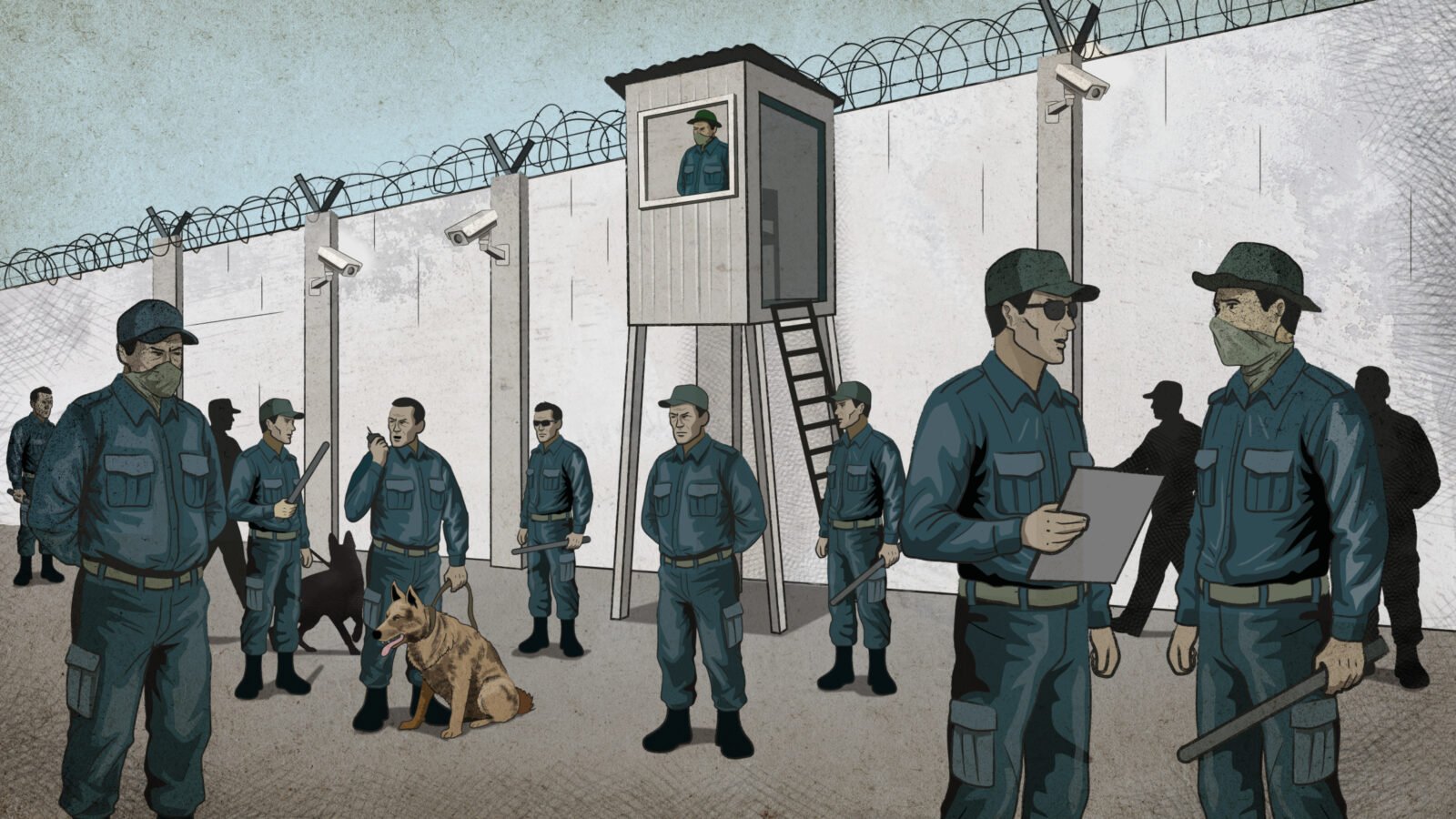
Cambodian police and military personnel allegedly worked as private security guards at scam compounds where thousands of trafficked people were subjected to forced labour, physical abuse and sexual violence, according to a major investigation by Amnesty International. The human rights organisation says serving officers helped maintain control over the compounds, with some guards allegedly using electric batons, beatings and intimidation to prevent workers from escaping the criminal operations.
The findings have renewed concerns about the connections between organised cybercrime, human trafficking and powerful individuals in Cambodia. Based on interviews with survivors, visits to suspected scam facilities and an examination of social media material, Amnesty alleges that private security companies played a central role in protecting the compounds and enforcing the exploitation of people forced to participate in online fraud.
The investigation, titled Official Business: Security Companies and Authorities at Scamming Compounds in Cambodia, draws on interviews with 151 survivors and visits to 82 scam compounds. Researchers also examined social media videos from dozens of security guards whose accounts reportedly showed them wearing company uniforms. According to Amnesty, the evidence helped establish links between criminal scamming operations and five private security companies with connections to influential figures.

Agnès Callamard, Amnesty International’s secretary general, said survivors had described encountering members of Cambodia’s military and police inside scam compounds for years. However, she noted that these accounts had previously been difficult to verify independently. The organisation believes its latest findings provide stronger evidence of the alleged involvement of serving officers in the security arrangements surrounding the operations.
Callamard said the investigation exposed suspected links between Cambodia’s extensive criminal scamming networks and politically connected individuals who had largely escaped public scrutiny. She argued that security companies played a crucial role by controlling exits, pursuing escapees and using threats or violence to enforce compliance.
According to the report, the alleged involvement of these companies went beyond ordinary security work. Guards reportedly helped maintain an environment in which workers could be confined, threatened and forced to continue conducting online scams. Amnesty argues that such arrangements enabled widespread exploitation by making it difficult for trafficked individuals to leave or seek assistance.
The allegations highlight the increasingly complex relationship between cybercrime and human trafficking across South-East Asia. Criminal networks have established large compounds that can resemble legitimate business facilities from the outside but allegedly operate as centres of coercion and fraud. People recruited through misleading employment advertisements may find themselves trapped after travelling to another country in search of work.
According to the United Nations, hundreds of thousands of people have been trafficked into South-East Asia from different parts of the world in connection with scam operations. Many are reportedly attracted by promises of office-based employment, customer service positions or well-paid digital jobs. Once they arrive, some discover that the work is fraudulent and that leaving the premises may expose them to threats, punishment or violence.
Victims are frequently forced to participate in online scams targeting people in other countries. One particularly damaging method is known as pig-butchering fraud, in which criminals build apparently genuine romantic or personal relationships with their targets. They gradually gain the victims’ trust before persuading them to invest money in fraudulent schemes or transfer funds that can never be recovered.
The resulting losses can devastate individuals and families, while the people forced to conduct the scams may themselves be victims of trafficking. This creates a particularly difficult challenge for law enforcement agencies, which must distinguish between those organising criminal operations and people compelled to participate under threat.
Amnesty’s investigation identified Leap Somnang as one of the most significant security companies allegedly connected to the compounds. The organisation said the company appeared to have the largest footprint among those examined, with links to at least 15 compounds across eight Cambodian provinces. Twelve survivors reportedly identified the company through its guards, uniforms or logo.
The report also raised questions about Ban Sophat, who publicly served as chairman of Leap Somnang while holding the rank of colonel in Cambodia’s armed forces. Amnesty alleged that he was believed to control the company and presented photographs it said showed him alongside company guards at two scamming compounds.
However, Ban Sophat denied holding an ownership, director or management position in Leap Somnang, according to a letter cited by Amnesty. He reportedly said that he had served as an adviser to the company’s owner. He also maintained that appearing in a photograph taken at a particular location did not establish that he knew about or participated in the activities conducted there.
These qualifications are important as the allegations concern potentially serious criminal conduct and relationships between private businesses and public officials. The claims about individuals and companies require careful examination, and the evidence must be assessed through appropriate investigative and legal processes.
Amnesty said it had identified more than 20 military and police personnel who appeared to have an active presence inside the compounds, including individuals reportedly working openly as guards. Survivors described alleged abuses ranging from electric shocks and beatings to confinement in dark rooms. Some also said guards remained present while compound managers sexually assaulted women.
The accounts point to the severe risks faced by people held in such facilities. Physical violence can be used to punish those who resist fraudulent work, while threats and isolation may prevent victims from contacting relatives or authorities. For women subjected to sexual violence, the consequences can include lasting physical and psychological harm.
The allegations also raise questions about whether individuals entrusted with public authority may have helped protect criminal activity rather than prevent it. If confirmed, such involvement would undermine public confidence in law enforcement and make it more difficult for trafficking victims to seek protection.
International pressure on Cambodia and neighbouring countries has intensified as the scale of online fraud has become clearer. Estimates cited in the report put annual losses associated with the global scam industry at approximately $100bn, highlighting the enormous financial incentives driving these criminal networks. Cambodia, Laos and Myanmar have faced particular scrutiny because of the presence of large scam operations in the region.
There are also concerns that enforcement measures in one country could push criminal groups towards other locations rather than eliminate their activities. Investigators have reported signs that some parts of the industry may be shifting towards South Asia, underlining the need for cooperation between countries to identify trafficking routes, freeze illicit financial flows and prosecute those responsible.
Cambodia launched its largest-ever crackdown on scam operations in July 2025, pledging to dismantle the criminal networks. Authorities have since claimed to have closed hundreds of scam centres. Amnesty described the industry in Cambodia as dormant, suggesting that the crackdown had disrupted many of the operations examined by researchers.
Nevertheless, the organisation warned that the closure of facilities did not necessarily mean the underlying system had been dismantled. Callamard said Cambodia would not have fully addressed the problem until those who staffed, managed, financed and protected the abusive operations had been held accountable.
The distinction between shutting down a compound and dismantling a criminal network is significant. Buildings can be vacated while the people who organised the operations, supplied their security or benefited financially remain beyond the reach of investigators. Trafficked workers may also continue to need assistance long after a facility closes, including access to medical care, legal support, safe accommodation and help returning home.
Amnesty said it had submitted its findings to Cambodian authorities and received a response from the Ministry of Interior outlining enforcement measures. According to the ministry’s response cited in the report, authorities had disciplined 77 police officers, prosecuted six private security guards for illegally using stun batons and detained 17 military, police and civil officials suspected of colluding with criminals.
The ministry also said that 3,477 suspects had been sent to court. It reportedly reaffirmed a policy of no tolerance, no exemption and no retreat, declaring that Cambodia should not become a safe haven or operating base for transnational criminal networks.
These figures indicate that Cambodian authorities have reported substantial enforcement activity. However, the scale of the alleged abuses and the concerns raised by Amnesty mean that the effectiveness of those measures will be judged not only by the number of raids, arrests or prosecutions but also by whether they lead to lasting accountability and protection for victims.
Amnesty said it did not receive a response from Leap Somnang. The Guardian also contacted Cambodia’s Ministry of Interior, Ban Sophat and the company for comment.
The investigation comes amid growing international recognition that cybercrime compounds are not simply sites of financial fraud. They can also function as places where trafficking victims are deprived of their freedom and forced to commit offences against people around the world. Addressing the problem therefore requires action against both the financial networks behind the scams and the individuals who allegedly facilitate the coercion.

For survivors, justice will depend on more than the closure of the buildings where they were held. They need safe routes to report abuse, protection from retaliation and access to support without being treated automatically as perpetrators of the crimes they were forced to carry out.
The allegations also place renewed responsibility on governments to investigate suspected misconduct within their own institutions. Where serving officers or private security personnel are credibly implicated, independent investigations and transparent legal proceedings are essential to establish the facts and prevent abuses from recurring.
Amnesty’s findings have intensified scrutiny of Cambodia’s response to online fraud and human trafficking. Whether the country can dismantle the alleged networks of protection surrounding these compounds will depend on the willingness of authorities to investigate powerful individuals, hold offenders accountable and ensure that survivors receive meaningful support. The outcome will have implications not only for Cambodia but also for international efforts to combat a criminal industry that exploits vulnerable people while inflicting substantial financial losses across borders.
Related News:
 Delhi Freezes Promotion of Police Officer After Allegations
 Sri Lanka Ex-First Lady Arrested Over Donation Probe
 Pakistan Lawyers Back PTI Long March and Demands
 Delhi Tightens Security Ahead of Election Protest
 Saudi Arabia Faces Outcry Over Execution of Former Minor
 Police Suspect Help in Missing Alice Springs Girl Case
 China mine blast death toll rises to 90
 New Footage Revives Peter Falconio Mystery
 Israeli Strike in Southern Lebanon Kills Seven
 Survivor Sues Musk’s xAI Over AI Abuse Images
 Argentina Orders Return of Nazi-Looted Painting
 Israel Accused of Undermining Palestinian Life
 Harrods Faces Dispute Over Fayed Abuse Compensation
 Japan PM Backs International Criminal Court
 Ukraine and Russia Escalate Long-Range Drone War
 Fayed Survivors Demand Inquiry Into Medical Regulator
 Tennessee Execution Fails After Two Lethal Doses
 Almost Half of Fayed Accusers May Be Trafficking Victims
 Latin America women fear rollback of rights
 Flydubai Co-Pilot Studied in Australia Before Attack
 Christa Pike Wakes After Failed Tennessee Execution
 Israel Promotes Film Challenging Controversial Gaza Documentary
 Delhi Braces for Youth Protests Over Voter Roll Dispute
 India’s Voter Roll Crisis Sparks Nationwide Protests
 Iranian Woman Faces Death Sentence Over Social Media Post
 Pakistan School Roof Collapse Kills 27 Students
 Senegal LGBTQ+ Crackdown Drives People Into Hiding
 UK Bill Faces Warning Over Fayed Trafficking Victims
 Prevent Failings Exposed After Southport Attack
 Ben Roberts-Smith Denies War Crime Allegations in First Statement
 Cartel crackdown raises fears of fresh violence
 Barrister Criticises Trial After Suicide Case Verdict
 Immigration Judges Fear Pressure in Trump Era
 Westminster Council Threatens Charing Cross Soup Kitchen
 BBC Warned About Missing Clothes of Murder Victim
 Nepal-Tibet Flood Death Toll Rises as 2,478 Remain Missing
 Ukraine Villagers Demand Answers After Deadly Arms Depot Strike
 Nepal Flood Survivors Face Unimaginable Loss
 Nepal Tunnel Rescue Offers Hope Amid Flood Devastation
 UN expert urges UK to rethink Israel policy
 Councils spend £125m on illegal children’s care
 Abusive ex used Tesla to control and harass former partner
 Royal Crown Branded Enslaved Africans in Britain’s Slave Trade

 Saudi Pact Raises Risk of Pakistan Entering War
 Clancy Defense Seeks Inquiry Into Lone Juror
 Democrat Says ICE Restricted Detention Camp Oversight
 King Refers Jamaica Slavery Petition to Privy Council
 Nepal PM calls deadly flood a global climate warning
 Yemen fighting forces children out of school and into work
 Tennessee Set to Execute Woman After Clemency Denied
 Cornell Fraternity Assault Investigation Reopened
 London Facial Recognition Trial Ends With False Alert
 Pilot Recalls Fight to Save Flydubai Passengers
 New Prosecutor Takes Over Cornell Assault Case
 Andrew Mountbatten-Windsor Challenges Police Raids
 France Braces for Major Student Protest Mobilisation
 Christa Pike Awake After Failed Tennessee Execution
 Okinawa US Troops Face Curfew After Murder Case
 Police accused of failing abuse victims
 Detective Breaks Down Recalling Double Murder Scene
 Royal Navy Sailor Charged With Alleged Spying
 India’s Youth Movement Alleges Mass Detentions Before Protest
 EU Divisions Deepen Over Israel Policy
 US Execution Livestream Plan Sparks Global Outrage
 Three Convicted in Mexico Surfing Trip Murders
 UAE Says Co-Pilot Planned Suicide Attack on Israel
 Delhi Detains Protest Leaders as Youth Rally Escalates
 British Military School Abuse Victims Denied Justice
 Leaked Files Raise Questions Over Abramovich’s Finances
 Former Students Raise Concerns Over School Culture
 Elizabeth Struhs Inquest Examines Child Safety Failures
 England and Wales Begin Second Wave of Early Prison Releases
 Gadi Eisenkot: Israel’s Anti-Netanyahu Challenger
 French Police Face Scrutiny Over Injured Teenagers
 Suu Kyi Appears in Rare Photos After Royal Gift
 Zelenskyy Says US Failed to Warn Kyiv of Russian Strikes
 US Military Failed to Notify UK Police Over Airman Crime
 Former RAAF Pilot Accused of Murdering Wife
 Serbia’s Student Victory Sparks a ‘Smell of Freedom’