Published: 07 November 2026. The English Chronicle Desk. The English Chronicle Online
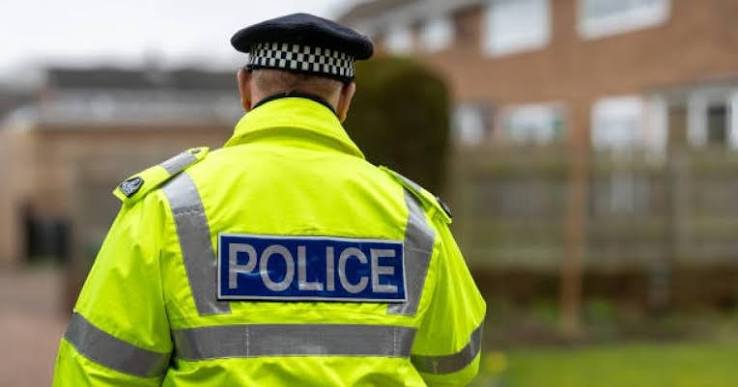
Plans to dramatically reduce the number of police forces across England and Wales have triggered strong opposition from several regional mayors, who warn that creating a small number of powerful regional forces could weaken local accountability and undermine community policing. The proposal, which could transform the structure of British law enforcement, has also raised concerns about the future relationship between policing authorities and the government’s wider devolution agenda.
The controversy emerged after Mark Rowley, commissioner of the Metropolitan Police and one of Britain’s most senior police officers, called for the existing 43 police forces in England and Wales to be merged into between eight and 10 larger regional organisations. His proposal has intensified an already significant debate over how policing should be organised, funded and managed in the coming years.
Rowley argues that the current policing structure is outdated and that a major reduction in the number of forces is necessary to improve efficiency, strengthen specialist capabilities and respond more effectively to modern criminal threats. However, several mayors and regional political leaders believe that such an extensive restructuring could move decision-making further away from local communities and reduce the ability of elected representatives to hold police leaders accountable.

Steve Rotheram, mayor of the Liverpool City Region and a close political ally of Prime Minister Keir Starmer, has emerged as one of the most outspoken critics of the proposal. He described the plan as a form of centralisation disguised as administrative reform, warning that merging smaller forces into a handful of enormous regional organisations would run counter to the government’s commitment to devolving power to local communities.
Rotheram argued that effective policing depends on understanding the particular challenges faced by individual towns, cities and neighbourhoods. According to him, creating large regional forces could make it more difficult for local communities to influence policing priorities and ensure that their concerns receive sufficient attention.
He also questioned the assumption that larger organisations would automatically deliver better public safety. In his view, the benefits of administrative consolidation should not come at the expense of local accountability, which remains an essential element of public confidence in law enforcement.
The disagreement comes as the government prepares to consider recommendations from an official review commissioned by Home Secretary Shabana Mahmood in January. The review is being conducted by Bernard Hogan-Howe, a former Metropolitan Police commissioner, who has been examining possible changes to the structure of policing in England and Wales.
Although the review has not yet been published, it is understood to consider several possible models for reorganising the existing 43 forces. The options reportedly include creating between nine and 18 larger forces, suggesting that the final recommendation could be less radical than Rowley’s preferred arrangement.
One of the central questions concerns how new police boundaries should be established. Several regional mayors believe that police forces should operate within boundaries that correspond to existing mayoral regions. They argue that this would allow elected regional leaders to exercise meaningful oversight while maintaining a closer relationship between police organisations and the communities they serve.
This approach has attracted attention because it could provide a middle ground between maintaining the existing 43-force system and creating only eight or 10 enormous regional forces.
London Mayor Sadiq Khan is also understood to have concerns about the proposed restructuring. His principal worries reportedly involve the potential impact on neighbourhood policing and the accountability of police leadership. The Metropolitan Police already covers almost the entire capital, while the City of London Police operates separately within the historic financial district. A more extensive merger could potentially bring the smaller force under the Metropolitan Police’s wider organisational structure.
The debate has also exposed differences between political leaders in northern England and senior figures within the Metropolitan Police. Some mayors believe that policing reforms should reflect regional needs rather than being driven primarily by the preferences of senior officers based in London.
One unnamed mayor suggested that Prime Minister Keir Starmer could ultimately support a compromise that aligns police forces with mayoral boundaries. Such an arrangement could reduce the number of forces by approximately half, leaving considerably more organisations than the eight to 10 proposed by Rowley.
The mayor suggested that the government was likely to pursue a balanced approach that would strengthen regional oversight without abandoning established local policing arrangements. The experience of Greater Manchester was highlighted as an example of how local accountability and regional leadership could work together.
Bev Craig, mayor of Greater Manchester, has also expressed opposition to the most radical version of the proposed reforms. She believes the government’s decision should recognise the benefits of locally accountable policing and avoid creating unnecessarily large organisations that could weaken established relationships between communities and law enforcement.
Craig argued that Greater Manchester had demonstrated the value of maintaining accountability at a geographical level that makes sense to residents. She indicated that the government should carefully examine existing regional arrangements before deciding how far structural changes should go.
David Skaith, mayor of York and North Yorkshire, delivered another strong criticism, describing the proposal as a real threat to local policing. He also challenged the idea that the Metropolitan Police should be considered an example of consistently successful law enforcement.
Skaith argued that the Met’s own record did not justify its leadership taking a position of authority over policing arrangements in other parts of the country. His comments reflected wider concerns among regional leaders that reform proposals should not be shaped exclusively by the experiences and priorities of London’s police service.
Kim McGuinness, mayor of North East England, also warned against dismantling a policing structure that has supported British law enforcement for generations. She described local accountability as a fundamental part of the criminal justice system and argued that any major restructuring must be approached with considerable caution.
McGuinness was particularly critical of the idea that the head of London’s police force should dictate how policing operates in northern England. She pointed to the difficulties facing the Metropolitan Police and questioned whether its leadership was in a position to lecture other regional forces about policing standards.
Despite the political opposition, Rowley has defended his proposal, insisting that the reforms are intended to strengthen rather than weaken local policing. Speaking in Manchester, he argued that modern criminal activity has become increasingly complex and that individual police forces cannot always respond effectively without access to broader regional resources.
He highlighted the growing challenges posed by international criminal networks and argued that local officers need the support of larger specialist organisations to tackle serious and organised crime. According to Rowley, neighbourhood policing and specialist capabilities should not be treated as competing priorities because successful law enforcement requires both.
His argument has received support from several senior police officers, including Stephen Watson, chief constable of Greater Manchester Police. Watson has warned that failing to reform the existing system would amount to allowing policing standards and operational capabilities to decline over time.
Watson described the need for structural change as essential, pointing to what he considers significant administrative duplication across the 43 existing forces. Each organisation maintains its own headquarters, senior leadership structure, information technology management, human resources departments and procurement arrangements.
He argued that maintaining 43 separate administrative systems creates unnecessary costs and prevents police forces from using their financial resources as efficiently as possible. In his view, merging organisations could reduce duplicated expenditure and release more funding for frontline policing.
The financial argument is particularly important because senior police figures reportedly do not expect the Treasury to provide substantial additional funding for law enforcement. Instead, the proposed restructuring is expected to generate savings that could eventually amount to hundreds of millions of pounds.
Those resources could potentially be redirected towards increasing the number of officers available for frontline duties, improving investigative capabilities and replacing outdated technology. Police leaders believe that modernising systems and sharing specialist resources would help forces respond more effectively to emerging security challenges.
However, the political debate demonstrates that financial efficiency alone may not determine whether the proposed reforms succeed. For regional mayors, the central issue is whether a larger policing structure can maintain public trust while ensuring that local communities retain meaningful influence over decisions affecting their safety.

The government’s eventual decision will therefore involve balancing several competing priorities, including operational efficiency, financial sustainability, specialist crime prevention, neighbourhood policing and democratic accountability.
With the official review still awaiting publication, uncertainty remains over the scale and direction of the proposed changes. The final model could represent a compromise between the existing system and the more ambitious consolidation advocated by senior police leaders.
Whatever decision is taken, the restructuring debate is likely to have lasting consequences for policing across England and Wales. The challenge for the government will be to modernise law enforcement without creating a system in which local communities feel increasingly distant from the institutions responsible for protecting them.
Related News:
 King Refers Jamaica Slavery Petition to Privy Council
 Burnham Opens Door to Possible UK Return to EU
 Drumcree Talks Falter as Legal Challenge Deepens
 UK-France Returns Deal Faces Expiry as Talks Stall
 Farage Rejects Claims Reform Would Let Troops Shoot Migrants
 King Charles Faces Reparations Protests at Antigua Summit
 UK and EU Signal Fresh Push for Defence Cooperation Talks
 UK may ban protests amid rising antisemitism fears
 Farage and Reform UK Reshape British Politics
 Starmer Leadership Under Pressure After Setbacks
 Le Pen’s Popularity Holds Despite Conviction
 Exeter Approves Saudi Military Training Partnership
 Green Leader Targets Starmer’s Former Seat
 Masked Protesters Bring Dover Port Traffic to Standstill
 UN expert urges UK to rethink Israel policy
 UK plans tougher Israel stance with settlement trade ban
 Miliband Rejects Chief Rabbi’s West Bank Warning
 Patriot Platform Raises Concern Across Britain
 Reform UK Receives Record £36m Donation From Crypto Billionaire
 Election Candidate Abuse Raises Alarm in England
 Mahmood Warns Far Right Over Asylum Protests
 Disabled Travellers Seek Fairer UK Care Rules
 Lib Dems Prepare for Election Amid Reform Challenge
 Briton Faces Cyprus Court Over Son’s Fatal Fall
 UK Reviews Hague Child Abduction Cases Involving Abuse
 UK Pauses Chagos Deal Amid US Opposition
 Elif Eralp Emerges as Berlin’s Next Political Force
 Far-Right Activist Arrested After Channel Dinghy Incident
 Portadown protest ends after tense Orange Order standoff
 Free Speech Emerges as Key UK Election Issue
 Three Die in Channel Crossing Attempt Near France
 French Student Protests Escalate Into Violent Clashes
 Green Party faces dispute over Zionism motion
 Drumcree Talks End Without Agreement Ahead of Appeal
 Badenoch Raises Prospect of 2027 UK Election
 French School Protests Escalate as 400 Schools Close
 Latin America women fear rollback of rights
 Gosport Protesters Clash With Police Over Migrant Rescue
 UK Mission in East Jerusalem to Remain Open
 Labour Wins Key London By-election as Greens Fall Short
 Burnham Rises as Farage and Polanski Face Setbacks
 Labour Beats Greens in Crucial London By-election
 Controversial Vaccine Trial Approved in Guinea-Bissau
 Delhi Detains Protest Leaders as Youth Rally Escalates
 UK Gaza Refugee Route Criticised Over False Hope Claims
 UK Greens Face Crisis Over Zionism and Extremism Row
 Ohio Airports Become Key Hubs for ICE Deportation Flights
 England and Wales Begin Second Wave of Early Prison Releases
 UK Urges Interpol to Reject Argentina’s Falklands Arrest Requests
 Brazil Cuts Working Week to 40 Hours in Lula Election Boost
 Gadi Eisenkot: Israel’s Anti-Netanyahu Challenger
 Talarico Faces Tough Voter Test in Texas Senate Race
 UK Could Rejoin EU Through a Switzerland Plus Deal
 UK Visa Refusal Threatens Baby’s Family Christmas
 Macron Condemns Violence as France Faces 2,400 Arrests
 Alberta Referendum Exposes Deep Divisions Over Independence
 UK Pledges Stronger Protections for Disabled Air Passengers
 Suu Kyi Appears in Rare Photos After Royal Gift
 Zelenskyy Accuses US of Delaying Ukraine Missile Supplies
 Fifth Foreign Firm Withdraws From Jerusalem Cable Car Plan
 Milan Braces for Unrest as Debate Intensifies Over Lost Generation
 Greens Face Leadership Test as Jordon Steele-John Misconduct Claims Leave Party in Limbo
 MoD Seeks Out-of-Court Resolution in LGBT Veterans Compensation Fight
 Briton Faces Deportation from Sweden and Separation from Infant Son
 US Midterms Could Reshape Trump’s Second Term
 Serbia’s Student Victory Sparks a ‘Smell of Freedom’
 Trump’s Midterm Campaign Faces Racism and Political Backlash
 UK Land Registry Plan Faces Opposition From Landowners
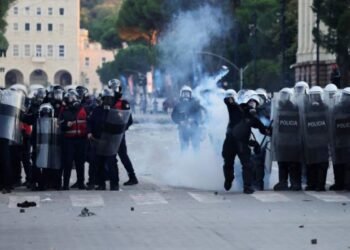 Albania Introduces $6,000 Fines for Violent Protests
 Montenegro Embassy Sparks London Neighbourhood Legal Row
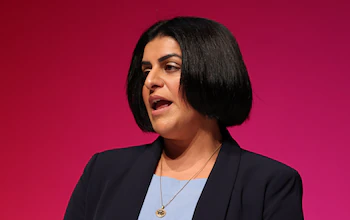 Ministers Clash Over Mahmood’s Migration Reforms
 Bedouin Women Drive Historic Arab Election Gains
 European Peacekeepers Could Return Fire in Ukraine
 Australia Reviews UK Visa Rules Amid Worker Influx
 Henry Nowak Family Rejects Political Use of His Death
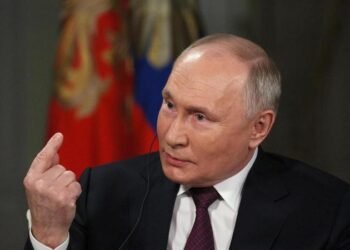 Exiled Journalists Defy Putin’s Growing Media Crackdown
 UK Parliament Faces Risk of Notre Dame-Style Fire
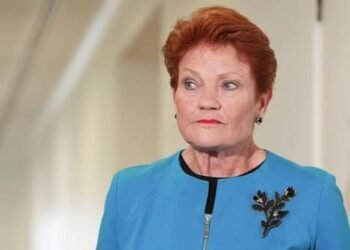 Hanson Takes Racial Discrimination Case to High Court
 Judge Blocks Trump’s $100m Washington Arch Project
 UK Employers to Be Forced to Publish Job Salaries