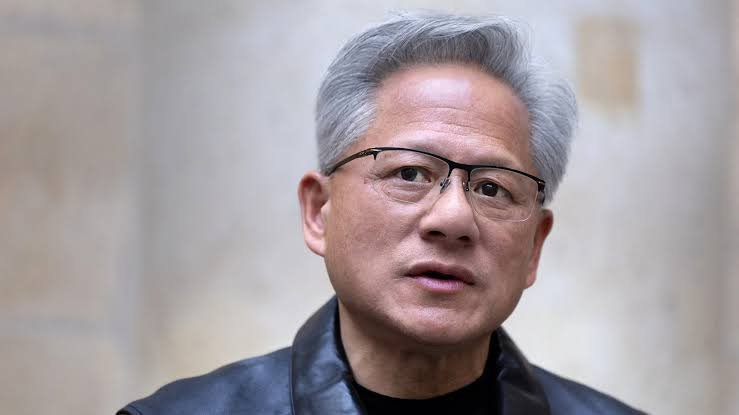
Nvidia is facing one of the most serious leadership crises in its history as reports emerge that the company’s board of directors is considering whether to remove co-founder and chief executive Jensen Huang following a turbulent week involving allegations of foreign intelligence links, revelations about his personal relationships and a sharp decline in the company’s share price. The uncertainty has unsettled investors and raised questions about the future leadership of one of the world’s most influential technology companies.
According to multiple media reports, Nvidia’s board met on Wednesday to consider Huang’s position as chief executive. The reported development represents a significant change from the board’s earlier position, when directors publicly expressed confidence in Huang and his leadership team. However, the situation reportedly became more complicated after additional allegations concerning his personal relationships emerged, intensifying scrutiny of the company’s leadership and corporate governance.

The controversy initially centred on Huang’s reported relationship with Alice Huang, a businesswoman accused of having connections to Chinese intelligence. The allegations have attracted particular attention because Nvidia occupies a strategically important position in the global technology industry, supplying advanced semiconductor chips used in artificial intelligence development, data centres and other critical computing infrastructure.
Huang has acknowledged having a romantic relationship but has denied knowing that the woman was allegedly connected to the Chinese government. US President Donald Trump has also commented on the matter, saying Huang denied having knowledge of any alleged intelligence links. The allegations against Alice Huang have not been established as proven facts, and the circumstances remain subject to investigation.
The growing controversy has created significant uncertainty among shareholders, particularly as Nvidia’s market valuation depends heavily on investor confidence in its leadership, technological direction and continued dominance of the artificial intelligence sector.
The company’s stock reportedly fell by more than 8 per cent in after-hours trading following a Wall Street Journal report that Nvidia was preparing to remove Huang from his position. If the reported losses were sustained, the company would have lost approximately $685 billion in market value since its board announced an investigation into the relationship involving Alice Huang.
The scale of the potential financial damage highlights how quickly concerns surrounding corporate leadership can affect investor sentiment, particularly in a company whose valuation has reached extraordinary levels during the global artificial intelligence boom.
Armina Rosenberg, a portfolio manager and co-founder of Minotaur Capital, which holds Nvidia shares, suggested that investors were increasingly considering a future in which the company operates without its founder. Her assessment reflected a growing concern that Huang’s departure was becoming a realistic possibility rather than a remote risk.
US technology analyst Dan Ives also indicated that Nvidia might now have to prepare for a future without Huang at the helm. Such assessments have intensified discussions about succession planning and whether the company could maintain its position in the global semiconductor industry without the executive who has led its development for more than three decades.
Under Nvidia’s corporate bylaws, the chief executive can be removed with or without cause through a majority vote of the board of directors. The company has 11 directors, and all except Huang are considered independent. This arrangement gives the independent directors the authority to make decisions about the chief executive’s future if they believe a leadership change is necessary to protect the company’s interests.
The board has already taken steps to examine the allegations independently. Independent directors appointed the prominent US law firm Wachtell, Lipton, Rosen & Katz to conduct a comprehensive investigation into Huang’s relationship with Alice Huang and the circumstances surrounding the reported foreign intelligence concerns. The firm has been tasked with carrying out an independent review, while Huang has been instructed to continue leading the company during the investigation.
The appointment of an external law firm indicates the seriousness with which Nvidia’s directors are approaching the controversy. For a company operating at the centre of international competition over artificial intelligence and advanced semiconductor technology, maintaining investor confidence and protecting corporate governance standards are particularly important.
The situation became more complicated following reports that Huang had a separate extramarital relationship with a company employee identified as Kimberly Powell. According to a New York Times report, Powell previously served as Nvidia’s president of healthcare. She was reportedly captured on video displaying affection towards Huang at a hotel during a company conference in March.
The additional report has brought renewed attention to Huang’s personal conduct and raised questions about workplace relationships, executive responsibilities and potential conflicts of interest within the organisation. However, the reported relationship does not independently establish any corporate wrongdoing, and the circumstances surrounding it have not been fully clarified.
Huang has been married to his wife, Lori, since 1985. In an email sent to Nvidia employees on Sunday, he acknowledged having an affair and said he would cooperate with the company’s internal investigation. Although he did not directly identify Alice Huang in the reported communication, his admission added another dimension to the growing controversy.
The board’s decision to investigate reports that Huang may have been targeted by a foreign intelligence effort also reflects the wider national security implications surrounding Nvidia’s operations. The company produces advanced graphics processing units and other semiconductor technologies that are essential to the development and operation of sophisticated artificial intelligence systems.
Nvidia’s products are used by major technology companies, including OpenAI, Anthropic and Google, to train and operate increasingly powerful AI models. Its chips have become central to the global technology race, with the United States and China competing for leadership in advanced computing, semiconductor manufacturing and artificial intelligence research.
Consequently, any uncertainty surrounding the company’s leadership could have implications beyond its shareholders. Governments, technology businesses and investors closely monitor Nvidia because its products form an essential part of the infrastructure supporting the rapidly expanding AI economy.
Huang co-founded Nvidia in 1993 and has played a central role in transforming it from a graphics technology company into one of the world’s most valuable businesses. His leadership has been closely associated with the company’s technological strategy, expansion into artificial intelligence and growing influence in the global semiconductor market.
His management approach is also considered unusual compared with that of other major technology executives. Huang reportedly maintains dozens of direct reports, creating a highly centralised leadership structure in which he exercises significant influence over the company’s operations and strategic decisions.
This arrangement has contributed to concerns about succession planning. Huang has no immediately obvious successor, and his potential departure could create a leadership vacuum at a particularly sensitive moment for the company. Replacing an executive who has shaped Nvidia’s strategy for more than 30 years would be a substantial challenge, especially while competition in the AI industry continues to intensify.
The financial significance of Huang’s position is also considerable. He personally owns more than 870 million Nvidia shares, representing approximately 3.6 per cent of the company. His estimated net worth stands at around $148 billion, making him one of the world’s wealthiest individuals. His substantial shareholding means that any leadership transition could have important implications for the company’s ownership structure and market perception.
The controversy has also attracted attention in Taiwan, where Alice Huang reportedly travelled eight times during 2024 and 2025. A Taiwanese government minister addressed questions about reports suggesting that the United States had advised Taiwan as early as 2024 to monitor her movements.
Chiu Chui-cheng, Taiwan’s Mainland Affairs Council minister, said there had been no special warning signs concerning Alice Huang during those visits. He added that Taiwanese authorities would have subjected her to heightened scrutiny if they had received critical intelligence indicating a potential security threat.
His comments introduce another important dimension to the controversy, particularly given Taiwan’s strategic importance in the global semiconductor industry and its sensitive relationship with China. The island is home to a major semiconductor manufacturing ecosystem and plays a crucial role in the international supply chain for advanced computing technologies.
Alice Huang has been described as an executive at Megaspeed, a Singapore-based data centre company that uses Nvidia chips. Her reported professional connections with the semiconductor and data centre industries have contributed to questions about whether the relationship with Jensen Huang could have exposed sensitive business information or created potential security vulnerabilities. However, the allegations of espionage remain unproven, and no established finding of wrongdoing has been presented in the reported developments.
US political figures have also become involved in the unfolding controversy. President Donald Trump has publicly defended Jensen Huang, describing him as an honourable individual who has performed an exceptional job leading Nvidia. The president’s comments indicate that Huang continues to enjoy support among influential figures despite the growing scrutiny.
Tesla and SpaceX chief executive Elon Musk has also expressed support for Huang. Responding to a question on the social media platform X about whether he would employ Huang if the Nvidia chief executive became unemployed, Musk said it would be an honour. His response demonstrated that some prominent figures in the technology industry continue to hold Huang in high regard.
Nevertheless, political and industry support may not be sufficient to resolve concerns among investors and independent directors. The central question remains whether Nvidia can maintain confidence in its governance arrangements while addressing the allegations through a credible and transparent investigation.
The controversy has also prompted renewed attention to US export controls governing advanced semiconductor technology destined for China. Democratic senators Elizabeth Warren and Chris Coons reportedly asked senior members of the Trump administration to preserve all government documents relating to Nvidia’s chip exports to China.
In a letter addressed to Commerce Secretary Howard Lutnick, Secretary of State Marco Rubio and White House Chief of Staff Stephen Miller, the senators expressed concern about the government’s ability to enforce export restrictions and protect national security.
Their intervention suggests that the controversy could develop into a broader political and regulatory issue involving technology exports, intelligence concerns and the protection of sensitive American computing capabilities. Nvidia’s position in the global semiconductor supply chain makes the matter particularly significant for policymakers seeking to prevent advanced technologies from reaching unauthorised users.
Nvidia has not immediately provided a detailed public response to the latest reports about the board’s deliberations. The independent investigation is expected to play an important role in determining how the company addresses the allegations and whether Huang can continue leading the business without further damage to investor confidence.
For Nvidia, the challenge is particularly complicated because its success has become closely associated with its founder. The company must protect its reputation, reassure shareholders and maintain confidence among customers and international partners while dealing with questions about its leadership and national security implications.

The coming days could therefore prove decisive for one of the most influential companies in the global technology industry. Whether Huang remains chief executive or the board eventually pursues a leadership transition, the outcome could reshape Nvidia’s corporate future and influence investor confidence across the wider artificial intelligence sector.
Beyond the immediate controversy, the situation highlights the growing importance of corporate accountability in an industry where individual executives can exercise extraordinary influence over technology, financial markets and international economic competition. Nvidia’s response will be closely watched as investors await clarity over the investigation, the board’s final position and the future direction of the company.
Related News:
 China’s AI Ambitions Hit $2.4 Trillion Market Setback
 Nvidia and Jensen Huang Face Shareholder Lawsuit
 Trump backs voluntary AI safety pact with tech giants
 Bank Chief Calls for Power to Intervene in AI
 Firmus Abandons Major ASX Listing Amid Investor Doubts
 EU Caps Chinese Hybrid Car Imports at 350,000
 Global Tech Sell-Off Deepens on Inflation and AI Debt Fears
 US Bans BYD Vehicles at Japan Military Base
 Anthropic IPO Reveals AI Boom’s Huge Costs and Risks
 Big Tech Faces a New Political Reckoning in America
 EU Manufacturers Face Growing Chinese Competition
 Shein targets $27bn valuation in Hong Kong debut
 Firms on both sides fear damage from US-Canada trade war
 UK Risks Falling Behind in AI Race
 Oil nears $100 as Saudi attacks shake markets
 AI CEOs Call for Slower Development
 Oil Prices Surge as Saudi Pipeline Closure Deepens Crisis
 JLR Eyes NATO Market With New Defender Military Vehicle
 Anthropic Backs $31.9bn Queensland Data Centre
 Next Raises Profit Forecast After Strong Summer Sales
 OpenAI Reveals Six Cases of Concerning AI Behaviour
 UK Productivity Improves as Bank Weighs Interest Rates
 Trump Threatens EU Over Canada Partnership Proposal
 Nvidia chief rejects AI extinction fears
 AI Takes Centre Stage in Trump-Xi Talks
 Trump gives Xi red-carpet welcome as trade truce extends
 Chinese Hybrid Car Surge Raises EU Auto Industry Concerns
 Xi urges Trump to avoid US-China military conflict
 TalkTalk Races to Sell Arms as Administration Looms
 BBC Three and Scotland Face Online-Only Future
 Feeld Founders Receive Record Dividend as Sales Rise
 UK Diesel Reaches £2 as Inflation Surges Across Europe
 Minister Rejects Fears of UK Diesel Shortage
 Asos Investigates Hack Claims After Customer Alerts
 EU-China Talks Target Surge in Hybrid Car Imports
 Samsung Heads for Record Profit as AI Chip Demand Surges
 US Moves to Restrict Chinese Labs Testing Electronics
 Hall and Woodford Win Nobel Economics Prize
 Meta Faces Election Bias Claims Ahead of Brazil Runoff
 Meta Reaches Deal to Keep Zuckerberg in California
 North Korea Linked to Record $6.3bn Binance Crypto Heist
 Global Crises Test Diplomacy as Trump’s Policies Face Scrutiny
 M&S Profits Rebound to £355m After Cyber-Attack
 Elon Musk’s $446m Midterm Gamble Ends in Defeat
 British AI Startup Outshines Human Forecasters in Global Prediction Contest
 Artemis II Returns After Historic Moon Flyby
 London Launches First Self-Driving Taxis
 Swedish Mining Push Puts Sami Land Rights Under Pressure
 Billionaire Chris Rokos poised to leave UK
 JPMorgan Boss Warns Against UK Bank Tax Rise
 UK Retailers Accused of Breaking Refund Laws
 Farage Threatens Union Funding Ban Over Reform Donations
 Horse Hill Oil Site Sold as New Drilling Bid Emerges
 Entain Plans 400 Job Cuts After Profit Update
 Trump Threatens EU With Tariffs Over Canada Proposal
 US Sanctions Open New Battle for Cuba Assets
 Tom Watson Takes Senior Role at Palantir
 British Columbia Sues OpenAI Over School Shooting
 AO Acquires Jessops in Camera Retail Expansion
 Sheikh Tahnoon and the UAE’s AI Ambitions
 French Debt Fears Put Euro Markets Under Pressure
 IMF Warns Governments Over Rising Debt Burdens
 Tesco Raises Profit Forecast as Consumer Confidence Holds
 Ministers Push ATO to Reconsider Credit Card Ban
 UK Water Firms Earn Millions From Industrial Wastewater
 UK Pharmacy Body Drops Teva After Ethical Concerns
 Brazil Court Scandal Threatens Lula as Bolsonaros Rise
 Healey Plans £1bn Online Marketplace Tax Crackdown
 Iran War Pushes UK Corporate Profit Warnings to Two-Year High
 UK Inflation Hits 3.5% as Middle East War Drives Fuel Costs
 Sainsbury’s Warns of Tough Christmas Ahead
 Spain Deepfake Ad Sparks Election Outrage
 Labour MPs Urge Burnham to Lead UK Reindustrialisation
 Australia Faces Deeper Economic Slowdown
 Australia Raises Interest Rates to 18-Year High
 Poundland Remains Vulnerable as Rescue Talks Continue
 Paraguay President Quits After Major Bank Collapse
 Labor Minister Defends Chalmers Amid Budget Tensions
 Starbucks to Create 7,500 UK Jobs in Major Expansion
 US Treasury Chief Moves to Military Base Over Iran Threat