Published: 27 November 2026 | The English Chronicle Desk | The English Chronicle Online
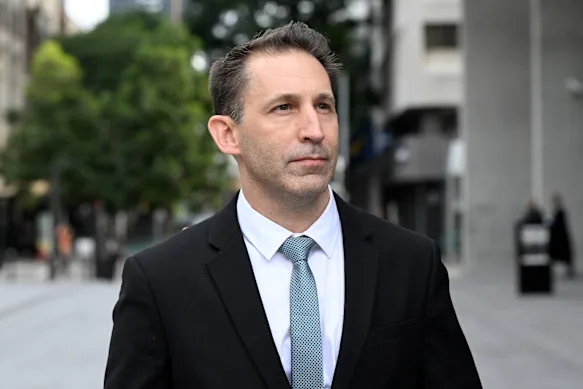
A former Royal Australian Air Force pilot has been convicted of murdering his wife after a Brisbane Supreme Court jury concluded that her death had been deliberately staged to resemble a tragic lawnmower accident. Robert John Crawford was found guilty following a closely watched trial that examined allegations of marital deception, financial motives and an attempt to disguise a killing as an accidental death.
The verdict was delivered on Friday after jurors spent several days considering the evidence presented during more than three and a half weeks of proceedings. Emotional reactions were heard inside the courtroom as the jury announced its decision, with gasps and sobs reportedly coming from those present. Crawford showed no visible reaction when the guilty verdict was delivered.
The case centred on the death of Frances Crawford, whose body was discovered by paramedics at approximately 4am near an overturned ride-on lawnmower at the couple’s property in Queensland’s Lockyer Valley, west of Brisbane.
Her body was found at the bottom of a retaining wall, while her husband was attempting to resuscitate her when emergency personnel arrived.

Prosecutors alleged that Crawford had murdered his wife by strangulation during the early hours of 30 July 2024, or late on 29 July, before arranging the circumstances to suggest that she had died in a lawnmower-related accident.
The prosecution argued that the killing was motivated by financial concerns and the prospect of losing valuable property and retirement security if Frances proceeded with a divorce.
The jury ultimately accepted the prosecution’s case, bringing a dramatic conclusion to a trial that attracted considerable attention because of the alleged efforts to conceal the circumstances surrounding the woman’s death.
The circumstances surrounding Frances Crawford’s death became the central focus of the investigation after emergency services were called to the couple’s rural property in the early hours of 30 July 2024.
Paramedics discovered her body at the bottom of a retaining wall beside an overturned ride-on lawnmower.
Her husband, Robert Crawford, was present and attempting to perform resuscitation when emergency personnel arrived.
Initially, the circumstances presented the appearance of a possible accident involving the lawnmower. However, investigators subsequently examined the scene and the injuries sustained by Frances, raising questions about whether the incident had occurred as it appeared.
Police forensic examinations became an important part of the prosecution’s case.
Investigators examined the nature and location of Frances’s injuries, alongside the circumstances in which her body was discovered.
The prosecution alleged that her death had resulted from strangulation rather than an accidental incident involving the machinery.
The jury was asked to consider whether the position of the body, the overturned lawnmower and the surrounding circumstances were consistent with an accident or formed part of an attempt to disguise a deliberate killing.
After hearing the evidence, jurors accepted the prosecution’s allegations and found Crawford guilty of murder.
A major element of the prosecution’s case concerned the couple’s relationship and the financial consequences Crawford allegedly faced if his wife proceeded with divorce proceedings.
Prosecutors described him as a serially unfaithful husband whose relationships with other women had contributed to the breakdown of his marriage.
The court heard allegations that Crawford was concerned about losing a substantial financial interest in the couple’s assets if Frances followed through with plans to end their relationship.
Their hilltop property in the Lockyer Valley was valued at approximately A$2m, and prosecutors argued that a divorce settlement could threaten his ownership of the home and his plans for early retirement.
Crown prosecutor Chris Cook told jurors that Crawford understood the financial consequences he could face.
The prosecution argued that his concerns about losing property and financial security provided a motive for killing his wife.
Cook also referred to communications between Crawford and other women, arguing that those conversations demonstrated his awareness of the potential consequences of divorce.
The financial allegations became an important part of the prosecution’s explanation of why Crawford would have wanted to prevent the marriage from ending through ordinary legal proceedings.
However, the jury was required to consider the full body of evidence rather than relying solely on the alleged financial motive.
One of the most serious allegations presented during the trial was that Crawford deliberately attempted to make Frances’s death appear accidental.
Prosecutors described him as a manipulative individual who had allegedly arranged the circumstances surrounding the discovery of his wife’s body.
Cook told the court that Crawford was responsible for Frances’s body being found at the bottom of the retaining wall.
The prosecution argued that the overturned lawnmower and the location of the body were part of an attempt to create the appearance of a fatal accident.
The alleged staging became a central issue during the proceedings because the defence and prosecution presented competing interpretations of the available evidence.
Jurors were required to examine the physical evidence, the forensic findings and the surrounding circumstances to determine whether the death had been accidental or the result of deliberate violence.
The guilty verdict indicates that the jury was satisfied beyond reasonable doubt that Crawford was responsible for murdering his wife.
The case has also highlighted the importance of detailed forensic investigations when an apparent accident raises questions about the circumstances of a person’s death.
Over three and a half weeks, the court heard evidence from investigators, forensic specialists and other witnesses.
Police forensic analysis of Frances Crawford’s injuries formed a significant part of the prosecution’s presentation.
The court also examined text messages exchanged between the couple, which provided additional context about their relationship and the events preceding her death.
The defence called a forensic physician from the United Kingdom, whose evidence formed part of its challenge to the prosecution’s interpretation of the medical findings.
The competing expert evidence required jurors to consider the medical and physical circumstances surrounding Frances’s death carefully.
Forensic evidence is often particularly important in murder trials where the alleged crime has been disguised as an accident.
Investigators must establish whether the physical evidence supports the reported explanation or points towards a different sequence of events.
In the Crawford case, the jury heard extensive arguments about the injuries, the location of the body and the circumstances involving the overturned lawnmower.
The evidence was considered alongside the couple’s relationship history and communications.
As part of the proceedings, jurors visited the Crawfords’ property in the Lockyer Valley, west of Brisbane.
The hilltop residence, surrounded by bushland, was an important location in the prosecution’s account of the alleged crime.
The visit allowed jurors to observe the physical setting in which Frances was discovered and consider the layout of the property.
The location of the retaining wall and the surrounding environment were relevant to the competing accounts of what had happened.
Seeing the property also provided jurors with a clearer understanding of the setting in which the prosecution alleged the murder and subsequent staging had occurred.
The visit formed part of a trial that relied heavily on the relationship between physical evidence and the accounts presented by both sides.
The verdict prompted an emotional response inside Brisbane Supreme Court.
After deliberating from Tuesday morning, jurors returned their decision on Friday, finding Crawford guilty of murder.
Gasps and sobs could be heard in the courtroom as the result was announced.
Crawford himself showed no visible reaction to the decision.
The outcome brought an end to a lengthy legal process that had examined the death of Frances Crawford, the couple’s troubled marriage and the prosecution’s allegations of financial motivation.
For those who followed the case, the verdict represented the conclusion of a trial involving disturbing allegations about domestic violence, deception and an attempt to disguise a murder.
The conviction also reflected the jury’s acceptance of the prosecution’s explanation of how Frances died and the circumstances in which her body was discovered.
The case has renewed attention on the serious consequences that can emerge when relationship breakdowns involve financial disputes, controlling behaviour and alleged violence.
Divorce proceedings can involve difficult decisions about property, finances and family arrangements. However, the prosecution’s case demonstrated how financial considerations can become relevant when investigators examine the possible motives behind an alleged killing.
The allegations in the Crawford case were particularly serious because prosecutors argued that the prospect of losing a valuable property and retirement plans contributed to the decision to murder Frances.
The trial also demonstrated the importance of taking unusual circumstances surrounding apparent accidents seriously.
Although emergency responders initially encountered a scene involving an overturned lawnmower, subsequent investigations examined whether the physical evidence supported that explanation.
The case illustrates why forensic analysis, witness evidence and careful examination of the surrounding circumstances are essential in establishing the truth behind suspicious deaths.

Robert John Crawford’s conviction represents a significant development in a case that began with the discovery of Frances Crawford’s body at the couple’s rural Queensland property in July 2024.
The prosecution successfully argued that her death was not an accident but a deliberate killing that had been made to look like one.
The jury considered forensic evidence, communications between the couple, expert testimony and the circumstances surrounding the discovery of the body before reaching its decision.
The verdict has brought criminal accountability for Frances’s death and concluded a trial that exposed deeply troubling allegations about the couple’s relationship.
The case also serves as a reminder of the importance of independent forensic investigation when the circumstances of a death appear inconsistent or raise unanswered questions.
As the legal process moves beyond the conviction, attention will remain on the consequences of the verdict and the wider lessons from a case in which prosecutors alleged that a murder had been concealed behind the appearance of an ordinary domestic accident.
Related News:
 Three Convicted in Mexico Surfing Trip Murders
 Helen Haines Loses Both Legs After Alleged Attack
 Alan Jones Trial Paused for Melbourne Cup Viewing
 Teen Charged After Layla Jeffery Found Dead
 Fugitive Developer Rants at NSW Corruption Inquiry
 Iran School Strike Raises War Crimes Questions, UN Says
 Briton Faces Cyprus Court Over Son’s Fatal Fall
 King Refers Jamaica Slavery Petition to Privy Council
 French Student Protests Escalate Into Violent Clashes
 Israel-bound Plane Lands in Saudi Arabia After Cockpit Fight
 French School Protests Escalate as 400 Schools Close
 Latin America women fear rollback of rights
 NSW Police Bid Delays Inquiry Into Sydney Protest
 Sam Wood Denied Bail Over Alleged Domestic Assault
 Trader Wins Unfair Dismissal Case After Overseas Work
 Navi Pillay Wins Nobel Peace Prize for Justice
 UAE Says Co-Pilot Planned Suicide Attack on Israel
 Baby Boy Found Dead at Adelaide Motel: Two Charged
 Elizabeth Struhs Inquest Examines Child Safety Failures
 Camera Discovery Triggers Navy Ship Investigation
 French Police Face Scrutiny Over Injured Teenagers
 One Nation Pledges $2,000 Baby Subsidy in Victoria
 Mexican Court Sentences Three Men to 158 Years Each
 Macron Condemns Violence as France Faces 2,400 Arrests
 Four Dead in Fast-Moving Fire at Canadian Military Base
 Marseille Activist Defies France’s Powerful Drug Gangs
 Helen Haines Loses Leg in Alleged Targeted Attack
 Zelenskyy Accuses US of Delaying Ukraine Missile Supplies
 Greens Face Leadership Test as Jordon Steele-John Misconduct Claims Leave Party in Limbo
 Former RAAF Pilot Accused of Murdering Wife
 Serbia’s Student Victory Sparks a ‘Smell of Freedom’
 Trump’s Midterm Campaign Faces Racism and Political Backlash
 Albanese Vows Swift Action on MP Safety Threats
 Erin Patterson Faces Life in Prison After Appeal Loss
 Victorian Magistrate Reprimanded Over Courtroom Remarks
 Hanson Takes Racial Discrimination Case to High Court
 Lamarre-Condon Defends First Shot in Double Murder Trial
 Seven Arrested After Bonfire Night Violence in Scotland
 Teenager Found Alive After Six Days Lost in Australian Bush
 Helen Haines Leaves Hospital After Double Amputation
 Twin Baby’s Death Raises Questions Over Home Birth Risks
 NSW Liberal Exodus Deepens as Mark Speakman Quits
 Alex Greenwich Withdraws Support for Fred Nile State Funeral
 Northern Ireland Family of Three Shot Dead in Maguiresbridge Home Incident
 Just Stop Oil Protesters Convicted Amid Climate Defence Row
 Ben Roberts-Smith Denies War Crime Allegations in First Statement
 Learner Driver Charged After Expo Tragedy
 Barrister Criticises Trial After Suicide Case Verdict
 New Footage Revives Peter Falconio Mystery
 Westminster Council Threatens Charing Cross Soup Kitchen
 Abusive ex used Tesla to control and harass former partner
 Turkey LGBTQ Crackdown Expands With New Arrests
 Mahmood Warns Far Right Over Asylum Protests
 British Columbia Sues OpenAI Over School Shooting
 Democrat Says ICE Restricted Detention Camp Oversight
 Tennessee Set to Execute Woman After Clemency Denied
 London Facial Recognition Trial Ends With False Alert
 Burnham Opens Door to Possible UK Return to EU
 Gosport Protesters Clash With Police Over Migrant Rescue
 Okinawa US Troops Face Curfew After Murder Case
 Police accused of failing abuse victims
 South Africa Withdraws Directive on Asylum Applications
 Australian Advocates Seek Subsidised Drugs for PMOS
 British Military School Abuse Victims Denied Justice
 Former Students Raise Concerns Over School Culture
 Pakistan School Roof Collapse Kills 27 Students
 Senegal LGBTQ+ Crackdown Drives People Into Hiding
 UK Bill Faces Warning Over Fayed Trafficking Victims
 UK Visa Refusal Threatens Baby’s Family Christmas
 Fire Engulfs Hitler’s Eagle’s Nest Retreat
 Flávio Bolsonaro Reportedly Leaves Brazil After Election Defeat
 King Charles Faces Reparations Protests at Antigua Summit
 Met Police Chief Urges More Russell Brand Victims to Speak Out
 Early-Release Prisoners Face Rising Risk of Homelessness
 Russell Brand’s Barrister Reports Himself to Legal Watchdog
 Iran Death Row Boxer Wins Prestigious Human Rights Award
 NSW Inquest Examines Deaths of Twins After Free Birth
 Bikie Faces Questions Over Fake $20,000 Souvlaki Bill
 Toxic Vape Sedative Linked to Hospitalisations in NSW
 Australian Defence Bill Sparks Rule of Law Concerns