Published: 05 October 2026. The English Chronicle Desk. The English Chronicle Online.
US authorities have arrested a California woman accused of carrying out surveillance on the son of Taiwan’s president on behalf of Chinese officials, in a case that has highlighted growing concerns in Washington and Taipei over alleged attempts by Beijing to monitor Taiwanese citizens abroad.
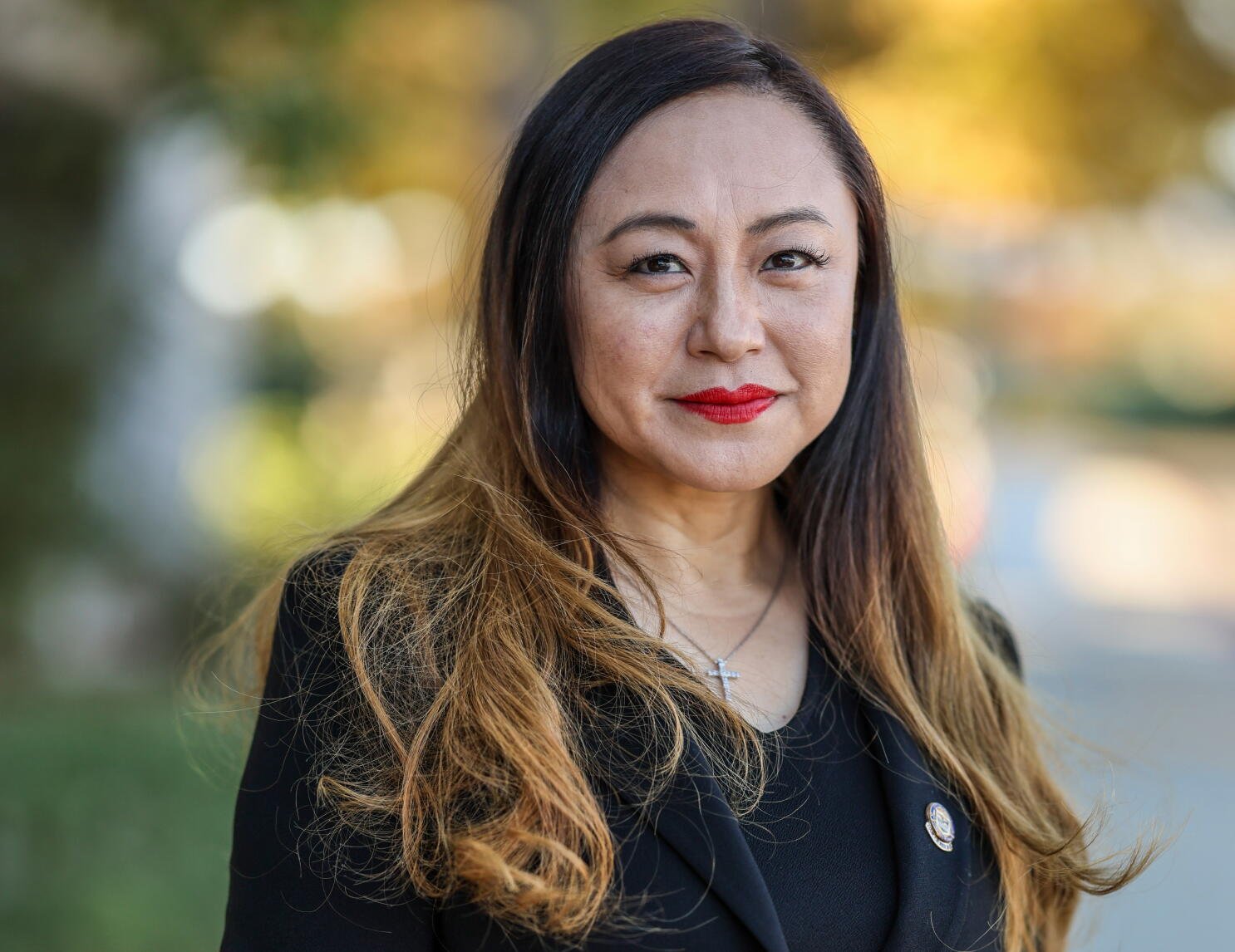
The Federal Bureau of Investigation arrested Wanying Zhang, also known as Heather, at Los Angeles International Airport on Sunday as she was preparing to leave the United States for China, according to the agency. Zhang, 34, a resident of Irvine, California, has been charged with acting as an unregistered foreign agent.
The case centres on allegations that Zhang gathered information about a son of Taiwanese President Lai Ching-te and his family while operating under the direction of Chinese officials. US prosecutors allege that her activities included collecting photographs, video footage and vehicle licence plate information connected to the Taiwanese president’s family.

The FBI has not directly identified the alleged target in its own public statement. A report published elsewhere subsequently identified him as Lai Ting-yu, who is a resident of the United States. The allegations have prompted a strong reaction from Taiwan, where officials described the reported surveillance as an example of what they called transnational repression.
Taiwan’s presidential office condemned the alleged activities and thanked the US government for taking action. Presidential spokesperson Karen Kuo said the reported conduct represented a serious violation of human rights and national sovereignty.
The allegations come against the backdrop of increasingly tense relations between Taiwan and China. Beijing considers Taiwan part of Chinese territory and has repeatedly opposed President Lai and his Democratic Progressive Party, which supports Taiwan’s distinct political identity and rejects Beijing’s claim that the island is under Chinese sovereignty.
Lai has maintained that Taiwan’s future can only be determined by the people of Taiwan. His position has repeatedly drawn criticism from the Chinese government, which regards moves toward greater international recognition of Taiwan as unacceptable.
According to allegations outlined by the US Justice Department, Zhang travelled to Seattle in 2025 after receiving instructions from Chinese officials. During the trip, prosecutors allege that she gathered information about the Taiwanese president’s son and members of his family before transmitting that material to individuals working on behalf of China.
The information allegedly included images, video and licence plate details. Such information can potentially be used to identify movements, establish patterns of activity or build detailed profiles of individuals, making surveillance of politically prominent families a particularly sensitive matter.
US prosecutors also allege that Zhang employed methods intended to avoid detection. Bill Essayli, the first assistant US attorney for the Central District of California, said she allegedly used tradecraft while conducting the surveillance and failed to notify US authorities that she was working for a foreign government.
The charge of acting as an unregistered foreign agent reflects US laws requiring certain individuals who operate in the United States on behalf of foreign governments or foreign political interests to disclose that relationship to American authorities. Prosecutors will have to establish the allegations through the legal process, and Zhang is presumed innocent unless proven guilty.
It was not immediately clear whether Zhang had obtained legal representation. She was expected to appear in federal court in Los Angeles on Monday following her arrest at the airport.
The timing of the arrest is significant because Zhang was allegedly preparing to leave the United States for China. Her detention prevented her from completing the planned journey and allowed federal authorities to bring the case before a US court.
The allegations also come at a time when Washington has intensified its focus on foreign interference, espionage and transnational repression. US authorities have increasingly warned that governments can attempt to exert influence beyond their borders by monitoring dissidents, political activists, ethnic communities and individuals associated with foreign governments.
For Taiwan, the case carries an additional dimension because senior officials and their families have become increasingly conscious of security threats linked to Beijing. Taiwan has faced growing military, diplomatic and political pressure from China in recent years, including military exercises around the island and increasingly frequent Chinese military activity in nearby waters and airspace.
The reported surveillance of a presidential family member in the United States therefore raises concerns beyond the immediate criminal allegations. Taiwanese officials have long warned that pressure on Taiwanese citizens can extend beyond the island itself, particularly in countries where Taiwanese nationals study, work or maintain family connections.
Taipei’s description of the alleged conduct as transnational repression reflects its broader concern that individuals connected to Taiwan could face monitoring or intimidation even when they are outside territory controlled by Beijing.
China’s foreign ministry had not responded to requests for comment on the allegations at the time of the report. The absence of an immediate response means that the Chinese government’s position on the specific accusations remains unclear.
The case also illustrates the complicated nature of the US relationship with Taiwan. Washington does not maintain formal diplomatic relations with Taipei, following its establishment of diplomatic relations with Beijing in 1979. Nevertheless, the United States has remained Taiwan’s most important international security partner and a major supplier of military equipment to the island.
The US has repeatedly stated that it supports maintaining peace and stability across the Taiwan Strait while providing Taiwan with weapons and other forms of support. At the same time, Washington has sought to manage its relationship with Beijing, which considers the Taiwan issue one of its most sensitive national-security concerns.
Any allegation involving Chinese intelligence activity against a member of Taiwan’s presidential family is therefore likely to attract considerable attention in both Washington and Taipei.
The case may also fuel debate over how foreign governments operate inside the United States and how authorities can distinguish legitimate diplomatic, commercial and community activity from covert operations conducted on behalf of foreign states.
Surveillance involving photographs, videos and licence plate information can appear relatively ordinary when considered individually, but investigators argue that such material can become significant when deliberately collected and transmitted as part of a foreign intelligence operation. The allegations against Zhang will now be tested in court, where prosecutors will need to present evidence supporting their claims.
For Taiwan, the incident is another reminder that political tensions with Beijing can have consequences far beyond the island’s borders. For US authorities, it represents another test of their ability to identify and disrupt alleged foreign influence and surveillance activities before suspects leave the country.

The arrest at Los Angeles International Airport has placed the allegations in the public spotlight, but many details of the case are likely to emerge only through subsequent court proceedings. Until then, the precise nature of Zhang’s alleged relationship with Chinese officials, the extent of the information she gathered and the intended use of that information remain matters for investigators and the judicial process.
What is already clear is the political sensitivity surrounding the allegations. A case involving the family of Taiwan’s president, alleged direction from Chinese officials and surveillance carried out on US soil brings together several of the most contentious issues in relations between Washington, Beijing and Taipei.
As the case moves through the US federal court system, it is likely to be closely watched by officials in all three capitals. The outcome could also contribute to the wider debate over foreign intelligence operations, the protection of Taiwanese citizens overseas and the growing challenge of transnational repression in an increasingly contested geopolitical environment.
Related News:
 Thousands Protest ICE Operations in Nationwide US Day of Action
 US judge dismisses Kilmar Abrego Garcia indictment
 Tulsi Gabbard exits after turbulent intelligence tenure
 Former ICC prosecutor condemns US sanctions
 Trump Weighs Retreat from Controversial $1.8bn Slush Fund
 Houthis Strike Saudi Arabia as Middle East Tensions Rise
 US National Guard Member Killed in DC Shooting
 Capitol Attack Anniversary Sparks Deep Political Divide
 Trump officials continue false claims after Alex Pretti shooting
 Partial US Government Shutdown Hits Homeland Security Funding
 Epstein Files Reveal Trump Officials’ Emails with Financier
 Thousands Protest ICE in New York Against Trump Deportation Campaign
 US-Cuba Negotiations Shift as Oil Blockade Looms
 Trump Probe Fallout: Patel Fires FBI Staff Tied to Documents Case
 Ukraine war briefing: Zelenskyy offers help to Saudi Crown prince on combatting Iranian drones
 Abramovich Chelsea Sale Cash Faces Jersey Probe
 The Moral Crisis Looming Within the American Chain of Command
 Congresswoman Condemns Trump Over Iran Conflict
 Trump Signals Hope for New Iran Talks as Ceasefire Fades
 Trump’s Presidency: A House of Cards Collapsing?
 GOP Senator Criticizes Trump’s Feud With Pope Leo XIV
 Trump Starts $166bn Tariff Refund Process
 Trump at Press Dinner Sparks Tension
 Investigation Into Anti-Trump Motives After Gala Shooting
 Ukraine Urges UK to Seize Russian Oil Tankers
 US Court Weighs Fate of TPS for Migrants
 Florida Redistricting Map Sparks Major US Political Battle
 US states redraw maps after voting rights ruling
 Trump orders US troop pullout from Germany
 Judge halts deportation of Yemeni refugees in US
 White House Security Case Sparks Political Firestorm
 Trump warns Iran as Middle East tensions surge again
 Australia pushes Pacific security pact amid China tension
 Florida Surgeon ‘Devastated’ Over Fatal Surgery Error
 Tensions Emerge in Netanyahu-Trump Alliance
 US Awaits Iran Reply on New Ceasefire Proposal
 Immigration Judges Fear Pressure in Trump Era
 Fear and Betrayal: The Chilling Case of Kouri Richins
 Trump Tightens Grip on GOP with Primary Victory
 Democrats release 2024 election report amid fierce backlash
 US green card applicants must apply from abroad, DHS says
 Hormuz Talks Near Critical Stage
 Discontent grows around Putin amid war strain
 Gunman Killed After White House Security Shootout
 Prosecutor Proposes Law to Combat Election Deceit
 Trump Allies Funded Hidden Network to Discredit US Vote
 UFC at the White House: Glory Marred by Bitter Smears
 The Dreamers Losing Jobs Under Trump’s Red Tape
 Trump Urged to Condemn UFC Fighter Over Obama Slurs
 US Military Pacific Boat Strike Kills Three People
 Trump’s Mount Rushmore Speech: A Divisive Anniversary
 Trump Refuses to Sign Housing Bill, But Law Takes Effect
 Trump Orders Signs Criticising Smithsonian Museum
 Trump Calls Strait of Hormuz ‘American Territory’
 Trump Hardens Canada Trade Stance as Talks Stall
 Typhoon Saudel Triggers Mass Evacuations in China
 Trump gives $45,000 holiday gifts to White House aides
 New Mexico Takes Facebook to Trial Over Data Scandal
 Nearly 50,000 Flee as Houthis Advance in Yemen
 Saudi Pact Raises Risk of Pakistan Entering War
 Patrick Clancy speaks publicly about children’s deaths
 Middle powers seek new alliances amid Trump era
 US Networks Suspend Trump White House Pool Coverage
 Clancy Defense Seeks Inquiry Into Lone Juror
 Trump and Mamdani Hold Cordial Gracie Mansion Meeting
 Democrat Says ICE Restricted Detention Camp Oversight
 Japan PM Backs International Criminal Court
 Trump gives Xi red-carpet welcome as trade truce extends
 Xi urges Trump to avoid US-China military conflict
 Republican Senator Questions Trump Ad Spending
 Tennessee Set to Execute Woman After Clemency Denied
 Cornell Fraternity Assault Investigation Reopened
 South Korea-Ukraine Row Erupts Over North Korean POWs
 South Korea demands apology over DMZ mine blast
 Kristi Noem Files for Divorce After 34 Years
 US Sends Third Carrier to Middle East
 Trump Immigration Policy Faces New Legal Tests
 New Prosecutor Takes Over Cornell Assault Case
 DOJ Declines to Reopen Powell Renovation Probe
 Musk’s DOGE Sparks Turmoil Inside US Government