Published: 29 September 2026. The English Chronicle Desk. The English Chronicle Online
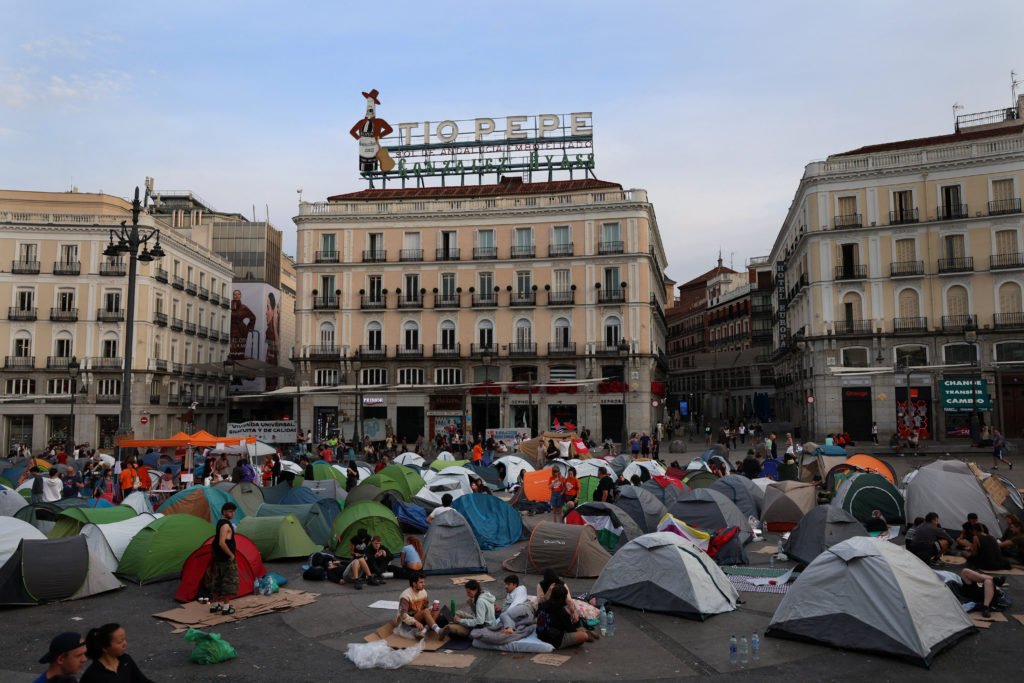
A growing tent encampment in the heart of Madrid has become a visible symbol of Spain’s deepening housing crisis, as protesters demand action over rising rents, unaffordable homes and a system they say increasingly places housing beyond the reach of ordinary people.
The camp has spread across the central Puerta del Sol plaza following nationwide demonstrations over housing conditions. What began with a small number of tents has expanded rapidly, with campaigners saying more than 300 tents were in place by Monday. For those occupying the square, the encampment is not simply a protest site but an attempt to maintain pressure on the government as it considers new measures to address the housing crisis.
Among those at the camp is Marta García, a 60-year-old retired schoolteacher. Rather than standing at the centre of the demonstrations, García was seen moving around the plaza with a broom and dustpan, collecting litter between the tents.
For García, the protest is deeply connected to the difficulties facing younger generations. Although she owns a home herself, she said she could not remain indifferent while her two daughters were forced to share bedrooms because they could not afford more suitable housing.

The encampment took shape after tens of thousands of people participated in demonstrations across Madrid over the weekend. The protests have been driven by concerns about the cost of housing and the increasing difficulty faced by renters and prospective homeowners.
The movement gained additional momentum following the eviction of Maricarmen Abascal, an 87-year-old woman with a disability, from the home where she had reportedly lived for about seven decades. Images of Abascal being taken from the property on a stretcher, surrounded by protesters and police officers, generated widespread anger and became a focal point for housing campaigners.
Her case was subsequently linked by activists to wider concerns about housing security and property speculation. Campaigners argued that the incident demonstrated the human consequences of a housing system under severe pressure.
Alicia del Río of the Madrid Tenants’ Union said the episode had shown people across Spain what housing insecurity could mean for vulnerable residents. She described the mood among campaigners as one of anger rather than resignation and said protesters intended to continue their efforts until they saw changes to housing policy.
Abascal’s lawyers later reportedly reached an agreement that could allow her to return home. Her lawyer, Beatriz Duro, described the agreement as a potentially positive outcome and suggested that the case could contribute to a wider change in the way housing issues are addressed.
The controversy has unfolded against a broader deterioration in housing affordability. Campaigners point to substantial increases in rents and property prices over the past decade, arguing that wages and household finances have struggled to keep pace with housing costs.
For young adults, the consequences can extend well beyond the question of where they live. David Iglesias, a 25-year-old participant at the Madrid encampment, said high housing costs were forcing people to postpone major decisions about their lives.
He argued that people should be able to plan families while renting and should have opportunities to pursue careers and personal ambitions without having to devote an overwhelming share of their lives to paying for accommodation.
His comments reflect concerns that housing insecurity can affect employment choices, family formation and the ability of young people to establish independent lives. When rent consumes a large proportion of household income, people may have little financial flexibility to deal with unexpected expenses or make long-term plans.
A large banner displayed near the camp expressed the protesters’ frustration with the idea that housing can be treated primarily as an investment asset. The message reflected a central argument of the movement: that homes should primarily serve as places for people to live rather than being treated solely as financial instruments.
The rapidly expanding camp has inevitably drawn comparisons with Spain’s Indignados movement of 2011. That earlier occupation of Puerta del Sol became a major symbol of public dissatisfaction during a period of economic hardship and eventually contributed to wider political changes in Spain.
Some protesters, however, have rejected the idea that the current movement is simply a revival of the earlier protest. Iglesias said the present campaign had a specific objective focused on housing rather than a broad demand for political change.
Campaigners have adopted a stark slogan suggesting that either Spain’s so-called rentier economy must change or the government itself will face growing pressure. The slogan reflects the increasingly confrontational language surrounding the housing debate, although the movement includes people with a wide range of political and social backgrounds.
The immediate focus of the protests is now on the Spanish government’s planned housing measures. Prime Minister Pedro Sánchez has said his government is working to introduce a royal decree on housing at its Tuesday meeting.
Housing campaigners have put forward demands including stronger protections against evictions and measures concerning short-term rentals and room rentals. They are also calling for policies intended to reduce the pressure created by rising housing costs.
The government’s position is complicated by the structure of Spain’s parliament. Sánchez’s coalition includes leftwing political forces that have supported stronger housing intervention, but the fragmented political landscape makes it difficult to secure broad parliamentary backing for major measures.
The protests have nevertheless continued to spread beyond Madrid. In Barcelona, members and supporters of the tenants’ movement have organised demonstrations and blocked major roads as part of the wider mobilisation.
Enric Aragonès of the Barcelona Tenants’ Union said the coming government decision would be closely watched. Campaigners have questioned whether any new decree will provide substantial changes or merely offer limited measures that fail to address the scale of the problem.
The mobilisation has also attracted support from prominent figures in Spanish public life. Oscar-winning filmmaker Pedro Almodóvar visited the Madrid encampment and expressed support for those demanding action. He described the housing problem as an issue that was paralysing aspects of Spanish life.
Yet the camp is not made up solely of established housing organisations or politically active groups. Its participants include people who see the housing crisis as part of a broader problem involving economic insecurity and the rising cost of living.
Guillermo Esteve, who was sitting and knitting at the entrance to a tent, said he had joined the encampment with a group of vegans. He described the protest as part of a wider desire for social change, beginning with the property market and extending to precarious employment and broader economic structures.
For some participants, the housing debate is therefore closely connected to the future they believe young people can realistically build. The cost of accommodation can influence where people work, whether they can afford to live independently and whether they can establish families.
The presence of older protesters also illustrates that the issue is not confined to one generation. García, despite having stable housing herself, said she felt compelled to participate because of the difficulties experienced by her daughters and others in their generation.
Her role at the camp has been practical as well as symbolic. While others have held signs or participated in discussions, she has spent time cleaning the plaza and helping maintain the encampment.
She said she would not have stayed if she believed the protest had no chance of achieving anything. Instead, she viewed her presence as a small contribution to a collective effort to demonstrate that people still believe change is possible.

The Madrid camp has consequently become more than a collection of tents. It represents the growing visibility of a housing debate that has been building across Spain for years.
Whether the current mobilisation results in significant policy changes will depend on the measures proposed by the government, parliamentary support for those measures and the ability of campaigners to maintain pressure.
For the protesters gathered at Puerta del Sol, however, the immediate message is straightforward: housing costs have reached a point where many people believe their ability to build stable lives is being compromised.
As the government prepares to consider new housing measures, the tents in Madrid’s central square provide a highly visible reminder of the expectations surrounding that decision. For those occupying the plaza, the encampment will remain a place of protest, solidarity and uncertainty until they see whether political promises translate into concrete action.
Related News:
 France Faces Record Presidential Crowded Race Amid Far-Right Surge
 Elif Eralp Emerges as Berlin’s Next Political Force
 EU weighs response amid Greenland tariff crisis with Trump
 EU Says US Ties Have Suffered ‘Big Blow’ After Greenland Crisis
 Italian Town Buys Mussolini Villa to Keep Away Fascist Fans
 Hungary election: Orbán faces biggest test amid scandal
 Trump Faces Crisis as Iran Reopens Hormuz Tensions
 Iran Reimposes Strait of Hormuz Restrictions Amid Tension
 Canadian astronaut French words ease language row
 Athens Mayor Moves to Tackle Overtourism Crisis
 RAF Typhoons scrambled amid Russian drone threat near Nato
 Trump likens US Navy actions to ‘pirates’
 Global order shifts amid Trump-era turmoil
 Ohio’s Battle for Trust: Democrats Vying to Flip the Buckeye State
 Ceasefire Standoff Deepens in Ukraine War
 Middle East Crisis Escalates as Oil Routes Shake Markets
 Norway Doubles Down on Oil and Gas for Europe Energy Security
 Putin Declares Russia Victory at Scaled Victory Day Parade
 Hybrid village stores fight rural decline
 UK Pushes for New EU Goods Trade Deal
 Reeves Fights to Keep Treasury Role Amid Labour Turmoil
 Trump’s Revenge Drive Deepens GOP Divide
 Pope Meets Families in Italy Toxic Waste Zone
 Zelenskyy warns over Oreshnik threat as Kyiv hit
 Discontent grows around Putin amid war strain
 Former ICC prosecutor condemns US sanctions
 Trump Claims Iran Peace Deal Near Completion
 Irish Gangland Figure Fails in Dublin Election Bid
 Farage and Reform UK Reshape British Politics
 Starmer Leadership Under Pressure After Setbacks
 Deadly Russian Air Raids Strike Across Ukraine
 UK Nations Brace for Potential Breakup Amid Reform Surge
 Le Pen to Run for President Despite Embezzlement Conviction
 Le Pen’s Popularity Holds Despite Conviction
 Labour MPs Urge Burnham to Revive UK Aid Target
 Dreyfus Statue Finally Gets Permanent Paris Home
 England and Norway Fans Turn Miami Into World Cup Carnival
 Is America Ready for an AOC Presidential Run?
 Five Years of Taliban Rule Leave Afghanistan in Crisis
 Russian Missiles Intensify Pressure on Kyiv
 Ukraine Villagers Demand Answers After Deadly Arms Depot Strike
 British Man Faces Deportation Threat in Sweden
 Trump Hardens Canada Trade Stance as Talks Stall
 Green Leader Targets Starmer’s Former Seat
 Bayeux Tapestry Revives Franco-British Ties
 Masked Protesters Bring Dover Port Traffic to Standstill
 Susan Sarandon Says Palestine Stand Costs Roles
 Swedish Mining Push Puts Sami Land Rights Under Pressure
 AfD election surge leaves Magdeburg residents deeply uneasy
 British widow says deportation from Sweden feels like a death sentence
 Europe’s democracies face a growing far-right threat
 Sweden Election Hangs on Far-Right Breakthrough
 Germany’s Far Right Surge Puts Merz Under Pressure
 Lib Dems Prepare for Election Amid Reform Challenge
 Macron and Carney deepen France-Canada ties
 Trump Eyes Major Belarus Fertiliser Deal Amid Canada Trade Dispute
 Burnham Leaves Door Open to Future Brexit Reversal
 King Refers Jamaica Slavery Petition to Privy Council
 Thinktank Calls for Abolition of UK State Pension
 Iran Rejects Claims of Shift in US Talks
 Greece Pushes for Parthenon Marbles Reunification
 Tony Blair Calls for Britain to Rejoin EU Within a Decade
 Saudi intercepts Houthi missiles as oil fears grow
 Russia Targets Ukraine’s Digital Economy With Strikes
 National Rally makes historic gains in French Senate
 Three Die in Channel Crossing Attempt Near France
 BBC to Apologise Over Edited Trump Speech Amid Backlash
 Greene Pushes Epstein Files Amid Trump Fallout
 December Run-Off in Chile as Election Produces No Winner
 Shadow Fleet at Sea: Europe’s Battle Against Illicit Oil Shipping
 Georgians Defy Government Crackdown After Year of Protests
 Pentagon Signals Reduced Role in Deterring North Korea
 UK and US Drop in Global Corruption Index Rankings
 Canberra Poster Seizure Sparks Free Speech Row
 Jacinda Ardern Move Sparks Kiwi Reflection
 Injured Mojtaba Khamenei Elevated as Iran Leader
 Air Canada CEO Faces Outcry Over Recent Language Misstep
 Relationship with Trump may be beyond repair, Starmer warned
 Meta Under Fire: The Battle Over Addictive Social Media Design
 Olympus Awaits Unesco Heritage Recognition