Published: 03 October 2026. The English Chronicle Desk. The English Chronicle Online
On a bright October morning in Sarajevo, the cafés around the city centre are busy. People sit outside in the autumn sunshine, drinking coffee and talking as football supporters from Sweden arrive ahead of a Nations League match. At first glance, there is little to suggest that Bosnia and Herzegovina is experiencing one of the most persistent demographic challenges in Europe.
Yet beneath the relaxed atmosphere, a different reality is becoming increasingly difficult to ignore. Large numbers of young Bosnians continue to leave the country in search of employment, stability and a future they believe may be easier to build elsewhere. For many, the political choices presented during elections have not been enough to persuade them that staying is the better option.
The issue has become particularly significant ahead of Sunday’s general election, when voters across Bosnia and Herzegovina will choose representatives for several levels of government. The election includes the country’s three-member Presidency, national and entity-level parliaments, the presidency and vice-presidencies of Republika Srpska, and cantonal assemblies in the Federation.

The complexity of the political system reflects the difficult compromise created by the Dayton Peace Agreement, which ended the Bosnian war in 1995. The country is divided into two main entities, the Federation of Bosnia and Herzegovina and Republika Srpska, alongside a complex network of state, entity, cantonal and local institutions.
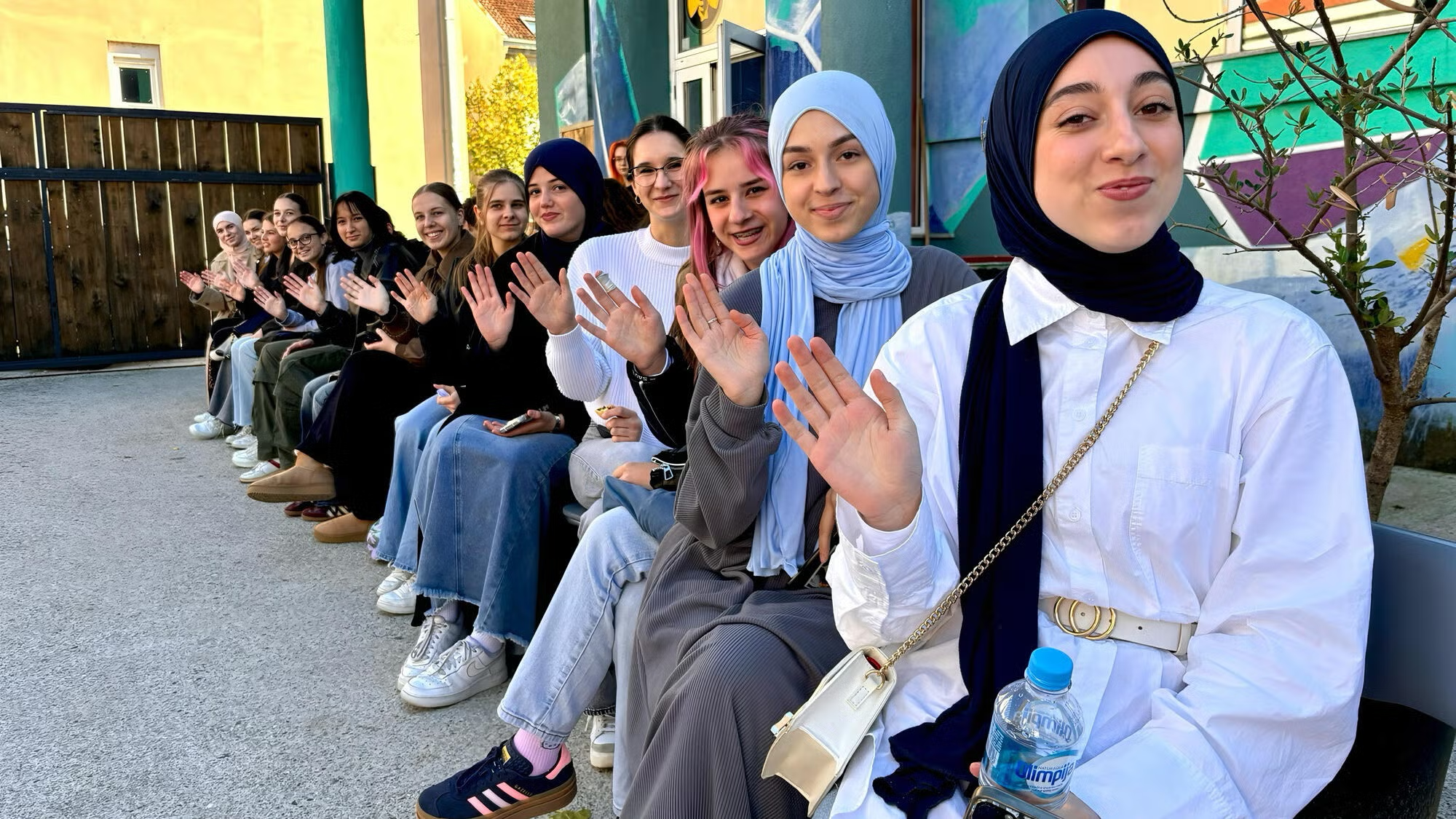
The arrangement helped establish peace after years of devastating conflict, but three decades later it remains at the centre of debates about Bosnia’s political future. Ethnic identity continues to play a major role in political life, while many younger citizens increasingly describe themselves in broader civic terms and are frustrated by a system they believe does not adequately address their concerns.
For young people who support multi-ethnic and non-nationalist political movements, this creates a particularly difficult contradiction. They may want political change, but many of their peers are no longer in the country to participate in that change.
Estimates cited by international officials indicate that around 600,000 people left Bosnia and Herzegovina between 2013 and 2023. Other assessments put the number within a wider range, reflecting differences in how migration is measured. The scale of the departure is nevertheless substantial for a country whose 2013 census recorded a population of about 3.5 million.
The country continues to experience population decline, with political instability, corruption, limited economic opportunities and living standards frequently identified among the factors encouraging people to seek lives abroad. Young and skilled citizens are particularly important to this trend, raising concerns about what continued emigration could mean for Bosnia’s economy, institutions and communities.
For Timur Ilic, a 28-year-old Sarajevo municipal councillor and candidate representing the liberal, multi-ethnic Our Party, the challenge is not simply convincing people to support a particular political programme. It is persuading a generation that meaningful change remains possible inside the country.
Ilic acknowledges that many voters remain reluctant to support significant political change because they fear uncertainty. He argues that a new generation may eventually become more willing to challenge the established political order, but that transition is complicated by the fact that many young people are already considering life abroad.
The contradiction is visible among first-time voters. Sarah Ćato, a 19-year-old student of political science and international relations, is eligible to vote for the first time but says many young people feel disconnected from mainstream politics.
For her generation, the problem is not necessarily a complete rejection of democratic participation. Instead, it is a sense that political parties have failed to offer a convincing reason for young people to believe that their priorities are being represented.
That frustration is intensified by the way Bosnia’s history continues to shape everyday life. Children can receive different interpretations of the country’s recent past depending on whether they grow up in predominantly Bosniak, Serb or Croat communities. The legacy of the 1992-95 war remains deeply embedded in politics, education and public debate.
In parts of Republika Srpska, young people grow up surrounded by symbols and imagery connected to the wartime past. Dijana Papaz, a 23-year-old resident of East Sarajevo, has described the experience of living amid murals and other reminders of the conflict. She has worked with other young people on projects examining the psychological and social boundaries that continue to divide communities.
The physical distance between central Sarajevo and East Sarajevo is small, but the political and cultural divide can feel much greater. Road signs, public symbols and political narratives change as people cross the entity boundary. For younger citizens who did not experience the war themselves, the persistence of those divisions can create a feeling that they are inheriting conflicts they did not create.
Papaz has rejected narrow ethnic labels and describes herself simply as Bosnian. Her outlook reflects a broader question facing the country: whether a generation born after the war can eventually develop a political identity that places greater emphasis on common citizenship rather than ethnic affiliation.
The challenge is complicated by the attitudes within families. Ajna Mešić, associated with the Youth Initiative for Human Rights, says many parents themselves encourage their children to leave. For families who experienced the war and its aftermath, migration can appear to offer a safer and more predictable future.
Some young people therefore grow up hearing that their future should be somewhere else. Germany and other European countries are frequently seen as destinations where education, employment and professional opportunities may be more accessible.
This creates a cycle that is difficult for political parties to break. Young people who might otherwise become active supporters of reform can leave before they establish careers, families or political networks at home. As more educated citizens depart, the domestic political environment can become even less representative of the aspirations of those who have already gone.
At a pre-election gathering of the Social Democratic Party in Sarajevo, 23-year-old Benjamin Ahmedbegovic, a vice-president of the local youth forum, expressed little expectation that the election alone would transform the situation.
He linked migration to political instability and to the persistence of voters identifying strongly with their own ethnic communities. His comments reflect a broader frustration among younger activists who believe political performance can become secondary to ethnic affiliation.
Yet the election also demonstrates that alternative political forces continue to exist. Multi-ethnic and non-nationalist parties are attempting to appeal to voters who want greater emphasis on economic opportunity, functioning institutions and a shared civic identity.
The question is whether those messages can compete with political structures that have been shaped by decades of ethnic division.
Bosnia’s political system was created to prevent a return to war and preserve a fragile peace. But the country now faces a different kind of long-term challenge. The concern is no longer only how to maintain stability, but how to create enough economic and political confidence for younger generations to imagine their future at home.
The country’s election on Sunday will provide another opportunity for voters to express their priorities. But ballots alone cannot reverse years of emigration. Political promises would need to be accompanied by changes that young citizens can experience in their daily lives, including greater economic security, stronger institutions and confidence that opportunities are not determined primarily by political or ethnic connections.

For many young Bosnians, the decision to leave is not necessarily a rejection of their homeland. It can instead be a practical response to uncertainty. Some leave temporarily for education or employment and hope to return. Others establish permanent lives abroad.
That distinction matters because the future of Bosnia and Herzegovina will depend not only on who wins political office, but also on whether the country can persuade its younger generation that it has a future worth building there.
Sarajevo’s cafés may remain full on a warm autumn afternoon, and the city’s streets may continue to attract visitors from across Europe. But behind that familiar image lies a demographic question that cannot be solved by election day alone.
For a generation born after the war, the most important political choice may increasingly be whether to remain in Bosnia and Herzegovina or build a life somewhere else. The answer will depend on whether the country’s political leaders can offer more than familiar arguments about identity and history — and provide young people with tangible reasons to believe that their future can be secured at home.
Related News:
 France Faces Record Presidential Crowded Race Amid Far-Right Surge
 Elif Eralp Emerges as Berlin’s Next Political Force
 Madrid Tent Camp Grows as Spain Housing Crisis Deepens
 French Student Protests Escalate Into Violent Clashes
 French School Protests Escalate as 400 Schools Close
 EU weighs response amid Greenland tariff crisis with Trump
 EU Says US Ties Have Suffered ‘Big Blow’ After Greenland Crisis
 Italian Town Buys Mussolini Villa to Keep Away Fascist Fans
 Hungary election: Orbán faces biggest test amid scandal
 Canadian astronaut French words ease language row
 Athens Mayor Moves to Tackle Overtourism Crisis
 RAF Typhoons scrambled amid Russian drone threat near Nato
 Global order shifts amid Trump-era turmoil
 Ceasefire Standoff Deepens in Ukraine War
 Norway Doubles Down on Oil and Gas for Europe Energy Security
 Putin Declares Russia Victory at Scaled Victory Day Parade
 Hybrid village stores fight rural decline
 Trump’s Revenge Drive Deepens GOP Divide
 Pope Meets Families in Italy Toxic Waste Zone
 Zelenskyy warns over Oreshnik threat as Kyiv hit
 Former ICC prosecutor condemns US sanctions
 Irish Gangland Figure Fails in Dublin Election Bid
 Farage and Reform UK Reshape British Politics
 Starmer Leadership Under Pressure After Setbacks
 Deadly Russian Air Raids Strike Across Ukraine
 UK Nations Brace for Potential Breakup Amid Reform Surge
 Le Pen to Run for President Despite Embezzlement Conviction
 Le Pen’s Popularity Holds Despite Conviction
 Dreyfus Statue Finally Gets Permanent Paris Home
 England and Norway Fans Turn Miami Into World Cup Carnival
 Is America Ready for an AOC Presidential Run?
 Five Years of Taliban Rule Leave Afghanistan in Crisis
 Russian Missiles Intensify Pressure on Kyiv
 Ukraine Villagers Demand Answers After Deadly Arms Depot Strike
 British Man Faces Deportation Threat in Sweden
 Green Leader Targets Starmer’s Former Seat
 Bayeux Tapestry Revives Franco-British Ties
 Masked Protesters Bring Dover Port Traffic to Standstill
 Susan Sarandon Says Palestine Stand Costs Roles
 AfD election surge leaves Magdeburg residents deeply uneasy
 British widow says deportation from Sweden feels like a death sentence
 Europe’s democracies face a growing far-right threat
 Sweden Election Hangs on Far-Right Breakthrough
 Germany’s Far Right Surge Puts Merz Under Pressure
 Lib Dems Prepare for Election Amid Reform Challenge
 Macron and Carney deepen France-Canada ties
 King Refers Jamaica Slavery Petition to Privy Council
 Greece Pushes for Parthenon Marbles Reunification
 Russia Targets Ukraine’s Digital Economy With Strikes
 National Rally makes historic gains in French Senate
 Three Die in Channel Crossing Attempt Near France
 Burnham Opens Door to Possible UK Return to EU
 Drumcree Talks Falter as Legal Challenge Deepens
 UK-France Returns Deal Faces Expiry as Talks Stall
 Green Party faces dispute over Zionism motion
 Ukraine’s New FP-7 Missile Makes Combat Debut
 Families Await USS Abraham Lincoln Homecoming
 BBC to Apologise Over Edited Trump Speech Amid Backlash
 Britain deploys RAF specialists to assist Belgium with drone threats
 Greene Pushes Epstein Files Amid Trump Fallout
 December Run-Off in Chile as Election Produces No Winner
 Shadow Fleet at Sea: Europe’s Battle Against Illicit Oil Shipping
 Georgians Defy Government Crackdown After Year of Protests
 UK and US Drop in Global Corruption Index Rankings
 Canberra Poster Seizure Sparks Free Speech Row
 Jacinda Ardern Moves To Australia Following Her US Fellowships
 Jacinda Ardern Move Sparks Kiwi Reflection
 Nick Greiner Warns Over Election Review Fallout
 Injured Mojtaba Khamenei Elevated as Iran Leader
 Gordon Brown urges court for crimes against children
 Pakistan Targets Militant Hideouts in Afghanistan
 Air Canada CEO Faces Outcry Over Recent Language Misstep
 Relationship with Trump may be beyond repair, Starmer warned
 Trump Brokers Landmark Lebanon Ceasefire Amid Regional Hopes
 Trump Announces 3-Day Russia–Ukraine Ceasefire Deal
 Olympus Awaits Unesco Heritage Recognition
 Democrat Says ICE Restricted Detention Camp Oversight
 Republican Senator Questions Trump Ad Spending
 Badenoch Raises Prospect of 2027 UK Election
 Lula Warns of Bolsonaro Family Return as Brazil Votes