Published: 05 October 2026. The English Chronicle Desk. The English Chronicle Online.
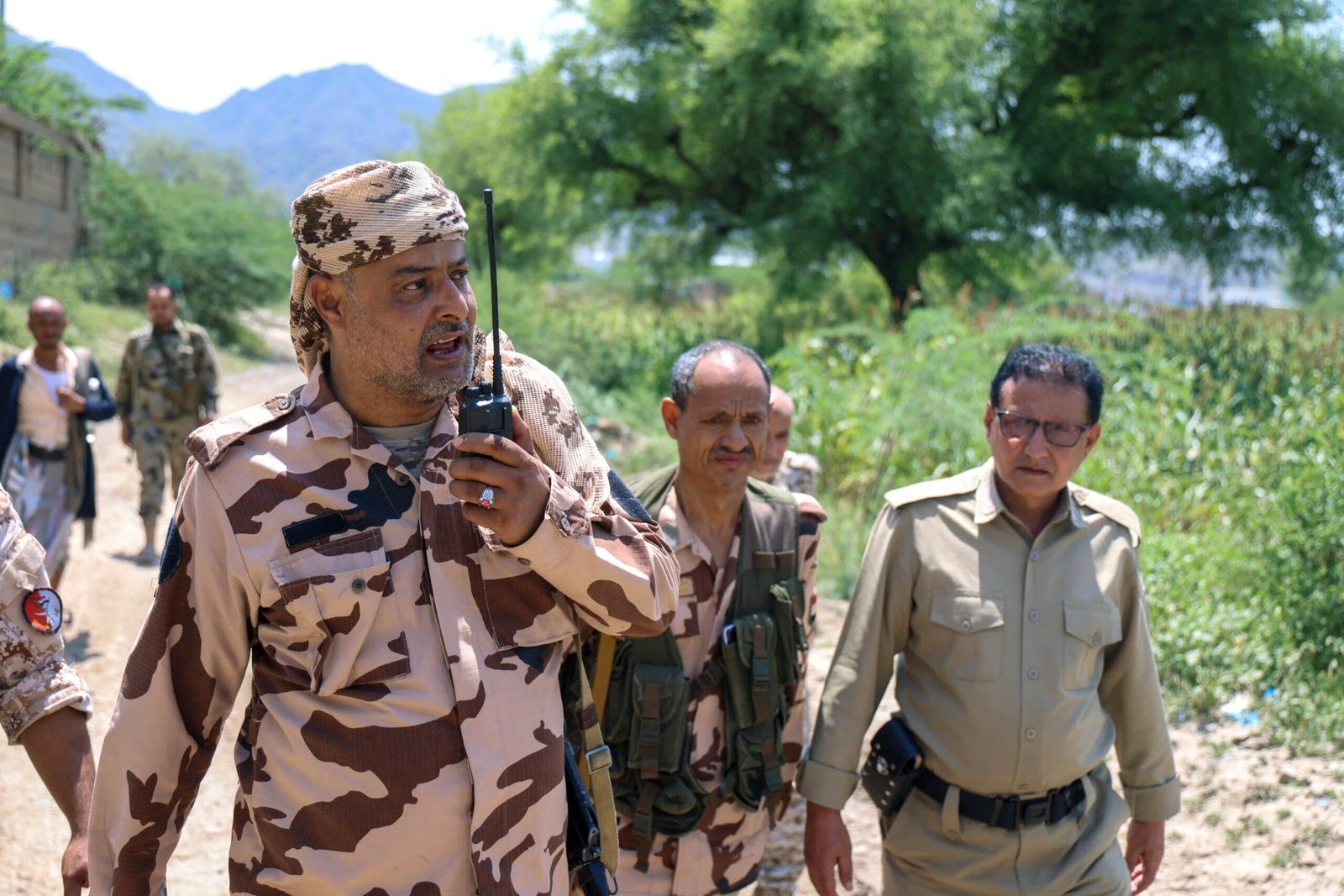
Yemen’s internationally recognised government has announced a major new military campaign aimed at reclaiming territory controlled by the Houthi movement, raising fears of a significant escalation in the country’s long-running civil war. The announcement came after Houthi forces reportedly captured a key area near the western city of Taiz and cut an important supply route linking the besieged city with Aden, the government’s interim capital.
Rashad al-Alimi, head of Yemen’s Presidential Leadership Council, announced the military operation on Sunday, declaring that government forces would seek to recover the remaining territory held by the Houthis and restore state authority across the country. The objective represents one of the most ambitious military declarations by Yemen’s internationally recognised authorities in recent years.
The announcement comes at a particularly difficult moment for government forces, which have struggled to contain a rapid Houthi advance in several strategically important areas. The Iran-backed movement has recently captured significant parts of Yemen’s Red Sea coastline and expanded its influence around the Bab al-Mandab Strait, one of the world’s most important maritime chokepoints.

The latest developments around Taiz have added another layer of urgency to the conflict. Security and military sources reported that Houthi fighters had seized control of the al-Safiya area, taking over a police station and cutting the main road used to supply government-held areas of Taiz. The road reportedly connects the city with Aden and has long been an important lifeline for civilians and government forces.
Several Yemeni military and security sources confirmed the reported Houthi advance, saying traffic along the route had been halted. The fighting was continuing in surrounding areas, while Houthi forces were reported to be tightening their positions around Taiz.
Taiz has remained one of the most important battlefronts in Yemen’s civil war. Although the city itself remains under the control of government forces, Houthi fighters have maintained positions around large parts of it for years. The city has effectively remained under siege from several directions, creating severe difficulties for residents and restricting the movement of humanitarian supplies and commercial goods.
The renewed fighting has already resulted in substantial casualties. Accounts from opposing sides indicated that more than 70 people were killed in fighting in and around Taiz over a 24-hour period. Government sources reported the deaths of 34 government troops, including 20 who were killed near the edge of Taiz province in neighbouring Lahj. Houthi military sources reported that 39 of their fighters were killed in battles across Taiz and areas along the Lahj border.
The figures could not immediately be independently verified, reflecting the broader difficulty of establishing reliable casualty numbers during Yemen’s rapidly changing conflict. Nevertheless, the reports point to a sharp intensification of fighting in a region that has already endured years of violence, displacement and economic hardship.
For civilians in Taiz, the renewed offensive threatens to deepen an already serious humanitarian crisis. The city has experienced prolonged shortages and restrictions because of its geographical isolation and the surrounding military positions. Any further disruption of the main supply route could make access to food, medicine and other essential goods more difficult.
The government’s announcement also comes as the Houthis intensify their attacks against Saudi Arabia. Houthi military spokesperson Yahya Saree said the group had launched ballistic missiles and drones towards sites belonging to Saudi energy giant Aramco in Riyadh and the Khurais area in eastern Saudi Arabia.
According to the Houthi statement, the attacks caused large fires and were carried out in response to dozens of Saudi-led air and missile strikes against targets inside Yemen. Saudi authorities had not immediately confirmed the Houthi account or provided a detailed assessment of any damage.
The exchange marks another escalation in a conflict that has increasingly developed a regional dimension. Saudi Arabia has provided military backing to Yemen’s internationally recognised government for years, while Iran has been accused of supporting the Houthi movement. The rivalry between Riyadh and Tehran has therefore remained closely intertwined with Yemen’s internal political and military struggle.
The latest Houthi attacks also come at a sensitive time for Saudi Arabia’s energy sector. Saudi oil exports have already faced pressure because of wider instability in the region and disruptions affecting major shipping routes. Further attacks on energy infrastructure could raise concerns about supplies and contribute to volatility in global energy markets.
The Houthis’ expanding military activity has also increased international concern because of Yemen’s proximity to major shipping routes. The Bab al-Mandab Strait connects the Red Sea with the Gulf of Aden and provides a crucial passage for international trade. Any prolonged instability in the surrounding territory could have consequences well beyond Yemen’s borders.
The government’s decision to launch a campaign to retake all Houthi-held territory therefore carries considerable risks. A large-scale offensive could restore government control over strategically important areas if successful, but it could also trigger further fighting and civilian displacement in regions already devastated by years of war.
Yemen’s conflict has repeatedly demonstrated the difficulty of achieving a decisive military victory. The internationally recognised government has received backing from Saudi Arabia and other regional partners, while the Houthis have established strong positions across large parts of northern and western Yemen. The movement has also developed significant military capabilities during years of conflict.
The new offensive will therefore require substantial military resources and coordination if the government hopes to make meaningful territorial gains. The ability of government-aligned forces to maintain supply lines, coordinate different armed factions and withstand Houthi counterattacks will be critical to the campaign’s outcome.
The situation is particularly sensitive around Taiz. Losing the remaining supply route would place additional pressure on government forces inside the city and could further isolate civilians. For the government, maintaining access to Taiz is strategically important because the city represents one of its most significant remaining strongholds in western Yemen.
For the Houthis, meanwhile, strengthening their positions around Taiz could provide a major strategic advantage. Control over surrounding roads and territory could allow the movement to increase pressure on government forces and potentially restrict their ability to reinforce the city.
The latest escalation also highlights the continuing fragility of Yemen’s political situation. Years of attempts to negotiate an end to the conflict have failed to produce a durable national settlement, while rival political and military groups continue to compete for control over territory and state institutions.
The announcement by al-Alimi suggests that Yemen’s government is now seeking to change the military balance rather than simply defend its existing positions. Whether that strategy can succeed remains uncertain, particularly as the Houthis have demonstrated an ability to launch coordinated attacks and rapidly exploit weaknesses on the battlefield.
For ordinary Yemenis, however, another military escalation is likely to bring further hardship regardless of which side gains territory. Millions of people have already endured displacement, poverty, damaged infrastructure and limited access to basic services during the conflict. Renewed fighting around populated areas could intensify those pressures.

The coming weeks are therefore likely to be closely watched across the region. Government forces will attempt to consolidate their positions and launch operations against Houthi-held territory, while the Houthis are expected to defend their gains and continue using missile and drone attacks to put pressure on Saudi Arabia and government allies.
Yemen now faces the prospect of another potentially prolonged period of fighting, with Taiz once again emerging as a central battlefield. The government’s declaration of a campaign to reclaim all Houthi-held territory marks a significant escalation in its ambitions. Whether it becomes the beginning of a successful counteroffensive or another chapter in Yemen’s long cycle of conflict will depend on developments on the ground, the strength of regional support and the ability of the opposing sides to withstand mounting military and humanitarian pressures.
Related News:
 Saudi Pact Raises Risk of Pakistan Entering War
 New Maps Reveal Gaza’s Vast Destruction
 US Sends Third Carrier to Middle East
 UK Prepares Aircraft Carrier for Middle East Crisis
 Houthis Strike Saudi Arabia as Middle East Tensions Rise
 Taliban global ties grow as rights fears mount
 Israeli Strike in Southern Lebanon Kills Seven
 Trump Asked Xi About Buying US Weapons
 Thousands Protest Iran Strikes Outside US Embassy London
 US Bombers Arrive at RAF Base Amid Rising Iran Tensions
 Anti-Regime Iranians Turn Anger Toward Trump
 Death, displacement and military duties: children plunged into crisis
 Aid Crisis Grows as Hormuz War Disrupts Supply
 Activists allege abuse after Gaza flotilla seizure
 Trump likens US Navy actions to ‘pirates’
 Middle East Crisis Escalates as Oil Routes Shake Markets
 Trump Announces 3-Day Russia–Ukraine Ceasefire Deal
 Putin Declares Russia Victory at Scaled Victory Day Parade
 Discontent grows around Putin amid war strain
 Former ICC prosecutor condemns US sanctions
 Millions Gather for Khamenei’s Six-Day State Funeral
 Five Years of Taliban Rule Leave Afghanistan in Crisis
 Trump dismisses concerns over 250-day carrier deployment
 Russian Missiles Intensify Pressure on Kyiv
 Trump Calls Strait of Hormuz ‘American Territory’
 Trump Faces Iran War Crisis Before Midterm Vote
 UN expert urges UK to rethink Israel policy
 Miliband Rejects Chief Rabbi’s West Bank Warning
 North Korea Expands Uranium Facility at Yongbyon
 Saudi Arabia Shuts Oil Pipeline After Drone Attack
 Nearly 50,000 Flee as Houthis Advance in Yemen
 Israel Accused of Undermining Palestinian Life
 South Korea Rules Out Military Role in Iran War
 Japan PM Backs International Criminal Court
 Netanyahu faces protests and pressure at UN
 Saudi intercepts Houthi missiles as oil fears grow
 Iran Awaits Trump Response on Seven-Day Hormuz Plan
 Yemen fighting forces children out of school and into work
 South Korea-Ukraine Row Erupts Over North Korean POWs
 South Korea demands apology over DMZ mine blast
 Russia Escalates Ukraine Energy Attacks as Winter Nears
 Ukraine’s New FP-7 Missile Makes Combat Debut
 Russian Strikes Disrupt Kyiv Bridge Traffic
 Iran Leader Blames Protesters, Says They Serve Trump
 Thousands Protest ICE in New York Against Trump Deportation Campaign
 Ukraine war briefing: Zelenskyy offers help to Saudi Crown prince on combatting Iranian drones
 Mojtaba Khamenei Chosen as Iran’s New Supreme Leader
 Tehran Oil Depot Strikes Darken City With Toxic Smoke
 Mojtaba Khamenei Supporters Rally as Iranians Fear Repression
 Iran Defiance Grows Amid US-Israel War Pressure
 Hormuz Crisis Sparks Global Oil Market Fears
 Injured Mojtaba Khamenei Elevated as Iran Leader
 North Korea Fires Missiles Amid US-South Korea Drills
 A Global Voice For Justice: Stephen Lewis Dies At Age 88
 Iran Crisis Tests Trump’s Global Leadership
 Southeast Asia Turns to Russia Amid Energy Crisis
 Australian Activists Detained as Gaza Aid Flotilla Intercepted
 Trump orders US troop pullout from Germany
 Judge halts deportation of Yemeni refugees in US
 North Korean Women’s Football Club to Visit Seoul in Rare Cross-Border Trip
 Afghan Families Left in Limbo Face Risk of Deportation
 Tensions Emerge in Netanyahu-Trump Alliance
 US Awaits Iran Reply on New Ceasefire Proposal
 Immigration Judges Fear Pressure in Trump Era
 Plea for Mercy: The Battle to Bring Ahmed al-Doush Home
 US green card applicants must apply from abroad, DHS says
 Hormuz Talks Near Critical Stage
 Iran Prepares for Massive Six-Day Funeral for Khamenei
 Iran Mourns: Millions at Khamenei’s Final Procession
 Ukraine Creates Long-Range Strike Command
 Former Diplomats Urge UK and France to Act on Palestine
 Ukraine Villagers Demand Answers After Deadly Arms Depot Strike
 Trump Calls Iran War ‘Small Potatoes’ Despite US Deaths
 Sweden Election Hangs on Far-Right Breakthrough
 King Refers Jamaica Slavery Petition to Privy Council
 Ukraine and Russia Escalate Long-Range Drone War
 Xi urges Trump to avoid US-China military conflict
 Putin Orders Russian Army Expansion as War Intensifies
 Pilot and Passengers Help Save Flydubai Flight
 North Korea Fires Missile Amid DMZ Tensions