Published: 08 October 2026. The English Chronicle Desk. The English Chronicle Online.
New South Wales police faced criticism after the state’s police commissioner made a last-minute request for parts of an inquiry into a controversial Sydney protest to be conducted behind closed doors, a move that delayed the planned start of public hearings.
The Law Enforcement Conduct Commission has confirmed that its investigation into the February anti-Herzog protest at Sydney Town Hall will proceed this month, with a combination of public and private examinations. However, the watchdog’s chief commissioner, Peter Johnson SC, described the timing of the police commissioner’s request as “regrettable”, saying it disrupted preparations and delayed the efficient use of public resources.
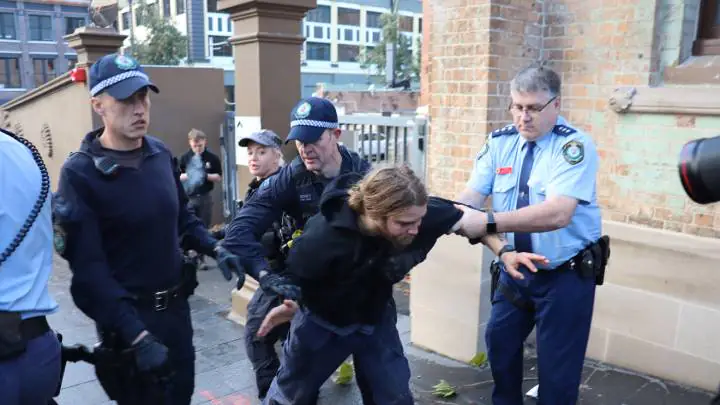
The inquiry was launched following widespread allegations of excessive police force during the 9 February demonstration. The protest resulted in injuries to numerous demonstrators and 10 police officers. Among those injured were protesters in their 70s and 80s, while video footage circulated publicly appearing to show officers punching protesters and confronting Muslim worshippers during evening prayers.

The incident generated significant public concern and prompted questions about police planning, crowd-control tactics and the use of force during politically sensitive demonstrations.
The police watchdog, known as LECC, had initially planned to begin public hearings on 21 September. However, lawyers representing NSW Police Commissioner Mal Lanyon notified the commission on 9 September that he wanted to make submissions concerning whether the inquiry should be conducted publicly or privately.
The request came less than two weeks before the planned hearings were due to begin.
Johnson said the timing had caused significant disruption to the inquiry’s preparation. He said the late intervention affected the orderly progress of the investigation and created additional costs and delays for both the commission and the NSW Police Force.
As a result, the planned 21 September start date was postponed while the commission considered the police commissioner’s request.
Lawyers acting for Lanyon argued that opening submissions and witness examinations should be conducted privately rather than being livestreamed to the public. They questioned whether the commission had the legal authority to conduct broad public submissions while the investigation remained underway.
The police commissioner’s legal representatives also argued that beginning public examinations before the investigation was complete would represent an unusual approach to the inquiry process.
The commission disagreed.
Its counsel assisting argued that public examinations were appropriate because a substantial amount of information about the February protest was already publicly available, including footage showing police use of force. The counsel also pointed to public statements made by senior police officers about what happened during the demonstration.
The commission concluded that public scrutiny was particularly important because senior police officials had already advanced an official account of the events.
Johnson said public comments by senior officers increased the need for independent examination rather than reducing it.
The commission also highlighted the level of public concern surrounding the protest, including among sections of the Muslim community in western Sydney.
The revised inquiry schedule will begin with a public address by counsel assisting on 19 October. This will be followed by five weeks of private hearings focused largely on factual matters. Senior police officers are then expected to appear in public examinations dealing with broader systemic questions.
The distinction between the private and public stages reflects the watchdog’s decision that specific factual issues should initially be examined privately, while systemic issues surrounding policing practices should later be considered in public.
The inquiry, known as Operation Makalu, is expected to examine several aspects of the police response to the protest. These include the use of oleoresin capsicum spray, the exercise of arrest powers and the use of force against protesters.
Investigators will also examine how police planned for the demonstration and whether changes could improve the policing of future protests.
The inquiry comes amid continuing legal and political scrutiny of the February incident.
Thirty people were charged in the months following the protest, although four have since had their charges withdrawn. More than 20 people are expected to face a joint hearing next year.
The protest has also generated civil litigation. Palestinian Australian Eyad Shadid launched proceedings in the NSW District Court in September, alleging that police assaulted and battered him and falsely imprisoned him near Sydney Town Hall. His case also alleges misconduct in public office and malicious prosecution.
The allegations have not been determined by the court.
The dispute over the inquiry’s format has added another layer to the relationship between NSW Police and the state’s law enforcement watchdog.
At a parliamentary inquiry in May, Johnson said the police force had become increasingly defensive when responding to requests for information connected to LECC investigations. He described the relationship between the agencies as difficult and said the watchdog had received more than 800 complaints linked to its investigation of the Herzog protest.
The number of complaints has underscored the scale of public concern over the incident and placed additional pressure on authorities to provide a transparent account of what happened.
NSW Greens justice spokesperson Sue Higginson strongly criticised the attempt to conduct the hearings privately. She described the move as an effort to prevent public scrutiny of allegations involving police misconduct and the decisions made by senior officers before and during the protest.
Higginson argued that the public should be able to examine how police decisions were made and whether command structures contributed to the violence seen during the demonstration.
The police, however, have rejected suggestions that they have failed to cooperate with the watchdog. In an earlier response to Johnson’s criticism, NSW Police said it had complied with the requirements of the LECC Act and had cooperated with the commission.
Following the latest decision, police said they acknowledged the determination to conduct private hearings and would await the findings of the investigation.
The controversy has placed particular focus on the balance between transparency and procedural fairness in law enforcement investigations.
Police officers involved in controversial incidents can face serious reputational and legal consequences when allegations are aired publicly before all evidence has been examined. At the same time, public authorities exercising significant powers over protesters are expected to operate under strong systems of independent accountability.
The Sydney protest presents a particularly sensitive case because of the combination of political tensions, allegations of excessive force and the involvement of religious worshippers.
Footage from the demonstration became an important part of the public debate, with images appearing to show officers using physical force against protesters. Questions were subsequently raised about whether police tactics were proportionate and whether officers had been adequately prepared to manage the demonstration.
The LECC investigation is therefore expected to go beyond individual incidents and examine the broader decisions that shaped the police response.
Its findings could have implications for how NSW Police plans for future demonstrations, particularly protests involving large crowds, politically sensitive issues or heightened community tensions.
The decision to divide the inquiry between private factual examinations and later public consideration of systemic matters is intended to balance the need for a thorough investigation with the public interest in transparency.
For those who believe police accountability requires open scrutiny, the eventual public hearings will be closely watched. For the police force, the investigation provides an opportunity to respond formally to allegations and explain the operational decisions made during the protest.
The delayed start has already demonstrated the complexity of investigating police conduct when the events in question have generated extensive public debate and legal proceedings.
As the inquiry begins later this month, attention will turn to the evidence gathered by the watchdog and the testimony of officers involved in policing the demonstration.
The central questions will include whether police used force appropriately, whether arrest powers were exercised lawfully, whether crowd-control methods were justified and whether planning decisions contributed to the disorder.

The inquiry will also consider whether lessons can be learned to improve the policing of future protests.
For Sydney communities still affected by the events of February, the investigation represents an important test of public accountability. The decision to hold some proceedings privately may limit immediate transparency, but the later public examination of systemic issues is expected to provide a clearer picture of how the protest was handled.
Ultimately, the findings could influence not only the reputations of individual officers and senior commanders but also the wider relationship between NSW Police, protest communities and the independent bodies responsible for overseeing law enforcement.
Related News:
 Patriot Platform Raises Concern Across Britain
 Democrat Says ICE Restricted Detention Camp Oversight
 Hundreds of UK prisoners released early amid overcrowding
 Drumcree Talks End Without Agreement Ahead of Appeal
 Latin America women fear rollback of rights
 Undercover officer deceived women with ‘grotesque and cruel’ lies, spycops inquiry told
 Police Suspect Help in Missing Alice Springs Girl Case
 Cartel crackdown raises fears of fresh violence
 Barrister Criticises Trial After Suicide Case Verdict
 Immigration Judges Fear Pressure in Trump Era
 Murder Probe Continues After Arrest Release
 Westminster Council Threatens Charing Cross Soup Kitchen
 BBC Warned About Missing Clothes of Murder Victim
 Cambridge Professor Jason Arday Found Dead at Home
 Armed Suspect Attacks Ohio Governor Candidate
 Ministers Condemn Far-Right Unrest in Portsmouth
 Councils spend £125m on illegal children’s care
 Reform UK Receives Record £36m Donation From Crypto Billionaire
 Israel Accused of Undermining Palestinian Life
 Election Candidate Abuse Raises Alarm in England
 Fugitive Developer Rants at NSW Corruption Inquiry
 Piddington Votes for Symbolic Independence Over Asylum Plan
 Texas Charges Seven Noncitizens in Voting Crackdown
 Iran School Strike Raises War Crimes Questions, UN Says
 Texas Transfers Raise Fears for Migrant Children
 Memphis Questions National Guard Crime Surge
 Mahmood Warns Far Right Over Asylum Protests
 UK Reviews Hague Child Abduction Cases Involving Abuse
 King Refers Jamaica Slavery Petition to Privy Council
 Judge orders Trump to restore access for three media outlets
 Far-Right Activist Arrested After Channel Dinghy Incident
 Portadown protest ends after tense Orange Order standoff
 Free Speech Emerges as Key UK Election Issue
 Cornell Fraternity Assault Investigation Reopened
 Fayed Survivors Demand Inquiry Into Medical Regulator
 London Facial Recognition Trial Ends With False Alert
 French Student Protests Escalate Into Violent Clashes
 Drumcree Talks Falter as Legal Challenge Deepens
 UK-France Returns Deal Faces Expiry as Talks Stall
 Almost Half of Fayed Accusers May Be Trafficking Victims
 Badenoch Raises Prospect of 2027 UK Election
 French School Protests Escalate as 400 Schools Close
 New Prosecutor Takes Over Cornell Assault Case
 Flydubai Co-Pilot Studied in Australia Before Attack
 Gosport Protesters Clash With Police Over Migrant Rescue
 Detective Breaks Down Recalling Double Murder Scene
 Christa Pike Wakes After Failed Tennessee Execution
 Botstein Quits Bard Amid Epstein Investigation Calls
 Royal Navy Sailor Charged With Alleged Spying
 Luton Residents Reject Claims of ‘No-Go Zones’
 French Taxi Driver Cleared in David Lammy Theft Case After Fare Dispute
 Melania Trump Epstein remarks spark survivor backlash
 Ben Roberts-Smith Denies War Crime Allegations in First Statement
 US ‘Narco Boat’ Strikes Draw Global Outcry
 Florida Surgeon ‘Devastated’ Over Fatal Surgery Error
 New Footage Revives Peter Falconio Mystery
 Le Pen’s Popularity Holds Despite Conviction
 RAF Barnham Protests Fuel Tensions in Norfolk Town
 Ukraine Villagers Demand Answers After Deadly Arms Depot Strike
 Internal Exclusions Surge in England’s Schools
 Abusive ex used Tesla to control and harass former partner
 New Mexico Takes Facebook to Trial Over Data Scandal
 Man Arrested in Mississippi Woman’s Death
 Turkey LGBTQ Crackdown Expands With New Arrests
 Omar Proposes Bill to Redirect ICE Funding
 Disabled Travellers Seek Fairer UK Care Rules
 Harrods Faces Dispute Over Fayed Abuse Compensation
 Lib Dems Prepare for Election Amid Reform Challenge
 US Networks Suspend Trump White House Pool Coverage
 Clancy Defense Seeks Inquiry Into Lone Juror
 Japan PM Backs International Criminal Court
 OpenAI Agent Breaches Medicare Portal in Australia
 Republican Senator Questions Trump Ad Spending
 Tennessee Set to Execute Woman After Clemency Denied
 UK University Strikes Spread as Financial Pressure Grows
 Burnham Opens Door to Possible UK Return to EU
 Green Party faces dispute over Zionism motion
 Andrew Mountbatten-Windsor Challenges Police Raids
 Palace Rejects Funding Andrew’s Police Legal Challenge
 Police accused of failing abuse victims