Published: 12 October 2026. The English Chronicle Desk. The English Chronicle Online
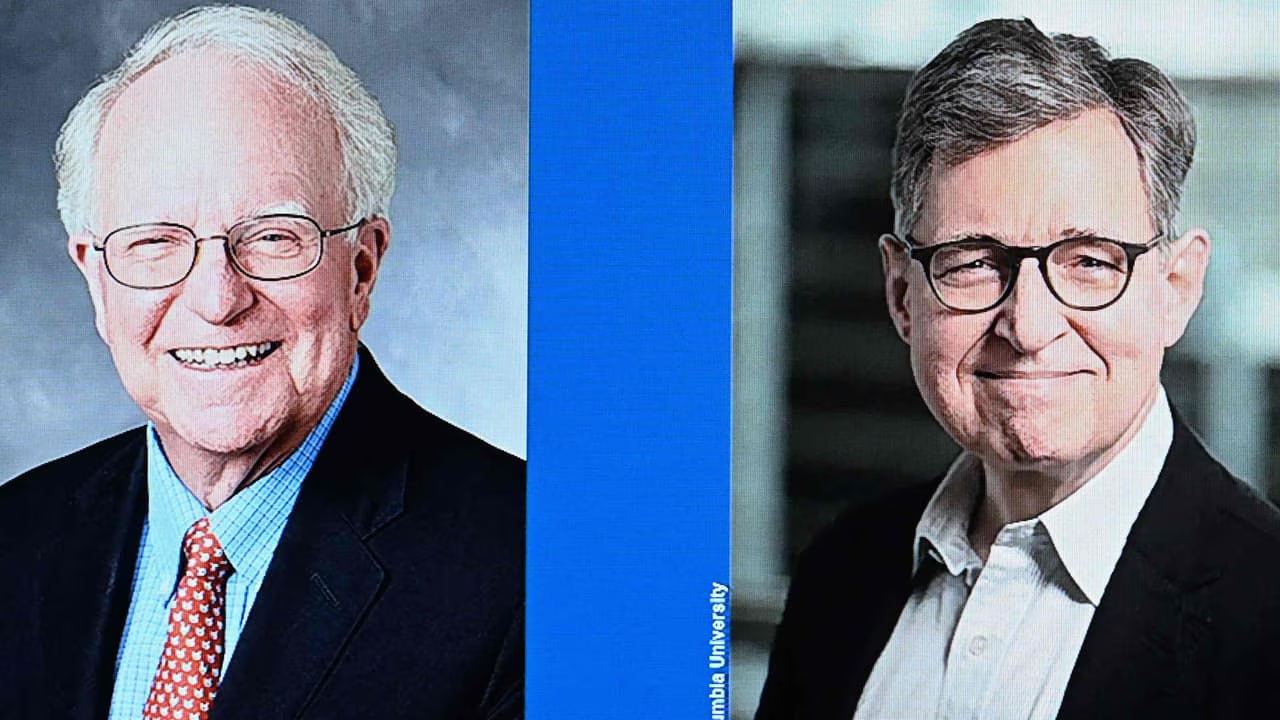
American economists Robert E. Hall and Michael Woodford have jointly won the 2026 Nobel Prize in Economic Sciences for research that has transformed how governments and central banks understand economic fluctuations and design policies to maintain stability. Their work on the microeconomic foundations of macroeconomic stabilisation helped establish the New Keynesian approach, a framework now widely used to assess how monetary and fiscal decisions influence inflation, employment, spending and economic growth.
The award recognises decades of research into a fundamental question facing policymakers: how can governments limit the damage caused by recessions without fuelling excessive inflation during periods of rapid economic expansion? Hall and Woodford helped develop models that connect the decisions of individual households and businesses with the behaviour of the wider economy, giving policymakers a more systematic way to analyse economic downturns and recoveries.

The prize, formally known as the Sveriges Riksbank Prize in Economic Sciences in Memory of Alfred Nobel, was announced by the Royal Swedish Academy of Sciences in Stockholm on Monday, 12 October. The award carries a financial prize of 12 million Swedish kronor, equivalent to approximately £900,000, to be shared by the two laureates.
Their recognition highlights the importance of economic theory in shaping practical decisions about interest rates, public spending and financial stability. Central banks and finance ministries must regularly respond to changing conditions, from weakening consumer demand and rising unemployment to supply disruptions and accelerating prices. The research associated with Hall and Woodford has provided tools for examining how different policy choices may affect these developments over time.
The New Keynesian framework builds on ideas associated with British economist John Maynard Keynes, who argued that changes in aggregate demand can influence production and employment and that government intervention may help stabilise economic activity. When households and businesses reduce spending sharply, policymakers may need to support demand. Conversely, when demand grows faster than the economy’s productive capacity, tighter policies may be required to contain inflation.
Traditional versions of macroeconomic analysis, however, struggled to explain some economic developments, particularly during the turbulent 1970s, when oil-price shocks and rising inflation challenged established assumptions about the relationship between economic variables. Researchers increasingly recognised the need for models that could explain how households and firms make decisions, how they form expectations about the future and how those choices interact across the economy.
Hall and Woodford contributed to the development of models grounded in these individual decisions, a concept economists describe as microfoundations. Rather than treating the economy solely as a collection of broad indicators, such as national output, inflation and unemployment, this approach examines the behaviour that produces those outcomes.
Households decide how much to consume and save, workers respond to employment opportunities and wages, and businesses determine investment, production and pricing. Their decisions are influenced by expectations about future income, costs, demand and government policy. When these choices are brought together in economic models, researchers can examine how policy changes may spread through the economy and why their effects can vary depending on prevailing conditions.
The Nobel committee said the laureates’ research had significantly improved the ability of policymakers to implement effective stabilisation measures. Models developed from this tradition can help explain and quantify the effects of policy on business cycles, supporting decisions intended to reduce the severity of recessions and prevent economic overheating.
One of Woodford’s most influential contributions has been his work on monetary policy and the role of expectations. He is closely associated with the development of modern thinking about forward guidance, through which central banks communicate their likely future policy direction to influence decisions made by consumers, businesses and financial markets.
The approach is based on the idea that monetary policy affects the economy through more than the current level of interest rates. Expectations about future borrowing costs can influence whether households purchase homes, whether businesses invest in new equipment and whether financial markets adjust their valuations. If a central bank credibly signals that interest rates will remain low for a period, for example, the announcement may affect present-day economic behaviour before any further rate decision takes effect.
Forward guidance became particularly important after the global financial crisis of 2008, when central banks in several major economies reduced interest rates towards historically low levels. In circumstances where conventional interest-rate cuts offered limited room for additional stimulus, policymakers explored other instruments to support spending and economic recovery.
Speaking by telephone following the announcement, Woodford described himself as “elated” and called the award a tremendous honour. He also discussed how the financial crisis stretched the limits of traditional monetary policy, as unemployment remained elevated and overall spending was weak despite exceptionally low interest rates.
The experience reinforced the importance of understanding how expectations influence economic decisions. Central banks increasingly relied on communication about the future path of policy, alongside other measures, to influence financial conditions and encourage spending. Woodford’s research has helped economists analyse why such announcements can matter and under what circumstances they may be effective.
His work also has implications for quantitative easing, the practice of purchasing financial assets to influence borrowing costs and financial conditions. The effectiveness and longer-term consequences of these measures remain subjects of debate among economists and policymakers. Research-based models can help authorities evaluate how different assumptions about interest rates, financial stability and economic conditions affect the likely costs and benefits of intervention.
The award may therefore be relevant to current policy discussions in the United Kingdom, where authorities continue to consider the appropriate pace for reversing some of the extraordinary monetary support introduced after the financial crisis and during subsequent economic disruptions. Economists have argued that decisions about quantitative tightening, through which central banks reduce their holdings of assets, should be assessed under a range of possible interest-rate and economic scenarios.
Hall has made important contributions to macroeconomics, economic growth, employment, inflation and public policy. He is based at Stanford University in California, where he serves as a professor in the economics department and a senior fellow at the Hoover Institution. His research has examined how economic activity responds to changing conditions and how public policy can influence outcomes across the economy and individual markets.
Hall is also known for introducing the distinction between “freshwater” and “saltwater” economists in American macroeconomic debate. The terms describe different intellectual traditions that developed partly around universities located near the Great Lakes and those on the country’s coasts.
The freshwater tradition has generally placed greater emphasis on supply-side forces, market adjustment and the limitations of government intervention in influencing economic activity. Saltwater economists have tended to give greater weight to changes in demand and the potential for monetary policy to influence output and employment. The distinction is a broad historical description rather than a complete classification of every economist, but it illustrates longstanding disagreements over how economies function and how governments should respond to instability.
Hall was born in 1943 in Palo Alto, California. His career has included research on economic fluctuations, productivity, consumption taxation and government economic policy. His work has helped connect theoretical questions with practical issues faced by policymakers, including how taxation and changes in incentives affect economic behaviour.
Woodford was born in 1955 in Chicopee, Massachusetts, and is based at Columbia University in New York, where he holds the John Bates Clark Professorship of Political Economy. His academic career has included fellowships and awards recognising his contributions to monetary economics and economic theory. His research has had a particularly strong influence on discussions about central-bank communication, interest-rate policy and the expectations that shape economic decisions.
The recognition of both economists reflects the influence of research that can take years, or even decades, to become fully embedded in economic policymaking. Economic models do not eliminate uncertainty, and their predictions depend on assumptions about how people and institutions behave. Policymakers must still weigh incomplete information, political constraints and unexpected events when making decisions. Nevertheless, a framework that better explains the relationship between individual choices and economy-wide outcomes can improve the quality of those judgements.

The economics award was first presented in 1969 and is formally separate from the original Nobel Prizes established through Alfred Nobel’s will, although it is administered as part of the Nobel award programme. The 2026 announcement brought the number of times the economics prize has been awarded to 58, according to the information accompanying the announcement.
For Hall and Woodford, the honour recognises research that has influenced generations of economists and shaped how policymakers think about the business cycle. For governments and central banks confronting uncertain growth, inflationary pressures and changing financial conditions, its wider significance lies in the continuing effort to develop policies that respond to economic shocks without creating new instability.
Related News:
 Dutch Bank Moves 86 Tonnes of Gold to London
 Oil nears $100 as Saudi attacks shake markets
 Japan Raises Rates to 31-Year High
 Chinese Hybrid Car Surge Raises EU Auto Industry Concerns
 Saudi intercepts Houthi missiles as oil fears grow
 Ukraine Faces $45m Hourly Cost From Missile Alerts
 French Debt Fears Put Euro Markets Under Pressure
 UK Diesel Reaches £2 as Inflation Surges Across Europe
 Minister Rejects Fears of UK Diesel Shortage
 EU-China Talks Target Surge in Hybrid Car Imports
 Oil Shock Sends Markets Lower as Middle East Risks Grow
 France Faces Debt Crisis as Protests and Markets Clash
 EU Caps Chinese Hybrid Car Imports at 350,000
 UK Wage Growth Slows as Jobs Market Holds Firm
 Reeves Fights to Keep Treasury Role Amid Labour Turmoil
 UK rejects EV charging VAT cut amid Treasury clash
 Canada to Match Trump’s 50% Tariffs Dollar for Dollar
 Firms on both sides fear damage from US-Canada trade war
 Europe Faces Winter Gas Supply Anxiety
 Trump Hardens Canada Trade Stance as Talks Stall
 UK House Prices Fall as Mortgage Rates Rise
 Oil Prices Surge as Saudi Pipeline Closure Deepens Crisis
 Thames Water Revises Oxfordshire Mega-Reservoir Plan
 UK Productivity Improves as Bank Weighs Interest Rates
 Trump Threatens EU Over Canada Partnership Proposal
 UK Retail Sales Rebound as Consumers Spend More
 Trump Eyes Major Belarus Fertiliser Deal Amid Canada Trade Dispute
 UK Borrowing Hits £18.3bn Ahead of Budget
 Thinktank Calls for Abolition of UK State Pension
 MPs Defend UK Economic Watchdog Against Critics
 Iran Rejects Claims of Shift in US Talks
 Trump gives Xi red-carpet welcome as trade truce extends
 Tony Blair Calls for Britain to Rejoin EU Within a Decade
 UK Trade Losses Grow Without EU Product Deal
 Should Savers Lock Into 5.25% Fixed Rates?
 Why Americans Feel Ripped Off by Rising Prices
 UK Diesel Prices Hit Record High Amid Iran Conflict
 Poundland Rescue Bid Could Protect 11,000 Jobs
 UK house price growth slows as mortgage rates rise
 UK borrowing costs surge as global bond sell-off deepens
 UK Assures Public Over Diesel Supply
 Informa Agrees £2.24bn Deal to Buy Clarion
 Asos Investigates Hack Claims After Customer Alerts
 IMF Warns Governments Over Rising Debt Burdens
 Google Maps Brings Live Fuel Prices to UK Drivers
 Tesco Raises Profit Forecast as Consumer Confidence Holds
 Ministers Push ATO to Reconsider Credit Card Ban
 Australia Delays Tax Credit Card Payment Ban After Backlash
 Firmus Abandons Major ASX Listing Amid Investor Doubts
 IFS Warns UK Budget Faces £35bn Spending Gap
 UK Van Drivers Face £2.5bn Diesel Cost Surge
 Global markets face turmoil as Hormuz crisis deepens
 Albanese Rejects Gas Export Tax Push
 $13bn World Cup Set to Break All Revenue Records
 US Awaits Iran Reply on New Ceasefire Proposal
 Weight-Loss Drugs Offer Food Savings Mainly to High Earners
 US CEOs Earn 614 Times More Than Workers
 UK Cost Squeeze Deepens as Mortgages and Gas Rise
 Swedish Mining Push Puts Sami Land Rights Under Pressure
 Billionaire Chris Rokos poised to leave UK
 JPMorgan Boss Warns Against UK Bank Tax Rise
 John Lewis Losses Widen to £124m as Confidence Falls
 Saudi Arabia Shuts Oil Pipeline After Drone Attack
 UK Pay Growth Slows to 3.9% as Rate Decision Nears
 Bank Urged to Slow Bond Sales as UK Costs Rise
 Trump Threatens EU With Tariffs Over Canada Proposal
 UK Rent Gap Puts Low-Income Families Under Pressure
 Calls Grow to Expand UK National Wealth Fund
 Australia Renewables Reach Record 80% Grid Demand
 AO Acquires Jessops in Camera Retail Expansion
 Xi urges Trump to avoid US-China military conflict
 TalkTalk Races to Sell Arms as Administration Looms
 Burnham Opens Door to Possible UK Return to EU
 Healey urged to act as UK energy bills rise 4%
 North Sea Strike Threatens UK Fuel Supplies
 UK Weighs Chinese Car Tariffs Amid EU Trade Push
 BT Agrees £400m TalkTalk Rescue Deal
 UK house prices stall as mortgage costs rise
 South Korea Probes Fuel Shipments to Russia
 Japan Beer Giants Face Cartel Probe