Published: 13 October 2026. The English Chronicle Desk. The English Chronicle Online
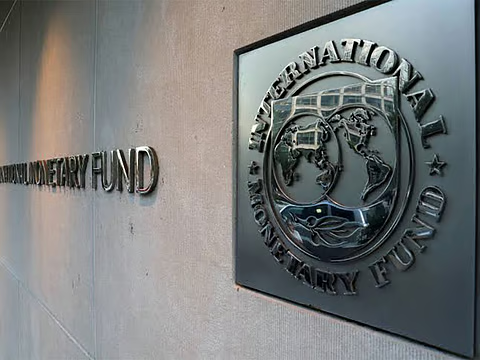
The global economy is approaching a potentially dangerous turning point as dwindling emergency oil reserves, rising government debt and persistent geopolitical tensions threaten to undermine its ability to withstand further shocks, the International Monetary Fund (IMF) has warned. Although economic growth has proved more resilient than many policymakers initially expected, the international financial institution cautions that governments may have increasingly limited resources to protect households and businesses if energy prices surge again.
In its latest World Economic Outlook, released on Tuesday in Bangkok, the IMF said the global economy had absorbed the effects of the conflict in the Middle East better than anticipated over the preceding six months. However, it warned that the combination of depleted energy inventories, overstretched public finances and continuing uncertainty could test the limits of that resilience.
The warning comes as governments face difficult decisions over spending, inflation, energy security and economic stability. With many countries carrying substantial debt and running budget deficits, their ability to introduce emergency subsidies or other measures to shield consumers from another sharp increase in fuel prices has become increasingly constrained.

The IMF’s assessment highlights a central concern for policymakers: the measures that helped the world economy withstand recent disruptions may not remain effective if the conflict intensifies or another major shock occurs.
According to the report, the rerouting of oil supplies away from the Strait of Hormuz and the release of strategic petroleum reserves have helped limit the impact of the US-Iran conflict on international oil prices. These interventions provided an important buffer at a time when uncertainty over energy supplies threatened to increase costs for consumers and businesses worldwide.
However, the IMF warned that emergency reserves are now dwindling, leaving countries more exposed to future disruptions. Its report stated that energy-market inventories were declining and that additional geopolitical shocks could quickly affect prices and supply chains.
The International Energy Agency announced an unprecedented release of emergency oil stocks in March 2026 and subsequently indicated that efforts to make supplies available would be accelerated following a meeting of oil ministers in October. While these measures were intended to ease pressure on markets, emergency stock releases cannot provide an unlimited or permanent solution to supply shortages.
The vulnerability is particularly evident in the United States, where the strategic petroleum reserve was recently reported to have fallen to its lowest level since 1982. Lower reserves can reduce the government’s capacity to respond to another major disruption, particularly if several supply routes or production facilities are affected simultaneously.
The situation has also complicated efforts to reduce fuel prices through diplomatic arrangements. US President Donald Trump recently agreed with Russian President Vladimir Putin to temporarily lift sanctions on US imports of Russian diesel in an attempt to ease pressure at petrol stations. However, analysts have questioned whether the arrangement would have a meaningful effect on prices, given the broader forces shaping global energy markets.
For households, prolonged increases in oil prices can affect much more than the cost of filling a vehicle. Higher fuel and transport expenses can push up the prices of food, manufactured goods and essential services. Businesses may face increased production and distribution costs, while households with limited disposable income can be forced to reduce spending on other necessities.
The IMF’s warning was delivered as finance ministers and central bankers gathered in Bangkok for the annual meetings of the IMF and the World Bank. The meetings provide an important forum for governments to discuss economic risks, international cooperation and the policy choices needed to preserve financial stability.
Silvana Tenreyro, the IMF’s economic counsellor, said the global economy had demonstrated resilience but warned that its capacity to absorb further shocks was approaching its limits. She urged policymakers to move beyond short-term crisis management and focus on rebuilding the financial and economic safeguards needed to withstand future disruptions.
The IMF’s managing director, Kristalina Georgieva, has similarly urged governments to exercise greater discipline as global debt levels rise. Her message reflects mounting concerns that repeated emergencies have encouraged governments to accumulate borrowing while postponing difficult decisions about public spending, taxation and economic reform.
The latest report nevertheless offers some encouraging news on the growth outlook. The IMF marginally upgraded its forecast for global economic growth in 2026 to 3.1%, compared with 3% in its previous update in July. Its projection for 2027 remained unchanged at 3.4%.
The revisions suggest that economic activity has held up better than expected despite the energy shock and wider geopolitical uncertainty. However, the relatively modest improvement does not eliminate the risks facing the global economy, particularly if oil supplies are disrupted again or higher interest rates begin to weigh more heavily on investment and household spending.
The United States is expected to record economic growth of 2.3% in 2026, unchanged from the previous forecast. The IMF also raised its projection for US growth in 2027 to 2.3%, from 2.2% previously.
The United Kingdom received a modest upgrade to its outlook for the current year. The IMF now expects the British economy to expand by 1.3% in 2026, an increase of 0.3 percentage points from its July forecast. The revision provides some encouragement for the government as it attempts to support economic activity while navigating persistent inflationary pressures and uncertainty in international markets.
However, the outlook for Britain in 2027 is less positive. The IMF reduced its forecast for UK growth next year to 1.2%, from 1.3%. It warned that prolonged high oil prices and elevated long-term interest rates could weaken consumption and investment, limiting the pace of economic expansion.
The prospect of slower growth presents a difficult challenge for policymakers. Higher energy costs can increase inflation while simultaneously reducing the purchasing power of households. If borrowing costs remain elevated, businesses may also delay investment decisions, making it harder to generate jobs and improve productivity.
The IMF expects global inflation to reach 4.7% in 2026, unchanged from its July forecast. It projects that inflation will ease to 4.1% in 2027, slightly above the previous estimate of 4%. The revised outlook suggests that price pressures could remain more persistent than previously anticipated.
The Fund identified the possibility of a prolonged stalemate or further escalation in the Middle East as a major downside risk. Such a development could drive energy and food prices higher, particularly if it disrupts oil production, transport infrastructure or critical shipping routes.
Damage to energy infrastructure could have consequences extending well beyond the countries directly involved in the conflict. Cyberattacks targeting essential systems and extreme weather events could create additional disruptions, amplifying existing pressures on supply chains and prices.
Another concern is the potential for an artificial intelligence-driven market crash. Strong enthusiasm for AI-related companies has attracted substantial investment, but a sharp reversal in valuations could affect financial markets and weaken confidence. If losses spread across investment portfolios, lending markets and businesses, the consequences could extend into the wider economy.
These risks are particularly concerning at a time when governments have limited fiscal flexibility and many countries are already managing high debt burdens. A combination of an energy shock, financial-market instability and slower economic growth could make it more difficult for policymakers to respond effectively.
The IMF urged central banks to avoid overreacting to temporary increases in inflation while remaining prepared to act quickly if price pressures become entrenched. Policymakers must distinguish between short-lived movements in energy prices and broader inflation that spreads through wages, services and other parts of the economy.
The balance will be difficult to maintain. Raising interest rates too aggressively could weaken economic activity and increase borrowing costs, while allowing inflation to persist could further erode household purchasing power and undermine confidence in monetary policy.

Ultimately, the IMF’s warning is not that a global economic crisis is inevitable, but that the safeguards supporting the current recovery are becoming less reliable. Replenishing emergency energy supplies, rebuilding fiscal buffers and strengthening resilience against geopolitical and financial shocks will be important priorities for governments.
The latest growth forecasts demonstrate that the global economy continues to expand, but the outlook remains vulnerable to events beyond policymakers’ control. Whether that resilience can be sustained will depend partly on governments’ ability to prepare for further disruptions before their remaining financial and energy reserves are exhausted.
As international leaders meet in Bangkok, the central challenge is increasingly clear: countries must move beyond repeatedly managing emergencies and begin rebuilding the capacity to withstand them. Without stronger safeguards and coordinated policy action, another major shock could turn today’s manageable pressures into a much more serious global economic setback.
Related News:
 Oil nears $100 as Saudi attacks shake markets
 UK Diesel Reaches £2 as Inflation Surges Across Europe
 Minister Rejects Fears of UK Diesel Shortage
 UK Wage Growth Slows as Jobs Market Holds Firm
 Reeves Fights to Keep Treasury Role Amid Labour Turmoil
 Europe Faces Winter Gas Supply Anxiety
 Dutch Bank Moves 86 Tonnes of Gold to London
 UK House Prices Fall as Mortgage Rates Rise
 Thames Water Revises Oxfordshire Mega-Reservoir Plan
 Japan Raises Rates to 31-Year High
 UK Retail Sales Rebound as Consumers Spend More
 UK Borrowing Hits £18.3bn Ahead of Budget
 Thinktank Calls for Abolition of UK State Pension
 MPs Defend UK Economic Watchdog Against Critics
 Tony Blair Calls for Britain to Rejoin EU Within a Decade
 UK Trade Losses Grow Without EU Product Deal
 Saudi intercepts Houthi missiles as oil fears grow
 Should Savers Lock Into 5.25% Fixed Rates?
 UK Diesel Prices Hit Record High Amid Iran Conflict
 Ukraine Faces $45m Hourly Cost From Missile Alerts
 Poundland Rescue Bid Could Protect 11,000 Jobs
 UK house price growth slows as mortgage rates rise
 UK borrowing costs surge as global bond sell-off deepens
 French Debt Fears Put Euro Markets Under Pressure
 UK Assures Public Over Diesel Supply
 Informa Agrees £2.24bn Deal to Buy Clarion
 EU-China Talks Target Surge in Hybrid Car Imports
 Google Maps Brings Live Fuel Prices to UK Drivers
 Oil Shock Sends Markets Lower as Middle East Risks Grow
 France Faces Debt Crisis as Protests and Markets Clash
 IFS Warns UK Budget Faces £35bn Spending Gap
 UK Van Drivers Face £2.5bn Diesel Cost Surge
 Hall and Woodford Win Nobel Economics Prize
 BBC News Faces Deep Cuts in 2,000 Job Plan
 UK Pushes for New EU Goods Trade Deal
 UK rejects EV charging VAT cut amid Treasury clash
 Labour MPs Urge Burnham to Revive UK Aid Target
 EasyJet Takeover Sparks Fears Over Passengers’ Future
 Canada to Match Trump’s 50% Tariffs Dollar for Dollar
 Firms on both sides fear damage from US-Canada trade war
 UK Households Could Save £173 on Fixed Energy Deals
 Burnham Faces Mounting Budget Challenges
 Trump Hardens Canada Trade Stance as Talks Stall
 UK Cost Squeeze Deepens as Mortgages and Gas Rise
 Billionaire Chris Rokos poised to leave UK
 JPMorgan Boss Warns Against UK Bank Tax Rise
 John Lewis Losses Widen to £124m as Confidence Falls
 Oil Prices Surge as Saudi Pipeline Closure Deepens Crisis
 UK State Pension Set to Rise 3.9% as Triple Lock Holds
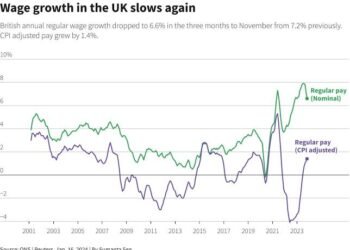 UK Pay Growth Slows to 3.9% as Rate Decision Nears
 Bank Urged to Slow Bond Sales as UK Costs Rise
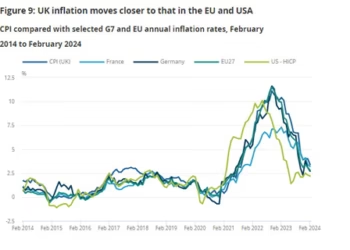 UK Inflation Hits 3.1% as Household Pressure Grows
 Trump Threatens EU With Tariffs Over Canada Proposal
 UK Productivity Improves as Bank Weighs Interest Rates
 Trump Threatens EU Over Canada Partnership Proposal
 UK Rent Gap Puts Low-Income Families Under Pressure
 Calls Grow to Expand UK National Wealth Fund
 Trump Eyes Major Belarus Fertiliser Deal Amid Canada Trade Dispute
 Iran Rejects Claims of Shift in US Talks
 Chinese Hybrid Car Surge Raises EU Auto Industry Concerns
 AO Acquires Jessops in Camera Retail Expansion
 Beaverbrooks Boss Calls for Relief on Business Costs
 Why Americans Feel Ripped Off by Rising Prices
 Burnham Opens Door to Possible UK Return to EU
 Healey urged to act as UK energy bills rise 4%
 Boots Sale Nears as Weston Family Eyes $9bn Deal
 London Luxury Homes Face a Prolonged Property Slump
 UK Faces Calls to Review Bank Failure Bets
 North Sea Strike Threatens UK Fuel Supplies
 UK Weighs Chinese Car Tariffs Amid EU Trade Push
 BT Agrees £400m TalkTalk Rescue Deal
 Asos Investigates Hack Claims After Customer Alerts
 UK house prices stall as mortgage costs rise
 IMF Warns Governments Over Rising Debt Burdens
 Tesco Raises Profit Forecast as Consumer Confidence Holds
 France Urges UK to Consider Returning to EU
 Ministers Push ATO to Reconsider Credit Card Ban
 Australia Delays Tax Credit Card Payment Ban After Backlash
 UK Savers Face Uncertainty as Rates Rise Above 5%
 Labour Fears Budget Will Fail to Lift Living Standards