Published: 13 October 2026. The English Chronicle Desk. The English Chronicle Online
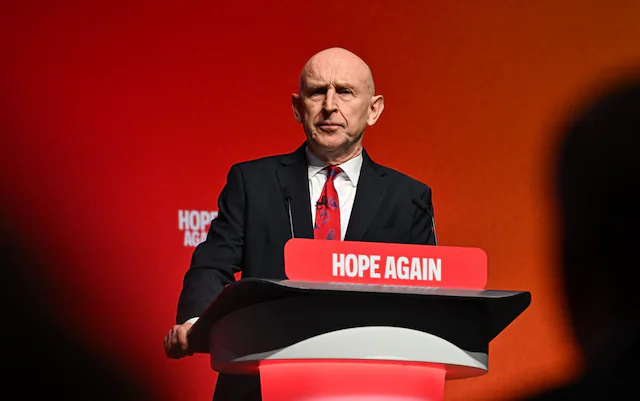
The International Monetary Fund has upgraded its economic growth forecast for the United Kingdom in 2026, offering Chancellor John Healey a boost just weeks before his first budget. However, the improvement comes with a warning that rising energy prices, persistent inflation and higher borrowing costs could slow the economy next year, placing renewed pressure on the government to balance household support with efforts to repair the public finances.
The IMF now expects the UK economy to expand by 1.3% in 2026, an increase of 0.3 percentage points from its previous forecast in July. The fund has also slightly reduced its growth projection for 2027, from 1.3% to 1.2%, suggesting that the recovery could lose momentum as higher energy costs and interest rates weigh on businesses and consumers.
The revised outlook comes at a politically sensitive moment for Healey, who is preparing to deliver his budget on 28 October. The chancellor faces competing demands to ease the pressure on households, respond to rising energy bills and demonstrate that the government can maintain control over public spending. The IMF’s assessment offers some encouragement for the UK economy but reinforces the challenges facing policymakers over the coming months.

Silvana Tenreyro, the IMF’s economic counsellor and a former member of the Bank of England’s Monetary Policy Committee, urged the UK government to continue its efforts to strengthen the public finances. Speaking at the fund’s annual meetings in Bangkok, she said Britain stood out among the Group of Seven advanced economies because it had begun a process aimed at narrowing its budget deficit.
Her message to the chancellor was straightforward: maintain the current direction rather than abandon fiscal consolidation in response to immediate political or economic pressures. The advice suggests that the IMF considers credible management of government finances important to maintaining confidence in Britain’s economic outlook.
Healey is nevertheless facing pressure to introduce a generous package of energy support before a sharp increase in household bills expected in January. Higher energy costs threaten to squeeze disposable incomes, particularly among lower-income households that spend a larger share of their budgets on essentials. Businesses could also face higher operating expenses, potentially affecting investment, prices and employment.
The IMF has cautioned governments against introducing broad, untargeted subsidies to shield consumers from rising energy costs. Instead, it recommends that support should be temporary, carefully targeted at those who need it most and designed to minimise distortions in the economy.
Such an approach could help the government protect vulnerable households without committing excessive public money to measures that benefit people who do not require financial assistance. However, deciding who qualifies for help and how long support should continue could prove politically difficult, particularly if energy prices remain elevated throughout the winter.
Healey has argued that international conflicts are affecting living standards in Britain and elsewhere, while maintaining that the UK economy has demonstrated resilience despite difficult global conditions. The IMF’s improved growth forecast provides some support for that position, although its projections indicate that the benefits may be constrained by renewed inflationary pressures.
Official figures showed that UK gross domestic product grew by 0.6% in the first quarter of 2026 and 0.5% in the second quarter. The stronger-than-expected performance has helped prompt the IMF’s upward revision. The Office for National Statistics has pointed to the expansion of businesses connected with artificial intelligence as one factor contributing to the stronger results.
Growth in AI-related activity could offer opportunities for productivity improvements, business investment and the development of new services. However, the broader economic picture remains uneven, and stronger output in particular sectors does not necessarily translate immediately into higher living standards for every household.
The IMF expects growth to edge lower in 2027 as the effects of elevated oil prices and long-term interest rates become more pronounced. Higher energy costs can push up transport, manufacturing and household expenses, while expensive borrowing can discourage companies from investing and consumers from making major purchases.
Mortgage rates have already been rising as banks face higher funding costs in financial markets. For homeowners approaching the end of fixed-rate mortgage deals, increased borrowing expenses could place additional pressure on monthly budgets. Prospective buyers may also find it harder to secure affordable finance, potentially affecting housing demand and construction activity.
Financial markets have increasingly anticipated higher inflation and interest rates across major economies since conflict in the Middle East intensified again during the summer. The uncertainty has complicated the outlook for central banks, which must weigh the risk of persistent price increases against the possibility that tighter monetary policy could weaken economic activity.
The Bank of England’s nine-member Monetary Policy Committee is widely expected by markets to raise its policy rate at its November meeting. Such a move would reflect concern that inflation may remain above target for longer than previously anticipated, although an expected decision is not a guarantee of what the committee will ultimately do.
Bank of England policymaker Megan Greene has argued that the IMF’s upward revision to UK growth strengthens the case for higher interest rates. She has also pointed to labour-market data suggesting that the degree of spare capacity in the economy may have reached its peak. If demand remains stronger than expected while inflationary pressures persist, policymakers could conclude that monetary policy needs to remain tighter.
The IMF’s inflation forecasts underline the difficulty. It expects average UK inflation to reach 3.3% in 2026 and remain at 2.8% in 2027. Core inflation, which excludes more volatile items such as energy, is not expected to return to the Bank of England’s 2% target until late next year.
Persistent inflation would complicate the government’s efforts to ease the cost-of-living pressures experienced by households. Even if the rate of price increases slows, consumers may continue to face high prices for food, housing, transport and other essentials. The political challenge is therefore not limited to bringing inflation down; it also involves helping people manage the cumulative effects of previous price rises.
Healey is expected to use the 28 October budget to outline plans for devolving more tax revenues to mayoralties, alongside measures intended to help households cope with higher energy bills ahead of winter. Greater local control over revenue could give mayors more flexibility to address regional priorities, although the details of any arrangements will determine how much practical freedom local authorities gain.
Other major spending decisions may be delayed until a wider spending review expected next year. Among the outstanding questions is when the UK should aim to devote 3% of gross domestic product to defence. Any commitment of that scale would need to be considered alongside competing demands on public finances, including healthcare, education, infrastructure and support for households.
The Institute for Fiscal Studies has added to the pressure on the chancellor by warning that the budget could lack credibility unless the government explains how it intends to address approximately £35bn in projected future spending pressures. The warning highlights the gap that can emerge between political promises and the resources available to deliver them.
The government must therefore navigate several competing priorities. More extensive energy assistance could offer immediate relief but increase the cost of public support. Faster deficit reduction could strengthen fiscal credibility but leave less room for new spending commitments. Meanwhile, higher interest rates could help contain inflation while making mortgages, business loans and other forms of borrowing more expensive.
The IMF’s improved growth forecast offers the government a more favourable starting point than it had in July, but it does not remove these difficult choices. The projected slowdown in 2027 suggests that policymakers should avoid assuming that stronger growth in the current year will automatically translate into lasting improvements in public finances or living standards.
For households, the most immediate concerns remain energy bills, mortgage payments and the prices of everyday goods. For businesses, uncertainty over demand, borrowing costs and operating expenses may influence decisions about hiring and investment. For the government, the central task is to provide credible economic leadership while ensuring that fiscal restraint does not undermine its wider social and economic objectives.

As Healey prepares for his first budget, the IMF’s advice is likely to reinforce the case for a cautious approach to public finances. Yet the pressure to offer meaningful help to households is unlikely to disappear. The coming weeks will test whether the government can combine disciplined financial management with targeted measures that respond to the cost-of-living squeeze without adding unnecessarily to inflationary pressures.
The upgraded forecast is a welcome signal for Britain, but the outlook remains vulnerable to developments in energy markets, international conflicts and interest-rate decisions. The government’s ability to maintain confidence, protect those most exposed to rising costs and address long-term spending commitments will help determine whether the modest improvement in growth becomes a sustained recovery.
Related News:
 Thinktank Calls for Abolition of UK State Pension
 MPs Defend UK Economic Watchdog Against Critics
 Informa Agrees £2.24bn Deal to Buy Clarion
 IFS Warns UK Budget Faces £35bn Spending Gap
 BBC News Faces Deep Cuts in 2,000 Job Plan
 Reeves Fights to Keep Treasury Role Amid Labour Turmoil
 Burnham Faces Mounting Budget Challenges
 UK House Prices Fall as Mortgage Rates Rise
 Oil nears $100 as Saudi attacks shake markets
 Thames Water Revises Oxfordshire Mega-Reservoir Plan
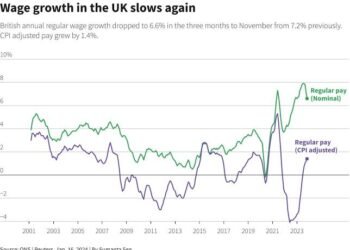 UK Pay Growth Slows to 3.9% as Rate Decision Nears
 Bank Urged to Slow Bond Sales as UK Costs Rise
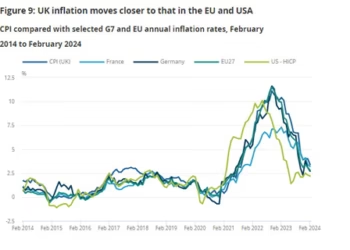 UK Inflation Hits 3.1% as Household Pressure Grows
 UK Retail Sales Rebound as Consumers Spend More
 UK Borrowing Hits £18.3bn Ahead of Budget
 Tony Blair Calls for Britain to Rejoin EU Within a Decade
 UK Trade Losses Grow Without EU Product Deal
 Saudi intercepts Houthi missiles as oil fears grow
 Should Savers Lock Into 5.25% Fixed Rates?
 UK Diesel Prices Hit Record High Amid Iran Conflict
 Poundland Rescue Bid Could Protect 11,000 Jobs
 UK house price growth slows as mortgage rates rise
 UK borrowing costs surge as global bond sell-off deepens
 UK Assures Public Over Diesel Supply
 UK Diesel Reaches £2 as Inflation Surges Across Europe
 Minister Rejects Fears of UK Diesel Shortage
 London Council Warns of 150% Council Tax Rise
 EU-China Talks Target Surge in Hybrid Car Imports
 IMF Warns Governments Over Rising Debt Burdens
 Google Maps Brings Live Fuel Prices to UK Drivers
 Ministers Push ATO to Reconsider Credit Card Ban
 Australia Delays Tax Credit Card Payment Ban After Backlash
 France Faces Debt Crisis as Protests and Markets Clash
 Labour Fears Budget Will Fail to Lift Living Standards
 UK Van Drivers Face £2.5bn Diesel Cost Surge
 IMF Warns Global Economy Is Nearing Its Limits
 UK Doubles Steel Tariffs to 50% to Protect Domestic Plants
 UK Pushes for New EU Goods Trade Deal
 UK rejects EV charging VAT cut amid Treasury clash
 Labour MPs Urge Burnham to Revive UK Aid Target
 EasyJet Takeover Sparks Fears Over Passengers’ Future
 Europe Faces Winter Gas Supply Anxiety
 UK Households Could Save £173 on Fixed Energy Deals
 Trump Hardens Canada Trade Stance as Talks Stall
 Reform Faces Fresh Financial Controversy
 UK Cost Squeeze Deepens as Mortgages and Gas Rise
 Billionaire Chris Rokos poised to leave UK
 JPMorgan Boss Warns Against UK Bank Tax Rise
 John Lewis Losses Widen to £124m as Confidence Falls
 UK State Pension Set to Rise 3.9% as Triple Lock Holds
 North Sea Firms Urge Early End to Windfall Tax
 Trump Threatens EU With Tariffs Over Canada Proposal
 UK Productivity Improves as Bank Weighs Interest Rates
 Trump Threatens EU Over Canada Partnership Proposal
 Japan Raises Rates to 31-Year High
 UK Rent Gap Puts Low-Income Families Under Pressure
 Reform UK Faces Internal Debate Over £72m Spending
 Calls Grow to Expand UK National Wealth Fund
 Trump Eyes Major Belarus Fertiliser Deal Amid Canada Trade Dispute
 Iran Rejects Claims of Shift in US Talks
 Chinese Hybrid Car Surge Raises EU Auto Industry Concerns
 AO Acquires Jessops in Camera Retail Expansion
 Beaverbrooks Boss Calls for Relief on Business Costs
 Why Americans Feel Ripped Off by Rising Prices
 Ukraine Faces $45m Hourly Cost From Missile Alerts
 Burnham Opens Door to Possible UK Return to EU
 Healey urged to act as UK energy bills rise 4%
 Boots Sale Nears as Weston Family Eyes $9bn Deal
 French Debt Fears Put Euro Markets Under Pressure
 Badenoch Raises Prospect of 2027 UK Election
 UK Faces Calls to Review Bank Failure Bets
 North Sea Strike Threatens UK Fuel Supplies
 UK Weighs Chinese Car Tariffs Amid EU Trade Push
 BT Agrees £400m TalkTalk Rescue Deal
 UK house prices stall as mortgage costs rise
 Tesco Raises Profit Forecast as Consumer Confidence Holds
 France Urges UK to Consider Returning to EU
 Oil Shock Sends Markets Lower as Middle East Risks Grow
 UK Savers Face Uncertainty as Rates Rise Above 5%
 Hall and Woodford Win Nobel Economics Prize