


Published: 14 October 2026. The English Chronicle Desk. The English Chronicle Online
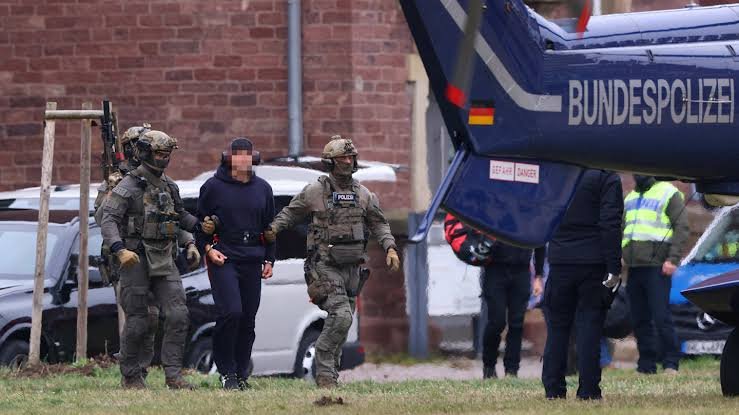
A Ukrainian special forces officer is due to stand trial in Germany over allegations that he participated in the sabotage of the Nord Stream gas pipelines, opening a politically sensitive legal case that could have major implications for relations between Ukraine, Germany and Russia.
Serhii Kuznetsov, a Ukrainian military officer, is accused by German prosecutors of participating in the September 2022 operation that severely damaged the Nord Stream 1 and Nord Stream 2 pipelines beneath the Baltic Sea. He denies involvement, as does the Ukrainian government.
The trial is taking place in Hamburg and concerns one of the most consequential acts of infrastructure sabotage in Europe since the end of the second world war. The explosions destroyed sections of pipelines designed to transport Russian natural gas to Germany, at a time when Europe was already attempting to reduce its dependence on Russian energy following Moscow’s full-scale invasion of Ukraine.

German prosecutors allege that Kuznetsov played an important role in preparing and executing the underwater operation. German privacy rules mean that he is expected to be identified as Serhii K during the opening proceedings, although his full name appeared in the extradition documentation used in the case.
Prosecutors allege that at least four explosive or incendiary devices, weighing as much as 27 kilograms each, were placed at a depth of approximately 80 metres in the Baltic Sea near the Danish island of Bornholm. The operation, according to investigators, required specialist diving skills and careful planning.
Kuznetsov is alleged to have been part of a larger group consisting of six other people, including four deep-sea divers, an explosives specialist and the captain of a vessel. Investigators believe the group used a rented yacht and timer-controlled explosives to reach the pipelines and carry out the attack.
The explosions occurred on 26 September 2022, producing massive underwater leaks and causing serious damage to the Nord Stream system.
Nord Stream 1 had previously been the principal route for Russian natural gas exports to Germany. Moscow had already halted supplies through the pipeline in August 2022, amid the rapidly deteriorating relationship between Russia and European countries following Russia’s invasion of Ukraine.
Nord Stream 2 had been completed and was technically ready to transport gas but never entered commercial operation. Germany suspended the authorisation process shortly before Russia launched its full-scale invasion of Ukraine.
The destruction of the pipelines therefore occurred against an extraordinary geopolitical backdrop. European governments were attempting to reduce their dependence on Russian energy, while Russia was seeking to maintain its influence over European energy markets.
The attack immediately generated competing theories about who was responsible.
Russia rejected responsibility and repeatedly pointed toward the United States, while Washington strongly denied any involvement. Early speculation also focused on Moscow because of Russia’s strategic interests in the pipeline system and the broader confrontation between Russia and the west.
The German investigation subsequently moved in a different direction.
In July, German state prosecutors alleged that Ukrainian state authorities had ordered the operation. Investigators argued that the objective was to permanently prevent the pipelines from supplying gas and to stop Russia from earning revenue from natural gas exports that could support its war effort.
Ukraine has rejected the allegations. President Volodymyr Zelenskyy has denied that the Ukrainian state was responsible for the sabotage.
The German trial therefore carries significance beyond the fate of the individual defendant. A finding that Ukrainian military personnel were involved could create political difficulties for Kyiv at a time when Germany remains one of Ukraine’s most important supporters in its war against Russia.
Berlin has so far avoided making detailed public comments about the proceedings, reflecting the diplomatic sensitivity of a case in which a country supported by Germany is accused of attacking infrastructure connected to Russia.
Kuznetsov was arrested in Italy in August 2025 while on a family holiday. Italian authorities said he surrendered without resistance. Investigators alleged that he had been travelling using a false passport.
After legal efforts to prevent his extradition failed, he was transferred to Germany in November 2025, where he has remained in custody ahead of the trial.
Another Ukrainian suspect has also entered the investigation. Volodymyr Zhuravlyov, described as an air-conditioning installer and hobby diver, was arrested in northern Croatia in August 2026 on a European arrest warrant. He has challenged extradition to Germany and has sought asylum in Croatia. Zhuravlyov denies involvement in the Nord Stream operation.
The German proceedings are being closely watched in Ukraine and across Europe because of their potential political consequences.
Germany has provided substantial military and financial support to Ukraine since Russia launched its full-scale invasion. Any evidence demonstrating that Ukrainian state actors ordered an attack against critical infrastructure could place additional pressure on the German government and potentially strengthen political forces opposed to continued support for Kyiv.
Germany’s far-right Alternative for Germany party has already used the Nord Stream allegations to attack the government’s Ukraine policy. The party, which has gained support in opinion polls, has argued that German assistance to Ukraine should end and that the Nord Stream infrastructure should eventually be restored to allow cheaper Russian gas to return to the German market.
The controversy also revives the long and complicated political history surrounding Nord Stream.
The pipeline projects had been controversial in Germany and elsewhere long before the 2022 explosions. Supporters argued that direct gas connections with Russia would provide Germany with relatively inexpensive and reliable energy. Critics warned that the projects would increase European dependence on Moscow while bypassing Ukraine, which had historically served as an important transit country for Russian gas.
Former German chancellor Gerhard Schröder became one of the most prominent political figures associated with Nord Stream. After leaving office, he was appointed chairman of the supervisory board of Nord Stream AG, a company closely connected to the pipeline project.
Schröder’s continuing relationship with Russian President Vladimir Putin has remained politically controversial in Germany. His attendance at Putin’s birthday celebrations last week once again attracted criticism from German political figures.
The Hamburg court has rejected a request by Russia to participate as a co-plaintiff in the proceedings. Gazprom, which owns Nord Stream 2, argued that the company had suffered severe economic damage from the sabotage and therefore had an interest in the case.
The court nevertheless concluded that the potential cost of repairing the pipelines did not make restoration economically impossible and rejected Russia’s attempt to take part as a co-plaintiff.
Kuznetsov’s defence is expected to focus heavily on his status as an active military officer. His military identification reportedly indicates that he was serving at the time of the explosions.
His lawyers are expected to argue that military obligations prevent him from disclosing certain information about his activities. They may also submit affidavits from two military superiors supporting the claim that he is bound by duties of confidentiality.
Kuznetsov is reportedly expected to exercise his right to remain silent during at least part of the proceedings.
Investigators believe he received instructions from another individual whom they regard as the alleged mastermind of the operation. That person is reportedly among those supporting Kuznetsov’s defence.
The court has scheduled 16 trial dates through 17 December, with additional hearings expected in January and February. The proceedings could therefore extend well beyond the initial phase and may produce further evidence about the planning and execution of the Nord Stream operation.
For Europe, the case raises questions that extend far beyond a single act of sabotage. The destruction of the pipelines demonstrated the vulnerability of critical infrastructure beneath the sea and exposed how energy networks can become targets during periods of geopolitical conflict.

The trial could also influence the political debate over Ukraine’s relationship with its European allies. If prosecutors succeed in establishing that Ukrainian military personnel were involved in the attack, governments supporting Kyiv may face renewed questions about the limits of wartime operations and accountability.
At the same time, a court proceeding is not itself proof of guilt. Kuznetsov remains entitled to a fair trial, and the allegations against him must be tested against evidence presented before the Hamburg court.
The Nord Stream explosions have remained one of the most mysterious and politically sensitive episodes of the war in Europe. The Hamburg proceedings could finally provide a clearer picture of how the attack was planned, who participated and whether Ukrainian state structures were involved.
For now, however, the central questions remain unresolved. As the trial begins, attention will turn to the evidence presented by German prosecutors and the defence of a Ukrainian soldier who insists that he had no role in one of Europe’s most consequential acts of infrastructure sabotage in recent history.
Related News:
 Hungary election: Orbán faces biggest test amid scandal
 Cartel crackdown raises fears of fresh violence
 US states redraw maps after voting rights ruling
 Former ICC prosecutor condemns US sanctions
 Irish Gangland Figure Fails in Dublin Election Bid
 Ukraine Villagers Demand Answers After Deadly Arms Depot Strike
 Europe’s democracies face a growing far-right threat
 Israel Accused of Undermining Palestinian Life
 Trump Media Ban Triggers First Amendment Clash
 US Networks Suspend Trump White House Pool Coverage
 UK Pauses Chagos Deal Amid US Opposition
 Elif Eralp Emerges as Berlin’s Next Political Force
 Republican Senator Questions Trump Ad Spending
 French Student Protests Escalate Into Violent Clashes
 Trump Ads Trigger Fight Over Taxpayer Money
 Drumcree Talks Falter as Legal Challenge Deepens
 UK-France Returns Deal Faces Expiry as Talks Stall
 French School Protests Escalate as 400 Schools Close
 Germany Pledges €1bn Military Aid to Ukraine
 Latin America women fear rollback of rights
 Lithuania Offers to Fund Permanent US Military Base
 Former German Intelligence Chief Arrested Over Espionage
 France Braces for Major Student Protest Mobilisation
 France Suspends Stun Grenades After Student Injury
 Trump Says He Deserves Nobel Peace Prize
 EU Divisions Deepen Over Israel Policy
 Controversial Vaccine Trial Approved in Guinea-Bissau
 Trump Attacks Norway After Nobel Peace Prize Snub
 Delhi Braces for Youth Protests Over Voter Roll Dispute
 French Students Protest Poor Conditions in Paris Suburbs
 Brazil Court Scandal Threatens Lula as Bolsonaros Rise
 Greta Thunberg Backs French Students in School Protests
 Ohio Airports Become Key Hubs for ICE Deportation Flights
 Farage Rejects Claims Reform Would Let Troops Shoot Migrants
 UK Urges Interpol to Reject Argentina’s Falklands Arrest Requests
 India’s Voter Roll Crisis Sparks Nationwide Protests
 US Justice Department Files Lawsuit Against California Over Partisan Voting Maps
 Trump Deploys DHS to Charlotte in Major Arrest Operation
 Thousands Protest ICE Operations in Nationwide US Day of Action
 Italian Town Buys Mussolini Villa to Keep Away Fascist Fans
 Report Says Pezzullo Acted ‘Recklessly’ in Dealings
 Suspected Plot Targets Pipeline Before Hungary Vote
 Ben Roberts-Smith Denies War Crime Allegations in First Statement
 Judge halts deportation of Yemeni refugees in US
 US ‘Narco Boat’ Strikes Draw Global Outcry
 Immigration Judges Fear Pressure in Trump Era
 Le Pen to Run for President Despite Embezzlement Conviction
 New Footage Revives Peter Falconio Mystery
 Le Pen’s Popularity Holds Despite Conviction
 Bayeux Tapestry Revives Franco-British Ties
 Trump Calls Iran War ‘Small Potatoes’ Despite US Deaths
 Reform Faces Fresh Financial Controversy
 UK plans tougher Israel stance with settlement trade ban
 New Mexico Takes Facebook to Trial Over Data Scandal
 Sweden Election Hangs on Far-Right Breakthrough
 Fugitive Developer Rants at NSW Corruption Inquiry
 Turkey LGBTQ Crackdown Expands With New Arrests
 US Sanctions Open New Battle for Cuba Assets
 Lib Dems Prepare for Election Amid Reform Challenge
 Democrat Says ICE Restricted Detention Camp Oversight
 Japan PM Backs International Criminal Court
 UK Plans New Centre to Counter Information Warfare
 OpenAI Agent Breaches Medicare Portal in Australia
 Lula accuses Trump of seeking control over Brazil
 Free Speech Emerges as Key UK Election Issue
 Madrid Tent Camp Grows as Spain Housing Crisis Deepens
 Economic growth and political strain reshape Benin
 Burnham Opens Door to Possible UK Return to EU
 Green Party faces dispute over Zionism motion
 Badenoch Raises Prospect of 2027 UK Election
 Bosnia’s Young People Look Beyond Election Hope
 France Schools Protests Draw 250,000 as Police Clash
 Flydubai Attack Probe Expands to New Zealand
 UK Mission in East Jerusalem to Remain Open
 Royal Navy Sailor Charged With Alleged Spying
 Sri Lanka Ex-First Lady Arrested Over Donation Probe
 Israel Promotes Film Challenging Controversial Gaza Documentary
 Gaza War Deepens India’s Strategic Ties With Israel
 Delhi Tightens Security Ahead of Election Protest
 ABC Reporter Faces Possible Disciplinary Action Over Opinion Piece








