A federal judge has rejected an emergency request by the Trump administration to force California election officials to set aside approximately 20,000 ballots linked to individuals the US Justice Department suspects may be non-citizens, delivering a significant legal setback to the administration’s efforts to challenge the state’s voter registration procedures ahead of the midterm elections.
US District Judge David Carter ruled on Wednesday that the federal government had not established a sufficient legal basis for requiring California officials to segregate ballots associated with voters whose citizenship status had not been confirmed. The decision underscored the legal and constitutional limits on federal intervention in state election administration, particularly when such action could prevent eligible citizens from having their votes counted.
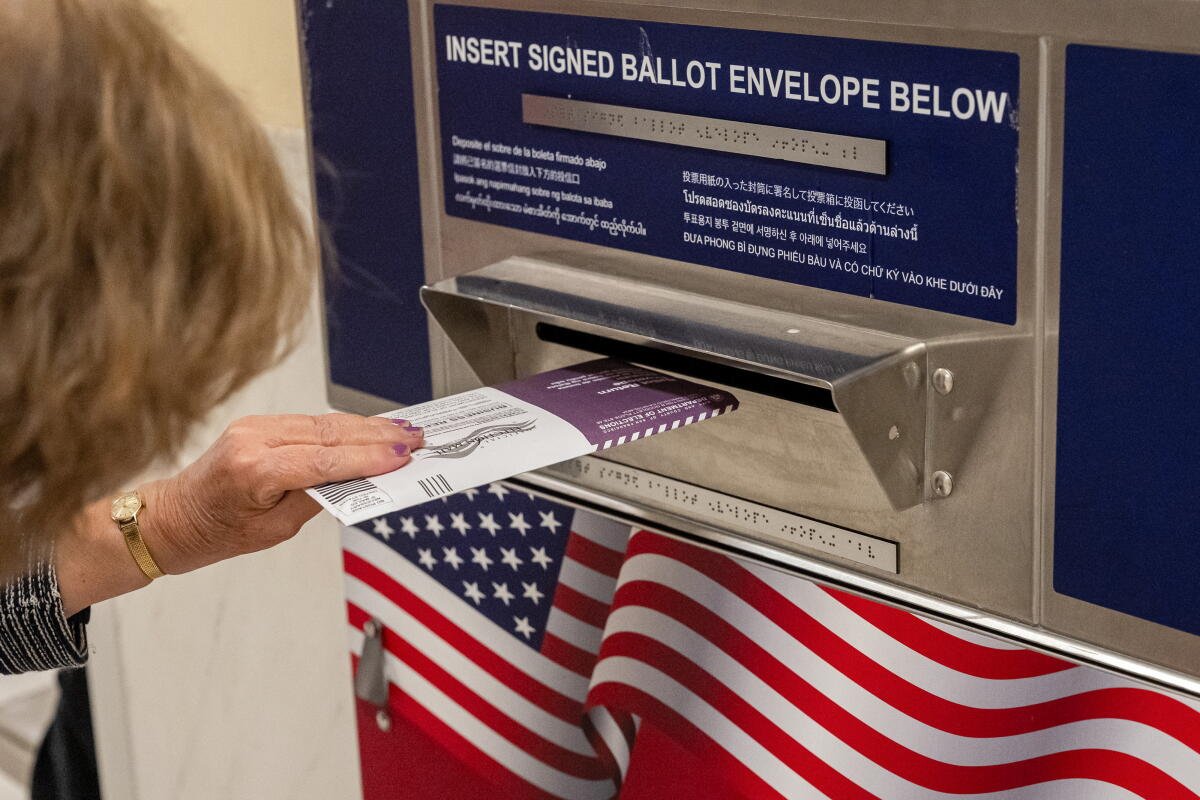
The dispute began approximately two weeks earlier, when the Justice Department delivered a USB drive to election officials in Los Angeles and Sacramento. The department said the device contained information identifying around 20,000 people it believed were non-citizens registered to vote in California. Federal officials demanded that state and local authorities review the list within 48 hours and separate ballots associated with individuals whose citizenship could not be verified.

The department warned that it would pursue legal action if election officials failed to comply. California officials, however, questioned the reliability of the information and said they could not complete the necessary citizenship checks before election day. The dispute subsequently escalated into a federal lawsuit seeking judicial intervention to compel the state to follow the administration’s demands.
California has more than 23 million registered voters, making it one of the largest electoral jurisdictions in the United States. Although federal law generally prohibits non-citizens from voting in federal elections, available research indicates that such voting is extremely rare. The central question in the case was not whether citizenship requirements apply, but whether the government had provided sufficient evidence and legal authority to justify withholding ballots based on the information it supplied.
In his ruling, Carter framed the dispute as a fundamental question about voting rights, constitutional responsibilities and the division of authority between the federal government and individual states. He warned that the administration’s approach risked interfering with established election procedures shortly before voters were due to cast their ballots.
The judge argued that the federal government could not simply demand that state and local authorities abandon their constitutional responsibilities because the executive branch had raised concerns about voter eligibility. He emphasised that California also possessed sovereign authority and that its election officials were required to operate within the legal framework governing the administration of elections.
Carter’s opinion reflected concern that the requested measures could deprive eligible citizens of their right to participate in the democratic process. If election officials were required to isolate ballots associated with people whose citizenship could not be confirmed in time, the practical effect could be that legitimate votes would not be counted.
The judge warned that separating a ballot could effectively amount to removing it from the electoral process. Such an outcome, he suggested, would be particularly troubling where the allegations underlying the decision remained unproven and the affected voters had not necessarily been shown to be ineligible.
The ruling also focused on federal election law, particularly a 1993 statute requiring states to complete the removal of ineligible voters from official registration lists no later than 90 days before an election, subject to the law’s provisions and exceptions. Carter said the Justice Department’s request would likely conflict with that legal framework by seeking to impose a new process for identifying and excluding voters close to election day.
The timing of the administration’s demands was therefore a central issue. Election officials need sufficient time to assess registration records, investigate discrepancies and provide appropriate procedures for resolving questions about eligibility. Introducing large-scale changes shortly before an election can increase the risk of mistakes, particularly when the information supplied by federal authorities is incomplete or difficult to verify.
California officials said the department had not provided enough information to establish the citizenship status of the people listed. The Justice Department also declined to explain its methodology in sufficient detail to resolve the concerns raised by state and local authorities. Preliminary checks by Los Angeles officials reportedly identified indications that the list contained inaccuracies.
Those concerns became more significant as other California counties began examining lists supplied by the federal government. According to reporting on the dispute, some election officials found that the department had identified people who were not on their voter registration rolls. Officials also said the information provided was insufficient to determine whether some individuals were citizens.
Such discrepancies highlight the difficulties involved in using administrative data to determine voter eligibility. Names and other identifying details may appear in multiple databases for different reasons, while records may be incomplete, outdated or inconsistent. Without adequate identifying information and a transparent verification process, officials may struggle to distinguish genuine eligibility concerns from errors.
The administration’s legal efforts also encountered resistance at the appellate level. After Carter scheduled a hearing for 27 October to consider the emergency request, the Justice Department sought intervention from the US Court of Appeals for the Ninth Circuit, arguing that the district judge was not moving quickly enough.
The move was unusual because it attempted to obtain appellate action before the district court had completed its consideration of the emergency application. A three-judge panel of the appeals court rejected the department’s effort by a two-to-one vote earlier in the week, allowing the case to proceed through the district court process.
Carter’s subsequent ruling represented another setback for the administration’s attempt to force California to segregate the ballots. The decisions did not eliminate the government’s ability to investigate credible allegations of unlawful voting, but they highlighted the need for such investigations to comply with established law and evidentiary requirements.
The Justice Department has also threatened to prosecute California election officials if they count ballots cast by non-citizens. Legal commentators have questioned the basis for those threats, particularly where officials are dealing with lists that have not been independently verified and voters whose eligibility remains unresolved.
The distinction between investigating suspected ineligible voting and penalising election officials for counting ballots is significant. Officials must follow applicable election laws, but they also have obligations to eligible voters. Threats of prosecution, when accompanied by uncertain evidence and short deadlines, can create pressure on local authorities to take precautionary measures that risk excluding lawful votes.
The controversy has emerged amid wider political disputes over election integrity and the federal government’s role in supervising voter registration. In July, the Department of Homeland Security announced that it had identified as many as 190,000 non-citizens on California’s voter rolls. However, the state did not receive additional details until after ballots had already been distributed, according to the account presented in the litigation.
The earlier announcement helped establish the background for the latest dispute, but the figures alone do not demonstrate that the individuals identified actually cast ballots unlawfully. Being listed on a voter registration database is not the same as having voted, and a suspected citizenship discrepancy must be investigated before it can be treated as proof of an offence.
Legal experts had expressed scepticism about the Justice Department’s approach even before the judge issued his decision. Their concerns centred on the short deadline, the limited explanation of the underlying data and the potential conflict with federal laws governing the timing of changes to voter registration lists.
For election officials, the case presents a difficult practical challenge. They must investigate credible evidence of ineligibility while ensuring that qualified voters are not wrongly prevented from participating. Any process used to assess citizenship must therefore be accurate, legally authorised and sufficiently transparent to allow errors to be identified and corrected.
The ruling also carries implications for public confidence in elections. Disputes over voter eligibility can undermine trust when allegations are presented without adequate evidence or when election procedures are changed in ways that leave voters uncertain about whether their ballots will count. Conversely, reliable investigations conducted within the law can help address genuine concerns without compromising participation.

Carter warned that excluding votes on the basis of unproven allegations could cause lasting damage to democratic confidence. His opinion stressed that once a ballot has been separated from the counting process, the harm may be difficult to reverse, particularly when voters have no clear opportunity to resolve the questions raised about their eligibility before election day.
The immediate outcome is that the court declined to order California officials to carry out the requested segregation of ballots. The dispute nevertheless leaves broader questions about the accuracy of federal voter data, the responsibilities of election administrators and the appropriate limits of executive authority unresolved.
As the midterm elections approach, the case highlights the importance of protecting both election integrity and the fundamental right of eligible citizens to vote. The challenge for federal and state authorities will be to investigate genuine concerns without allowing incomplete information, rushed procedures or political pressure to determine which ballots are counted.
Related News:
 US states redraw maps after voting rights ruling
 Immigration Judges Fear Pressure in Trump Era
 Judge Allows Pentagon Firings at Stars and Stripes
 New Mexico Takes Facebook to Trial Over Data Scandal
 Trump Media Ban Triggers First Amendment Clash
 US Deportation Deals Send Migrants to Unfamiliar Countries
 US Networks Suspend Trump White House Pool Coverage
 Democrat Says ICE Restricted Detention Camp Oversight
 Republican Senator Questions Trump Ad Spending
 Trump Ads Trigger Fight Over Taxpayer Money
 Musk’s DOGE Sparks Turmoil Inside US Government
 Latin America women fear rollback of rights
 Trump Says He Deserves Nobel Peace Prize
 ICE Agent Shoots Man in New York as Child Escapes Harm
 Trump Attacks Norway After Nobel Peace Prize Snub
 Brazil Court Scandal Threatens Lula as Bolsonaros Rise
 Ohio Airports Become Key Hubs for ICE Deportation Flights
 Judge Blocks Trump White House Media Ban
 Serbia Leader Linked to Controversial Trump Tower Plan
 Trump’s New Press Secretary Faces Questions Over Credentials
 Trump’s Midterm Campaign Faces Racism and Political Backlash
 US National Guard Member Killed in DC Shooting
 Trump officials continue false claims after Alex Pretti shooting
 Partial US Government Shutdown Hits Homeland Security Funding
 Thousands Protest ICE Operations in Nationwide US Day of Action
 Trump at Press Dinner Sparks Tension
 US Court Weighs Fate of TPS for Migrants
 Florida Redistricting Map Sparks Major US Political Battle
 Cartel crackdown raises fears of fresh violence
 Judge halts deportation of Yemeni refugees in US
 White House Security Case Sparks Political Firestorm
 Trump warns Iran as Middle East tensions surge again
 US ‘Narco Boat’ Strikes Draw Global Outcry
 Florida Surgeon ‘Devastated’ Over Fatal Surgery Error
 US green card applicants must apply from abroad, DHS says
 Tulsi Gabbard exits after turbulent intelligence tenure
 Former ICC prosecutor condemns US sanctions
 Prosecutor Proposes Law to Combat Election Deceit
 Trump Refuses to Sign Housing Bill, But Law Takes Effect
 Trump Orders Signs Criticising Smithsonian Museum
 Trump Calls Iran War ‘Small Potatoes’ Despite US Deaths
 Trump gives $45,000 holiday gifts to White House aides
 Israel Accused of Undermining Palestinian Life
 Trump’s Washington Projects Face Architectural Criticism
 Texas Charges Seven Noncitizens in Voting Crackdown
 Omar Proposes Bill to Redirect ICE Funding
 Trump and Mamdani Hold Cordial Gracie Mansion Meeting
 Lula accuses Trump of seeking control over Brazil
 Free Speech Emerges as Key UK Election Issue
 Cornell Fraternity Assault Investigation Reopened
 Drumcree Talks Falter as Legal Challenge Deepens
 UK-France Returns Deal Faces Expiry as Talks Stall
 Kristi Noem Files for Divorce After 34 Years
 Trump Immigration Policy Faces New Legal Tests
 Badenoch Raises Prospect of 2027 UK Election
 New Prosecutor Takes Over Cornell Assault Case
 DOJ Declines to Reopen Powell Renovation Probe
 US bombers leave RAF Fairford after terror threat
 McIver Faces Key Deadline in ICE Confrontation Case
 Susan Collins Distances Herself From Trump in Maine Race
 Botstein Quits Bard Amid Epstein Investigation Calls
 Royal Navy Sailor Charged With Alleged Spying
 Sri Lanka Ex-First Lady Arrested Over Donation Probe
 Bolsonaro Gains Key Endorsement Ahead of Brazil Runoff
 Delhi Tightens Security Ahead of Election Protest
 US Execution Livestream Plan Sparks Global Outrage
 Controversial Vaccine Trial Approved in Guinea-Bissau
 Millions Face Tougher Medicaid Rules From January
 England and Wales Begin Second Wave of Early Prison Releases
 India’s Voter Roll Crisis Sparks Nationwide Protests
 Ukrainian Soldier Faces Trial Over Nord Stream Blast
 Farage Calls for Prosecution of Asylum Seeker Charities
 Gadi Eisenkot: Israel’s Anti-Netanyahu Challenger
 Trump Rallies GOP as Senate Democrats Boost Key Races
 Talarico Faces Tough Voter Test in Texas Senate Race
 Trump’s Ambassador Picks Face Growing Controversy
 Omar Claims US Raid on Residence Was Meant to Intimidate
 Serbia’s Student Victory Sparks a ‘Smell of Freedom’
 Flávio Bolsonaro Reportedly Leaves Brazil After Election Defeat
 Judge Disqualifies Trump-Appointed Federal Prosecutor