Confidence among Australian households with mortgages has fallen to its lowest level in more than three decades, reflecting growing financial anxiety, persistent cost-of-living pressures and fears about the country’s economic outlook. New survey findings indicate that indebted households are increasingly pessimistic about their financial future, with many feeling powerless to respond to rising expenses and uncertainty over interest rates.
The latest Westpac consumer sentiment survey, released in November, showed overall consumer confidence falling to a four-year low. However, the deterioration was considerably more severe among households carrying mortgage debt. Their confidence reached its weakest level since records began in 1994, highlighting the mounting pressure on Australians who are already struggling with higher borrowing costs and household expenses.

The findings have intensified concerns about the possibility of a difficult economic year ahead. Although financial markets have started to anticipate potential interest rate reductions from the middle of next year, households remain deeply worried about their immediate financial circumstances. The contrast between growing public pessimism and changing investor expectations reflects the uncertainty surrounding Australia’s economic direction.
Matthew Hassan, Westpac’s head of economic forecasting, said the latest consumer sentiment readings were comparable with some of the most difficult periods in Australia’s recent economic history. He noted that confidence had last been similarly weak in 2022, when inflation approached 8% and the Reserve Bank of Australia had increased borrowing costs by four percentage points over the preceding year.
Before that period, readings at comparable levels had largely been associated with major economic shocks, including the beginning of the Covid-19 pandemic, the height of the global financial crisis and recessions in the early 1990s and early 1980s.
Hassan said the current economic situation was not as extreme as the pandemic and its immediate aftermath, but survey responses contained similarities to the uncertainty experienced during that period. In particular, households appeared to be developing a sense of helplessness because many of the pressures affecting their finances were beyond their control.
The survey found that confidence in Australia’s economic outlook over the next 12 months had fallen to its weakest level since August 2020. That was a particularly difficult period for the country, as Melbourne entered its second major Covid lockdown and households faced uncertainty over employment, income and public health restrictions.
Hassan said the comparison was useful because people at that time had little ability to influence the circumstances affecting their lives. The situation improved for many households after the government introduced substantial income-support measures, including JobKeeper, which helped businesses retain employees and provided financial assistance during the crisis.
He suggested that a similar feeling of powerlessness was now emerging among consumers. Rising fuel prices, household expenses and other economic pressures have left many families concerned that there is little they can personally do to improve their financial position. Although governments and central banks can introduce measures to reduce the impact, their ability to protect households from every external economic shock remains limited.
Mortgage holders are particularly exposed because changes in interest rates directly influence their monthly repayments. Australians who borrowed during periods of historically low interest rates have faced significant increases in repayment costs as the central bank tightened monetary policy to contain inflation. For households already managing mortgages, food bills, energy expenses, transport costs and other essential spending, the cumulative pressure has become increasingly difficult to absorb.
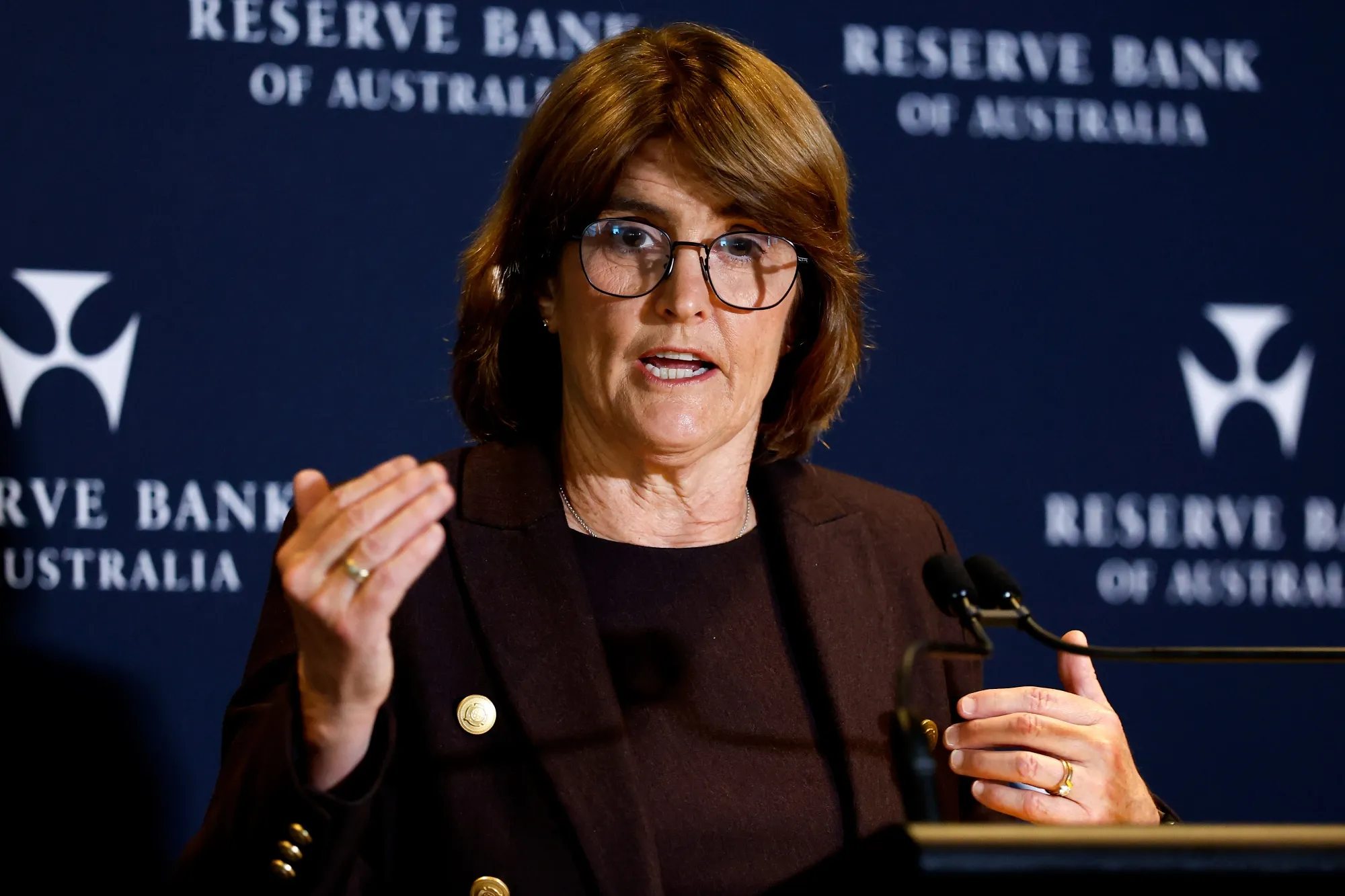
The survey results also come amid concerns about the broader economic outlook. Reserve Bank governor Michele Bullock recently warned that the coming year could feel like a recession for many Australians because of continuing cost-of-living pressures combined with weak economic growth.
Her warning reflected the possibility that households could experience recession-like financial conditions even if the economy does not officially enter a technical recession. Weak spending, rising borrowing costs and uncertainty about employment can make daily life increasingly difficult, particularly for families with limited savings or substantial debt.
Australia has already experienced five interest rate increases this year, adding to the financial burden on borrowers. The cumulative effect has increased the cost of servicing mortgages and reduced the amount of money many households have available for other spending. Against this background, nearly three-quarters of respondents in the latest survey said they expected another interest rate increase within the next 12 months.
Such expectations underline the extent of public concern. Even though investors have begun considering the possibility of future rate cuts, ordinary borrowers appear less convinced that financial relief is approaching. Their immediate experience is shaped by existing repayment obligations and uncertainty over whether further increases could make their circumstances worse.
The outlook in financial markets, however, has changed significantly in recent weeks. Investors have increasingly factored in the possibility that the Reserve Bank could begin reducing interest rates from the middle of next year. According to ANZ data, the implied probability of a rate cut had risen above 50% by August 2027. Markets were also fully pricing in a reduction in the cash rate to 4.6% by December 2027.
One important factor behind the changing expectations is the recent fall in global oil prices. Energy costs have been a significant source of inflationary pressure, affecting transport, production and the prices of goods and services. Lower international oil prices could help reduce some of those pressures if the decline continues and is reflected in domestic fuel and other energy costs.
Brent crude, the global benchmark for oil prices, had climbed to almost US$118 a barrel at the end of October following a sharp rise associated with the Iran war. It subsequently fell by around 20%, dropping below US$94 a barrel. The retreat has encouraged investors to reconsider their expectations for central bank interest rate decisions.
Lower oil prices could provide some relief to households and businesses, but the impact on inflation would depend on how long the decline lasts and whether other prices continue rising. Fuel costs are only one part of the wider inflation picture. Housing expenses, insurance, services, food prices and wage developments will also influence the Reserve Bank’s decisions.
Hassan said Westpac’s central expectation was that interest rates would begin falling from August next year, with no additional increases anticipated under its current forecast. However, such projections remain dependent on economic developments and should not be interpreted as a guarantee that borrowers will receive relief on a particular date.
The uncertainty surrounding monetary policy also creates difficulties for households planning their finances. Mortgage holders must balance the possibility of future rate reductions against the risk that repayments could remain high for longer than expected. Families considering buying homes, refinancing loans or making major purchases may also delay decisions while waiting for a clearer economic direction.
The political implications of the deteriorating consumer mood are becoming increasingly significant for the Australian Labor government. Prime Minister Anthony Albanese and Treasurer Jim Chalmers are facing growing pressure over the cost of living, weak economic confidence and the government’s approach to public spending.
Questions have also emerged about internal tensions within the government over economic management. The debate intensified after senior Labor figure Murray Watt urged colleagues to stop undermining Chalmers. Albanese subsequently played down suggestions of serious disagreement, publicly praising the treasurer’s performance.
“The treasurer is doing a great job,” Albanese said, emphasising that he was working closely with Chalmers ahead of the government’s mid-year budget update scheduled for next month.
The prime minister pointed to previous budget surpluses, lower deficits and economic reforms as evidence of the treasurer’s record. He also indicated that the upcoming budget update would include reductions in government spending as the administration attempts to contain inflationary pressure.
The government’s spending decisions will be closely watched because excessive demand can make it harder for the central bank to bring inflation under control. However, reducing public expenditure while households are already struggling could create additional political and economic challenges. The administration will need to balance fiscal restraint with the need to support vulnerable families and maintain essential public services.
For mortgage holders, the latest survey offers a troubling picture of financial confidence. Their pessimism is not simply a reaction to interest rates but reflects a wider combination of rising living expenses, uncertain economic growth and limited confidence that conditions will improve quickly.

Although falling oil prices and the prospect of future interest rate cuts have provided some encouragement to financial markets, households are still confronting the immediate consequences of expensive borrowing and everyday financial pressures. Whether the anticipated relief arrives will depend on inflation, global energy markets and the Reserve Bank’s assessment of Australia’s economic performance.
The latest findings therefore present a significant challenge for both policymakers and financial institutions. As the country approaches another uncertain economic year, restoring confidence among mortgage holders will require more than optimistic forecasts. Australians will be looking for tangible improvements in household budgets, borrowing costs and the broader cost of living before they can feel confident that the worst financial pressures are behind them.
Related News:
 UK House Prices Fall as Mortgage Rates Rise
 Thames Water Revises Oxfordshire Mega-Reservoir Plan
 Thinktank Calls for Abolition of UK State Pension
 Poundland Rescue Bid Could Protect 11,000 Jobs
 Ministers Push ATO to Reconsider Credit Card Ban
 Australia Delays Tax Credit Card Payment Ban After Backlash
 France Faces Debt Crisis as Protests and Markets Clash
 Australian Mortgages Now Cheaper Than Rent in Some Suburbs
 Cormann Warns Australia Against Populist Migration Caps
 Australia Inflation Surges as Trump’s Iran War Hits Households
 UK House Price Growth Slows to Two-Year Low
 Rate Rise Threatens Australian Jobs and Businesses
 Australia Faces Deeper Economic Slowdown
 Australia Raises Interest Rates to 18-Year High
 David Jones Faces Administration After Talks Collapse
 Weight-Loss Drugs Transform Fashion Shopping Habits
 UK Households Could Save £173 on Fixed Energy Deals
 Dutch Bank Moves 86 Tonnes of Gold to London
 Oil nears $100 as Saudi attacks shake markets
 UK State Pension Set to Rise 3.9% as Triple Lock Holds
 UK Parents Cut School Uniform Costs as Prices Rise
 UK Pay Growth Slows to 3.9% as Rate Decision Nears
 Bank Urged to Slow Bond Sales as UK Costs Rise
 UK Inflation Hits 3.1% as Household Pressure Grows
 Japan Raises Rates to 31-Year High
 UK Retail Sales Rebound as Consumers Spend More
 UK Rent Gap Puts Low-Income Families Under Pressure
 UK Borrowing Hits £18.3bn Ahead of Budget
 MPs Defend UK Economic Watchdog Against Critics
 Chinese Hybrid Car Surge Raises EU Auto Industry Concerns
 UK Trade Losses Grow Without EU Product Deal
 Saudi intercepts Houthi missiles as oil fears grow
 Should Savers Lock Into 5.25% Fixed Rates?
 Why Americans Feel Ripped Off by Rising Prices
 UK Diesel Prices Hit Record High Amid Iran Conflict
 New UK Homes in Flood Zones Face Insurance Risk
 Ukraine Faces $45m Hourly Cost From Missile Alerts
 Healey urged to act as UK energy bills rise 4%
 UK house price growth slows as mortgage rates rise
 UK borrowing costs surge as global bond sell-off deepens
 French Debt Fears Put Euro Markets Under Pressure
 UK Assures Public Over Diesel Supply
 UK Diesel Reaches £2 as Inflation Surges Across Europe
 Minister Rejects Fears of UK Diesel Shortage
 Informa Agrees £2.24bn Deal to Buy Clarion
 EU-China Talks Target Surge in Hybrid Car Imports
 IMF Warns Governments Over Rising Debt Burdens
 Google Maps Brings Live Fuel Prices to UK Drivers
 Tesco Raises Profit Forecast as Consumer Confidence Holds
 Oil Shock Sends Markets Lower as Middle East Risks Grow
 Firmus Abandons Major ASX Listing Amid Investor Doubts
 UK Savers Face Uncertainty as Rates Rise Above 5%
 Labour Fears Budget Will Fail to Lift Living Standards
 IFS Warns UK Budget Faces £35bn Spending Gap
 UK Van Drivers Face £2.5bn Diesel Cost Surge
 EU Caps Chinese Hybrid Car Imports at 350,000
 Hall and Woodford Win Nobel Economics Prize
 IMF Warns Global Economy Is Nearing Its Limits
IMF Raises UK Growth Forecast Ahead of Healey’s Budget
 Greens Block Labor’s Health Rebate Cuts for Pensioners
 Healey Plans £1bn Online Marketplace Tax Crackdown
 Business Chief Urges Burnham to Fix Brexit Damage
 UK Unemployment Falls to 4.7% as Vacancies Decline
UK Borrowing Hits £24.5bn Ahead of Healey’s Budget
 China’s AI Ambitions Hit $2.4 Trillion Market Setback
 UK Chancellor Moves to Scrap Gas Standing Charges
 Healey Set to Scrap Planned Cut to Cash ISA Allowance
 Fed Expected to Hold Rates Steady Ahead of US Midterms
 Albanese Faces Labor Pressure as Inflation Hits 4.3%
 North Korea Linked to Record $6.3bn Binance Crypto Heist
 UK Side-Hustle Tax-Free Limit to Rise to £3,000
 BP Profits Surge as Middle East Conflict Lifts Margins
 Burnham Admits First Budget Fell Short of His Ambitions
 London Luxury Homes Face Deeper Price Declines
 Avanti West Coast Faces £70m Refund Bill
 UK Mortgage Holders Face Fresh Payment Shock
 UK House Prices Suffer Sharpest Fall in Three Years
 Entain Plans 400 Job Cuts After Profit Update
 Badenoch Raises Prospect of 2027 UK Election
 UK Inflation Hits 3.5% as Middle East War Drives Fuel Costs