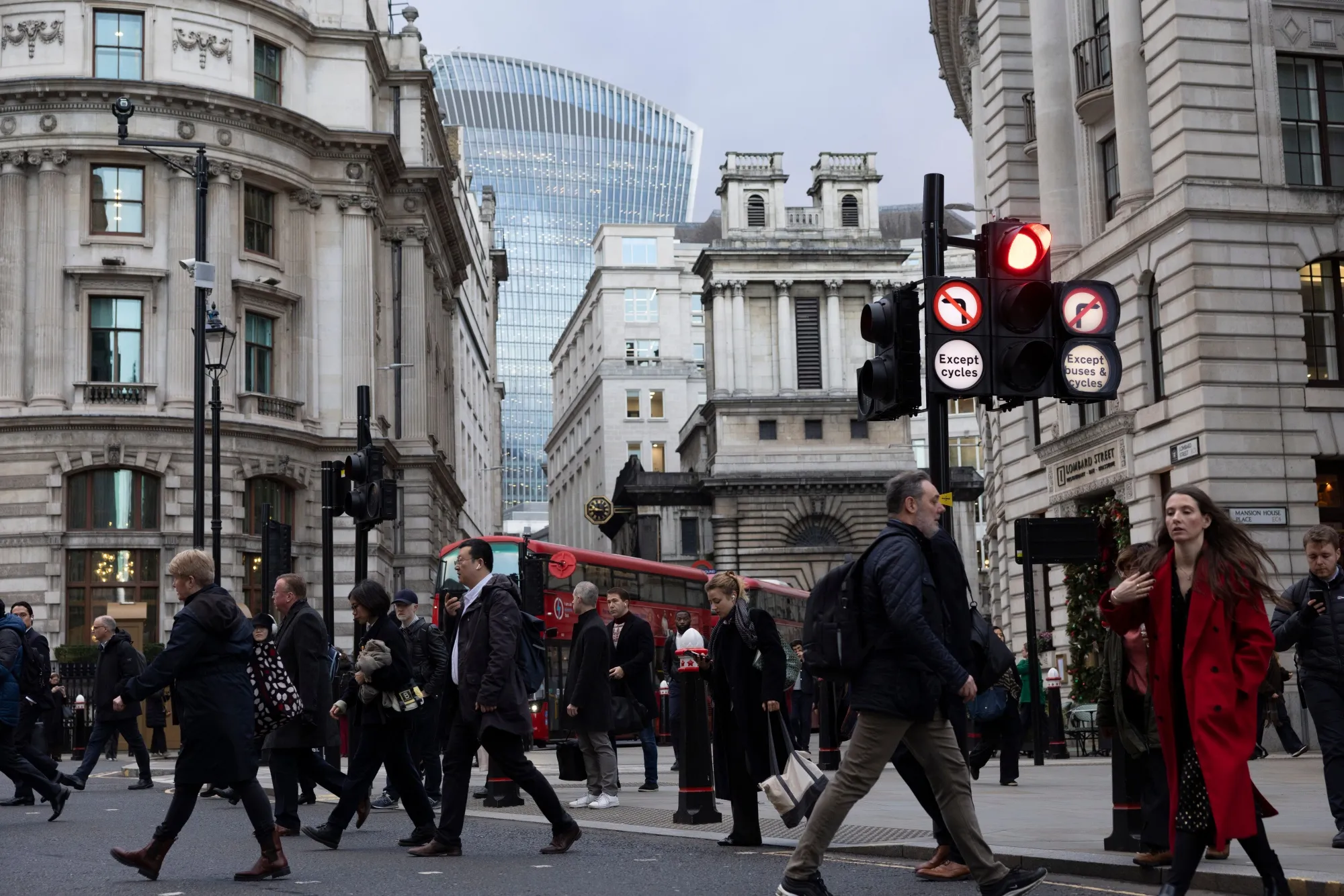
Young people across the United Kingdom are bearing the greatest burden of a weakening labour market as employers delay recruitment amid economic uncertainty linked to the war in the Middle East, a senior Bank of England official has warned. The growing reluctance of businesses to hire new workers is creating serious difficulties for people entering the jobs market, even as companies avoid widespread redundancies and retain much of their existing workforce.
Clare Lombardelli, the Bank of England’s deputy governor for monetary policy, has described the situation as a “low-gear economy”, in which recruitment has slowed significantly while employers are reluctant to dismiss existing staff. She warned that the resulting imbalance is particularly damaging for young people, graduates and others seeking their first opportunities in employment.

Her assessment comes as the UK faces rising unemployment, persistent inflation and uncertainty over the economic consequences of the conflict involving Iran. Higher energy prices, increased operating costs and weaker consumer demand have made businesses more cautious about expanding their workforces. As a result, many employers are delaying recruitment decisions while waiting for greater clarity about the economic outlook.
In an interview, Lombardelli explained that businesses were holding on to existing employees but reducing the number of new positions available. She said employers were waiting to see whether geopolitical uncertainty would ease, adding that the prolonged conflict had lasted much longer than many had initially expected.
The deputy governor said this pattern of low hiring and low redundancies was creating a difficult environment for people entering the labour market. When companies stop recruiting, those who have recently completed their education or are trying to secure their first job face fewer opportunities to demonstrate their abilities and gain professional experience.
The consequences are becoming increasingly visible in sectors traditionally regarded as important entry points for young workers. Hospitality and retail businesses, which often provide early employment opportunities for school leavers, students and inexperienced applicants, have experienced a particularly noticeable decline in recruitment activity.
Lombardelli said the reduction in vacancies had been concentrated in industries where young people commonly secure their first jobs. Employers surveyed by the Bank of England had also indicated that recruiting younger workers was increasingly perceived as a greater risk than in the past.
This perception could make it harder for inexperienced applicants to compete against candidates with established employment records. When businesses become cautious about recruitment, they often prioritise workers who can immediately meet operational requirements, leaving younger applicants with fewer opportunities to develop the skills and experience needed to progress.
The latest warning comes as unemployment across the UK has risen to 4.7% this year. Youth unemployment has increased more sharply, reaching its highest level outside the Covid-19 pandemic since 2015. The deterioration has raised concerns about the long-term consequences for a generation attempting to establish careers during a period of economic uncertainty.
The number of young people not in education, employment or training, commonly described as NEET, has also climbed to almost one million. The increase has become a growing concern for policymakers because prolonged periods outside education and employment can make it more difficult for individuals to develop professional skills, maintain financial independence and establish stable careers.
The government is awaiting the findings of a report examining young people and employment by former Labour cabinet minister Alan Milburn, which is expected to be published next week. The report is likely to attract considerable attention as ministers seek ways to address the growing number of young people struggling to find work or remain connected to education and training.
The economic difficulties facing employers have been intensified by several overlapping pressures. The war involving Iran has contributed to higher energy prices, increasing costs for businesses that depend on fuel, electricity and transportation. At the same time, companies are dealing with higher taxes and weaker consumer demand as households reduce spending to cope with the cost-of-living crisis.
For businesses in retail, hospitality and other consumer-facing industries, the combination of higher operating expenses and cautious customers can make recruitment particularly difficult. Employers may decide to postpone expansion, reduce working hours or leave vacant positions unfilled rather than take on additional long-term costs.
Lombardelli is expected to outline her concerns about the loss of dynamism in the UK labour market during a speech in London. Her assessment is especially significant because the Bank of England is closely monitoring employment conditions while attempting to control inflation.
The central bank faces a difficult balancing act. Higher interest rates can help reduce inflation by discouraging borrowing and limiting demand, but they also increase financing costs for households and businesses. If companies respond by slowing recruitment and investment, the effects can be particularly severe for workers who are already struggling to find employment.
Lombardelli was among the members of the Bank’s Monetary Policy Committee who supported raising the base interest rate from 3.75% to 4% last week. The increase marked the first rise in borrowing costs in three years, reflecting concerns that inflationary pressures could remain persistent.
She said another quarter-point increase could be considered as early as the committee’s next meeting in December. According to Lombardelli, every meeting remains open to a possible policy change, depending on developments in the conflict, energy prices and wider economic data.
Financial markets have been pricing in roughly an equal chance of another increase in December. However, Lombardelli stressed that the Bank did not yet have enough information to determine whether further tightening would be necessary.
The future direction of interest rates will depend heavily on how the conflict in the Middle East develops. Oil prices have fallen sharply to below US$100 a barrel after the recent Democratic victories in the US Congress. Some investors have interpreted the political developments as a possible constraint on US President Donald Trump’s ability to prolong the conflict.
Trump also said over the weekend that he was unlikely to order further attacks on Iran if negotiations to end the conflict continued to make progress. Any sustained reduction in geopolitical tensions could ease pressure on global energy markets and help reduce some of the inflationary risks facing the UK economy.
However, the Bank of England must consider more than oil prices when deciding its monetary policy. It is also concerned about the possibility that inflation could become embedded in the domestic economy through wage increases and higher business costs.
When workers have strong bargaining power, they may demand higher wages to compensate for rising living expenses. Businesses facing larger wage bills may then increase the prices of their products and services to protect profit margins. This process can create a cycle in which higher wages and prices reinforce each other, making inflation more difficult to control.
A weakening labour market could normally help reduce such pressures by limiting workers’ ability to demand substantial pay increases. However, Lombardelli warned that the current situation may not produce the expected effect.
She explained that unemployment could rise without necessarily creating significant downward pressure on inflation. This is because employers are retaining existing staff while recruiting only for positions that are difficult to fill. As a result, the workers who remain employed may still have considerable bargaining power, even as the number of people struggling to find jobs increases.
This creates a complicated economic situation for policymakers. Higher unemployment does not automatically mean that wage pressures will ease, particularly when businesses are reluctant to replace experienced workers and continue competing for people with specialised skills.
The impact on young people could also extend beyond the immediate difficulty of securing employment. Early career opportunities are important for building experience, developing workplace confidence and gaining access to better-paid positions. When recruitment slows, young workers may experience longer periods of unemployment or be forced to accept jobs below their qualifications and expectations.
A prolonged absence from the labour market can also affect future earnings and career progression. Young people who cannot secure their first job may find it harder to compete for more advanced positions later, especially if employers continue prioritising candidates with previous experience.
For the government, the challenge is therefore not limited to reducing the headline unemployment rate. It must also address the shortage of entry-level opportunities, strengthen access to training and ensure that young people can move from education into stable employment.
The Bank of England’s warning highlights the growing tension between controlling inflation and protecting employment. While policymakers must prevent rising prices from becoming entrenched, businesses and households are already facing the consequences of expensive energy, higher borrowing costs and uncertain demand.
The coming months will be important in determining whether the UK economy can regain momentum. A reduction in geopolitical tensions and energy prices could improve business confidence, but employers may remain cautious until they see stronger demand and greater economic stability.

For Britain’s younger generation, the immediate concern is whether enough employers will begin recruiting again. Without a recovery in hiring, the country risks leaving a substantial number of young people on the sidelines of the labour market, even as established workers remain relatively protected from job losses.
Lombardelli’s assessment presents a warning that the absence of mass redundancies does not necessarily indicate a healthy employment market. An economy in which businesses retain existing staff but stop creating opportunities can still produce serious social and economic consequences, particularly for those attempting to take their first steps into working life.
Related News:
 UK Households Could Save £173 on Fixed Energy Deals
 UK House Prices Fall as Mortgage Rates Rise
 Thames Water Revises Oxfordshire Mega-Reservoir Plan
 UK Rent Gap Puts Low-Income Families Under Pressure
 Thinktank Calls for Abolition of UK State Pension
 New UK Homes in Flood Zones Face Insurance Risk
 Poundland Rescue Bid Could Protect 11,000 Jobs
 Healey urged to act as UK energy bills rise 4%
 Labour Fears Budget Will Fail to Lift Living Standards
 UK Side-Hustle Tax-Free Limit to Rise to £3,000
 Burnham Admits First Budget Fell Short of His Ambitions
 UK House Price Growth Slows to Two-Year Low
 Avanti West Coast Faces £70m Refund Bill
 Wealthy Britons Flee Gulf War but Avoid UK Taxes
 UK Wage Growth Slows as Jobs Market Holds Firm
 BBC News Faces Deep Cuts in 2,000 Job Plan
 Reeves Fights to Keep Treasury Role Amid Labour Turmoil
 UK rejects EV charging VAT cut amid Treasury clash
 Burnham Faces Mounting Budget Challenges
 UK Subsidence Claims Surge After Record-Breaking Summer
 Oil nears $100 as Saudi attacks shake markets
 John Lewis Losses Widen to £124m as Confidence Falls
 UK Retailers Accused of Breaking Refund Laws
 UK State Pension Set to Rise 3.9% as Triple Lock Holds
 UK Parents Cut School Uniform Costs as Prices Rise
 UK Pay Growth Slows to 3.9% as Rate Decision Nears
 Bank Urged to Slow Bond Sales as UK Costs Rise
 UK Inflation Hits 3.1% as Household Pressure Grows
 Entain Plans 400 Job Cuts After Profit Update
 Barclays Staff Push Back Against Office Return Plan
 UK Retail Sales Rebound as Consumers Spend More
 Calls Grow to Expand UK National Wealth Fund
 Labour Apprenticeship Scheme Faces Slow Start
 UK Borrowing Hits £18.3bn Ahead of Budget
 MPs Defend UK Economic Watchdog Against Critics
 Tony Blair Calls for Britain to Rejoin EU Within a Decade
 UK Trade Losses Grow Without EU Product Deal
 AO Acquires Jessops in Camera Retail Expansion
 Should Savers Lock Into 5.25% Fixed Rates?
 Beaverbrooks Boss Calls for Relief on Business Costs
 UK Diesel Prices Hit Record High Amid Iran Conflict
 Burnham Opens Door to Possible UK Return to EU
 UK house price growth slows as mortgage rates rise
 UK borrowing costs surge as global bond sell-off deepens
 UK Assures Public Over Diesel Supply
 Feeld Founders Receive Record Dividend as Sales Rise
 Badenoch Raises Prospect of 2027 UK Election
 UK Diesel Reaches £2 as Inflation Surges Across Europe
 Minister Rejects Fears of UK Diesel Shortage
 London Council Warns of 150% Council Tax Rise
 BT Agrees £400m TalkTalk Rescue Deal
 Informa Agrees £2.24bn Deal to Buy Clarion
 Google Maps Brings Live Fuel Prices to UK Drivers
 Labour MP Urges Billions for Affordable Homes
 France Faces Debt Crisis as Protests and Markets Clash
 UK Savers Face Uncertainty as Rates Rise Above 5%
 IFS Warns UK Budget Faces £35bn Spending Gap
 UK Van Drivers Face £2.5bn Diesel Cost Surge
 IMF Warns Global Economy Is Nearing Its Limits
IMF Raises UK Growth Forecast Ahead of Healey’s Budget
 Healey Plans £1bn Online Marketplace Tax Crackdown
 UK Water Firms Face £107m Bill Reduction Penalties
 UK Family Linked to Offshore Gambling Licence Controversy
 UK Unemployment Falls to 4.7% as Vacancies Decline
UK Borrowing Hits £24.5bn Ahead of Healey’s Budget
Tax Online Sales to Save High Street, Burnham Urged
 UK Consumer Confidence Plunges at Fastest Rate Since Brexit Vote
 Labour MPs Urge Burnham to Lead UK Reindustrialisation
 UK Chancellor Moves to Scrap Gas Standing Charges
 Healey Set to Scrap Planned Cut to Cash ISA Allowance
 UK Budget Leaves Households Facing Higher Energy Bills
 Lloyds Warns Against Extending Higher Bank Tax
 BP Profits Surge as Middle East Conflict Lifts Margins
 London Luxury Homes Face Deeper Price Declines
 UK Mortgage Holders Face Fresh Payment Shock
 Poundland Remains Vulnerable as Rescue Talks Continue
 UK Urges Energy Firms to Help Households Clear Debt
 UK House Prices Suffer Sharpest Fall in Three Years
 Starbucks to Create 7,500 UK Jobs in Major Expansion
 Australian Mortgage Confidence Hits 32-Year Low