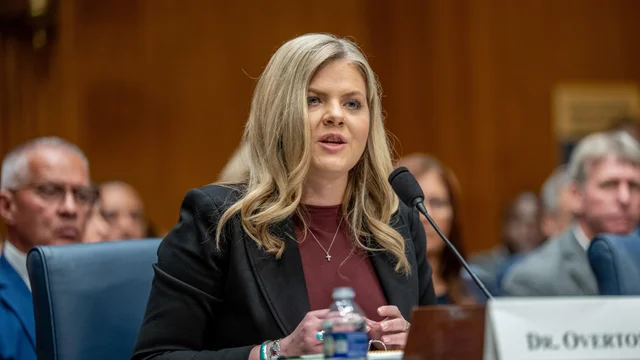
The administration of US President Donald Trump has withdrawn its nomination of physician Heidi Overton to lead the Food and Drug Administration (FDA), following growing political opposition and uncertainty over whether she could secure enough support in the Senate. The decision represents a significant setback for the president’s efforts to reshape the leadership of one of America’s most influential public health institutions and highlights continuing divisions within the Republican Party over abortion policy and healthcare regulation.
Overton, a prominent opponent of abortion, was nominated by Trump in August to become the permanent commissioner of the FDA. The agency plays a central role in protecting public health by regulating medicines, vaccines, medical devices, food safety and other products used by millions of Americans. Its decisions also influence access to reproductive healthcare, making the leadership position particularly sensitive amid the country’s continuing political debate over abortion rights.

A White House official confirmed that the administration had decided to withdraw Overton’s nomination. The announcement came shortly before a scheduled vote by the Senate Committee on Health, Education, Labor and Pensions, which was expected to consider her confirmation the following day.
Although Trump had initially supported Overton’s appointment, her path to confirmation became increasingly difficult as lawmakers raised concerns about her political positions and approach to the regulation of abortion medication. The uncertainty intensified when Republican Senator Bill Cassidy of Louisiana, who chairs the Senate health committee, indicated that he remained undecided about whether to support her nomination.
Cassidy’s position was particularly important because Republican support was essential to advancing the nomination through the confirmation process. His reservations created additional uncertainty about whether Overton could obtain sufficient backing from committee members and subsequently secure approval from the full Senate.
The White House ultimately withdrew its support, effectively ending her immediate prospects of becoming the FDA’s next permanent commissioner.
However, Cassidy expressed surprise at the administration’s decision, arguing that Overton had still been capable of securing confirmation. In a statement following the announcement, he described the withdrawal as unusual and suggested that the White House had abandoned a viable path towards her appointment.
He said he had been involved in productive discussions with other senators and believed Overton could have obtained enough votes to pass both the committee stage and the full Senate.
Cassidy also said his conversations with the nominee had convinced him that she would follow scientific evidence and resist decisions that could place the health of Americans at risk. His comments suggested that he considered her professional approach and willingness to follow scientific principles sufficient reasons to support her appointment.
However, the senator identified disagreements surrounding abortion policy as a major obstacle. According to Cassidy, several Republican senators who opposed abortion had sought final assurances from the Trump administration regarding its commitment to their position on the issue.
He argued that the administration had chosen to withdraw Overton rather than provide the assurances requested by those lawmakers. Cassidy also suggested that the limited time remaining in the congressional calendar could mean the responsibility for confirming a permanent FDA commissioner would eventually pass to Senate Democrats.
The withdrawal has attracted particular attention from reproductive rights organisations, which had strongly opposed Overton’s nomination. Critics feared that her appointment could significantly influence federal policies governing medication abortion and potentially restrict access to reproductive healthcare across the United States.
One of the most prominent organisations welcoming the decision was Reproductive Freedom for All, formerly known as NARAL Pro-Choice America. Its president and chief executive, Mini Timmaraju, described Overton’s failed confirmation as a victory for reproductive rights advocates.
Timmaraju argued that Overton’s views posed a serious threat to the future availability of medication abortion. She also warned Republican lawmakers that reproductive rights organisations would continue campaigning against any future nominee whose policies could undermine access to reproductive healthcare.
The organisation’s opposition was closely connected to Overton’s previous public statements about abortion regulation. In a 2023 policy brief published by the conservative America First Policy Institute, she argued that Congress should introduce strict regulation of the abortion medication mifepristone to protect women and children.
She also criticised federal policies allowing abortion pills to be distributed through the mail and expressed strong opposition to abortion, describing it as harmful to women, children and society more broadly.
These positions became particularly significant because the FDA is responsible for regulating medications used in reproductive healthcare. As commissioner, Overton would have had considerable influence over the agency responsible for evaluating the safety, effectiveness and distribution of abortion-related medicines.
Mifepristone is one of the medications used in the United States for medication abortion. Its regulatory status has become a major political and legal issue, with reproductive rights advocates and abortion opponents sharply divided over access, distribution and federal oversight.
Overton’s nomination therefore became part of a much broader political struggle over reproductive healthcare in America. Her potential appointment was viewed by conservative abortion opponents as an opportunity to strengthen restrictions, while reproductive rights organisations feared that the FDA could become more politically influenced in decisions involving reproductive medicines.
Following the withdrawal, attention quickly turned towards possible alternatives. Reports indicated that the Trump administration was considering Republican Senator Roger Marshall of Kansas as a potential replacement candidate.
Marshall, a physician specialising in obstetrics and gynaecology, has previously served in the House of Representatives and currently serves in the Senate. He is also a member of the Senate committee responsible for health-related matters and has expressed opposition to abortion.
His medical background and experience in Congress could make him an attractive choice for the administration. However, his potential nomination would also face scrutiny over his political positions and ability to secure sufficient support from lawmakers.
Marshall is completing his Senate term after losing his re-election campaign in an unexpected result that saw Kansas elect its first Democratic senator in 94 years. His political background and existing relationships with Senate colleagues could potentially offer the administration an alternative route towards filling the FDA leadership position.
A Trump administration official reportedly suggested that Marshall could be considered if Overton failed to secure confirmation. The official also indicated that senators might find it easier to obtain confirmation than other candidates, although the broader political environment had made the approval of senior appointments increasingly difficult.
The leadership uncertainty comes at a critical time for the FDA, which oversees a wide range of products essential to public health and the American economy. The agency is responsible for evaluating new medicines, monitoring potential safety problems, supervising clinical trials and ensuring that regulated products meet established standards.
A permanent commissioner is particularly important because major regulatory decisions can influence pharmaceutical companies, healthcare providers, patients and medical researchers. Delays in leadership appointments can also create uncertainty over the direction of regulatory policies and the agency’s long-term priorities.
The FDA’s responsibilities have become especially politically sensitive in recent years because of disagreements over reproductive medicine, vaccine regulation and pharmaceutical oversight. The appointment of a new commissioner is therefore likely to attract attention from both political parties and organisations representing different healthcare interests.
The controversy surrounding Overton also demonstrates the difficulties Trump faces in managing competing priorities within his own political coalition. Although Republican lawmakers broadly share several conservative policy objectives, disagreements can emerge over how aggressively the administration should pursue particular issues and what assurances should accompany major appointments.
In this case, the disagreement over abortion policy appears to have complicated an appointment that Cassidy believed could otherwise have progressed through the Senate.
Meanwhile, the White House’s decision has created an opportunity for opponents of Overton’s political agenda to claim a significant victory. Reproductive rights advocates have indicated that they will continue monitoring future nominations and challenge candidates they believe could restrict access to abortion medication.
The next nomination could therefore face similar scrutiny, particularly if the administration selects someone with strong views on reproductive healthcare regulation.
The withdrawal also leaves questions about the timeline for appointing a permanent FDA commissioner. With congressional political control changing following the 2026 midterm elections, the confirmation process could become more complicated. Cassidy’s suggestion that Democrats may ultimately oversee the next confirmation highlights how quickly the political balance surrounding the appointment could change.

For now, the administration must decide whether to nominate another candidate who can satisfy conservative supporters while also obtaining sufficient support in the Senate. The choice will have implications not only for Trump’s healthcare agenda but also for the future direction of the country’s principal medicines and food safety regulator.
Ultimately, Overton’s failed nomination represents more than an unsuccessful appointment. It illustrates the continuing influence of abortion politics on American healthcare institutions and exposes divisions within the Republican Party over how far the administration should go in reshaping federal regulatory policy. The selection of the next FDA commissioner will be closely watched by lawmakers, healthcare professionals, pharmaceutical companies and millions of Americans whose access to medical treatment depends on the agency’s decisions.
Related News:
 Judge Blocks Trump Bid for Arizona Voter Data
 US Court Weighs Fate of TPS for Migrants
 US Court Restores Abortion Pill Access Temporarily
 Florida Surgeon ‘Devastated’ Over Fatal Surgery Error
 Immigration Judges Fear Pressure in Trump Era
 FDA Chaos Deepens as Trump Eyes Makary Exit
 Trump’s Revenge Drive Deepens GOP Divide
 Mystery Grows Over Mitch McConnell’s Health
 Trump Orders Signs Criticising Smithsonian Museum
 Armed Suspect Attacks Ohio Governor Candidate
 Texas Transfers Raise Fears for Migrant Children
 Memphis Questions National Guard Crime Surge
 Disabled Travellers Seek Fairer UK Care Rules
 Patrick Clancy speaks publicly about children’s deaths
 Trump and Mamdani Hold Cordial Gracie Mansion Meeting
 Democrat Says ICE Restricted Detention Camp Oversight
 Latin America women fear rollback of rights
 Botstein Quits Bard Amid Epstein Investigation Calls
 ICE Agent Shoots Man in New York as Child Escapes Harm
 US Senate Debates Turn Bitter as Midterms Near
 US Execution Livestream Plan Sparks Global Outrage
 Controversial Vaccine Trial Approved in Guinea-Bissau
 Trump Attacks Norway After Nobel Peace Prize Snub
 Ten US Midterm Races That Could Defy Expectations
 Millions Face Tougher Medicaid Rules From January
 Ohio Airports Become Key Hubs for ICE Deportation Flights
 Brazil Cuts Working Week to 40 Hours in Lula Election Boost
 Talarico Faces Tough Voter Test in Texas Senate Race
 One Nation Pledges $2,000 Baby Subsidy in Victoria
 Obama Warns Against Threat to Ilhan Omar’s Citizenship
 Helen Haines Loses Leg in Alleged Targeted Attack
 Trump Pledges $400m to Boost Republicans in Midterms
 Helen Haines Loses Both Legs After Alleged Attack
 US Midterms Could Reshape Trump’s Second Term
 Trump’s Midterm Campaign Faces Racism and Political Backlash
 US Judge Blocks Pressure on Election Officials
 Democrats Court Maha Voters as Trump Alliance Frays
 Judge Blocks Trump’s $100m Washington Arch Project
 Stephen Miller’s Rise Puts Hardline Views at Centre of Power
 US National Guard Member Killed in DC Shooting
 Partial US Government Shutdown Hits Homeland Security Funding
 Thousands Protest ICE Operations in Nationwide US Day of Action
 Barrister Criticises Trial After Suicide Case Verdict
 US green card applicants must apply from abroad, DHS says
 Trump’s Mount Rushmore Speech: A Divisive Anniversary
 Trump gives $45,000 holiday gifts to White House aides
 New Mexico Takes Facebook to Trial Over Data Scandal
 Mahmood Warns Far Right Over Asylum Protests
 US Networks Suspend Trump White House Pool Coverage
 Republican Senator Questions Trump Ad Spending
 Free Speech Emerges as Key UK Election Issue
 Tennessee Set to Execute Woman After Clemency Denied
 Burnham Opens Door to Possible UK Return to EU
 Badenoch Raises Prospect of 2027 UK Election
 French School Protests Escalate as 400 Schools Close
 Families Await USS Abraham Lincoln Homecoming
 Gosport Protesters Clash With Police Over Migrant Rescue
 Trump Says He Deserves Nobel Peace Prize
 South Africa Withdraws Directive on Asylum Applications
 Trump Names Katie Zachariah as Next White House Press Secretary
 Elizabeth Struhs Inquest Examines Child Safety Failures
 Brazil Court Scandal Threatens Lula as Bolsonaros Rise
 Senegal LGBTQ+ Crackdown Drives People Into Hiding
 Gadi Eisenkot: Israel’s Anti-Netanyahu Challenger
 Up to 20 English Maternity Units Face Possible Closure
 Greens Face Leadership Test as Jordon Steele-John Misconduct Claims Leave Party in Limbo
 Lula Supporters Make Final Push Ahead of Brazil Runoff
 UK Land Registry Plan Faces Opposition From Landowners
 Flávio Bolsonaro Reportedly Leaves Brazil After Election Defeat
 Yvette Cooper Reverses NHS Patient Watchdog Abolition Plan
 Trump Again Demands Peltola Prosecution as Alaska Race Escalates
 King Charles Faces Reparations Protests at Antigua Summit
 Hegseth Faces Growing Pressure After GOP Election Defeat
 Trump-Backed Republicans Suffer Major Midterm Defeats
 UK Employers to Be Forced to Publish Job Salaries
 Early-Release Prisoners Face Rising Risk of Homelessness
 EU Citizens Sue Home Office Over UK Residency Rights
 Pentagon Claims Victory as Hegseth Impeachment Bid Stalls
 Hackney Mayor Accuses Home Office of Free Speech Assault
 NSW Inquest Examines Deaths of Twins After Free Birth