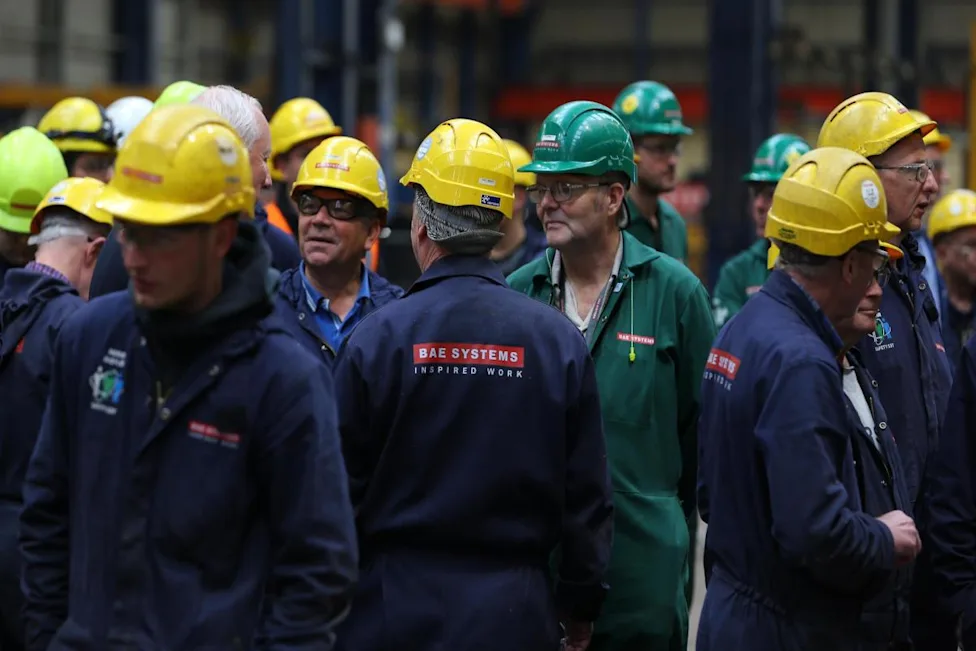
Britain’s largest defence contractor, BAE Systems, has announced plans to cut approximately 1,070 jobs across its head office and air business in the United Kingdom, raising fresh concerns about the future of the country’s defence manufacturing workforce and the need for stronger government commitments to domestic military production.
The proposed reductions, which account for around 2% of BAE Systems’ 50,000-strong UK workforce, are expected to take place through voluntary redundancies. The company said the decision forms part of an ongoing effort to improve operational efficiency, respond more quickly to customer requirements and strengthen its competitiveness in an increasingly demanding international defence market.
The announcement has nevertheless prompted criticism from trade union leaders and political representatives, who argue that the government must do more to secure long-term work for British defence manufacturers. They have called for additional orders for domestically built fighter aircraft and emerging combat technologies, warning that uncertainty over major military programmes could threaten skilled employment and industrial capacity.

The planned job cuts will mainly affect employees at the company’s head office and its air business. BAE Systems has indicated that workers on factory production lines, aircraft maintenance personnel based at Royal Air Force facilities and early-career trainees will be excluded from the reductions. This distinction means that the company is seeking to adjust certain parts of its organisational structure while protecting employees directly involved in manufacturing, maintenance and workforce development.
BAE’s UK air business employs approximately 18,500 people, while its London head office has around 1,000 employees. The wider workforce includes thousands of engineers, technicians, administrators and other specialists involved in the production and support of advanced military equipment. Although the proposed reductions represent a relatively small proportion of the company’s total UK workforce, they have attracted considerable attention because of BAE’s importance to the national defence industry.
A company spokesperson described the announcement as the next stage of its continuing effort to improve agility and competitiveness. The spokesperson said the objective was to maximise the value of public and customer spending on defence while ensuring that critical military capabilities could be delivered with greater speed and efficiency.
The company also acknowledged that the announcement could create uncertainty among employees. It said it was focused on achieving any potential workforce reductions through a voluntary process, rather than immediately pursuing compulsory redundancies. However, the development has raised questions about the availability of future work and the stability of employment in parts of the British aerospace and defence sector.
One of the central concerns relates to the production schedule for the Eurofighter Typhoon programme. BAE Systems received a significant international order last year when Türkiye agreed to purchase 20 Typhoon fighter jets in a deal announced during Prime Minister Keir Starmer’s visit to the company’s manufacturing facilities. The agreement, valued at approximately £8bn, was widely viewed as an important development for British defence exports and the future of the aircraft programme.
However, the order is believed to provide only around two years of work at BAE’s Lancashire manufacturing facilities. That period may not be sufficient to maintain existing levels of employment until production begins on the next generation of combat aircraft. The potential gap between current orders and future programmes has therefore become a major concern for workers, unions and local political representatives.
A source familiar with the matter indicated that uncertainty surrounding the Eurofighter Typhoon programme was a more significant factor behind the job reductions than straightforward cost-cutting. The concern reflects the challenges associated with maintaining a highly skilled manufacturing workforce when major defence contracts are dependent on government decisions, international partnerships and long-term procurement schedules.
BAE Systems is expected to play a leading role in developing the next generation of military aircraft through the Global Combat Air Programme, which aims to produce a sixth-generation fighter known as Tempest. The programme is being developed through cooperation between the United Kingdom, Italy and Japan. It is intended to strengthen the participating countries’ future air combat capabilities while supporting advanced engineering, research and industrial development.
Nevertheless, major next-generation aircraft programmes require years of planning, investment and technical development before they can generate the level of manufacturing activity needed to sustain large workforces. This creates a challenge for companies such as BAE Systems, which must balance existing production commitments with preparations for future defence technologies.
The company has also been developing uncrewed combat aircraft technology. In July 2026, it unveiled Brontanax, a British-designed Collaborative Combat Aircraft, at the Farnborough International Airshow. The aircraft represents part of a broader shift towards integrating autonomous and uncrewed systems into modern military operations. Such technologies could create new opportunities for the British defence industry, although their long-term employment impact will depend on future procurement decisions and production requirements.
The job announcement has come at a time when defence spending has increased significantly across Europe and other parts of the world following Russia’s full-scale invasion of Ukraine in 2022. Governments have been reviewing military capabilities, strengthening security arrangements and increasing investment in defence equipment. BAE Systems has benefited from this environment, reporting substantial orders and improved financial expectations.
Last month, the company informed investors that it had secured approximately £33bn in orders so far in 2026 and expected additional contracts before the end of the year. It also increased its free cash flow guidance for the financial year by 10%, raising the expected figure from around £2bn to £3bn.
These figures have highlighted an apparent contradiction between the company’s strong order performance and its decision to reduce part of its workforce. However, the overall value of defence orders does not necessarily translate into immediate work for every division or manufacturing facility. Contracts may involve different products, delivery schedules, international operations and specialist capabilities. Consequently, uncertainty over particular aircraft programmes can remain a concern even when a defence contractor reports substantial business growth.
Unite, one of the UK’s largest trade unions, has strongly criticised the situation. Its general secretary, Sharon Graham, warned that Britain’s manufacturing industry could face further erosion unless the government makes important decisions about domestic defence procurement.
Graham argued that ministers should immediately announce contracts for British-built Typhoon aircraft and Collaborative Combat Aircraft. She said such commitments would help protect skilled jobs, strengthen the country’s manufacturing base and provide greater certainty for companies and workers involved in the defence supply chain.
Her comments reflect wider concerns about the relationship between government procurement decisions and the long-term survival of specialist industrial capabilities. Defence manufacturing depends on highly trained engineers, experienced technicians and complex networks of suppliers. If production slows or major contracts are delayed, rebuilding those capabilities can become difficult and expensive.
Andrew Snowden, a Conservative MP representing an area of Lancashire where BAE Systems operates two major air manufacturing hubs, has also called for greater government support. He argued that ministers should act quickly by placing orders for British-built Typhoons and Collaborative Combat Aircraft. According to Snowden, a clearer pipeline of work would provide greater confidence for skilled employees and businesses across the regional supply chain.
The issue extends beyond aircraft manufacturing. The government is also facing pressure to decide how to replace the country’s Skynet military satellite system, which provides important communications capabilities for the armed forces. American defence company Lockheed Martin was reportedly considered the Ministry of Defence’s preferred option. However, ministers have delayed the decision following objections from Unite, which warned that selecting the American company could threaten employment at Airbus facilities in the UK.
The debate illustrates the competing pressures facing the government as it seeks to strengthen national security while protecting domestic industrial capacity. Defence procurement decisions often involve considerations such as cost, technology, operational performance and international partnerships. At the same time, unions and manufacturers argue that domestic contracts are essential for maintaining skilled employment and reducing dependence on overseas suppliers.
The Ministry of Defence expressed sympathy for employees who may be affected by the proposed voluntary redundancies. A spokesperson acknowledged that the prospect of job losses could create concern among workers and their families.
The department also defended the government’s wider record on defence investment, saying it was delivering the biggest increase in defence spending since the Cold War. It pointed to approximately £4bn in investments agreed since July, including a £708m contract extension for BAE Systems to lead further development work under the Global Combat Air Programme.
The ministry also highlighted the £8bn agreement to supply Türkiye with 20 Typhoon fighter jets, which it said supports approximately 6,000 jobs across two BAE Systems sites.
Despite these commitments, the latest announcement has intensified calls for a more consistent long-term defence procurement strategy. For workers in Lancashire and other parts of the UK, the central issue is whether current contracts and future military programmes will provide enough continuous work to protect specialist manufacturing jobs.

The coming months could therefore prove important for BAE Systems, its employees and the wider British defence industry. Further government orders, decisions on major aircraft programmes and progress on next-generation military technologies may determine how successfully the company manages the transition between existing production and future projects.
While BAE Systems maintains that the proposed reductions are intended to improve efficiency and competitiveness, the announcement has placed renewed attention on the need to balance corporate restructuring with the country’s broader industrial and security priorities. For thousands of workers whose livelihoods depend on defence manufacturing, certainty over future orders remains a critical concern.
Related News:
 Palantir Lobbyist Had Role in Burnham Campaign
 Informa Agrees £2.24bn Deal to Buy Clarion
 Labour MPs Urge Burnham to Lead UK Reindustrialisation
 Bank of England Faces £160m Renovation Challenge
 MPs warn AI financial risks threaten UK stability
 MPs warn AI financial risks threaten UK stability
 UK Doubles Steel Tariffs to 50% to Protect Domestic Plants
 OpenAI Halts Stargate UK Project Amid Energy Crisis
 Reform UK funding: mystery billionaire revealed
 BBC News Faces Deep Cuts in 2,000 Job Plan
 UK Pushes for New EU Goods Trade Deal
 Reeves Fights to Keep Treasury Role Amid Labour Turmoil
 UK rejects EV charging VAT cut amid Treasury clash
 UK Risks Falling Behind in AI Race
 Burnham Faces Mounting Budget Challenges
 Swedish Mining Push Puts Sami Land Rights Under Pressure
 Oil nears $100 as Saudi attacks shake markets
 McLaren to Create 1,000 UK Jobs in £450m Investment
 Nats Boss Summoned as UK Flight Chaos Continues
 John Lewis Losses Widen to £124m as Confidence Falls
 Thames Water Revises Oxfordshire Mega-Reservoir Plan
 Mayors Could Gain Greater Powers Over Water Firms
 Next Raises Profit Forecast After Strong Summer Sales
 UK Productivity Improves as Bank Weighs Interest Rates
 Trump Threatens EU Over Canada Partnership Proposal
 Tom Watson Takes Senior Role at Palantir
 MPs Defend UK Economic Watchdog Against Critics
 Chinese Hybrid Car Surge Raises EU Auto Industry Concerns
 Tony Blair Calls for Britain to Rejoin EU Within a Decade
 UK Trade Losses Grow Without EU Product Deal
 AO Acquires Jessops in Camera Retail Expansion
 TalkTalk Races to Sell Arms as Administration Looms
 Avanti West Coast Set for Public Ownership in March
 Beaverbrooks Boss Calls for Relief on Business Costs
 Burnham Opens Door to Possible UK Return to EU
 Poundland Rescue Bid Could Protect 11,000 Jobs
 Bank Chief Calls for Power to Intervene in AI
 BBC Three and Scotland Face Online-Only Future
 Badenoch Raises Prospect of 2027 UK Election
 UK Diesel Reaches £2 as Inflation Surges Across Europe
 Minister Rejects Fears of UK Diesel Shortage
 BT Broadband Pauses Raise Digital Switchover Concerns
 UK Weighs Chinese Car Tariffs Amid EU Trade Push
 BT Agrees £400m TalkTalk Rescue Deal
 Asos Investigates Hack Claims After Customer Alerts
 EU-China Talks Target Surge in Hybrid Car Imports
 Doubts Grow Over Trump’s $15bn Iowa Steel Plant
 France Urges UK to Consider Returning to EU
 Ministers Push ATO to Reconsider Credit Card Ban
 Australia Delays Tax Credit Card Payment Ban After Backlash
 UK Water Firms Earn Millions From Industrial Wastewater
 Tom Watson Warns Against ‘Mob Rule’ in UK Contracts
 Labour MP Urges Billions for Affordable Homes
 Labour Fears Budget Will Fail to Lift Living Standards
 UK Must Build Its Own AI to Protect National Security
 IFS Warns UK Budget Faces £35bn Spending Gap
 EU Caps Chinese Hybrid Car Imports at 350,000
IMF Raises UK Growth Forecast Ahead of Healey’s Budget
 Healey Plans £1bn Online Marketplace Tax Crackdown
 UK Could Rejoin EU Through a Switzerland Plus Deal
 UK Plans Higher Training Costs for Older Apprentices
UK Borrowing Hits £24.5bn Ahead of Healey’s Budget
 Tax Online Sales to Save High Street, Burnham Urged
 China’s AI Ambitions Hit $2.4 Trillion Market Setback
UK Devolution Plan Faces Test Over Regional Inequality
 UK Budget Leaves Households Facing Higher Energy Bills
 Lloyds Warns Against Extending Higher Bank Tax
 BP Profits Surge as Middle East Conflict Lifts Margins
Burnham Admits First Budget Fell Short of His Ambitions
 Virgin Media O2 Plans Thousands of Job Cuts
 Elon Musk’s $446m Midterm Gamble Ends in Defeat
 UK Warned Over Dangerous Dependence on China for Minerals
 Poundland Remains Vulnerable as Rescue Talks Continue
 California Voters Reject One-Time Billionaire Tax
 EU Manufacturers Face Growing Chinese Competition
 Labour MPs Question Ambition of Burnham’s 10-Year Plan
 UK Water Regulator Moves to Tighten Boss Bonus Ban
 Imperial Brands to Cut 4,600 Jobs Amid AI Expansion
 Burnham Weighs Tax Cuts to Boost Youth Employment
 EDF Expands UK Market With 1.3m Utilita Accounts