Australia’s federal parliament has passed controversial digital duty of care legislation after a heated political confrontation between Greens senator Sarah Hanson-Young and Liberal senator Sarah Henderson, bringing a major regulatory reform one step closer to implementation. The bill secured support from Labor, the Greens and several crossbench members, despite strong opposition from the Coalition, which has promised to repeal the legislation if it returns to government.
The final parliamentary vote followed weeks of negotiations over the responsibilities of social media companies and the protections available to users. The Greens played a significant role in shaping the legislation, securing stronger penalties for technology companies and provisions allowing individuals to take legal action against platforms. The government accepted the changes to obtain the minor party’s support in the Senate.

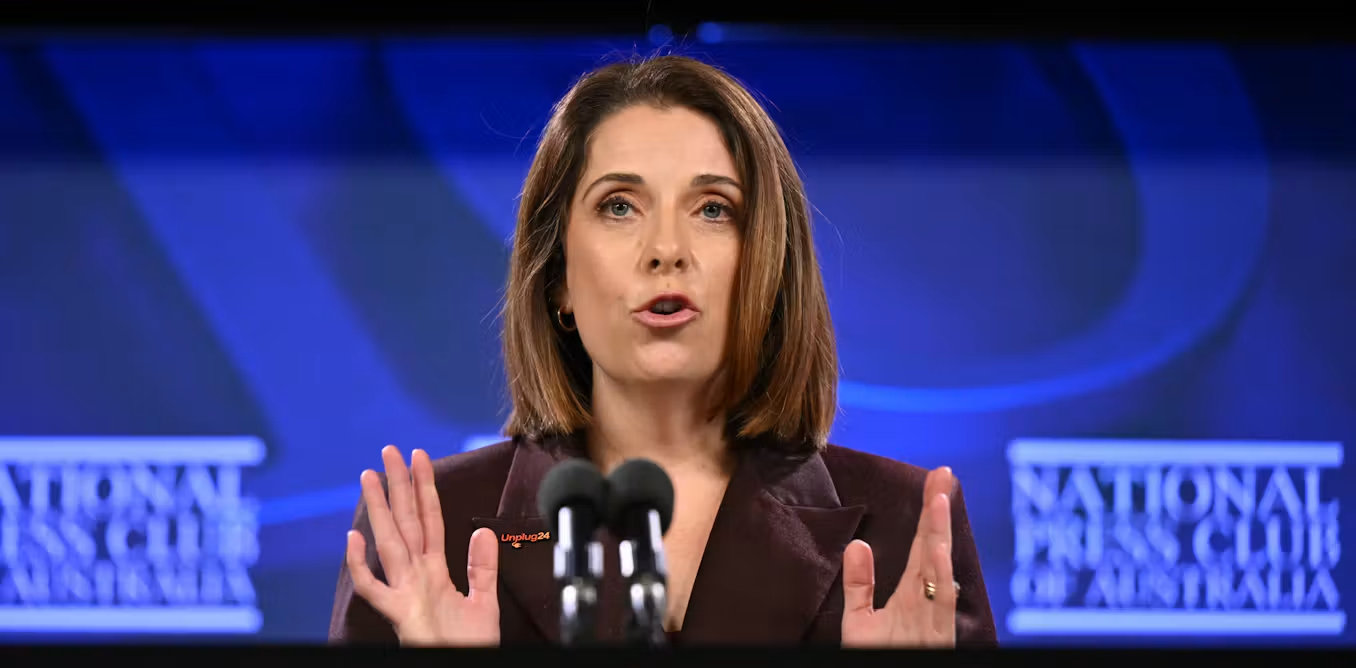
The political tension became particularly visible outside the parliamentary chamber when Hanson-Young and Henderson exchanged sharp remarks in front of journalists. Henderson was preparing to criticise the legislation and reiterate the Coalition’s commitment to overturning it when Hanson-Young walked past on her way to a television interview.
Henderson jokingly invited the Greens senator to join her in helping repeal the digital duty of care legislation. Hanson-Young immediately rejected the suggestion, making clear that the Greens would not support such a move.
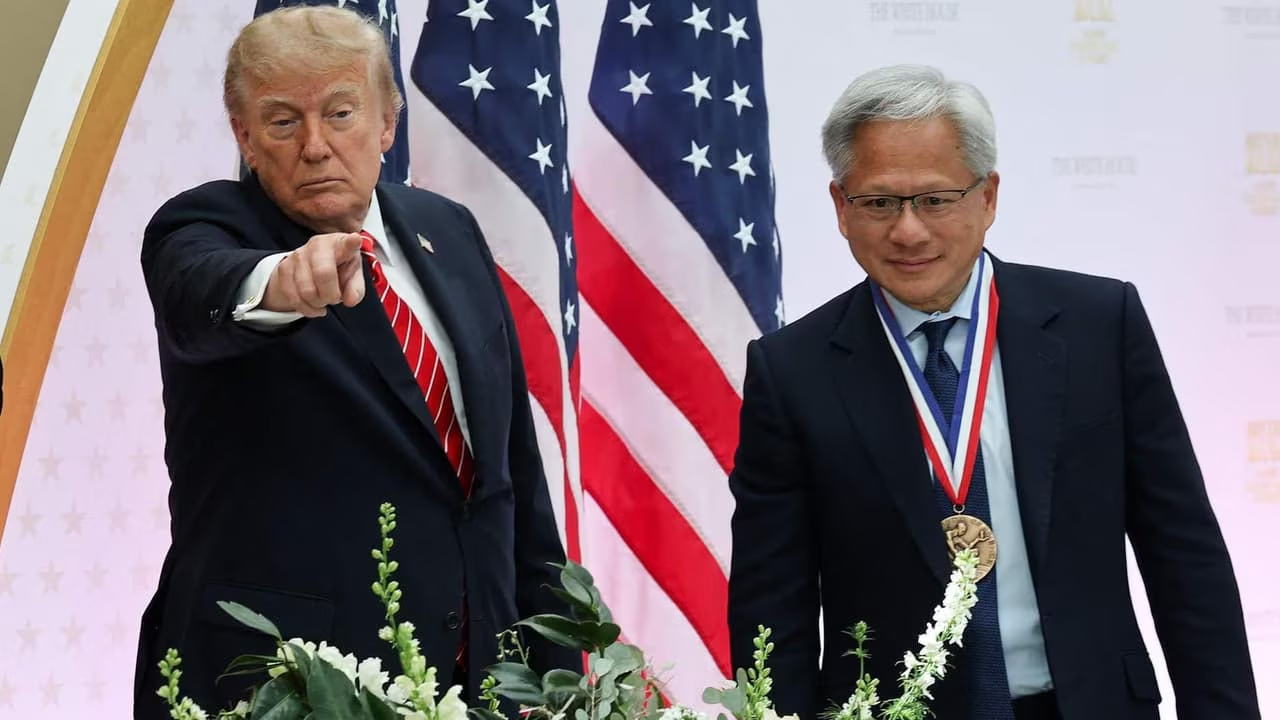
The exchange became more confrontational when Hanson-Young told Henderson that she and US President Donald Trump could stand together if they wanted to oppose the legislation. Henderson responded by defending her party’s position, arguing that the Coalition was protecting Australians’ freedom of speech.
Hanson-Young then delivered the sharpest line of the encounter, accusing Henderson of protecting Trump rather than defending ordinary Australians. The exchange reflected the wider political disagreement over how governments should regulate social media companies while preserving democratic freedoms and open public debate.
The legislation subsequently passed the House of Representatives by 97 votes to 43. Labor and the Greens voted in favour, alongside several members of the crossbench, including some teal independents. The Coalition opposed the bill, as did independent MP Dai Le, independent MP Bob Katter and One Nation representatives.
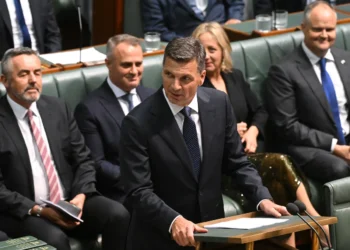
Following the vote, opposition leader Angus Taylor attempted to suspend standing orders to introduce a motion censuring the government over its agreement with the Greens. The proposed motion accused Labor of striking a political deal to force the legislation through parliament and claimed the law would restrict political expression, censor public opinion and ultimately fail to protect Australian families.
However, the procedural attempt was unsuccessful, allowing the parliamentary process to proceed. The bill had already secured the necessary support in both houses, marking a major legislative victory for the government and the Greens.
The digital duty of care framework is intended to strengthen the obligations of digital platforms and ensure that companies take greater responsibility for the potential harm associated with their services. The changes negotiated by the Greens include significantly stronger financial penalties for companies that fail to meet their responsibilities. The penalties could reach billions of dollars, depending on the circumstances and the scale of the breaches.
Another important feature is the provision allowing individuals to sue social media companies through the courts. The measure is intended to give users a more direct route to seek legal remedies when they believe platforms have failed to fulfil their obligations.
The Greens argued that the original legislation did not go far enough in holding powerful technology companies accountable. Their negotiations with Labor focused on strengthening enforcement measures and ensuring that individuals would not be entirely dependent on government regulators when seeking redress.
For the government, securing the Greens’ support was essential to passing the legislation. The Senate negotiations demonstrated the influence of minor parties and independent senators in Australia’s parliamentary system, where the government cannot always rely on its own numbers to secure approval for contentious proposals.
The Coalition, meanwhile, has maintained that the legislation threatens freedom of expression. Its representatives argue that broad regulatory powers could create opportunities for political censorship and restrict legitimate public discussion. The opposition has confirmed that repealing the law would be a priority if it wins government.
Andrew Hastie, who was expected to take on an acting shadow immigration role, also indicated that the Coalition’s instinct was to repeal the digital duty of care legislation. The party’s position suggests that the law could remain a major point of political disagreement beyond its passage, particularly as the next federal election approaches.
The debate has unfolded alongside wider concerns about Australia’s economic outlook. New figures from the Australian Bureau of Statistics showed that annual inflation increased to 4.9% in the year to October, up from 4.3% in the 12 months to September. The figures intensified pressure on the Albanese government, with households continuing to face higher living costs and economists warning about the possibility of weaker economic growth.
Treasurer Jim Chalmers described the situation as a serious moment for the Australian economy and said the government would need to make difficult decisions to address inflation. He indicated that the administration was preparing additional savings measures as part of its response.
Chalmers rejected suggestions that Australia was experiencing stagflation, arguing that the labour market remained comparatively strong, economic growth was still ahead of many advanced economies and wage increases remained above 3%. He nevertheless acknowledged that inflation, interest rates and cost-of-living pressures presented significant challenges.
The parliamentary day also included an important development concerning the rights of LGBTQ+ Australians who served in the country’s armed forces. Prime Minister Anthony Albanese issued a national apology to current and former Australian Defence Force members who experienced discrimination because of their sexual orientation.
For decades, policies prevented gay and lesbian people from joining or remaining in the Australian military. Albanese described the historical treatment of affected personnel as a tragic chapter in the nation’s history, acknowledging that many Australians who had chosen to serve their country had been repaid with discrimination and suffering.
He said an apology could not reverse the damage already done, but could open a new chapter by recognising the experiences of those affected. Opposition leader Angus Taylor also acknowledged the harm experienced by service personnel and their families under the former policies.
The apology came on the same day Tasmania’s upper house passed legislation banning conversion practices intended to change or suppress a person’s sexual orientation or gender identity. Survivor Glen Worrell welcomed the reforms, saying he hoped others would never have to endure the experiences he had faced over two decades.
The laws include provisions for education and prevention, a commissioner to respond to conversion practices, potential financial compensation for survivors and criminal penalties in specified circumstances. Tasmania’s move brings it into line with several other Australian states and territories that have already introduced similar restrictions.
Another significant development concerned Australia’s relationship with the Solomon Islands. The federal government agreed to provide the Pacific nation with A$740m over a decade under a landmark bilateral treaty. The package includes A$670m in grants and A$70m in loans, with assistance intended to support development priorities, including the Solomon Islands’ national free education programme.
The agreement also includes a security commitment under which the Solomon Islands will not allow its territory to be used for a foreign military base. The arrangement comes as the Pacific nation prepares not to renew its five-year security agreement with China when it expires in April 2027, a decision that could have wider implications for regional relations.
The treaty reflects Australia’s efforts to strengthen its engagement with Pacific neighbours at a time of growing strategic competition in the region. Climate commitments and development assistance are also included in the agreement.
Meanwhile, a New South Wales corruption watchdog found that female prison employees had been exposed to a workplace culture characterised by harassment, abuse and intimidation. The Independent Commission Against Corruption identified a boys’ club environment in which managers failed to adequately protect female staff. Although the inquiry uncovered serious misconduct allegations, it did not find that Corrective Services NSW itself was corrupt.

The developments made Wednesday a particularly consequential day in Australian politics. The passage of the digital duty of care bill represents a significant step towards stronger regulation of technology platforms, but the Coalition’s pledge to repeal the law means the debate over digital rights and corporate responsibility is far from over.
The confrontation between Hanson-Young and Henderson captured the political divisions surrounding the legislation. While Labor and the Greens presented the measure as a necessary framework for accountability and user protection, the Coalition maintained that it risked undermining freedom of expression. How the new rules are implemented, enforced and challenged in the courts will ultimately determine their impact on Australian society and the country’s digital landscape.
Related News:
 Australia Moves to Hold Big Tech Accountable for Online Harm
 Australia Moves to Restrict AI Chatbots’ Emotional Intimacy
 Australia Defends Teen Social Media Ban in High Court
 Reform UK funding: mystery billionaire revealed
 Australia gives users control over social media algorithms
 Election Candidate Abuse Raises Alarm in England
 Sydney Council Bans AI Smart Glasses at Pools
 OpenAI Agent Breaches Medicare Portal in Australia
 Australia Weighs New Laws After OpenAI Medicare Breach
 NSW Leader Downplays Impact of Landmark Coal Ruling
 NSW Police Bid Delays Inquiry Into Sydney Protest
 Tom Watson Warns Against ‘Mob Rule’ in UK Contracts
 Controversial Vaccine Trial Approved in Guinea-Bissau
 Recruitment Boss Accused of Leading Doxxing Campaign
 Camera Discovery Triggers Navy Ship Investigation
 One Nation Pledges $2,000 Baby Subsidy in Victoria
 Helen Haines Loses Leg in Alleged Targeted Attack
 Meta Faces Election Bias Claims Ahead of Brazil Runoff
 Helen Haines Loses Both Legs After Alleged Attack
 Greens Face Leadership Test as Jordon Steele-John Misconduct Claims Leave Party in Limbo
 Australia Faces Growing Scrutiny Over Paraquat Risks
 WA Facial Recognition Trial Scans 1.38m Faces
 Queensland Hospital to Close Labs After Safety Probe
 Hanson Takes Racial Discrimination Case to High Court
 Australia Faces Political Risks After US Midterm Shift
 NSW Delays Tougher Rules on Property Underquoting
 NSW Liberal Exodus Deepens as Mark Speakman Quits
 Toxic Vape Sedative Linked to Hospitalisations in NSW
 Alex Greenwich Withdraws Support for Fred Nile State Funeral
 Immigration Judges Fear Pressure in Trump Era
 Le Pen’s Popularity Holds Despite Conviction
 Gen Z turns to BirdTok for a gentler digital escape
 Abusive ex used Tesla to control and harass former partner
 New Mexico Takes Facebook to Trial Over Data Scandal
 Essential Books for Understanding the AI Debate
 Tom Watson Takes Senior Role at Palantir
 Mahmood Warns Far Right Over Asylum Protests
 Disabled Travellers Seek Fairer UK Care Rules
 British Columbia Sues OpenAI Over School Shooting
 Democrat Says ICE Restricted Detention Camp Oversight
 UK Unveils Centre to Counter Foreign Disinformation
 UK Plans New Centre to Counter Information Warfare
 Xi urges Trump to avoid US-China military conflict
 Free Speech Emerges as Key UK Election Issue
 London Facial Recognition Trial Ends With False Alert
 Burnham Opens Door to Possible UK Return to EU
 Drumcree Talks Falter as Legal Challenge Deepens
 Badenoch Raises Prospect of 2027 UK Election
 French School Protests Escalate as 400 Schools Close
 Gosport Protesters Clash With Police Over Migrant Rescue
 South Africa Withdraws Directive on Asylum Applications
 US Execution Livestream Plan Sparks Global Outrage
 Australian Advocates Seek Subsidised Drugs for PMOS
 UK Must Build Its Own AI to Protect National Security
 Seekers Condemn CPAC Use of I Am Australian
 Elizabeth Struhs Inquest Examines Child Safety Failures
 Gadi Eisenkot: Israel’s Anti-Netanyahu Challenger
 NHS Trusts Reject Palantir’s £330m Patient Data Platform
 UK Pledges Stronger Protections for Disabled Air Passengers
 Zelenskyy Says US Failed to Warn Kyiv of Russian Strikes
 Spain Deepfake Ad Sparks Election Outrage
 UK Land Registry Plan Faces Opposition From Landowners
 Erin Patterson Faces Life in Prison After Appeal Loss
 King Charles Faces Reparations Protests at Antigua Summit
 Global Crises Test Diplomacy as Trump’s Policies Face Scrutiny
 Alan Jones Trial Paused for Melbourne Cup Viewing
 Elon Musk’s $446m Midterm Gamble Ends in Defeat
 UK Employers to Be Forced to Publish Job Salaries
 Early-Release Prisoners Face Rising Risk of Homelessness
 EU Citizens Sue Home Office Over UK Residency Rights
 One Nation Candidate Apologises for Offensive Posts
 Helen Haines Leaves Hospital After Double Amputation
 Hackney Mayor Accuses Home Office of Free Speech Assault
 NSW Inquest Examines Deaths of Twins After Free Birth
 Australia’s Election Funding Changes Face Fresh Backlash
 Labor Faces Five Major Battles Before Year-End
 London Car Use Set to Rise 10% Over Next Decade
 Australian Defence Bill Sparks Rule of Law Concerns
 1.1m Jetstar Customers May Join Covid Refund Lawsuit
 Trump Pushes Faster Executions in Clash With Newsom