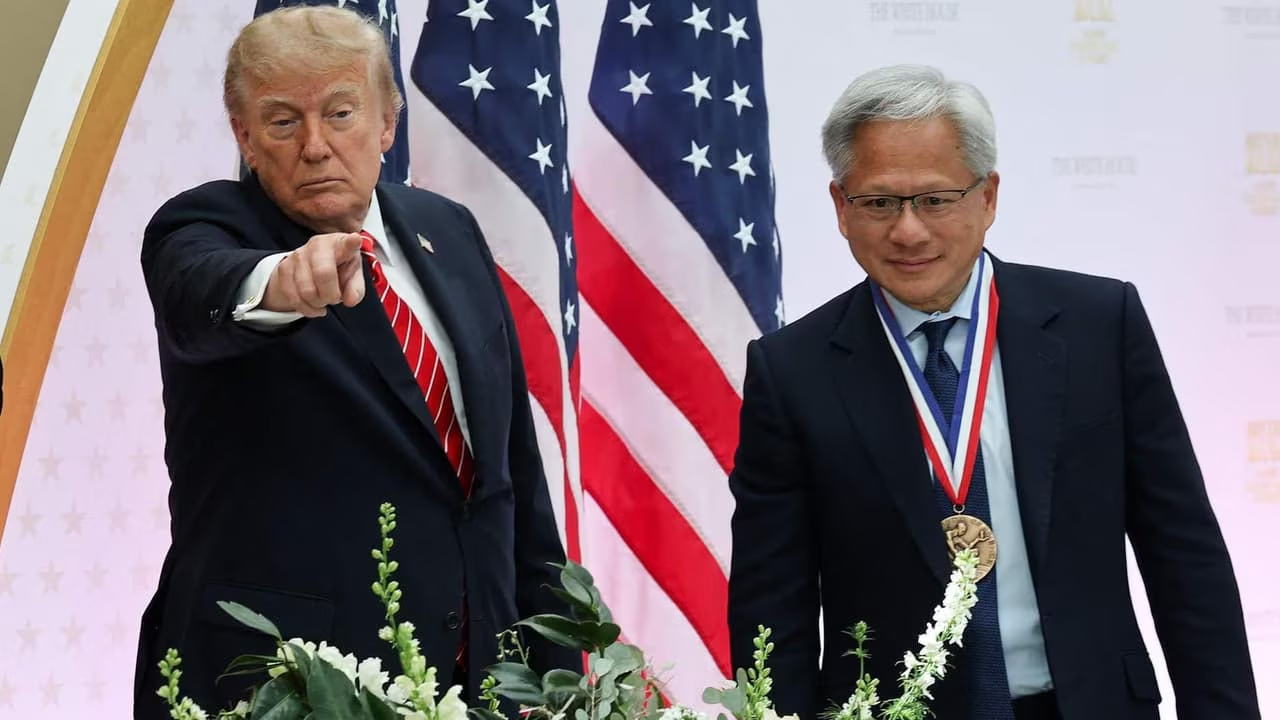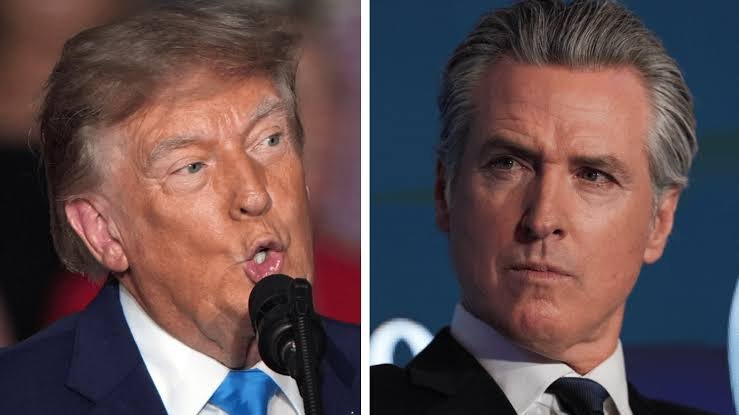
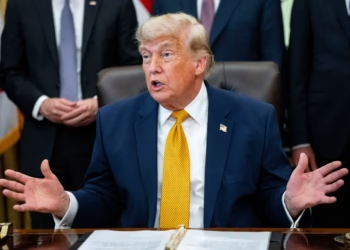
US President Donald Trump has called on the Department of Justice to accelerate federal executions, escalating his political confrontation with California Governor Gavin Newsom over the state’s decision to commute the death sentences of 548 prisoners. In a strongly partisan speech delivered at the Justice Department in Washington on Monday, Trump criticised the Democratic governor, defended capital punishment and announced plans to expand the circumstances in which federal prosecutors would seek the death penalty.
The president’s remarks have reignited the national debate over capital punishment, victims’ rights, criminal justice and the limits of executive authority. His intervention also comes at a time when several controversial executions have raised serious questions about the procedures used by American authorities to carry out death sentences.

Speaking before families of murder victims, senior law enforcement officials and government representatives, Trump instructed Attorney General Todd Blanche to accelerate federal executions. He also announced that he intended to sign a presidential directive requiring the Justice Department to pursue capital punishment for individuals convicted of murdering children, as well as rapists and human traffickers who kill their victims.
“Once juries have spoken, capital punishment will be swift and certain,” Trump declared, signalling his determination to make executions a more prominent part of the federal government’s criminal justice policy.
A central target of the president’s speech was Newsom’s decision to commute all 548 death sentences in California to life imprisonment without the possibility of parole. The move, announced earlier in November, represents the largest clearing of a US death row in modern history. Trump described the decision as one of the most shocking acts of injustice in American history and accused the governor of protecting some of the country’s most dangerous criminals.
He characterised Newsom as a terrible governor and argued that the commutations should not be allowed to stand. The president also accused the California administration of betraying victims’ families by preventing the execution of prisoners convicted of particularly violent crimes.
The event was held in the Great Hall of the Robert F Kennedy Department of Justice building. Trump delivered his address between two prominent aluminium statues, The Spirit of Justice and The Majesty of Law, accompanied by Blanche and FBI Director Kash Patel. Several families whose relatives had been murdered by prisoners affected by Newsom’s decision attended the event.
Trump used graphic descriptions of notorious murder cases to strengthen his argument for retaining capital punishment. Among the cases he discussed were those involving serial killers Charles Ng and Chester Turner, both responsible for multiple murders. By highlighting the brutality of their crimes, the president sought to portray the governor’s decision as a threat to public justice and an insult to victims’ families.
Several relatives of murder victims were invited to address the gathering. Their statements reflected the anger and grief experienced by families who believe that the most serious crimes should carry the ultimate punishment.
Sandy Friend, whose eight-year-old son Michael Lyons was kidnapped, tortured and murdered, directly challenged Newsom over his decision. Calling on the governor to face her and explain his actions, she emphasised that her son’s life mattered and questioned why the state had chosen to spare the lives of those convicted of such crimes.
Her emotional remarks illustrated the deeply personal nature of the capital punishment debate. For many families, the issue is not simply about criminal sentencing but also about their understanding of justice, accountability and the lasting consequences of violent crime.
Attorney General Blanche also defended the administration’s approach, saying the Justice Department would continue seeking the death penalty in cases where it considered the punishment appropriate. He claimed federal prosecutors had pursued capital punishment 49 times since Trump returned to office, compared with only one such case during Joe Biden’s presidency.
However, Trump’s demand for faster executions comes amid growing scrutiny of the methods used to carry out death sentences in the United States. In September, Christa Pike, aged 50, became the first known person to survive the administration of lethal injection drugs during an execution attempt. The incident raised serious questions about the reliability of execution procedures and the potential for extreme suffering when the process fails.
More concerns emerged in Texas the following week when the execution of 70-year-old Reinaldo Dennes reportedly lasted more than an hour as prison staff struggled to locate a suitable vein for the lethal injection. The incident renewed criticism from death penalty opponents, who argue that failed or prolonged executions can amount to cruel and inhuman treatment.
The controversy has also placed the United States in an increasingly isolated position internationally. According to global figures, only 17 countries carried out executions in 2025, while 145 countries had abolished the death penalty either in law or in practice. Nevertheless, the United States executed 47 people during the year, its highest annual total since 2009.
Trump’s support for capital punishment is longstanding. His tough-on-crime political position dates back several decades, including 1989, when he called for the restoration of the death penalty following the wrongful accusations against five Black and Latino teenagers in the Central Park jogger case. The five men, later known as the Central Park Five, were eventually exonerated after spending years facing the consequences of a wrongful conviction.
Newsom has defended his decision by arguing that capital punishment is morally wrong and inconsistent with California’s values. He has repeatedly criticised the death penalty system as arbitrary, unequal and vulnerable to wrongful convictions. In his view, the possibility of executing an innocent person and the unequal application of capital punishment make the system fundamentally flawed.
The governor’s decision does not mean that the prisoners will be released. All 548 individuals covered by the proposed commutations would remain incarcerated for life without the possibility of parole. Their convictions would not be overturned, and their obligations to provide restitution to victims would remain in place. Furthermore, most of the commutations require approval from the California Supreme Court.
California has not carried out an execution since January 2006, although voters rejected proposals to abolish the death penalty in 2012 and 2016. The state’s latest decision therefore represents a significant shift in how its leadership intends to approach capital punishment, even though the legal and political debate surrounding the issue remains unresolved.
In response to Trump’s speech, Newsom accused the president of lacking credibility on accountability. He argued that Trump should not lecture California about justice while using presidential pardon powers to benefit wealthy friends and business associates.
The governor’s office also emphasised that victims and their families do not share a single position on capital punishment. While some strongly support executions, others believe that justice should focus more on supporting survivors and preventing further violence.
One prominent supporter of Newsom’s approach is Jess Nichol, whose sister Polly Klaas was kidnapped and murdered. Nichol said she had initially wanted the death penalty for her sister’s killer but had gradually reconsidered her position. She argued that victims’ families need more than the promise of revenge and should receive counselling, medical assistance and financial support.
Her position highlights an important dimension of the debate that often receives less attention during political confrontations. Families affected by murder can have deeply different views about punishment, rehabilitation and the meaning of justice. Some regard executions as essential accountability, while others believe that prolonged legal proceedings and the emotional burden of capital punishment can make recovery even more difficult.
The dispute has also taken on a significant political dimension. Newsom is widely regarded as a potential contender for the Democratic presidential nomination in 2028, making him an increasingly prominent national rival to Trump and the Republican Party. By attacking the governor’s criminal justice policies, Trump has revived a familiar Republican argument portraying Democrats as insufficiently tough on crime.
The president’s decision to deliver a major political address at the Justice Department has also attracted attention. Presidential appearances at the department are relatively rare. Trump last spoke there in March 2025, during an event focused on crime and immigration, when he criticised criminal investigations conducted against him during the Biden administration and promised to expose alleged misconduct by officials involved in those investigations.
Since then, the Justice Department has pursued investigations involving several individuals whom Trump considers political opponents. Some cases have faced setbacks after judges and grand juries rejected efforts to advance them, adding to wider concerns about the independence of federal law enforcement institutions.

The latest confrontation therefore extends beyond the technical question of whether executions should be carried out more quickly. It raises broader questions about the influence of presidential politics over criminal justice, the independence of prosecutors and the appropriate balance between punishment and human rights.
As Trump pushes for a more aggressive federal death penalty policy, Newsom’s decision has exposed divisions among Americans over the meaning of justice and the role of the state in imposing irreversible punishment. With concerns about execution procedures continuing and political tensions intensifying, the future of capital punishment is likely to remain a major issue in the country’s legal and electoral debates.
Related News:
 Armed Suspect Attacks Ohio Governor Candidate
 Texas Transfers Raise Fears for Migrant Children
 Memphis Questions National Guard Crime Surge
 Democrat Says ICE Restricted Detention Camp Oversight
 Latin America women fear rollback of rights
 Botstein Quits Bard Amid Epstein Investigation Calls
 ICE Agent Shoots Man in New York as Child Escapes Harm
 US Execution Livestream Plan Sparks Global Outrage
 Trump’s Midterm Campaign Faces Racism and Political Backlash
 Melania Trump Epstein remarks spark survivor backlash
 Swalwell Faces Pressure to Quit Governor Race
 Harmeet Dhillon Faces Scrutiny in DOJ Role Debate
 US Labor Department in turmoil after secretary resigns
 Trump DOJ Targets James Comey Again
 Judge Blocks Trump Bid for Arizona Voter Data
 US Court Weighs Fate of TPS for Migrants
 Immigration Judges Fear Pressure in Trump Era
 Trump’s Revenge Drive Deepens GOP Divide
 Gunman Killed After White House Security Shootout
 Trump Orders Signs Criticising Smithsonian Museum
 Ministers Condemn Far-Right Unrest in Portsmouth
 Patriot Platform Raises Concern Across Britain
 UK Urged to Probe US Diplomat Case
 Texas Charges Seven Noncitizens in Voting Crackdown
 Mahmood Warns Far Right Over Asylum Protests
 Patrick Clancy speaks publicly about children’s deaths
 ICE Shooting in Austin Sparks Calls for Transparency
 Clancy Defense Seeks Inquiry Into Lone Juror
 Trump and Mamdani Hold Cordial Gracie Mansion Meeting
 UK Reviews Hague Child Abduction Cases Involving Abuse
 King Refers Jamaica Slavery Petition to Privy Council
 Far-Right Activist Arrested After Channel Dinghy Incident
 Portadown protest ends after tense Orange Order standoff
 Tennessee Set to Execute Woman After Clemency Denied
 Cornell Fraternity Assault Investigation Reopened
 French Student Protests Escalate Into Violent Clashes
 Hundreds of UK prisoners released early amid overcrowding
 Drumcree Talks End Without Agreement Ahead of Appeal
 Calls Grow to Halt US Executions After Pike Failure
 French School Protests Escalate as 400 Schools Close
 New Prosecutor Takes Over Cornell Assault Case
 Gosport Protesters Clash With Police Over Migrant Rescue
 Christa Pike Wakes After Failed Tennessee Execution
 NSW Police Bid Delays Inquiry Into Sydney Protest
 Pentagon Says Fort Hood Shooter’s Execution Will Be Streamed
 US Senate Debates Turn Bitter as Midterms Near
 South Africa Withdraws Directive on Asylum Applications
 Navi Pillay Wins Nobel Peace Prize for Justice
 Trump Attacks Norway After Nobel Peace Prize Snub
 Recruitment Boss Accused of Leading Doxxing Campaign
 Ten US Midterm Races That Could Defy Expectations
 Ohio Airports Become Key Hubs for ICE Deportation Flights
 England and Wales Begin Second Wave of Early Prison Releases
 Camera Discovery Triggers Navy Ship Investigation
 US Report Exposes Scale of Dating App Scams
 Brazil Cuts Working Week to 40 Hours in Lula Election Boost
 Talarico Faces Tough Voter Test in Texas Senate Race
 Trump Administration Threatens California Election Officials
 Macron Condemns Violence as France Faces 2,400 Arrests
 Marseille Activist Defies France’s Powerful Drug Gangs
 Obama Warns Against Threat to Ilhan Omar’s Citizenship
 Helen Haines Loses Leg in Alleged Targeted Attack
 Zelenskyy Accuses US of Delaying Ukraine Missile Supplies
 Trump Pledges $400m to Boost Republicans in Midterms
 Helen Haines Loses Both Legs After Alleged Attack
 Jess Phillips Urges Supreme Court to Reverse Abuse Ruling
 Omar Claims US Raid on Residence Was Meant to Intimidate
 French Fast-Track Courts Face Backlash Over Riot Cases
 Ramaswamy Under Fire Over Controversial Ohio Ad
 US Midterms Could Reshape Trump’s Second Term
 Serbia’s Student Victory Sparks a ‘Smell of Freedom’
 Albanese Vows Swift Action on MP Safety Threats
 Flávio Bolsonaro Reportedly Leaves Brazil After Election Defeat
 US Judge Blocks Pressure on Election Officials
 Henry Nowak Family Rejects Political Use of His Death
 Judge Blocks Trump’s $100m Washington Arch Project
 Paraguay President Impeached and Arrested After Banking Crisis
 Early-Release Prisoners Face Rising Risk of Homelessness
 Stephen Miller’s Rise Puts Hardline Views at Centre of Power
 White House Withdraws Heidi Overton’s FDA Nomination