Published: 24 October 2026. The English Chronicle Desk. The English Chronicle Online
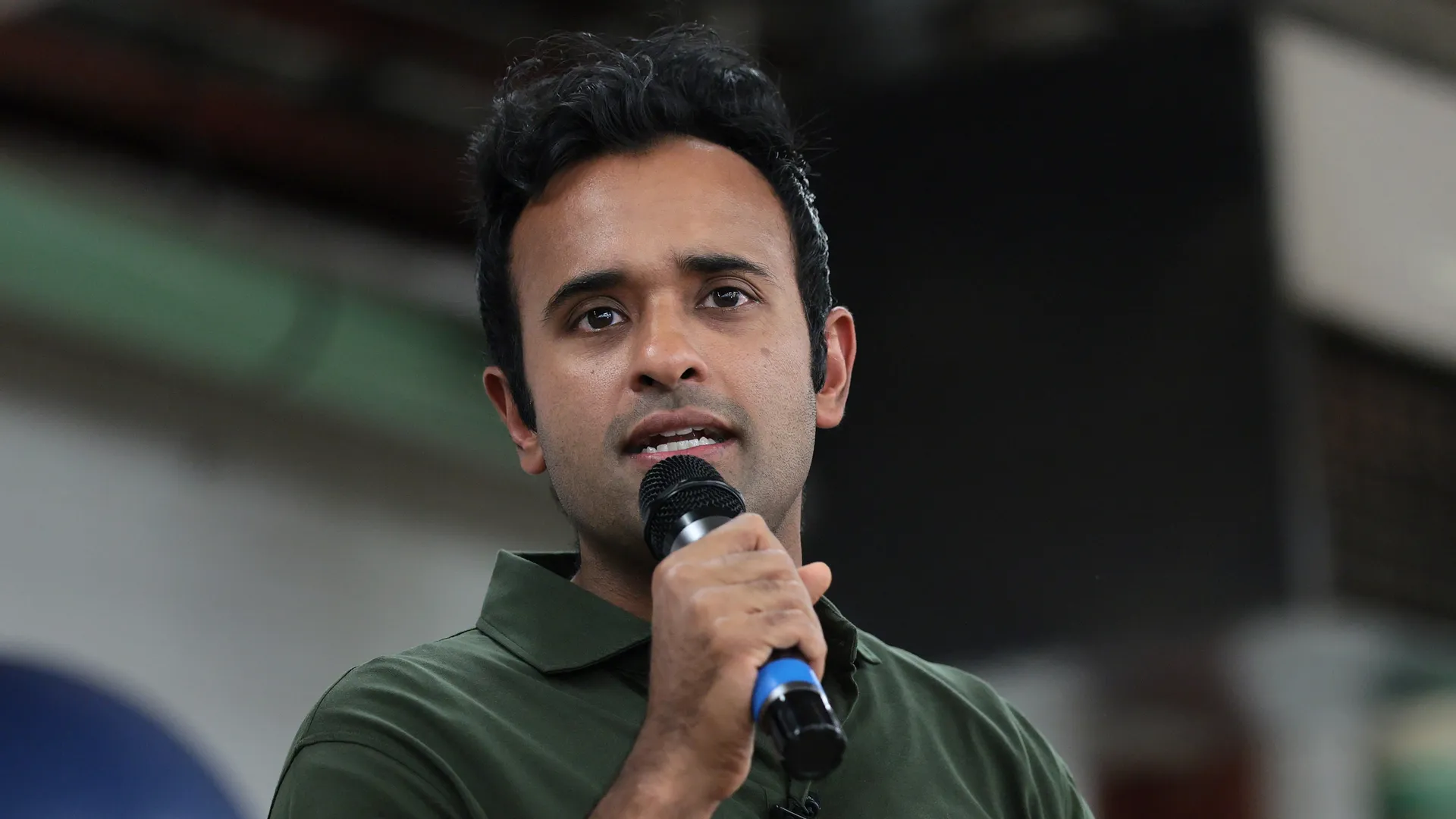
Republican Ohio gubernatorial candidate Vivek Ramaswamy is facing growing criticism over a deeply personal campaign advertisement targeting his Democratic opponent, Dr Amy Acton, after he accused her of misleading voters about her childhood. The controversy has intensified after court and police records emerged that appear to support key elements of Acton’s account of her upbringing, raising fresh questions about the claims used in the Republican campaign’s attack.
Ramaswamy defended the advertisement on Friday, arguing that his campaign had produced an ad about alleged dishonesty rather than one focused on childhood sexual abuse. He accused Acton of “lying about lying” and said the advertisement was intended to challenge what he described as inconsistencies in her personal history.
The dispute centres on Acton’s estranged mother, Donna Arthur, who appears in the advertisement accusing her daughter of being dishonest about her childhood. Arthur claims that Acton falsely described growing up in a tent and questioned other elements of the Democratic candidate’s account of her early life.

But historical records cited during the controversy tell a substantially different story. Police and court documents from 1978 indicate that Arthur’s second husband, Cledith Arthur, was arrested and charged with raping his stepdaughter after Acton’s biological father reported the alleged abuse to authorities. The alleged abuse took place over a period when Acton was between 10 and 12 years old.
Cledith Arthur pleaded not guilty and was subsequently indicted by a grand jury. He later failed to appear at a court hearing and remained wanted for years. Records indicate that he and Donna Arthur left Ohio, with Donna remaining married to him until his death.
The history has become central to the political controversy because the attack advertisement relies heavily on Arthur’s criticism of her daughter while providing little context about the circumstances that led to Acton and her brother being removed from their mother’s custody.
Acton’s brother, Philip Stearns, has strongly condemned the advertisement. He has said that after the allegations against their stepfather emerged and the children were removed from their mother’s custody, their birth mother continued her marriage to the man accused of sexually abusing Acton.
The advertisement also challenges Acton’s account of living in a tent as a child. Arthur calls her daughter a liar and rejects the claim that the family experienced such circumstances. The campaign then uses footage of a tent that had previously appeared in an advertisement produced by Acton’s campaign.
Acton had described a difficult childhood in that earlier campaign, recalling that she was about 12 years old when she and her family were living in a tent somewhere near Route 7. The statement became a central target of Ramaswamy’s advertisement.
A copy of an arrest warrant from 1978 has since emerged, however, providing potentially significant corroboration for Acton’s recollection. The document lists a campground off Ohio Route 7 in Rogers, Ohio, as Cledith Arthur’s address. A later handwritten note by a deputy reportedly indicated that the campground manager said Arthur had not stayed there for more than two years.
The records do not by themselves establish every detail of Acton’s childhood account, but they undermine the broad suggestion that her description of living around a campground was fabricated. The evidence has therefore intensified criticism of Ramaswamy’s decision to use his opponent’s traumatic childhood as a central element of a campaign attack.
The controversy has also exposed divisions within Ramaswamy’s own campaign. Reports have suggested that some campaign staff members were unhappy with the advertisement and believed that Ramaswamy himself had pushed for it despite concerns about its political impact.
According to accounts of the campaign’s internal discussions, the advertisement was tested with voters before becoming public. People who encountered the material during the testing process reportedly reacted negatively, with one version eventually appearing online and generating widespread criticism.
The backlash has crossed traditional partisan boundaries. Critics have argued that political campaigns should not exploit allegations of childhood sexual abuse and family trauma for electoral purposes, particularly when the historical record provides important context that changes how the claims should be understood.
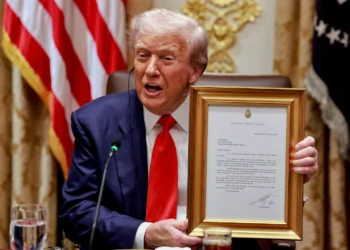
The controversy reached the White House on Friday, when President Donald Trump defended the advertisement and declined to concede that the history involving Acton’s stepfather should disqualify her mother’s statements from being used politically.
Trump argued that voters should be allowed to hear what a mother says about her daughter. His defence prompted a confrontation with a reporter who repeatedly asked whether allegations involving sexual abuse should affect the credibility of the woman featured in the advertisement.
The president became visibly irritated by the questioning and challenged the reporter’s affiliation before telling her to be quiet. When she continued to raise the allegation that Acton’s stepfather had been charged with raping his stepdaughter, Trump said he did not know anything about the stepfather.
The exchange highlighted the broader political sensitivity surrounding the advertisement. The controversy is not simply about whether Acton made an inaccurate statement about her childhood. It also concerns whether a family member whose actions were closely connected to a traumatic childhood should be presented to voters as an authoritative witness against her daughter without acknowledging the circumstances documented in court records.
The incident comes during an increasingly intense period of campaigning ahead of the Ohio gubernatorial contest. Both parties are seeking to mobilise voters around deeply personal narratives, while candidates and their supporters are using increasingly aggressive advertising strategies to define their opponents.
Ramaswamy, who has built his political profile around confrontational campaigning and an emphasis on challenging established political narratives, has continued to defend the advertisement despite the backlash. His argument is that Acton’s biography is relevant to voters and that his campaign has a legitimate right to question whether her public account of her childhood is accurate.
Acton and her supporters have instead portrayed the advertisement as an attempt to weaponise a traumatic family history for political gain. They argue that the circumstances surrounding her childhood cannot be separated from the abuse allegations and the actions of the adults responsible for her care.
The emergence of historical records has given the dispute an additional factual dimension. Rather than relying solely on competing campaign narratives, voters are now confronted with documents from the period that provide evidence about where the family was living and what happened after Cledith Arthur was accused of abuse.
The episode also illustrates the increasingly blurred boundary between political advertising and personal attacks in modern American elections. Candidates routinely use opponents’ biographies to build narratives about character, honesty and leadership. But when those narratives involve childhood trauma, sexual abuse and family breakdown, the consequences can extend well beyond ordinary political disagreement.
For Ramaswamy, the controversy creates a difficult political calculation. Continuing to defend the advertisement could satisfy supporters who view Acton’s biography as legitimate campaign material, but it also risks allowing the election debate to become dominated by questions about the ethics of the advertisement rather than policy differences between the candidates.
For Acton, the dispute has placed deeply personal aspects of her childhood at the centre of a statewide political contest. Her campaign now faces the challenge of responding to allegations about her biography while protecting the privacy and dignity of a family history that includes documented allegations of sexual abuse and separation from her parents.
The controversy has also drawn attention to the role of evidence in political campaigning. Historical court documents cannot settle every dispute about a person’s memories or childhood experiences, but they can provide important context when political advertisements make sweeping accusations about whether those experiences occurred.

As the Ohio race continues, the fight over the advertisement is likely to remain a major issue. The controversy has already moved beyond a conventional dispute over campaign messaging and into a broader debate about political responsibility, the use of traumatic personal histories and the standards candidates should meet when making claims about their opponents.
The central question for voters may ultimately extend beyond whether Acton’s description of her childhood is accurate. It may also concern whether political campaigns should use painful family histories as weapons when the people at the centre of those histories are no longer able to speak for themselves and when official records tell a far more complicated story than a campaign advertisement suggests.
Related News:
 Melania Trump Epstein remarks spark survivor backlash
 US Labor Department in turmoil after secretary resigns
 Trump DOJ Targets James Comey Again
 Armed Suspect Attacks Ohio Governor Candidate
 Texas Transfers Raise Fears for Migrant Children
 Memphis Questions National Guard Crime Surge
 Democrat Says ICE Restricted Detention Camp Oversight
 Latin America women fear rollback of rights
 Botstein Quits Bard Amid Epstein Investigation Calls
 ICE Agent Shoots Man in New York as Child Escapes Harm
 US Execution Livestream Plan Sparks Global Outrage
 US Report Exposes Scale of Dating App Scams
 Harmeet Dhillon Faces Scrutiny in DOJ Role Debate
 NHS Safety Fears as Nurses Cover Doctor Gaps
 US Court Weighs Fate of TPS for Migrants
 US ‘Narco Boat’ Strikes Draw Global Outcry
 Immigration Judges Fear Pressure in Trump Era
 Gunman Killed After White House Security Shootout
 DeSantis’s ‘Alligator Alcatraz’ Faces Final Shutdown
 Trump’s Mount Rushmore Speech: A Divisive Anniversary
 Dreyfus Statue Finally Gets Permanent Paris Home
 Trump Orders Signs Criticising Smithsonian Museum
 Is America Ready for an AOC Presidential Run?
 Masked Protesters Bring Dover Port Traffic to Standstill
 Turning Point USA Faces Crisis After Kirk Killing
 Patriot Platform Raises Concern Across Britain
 Man Arrested in Mississippi Woman’s Death
 Texas Charges Seven Noncitizens in Voting Crackdown
 Mahmood Warns Far Right Over Asylum Protests
 Patrick Clancy speaks publicly about children’s deaths
 Clancy Defense Seeks Inquiry Into Lone Juror
 Trump and Mamdani Hold Cordial Gracie Mansion Meeting
 UK Reviews Hague Child Abduction Cases Involving Abuse
 King Refers Jamaica Slavery Petition to Privy Council
 Far-Right Activist Arrested After Channel Dinghy Incident
 Portadown protest ends after tense Orange Order standoff
 Three Die in Channel Crossing Attempt Near France
 Tennessee Set to Execute Woman After Clemency Denied
 Cornell Fraternity Assault Investigation Reopened
 French Student Protests Escalate Into Violent Clashes
 Man Arrested Over Alleged Texas Capitol Attack Plot
 US election threat checks face federal pullback
 Senators warn US childcare policies could raise costs
 Drumcree Talks End Without Agreement Ahead of Appeal
 Calls Grow to Halt US Executions After Pike Failure
 French School Protests Escalate as 400 Schools Close
 New Prosecutor Takes Over Cornell Assault Case
 Families Await USS Abraham Lincoln Homecoming
 Pritzker’s National Profile Grows Ahead of 2028
 Gosport Protesters Clash With Police Over Migrant Rescue
 Christa Pike Wakes After Failed Tennessee Execution
 Luton Residents Reject Claims of ‘No-Go Zones’
 USS Lincoln Ends Record 265-Day Deployment
 Pentagon Says Fort Hood Shooter’s Execution Will Be Streamed
 US Senate Debates Turn Bitter as Midterms Near
 Bolsonaro Gains Key Endorsement Ahead of Brazil Runoff
 South Africa Withdraws Directive on Asylum Applications
 Hurricane Isaias Puts FEMA Under New Pressure
 Trump Attacks Norway After Nobel Peace Prize Snub
 Trump Names Katie Zachariah as Next White House Press Secretary
 Millions Face Tougher Medicaid Rules From January
 Ohio Airports Become Key Hubs for ICE Deportation Flights
 England and Wales Begin Second Wave of Early Prison Releases
 Camera Discovery Triggers Navy Ship Investigation
 Brazil Cuts Working Week to 40 Hours in Lula Election Boost
 Talarico Faces Tough Voter Test in Texas Senate Race
 Trump Slams Ukraine Strikes as Russia Ceasefire Collapses
 Oregon School Shooting Kills Three Children and Teacher
 Jenrick Defends Farage Amid Fresh Reform Racism Claims
 Trump Administration Threatens California Election Officials
 Macron Condemns Violence as France Faces 2,400 Arrests
 Milan Luxury Stores Shut as Italy Plans Troop Deployment
 Helen Haines Loses Leg in Alleged Targeted Attack
 Zelenskyy Accuses US of Delaying Ukraine Missile Supplies
 Zelenskyy Says US Failed to Warn Kyiv of Russian Strikes
 Trump Pledges $400m to Boost Republicans in Midterms
 Omar Claims US Raid on Residence Was Meant to Intimidate
 French Fast-Track Courts Face Backlash Over Riot Cases
 Lula Supporters Make Final Push Ahead of Brazil Runoff
 Rubio Urges Cubans to Seize Moment for Change