The UK government is preparing to publish details of two major treaties underpinning its post-Brexit reset with the European Union, marking a significant development in efforts to rebuild economic and political relations between Britain and the bloc. The legal documents, alongside new legislation designed to implement the agreements into British law, are expected to provide greater clarity about the country’s future relationship with its largest trading partner.
The publication comes amid growing political debate over the long-term implications of the agreements, particularly a reported 10-year termination clause that could create financial obligations for either side if the arrangements are abandoned. Opposition politicians have already criticised the government’s approach, raising questions about national sovereignty, parliamentary accountability and the ability of future administrations to change Britain’s relationship with Europe.
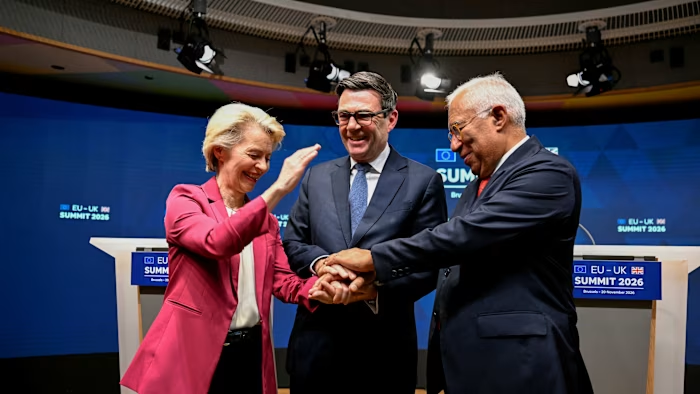
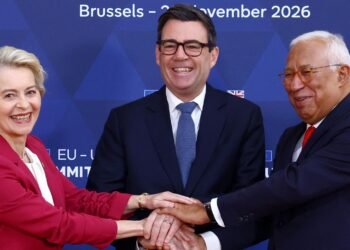
The agreements were negotiated following a major UK-EU summit in Brussels last week, where both sides announced three separate arrangements covering food and drink trade, emissions trading and youth mobility. The government has presented the agreements as an important step towards reducing trade barriers, supporting British businesses and creating new opportunities for younger generations.

Two of the three legal texts are scheduled for publication on Thursday, covering the food and drink trade arrangement and the emissions trading agreement. The government will also introduce a bill intended to bring the agreements into effect under UK law. In addition, ministers are expected to publish assessments examining the potential effects of the arrangements on different industries and regions across the country.
One of the most significant aspects of the agreements is the reported 10-year termination clause. According to a BBC report, either party seeking to terminate the arrangements would face financial responsibilities connected to rebuilding border-check infrastructure. This provision is intended to establish consequences for abandoning the agreements, although it has also become a source of political controversy.
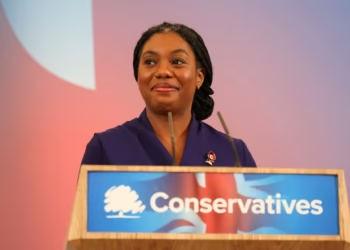
The clause has attracted criticism from opposition figures who argue that the government could be limiting the freedom of future administrations to determine Britain’s relationship with the European Union. Conservative leader Kemi Badenoch has described the agreement as a terrible deal and indicated that she would scrap it if given the opportunity to govern.
Reform UK leader Nigel Farage has also challenged the arrangement, suggesting that he would refuse to make the required payment if his party came to power. He has argued that the current government cannot legally or politically bind a future British administration to an agreement against its wishes.
These objections have placed the government under pressure to explain the legal and financial implications of the treaties. The publication of the documents is therefore expected to become an important moment in the political debate over Britain’s post-Brexit direction.
The food and drink agreement is particularly important for British producers and exporters. Since leaving the European Union, businesses involved in cross-border food and agricultural trade have faced additional administrative requirements, including documentation, certification and border-related procedures. These requirements have increased operational costs and created difficulties for companies seeking to maintain smooth trade with European markets.
The new arrangement is intended to reduce unnecessary paperwork and make trade in food and agricultural products easier. For British businesses, particularly smaller exporters, a reduction in administrative barriers could improve access to European customers and help strengthen commercial relationships.
The emissions trading agreement is another important element of the wider reset. Differences between the UK’s carbon pricing arrangements and the European Union’s system have created uncertainty for industries involved in international trade. Closer cooperation could help reduce the risk of additional costs arising from differences in carbon regulations.
The agreement is particularly relevant to British exporters because European carbon-related trade measures could otherwise increase the financial burden on businesses supplying goods to the EU market. By establishing closer alignment between the two systems, the government hopes to protect billions of pounds worth of British exports from potential carbon-related charges.
The third agreement, covering youth mobility, has also attracted considerable attention. The proposed scheme will allow up to 100,000 young British citizens to live, work, study and travel in European Union countries, with reciprocal opportunities for European citizens in the United Kingdom.
The arrangement could create new opportunities for young people interested in international education, professional development and cultural exchange. It may also help businesses and educational institutions attract younger talent from across Europe.
However, questions remain about the practical implementation of the youth mobility agreement and the conditions that will apply to participants. Although the scheme represents a significant change from the restrictions introduced after Brexit, it does not amount to a restoration of the freedom of movement that existed when the UK was an EU member.
Another issue threatening the wider agreement concerns university tuition fees for European students. There are concerns that the three arrangements could face difficulties within six months unless Britain agrees to allow European students to pay the same domestic tuition fees as British students at UK universities.
On Wednesday, Andy Burnham indicated that European students would continue to face higher tuition fees than domestic students. The issue has introduced another potential point of disagreement between London and Brussels, particularly because educational access and opportunities for young people are central to the wider mobility discussions.
The government’s proposed legislation is also likely to generate debate because it includes provisions allowing ministers to align British regulations with evolving European single market rules in specific areas.
Under the proposed arrangements, the government would receive powers to implement changes connected to agreements already reached with the European Union. It would also be able to introduce certain updated European rules more quickly when ministers determine that doing so is in the national interest.
This approach could reduce delays in implementing technical regulatory changes and help businesses avoid unnecessary differences between British and European standards. However, it has raised concerns about the extent of parliamentary scrutiny over decisions that could influence domestic laws and regulations.
Earlier this year, reports revealed that ministers were considering legislation that could bring Britain closer to selected European single market rules without requiring a conventional parliamentary vote on every individual regulatory change.
The proposed bill appears to provide a mechanism for achieving that objective in areas covered by the new agreements. Supporters argue that the approach would offer greater flexibility and help maintain economic cooperation with Europe. Critics, however, may question whether Parliament will have sufficient influence over regulatory decisions that affect businesses, consumers and the wider economy.
European affairs minister Hamish Falconer defended the legislation, describing it as an important measure for implementing the two major trade agreements.
He said the bill would help eliminate unnecessary paperwork for food and drink traders, protect billions of pounds worth of British exports from carbon-related charges and make commercial activity with the UK’s largest trading partner cheaper and easier.
The government has repeatedly emphasised that the reset is intended to improve practical cooperation rather than reverse the outcome of the 2016 Brexit referendum. Although Burnham has previously expressed his personal hope that Britain could rejoin the European Union during his lifetime, he has sought to distinguish the current agreements from any proposal for full membership.
Following the Brussels summit, Burnham stressed that the new arrangements should not be interpreted as a prelude to Britain rejoining the bloc. He has also argued that returning to EU membership without another referendum would be unthinkable.
This distinction is important because the political consequences of Brexit continue to influence British public debate. While some political groups support closer economic cooperation with Europe, others remain strongly opposed to arrangements that could increase the influence of European institutions over British regulations.
The publication of the treaties will therefore provide an opportunity for parliamentarians, businesses and the public to examine the details behind the government’s proposed changes. Their long-term impact will depend not only on the legal commitments but also on how effectively the arrangements are implemented and whether both sides remain committed to cooperation.

For British businesses, the immediate priorities are likely to be reduced administrative costs, greater regulatory certainty and improved access to European markets. For young people, the mobility agreement could offer opportunities that have become more restricted since Brexit. At the same time, the financial implications of the termination clause and the proposed powers over regulatory alignment will remain central to political scrutiny.
Ultimately, the agreements represent an attempt to establish a more practical and cooperative relationship between the United Kingdom and the European Union without reopening the fundamental question of Brexit. Whether this approach can deliver lasting economic benefits while addressing concerns about sovereignty and democratic accountability will become clearer as the treaties move through the legislative process.
Related News:
 UK Pushes for New EU Goods Trade Deal
 Reeves Fights to Keep Treasury Role Amid Labour Turmoil
 Green Leader Targets Starmer’s Former Seat
 Argentina to file criminal charges over Falklands oil drilling
 UK plans tougher Israel stance with settlement trade ban
 Burnham Leaves Door Open to Future Brexit Reversal
 Tony Blair Calls for Britain to Rejoin EU Within a Decade
 Burnham Opens Door to Possible UK Return to EU
 Report Urges UK to Rethink Overseas Military Spending
 France Urges UK to Consider Returning to EU
 UK Urges Interpol to Reject Argentina’s Falklands Arrest Requests
 UK Rejects EU Pressure to Impose Tariffs on China
 UK Could Rejoin EU Through a Switzerland Plus Deal
 Brexit Debate Returns as UK Voters Reconsider EU Exit
 UK Aid Set to Fall Short of Reduced 2027 Target
 Brexit Deal Not Good Enough for Britain, Burnham Says
 Denmark Seeks EU-Wide Ban on Fast-Growing Turbo Chickens
 Australia Reviews UK Visa Rules Amid Worker Influx
 UK Parliament Faces Risk of Notre Dame-Style Fire
 Burnham’s Christmas Homelessness Pledge Faces Uncertainty
 Argentina Threatens UK Oil Boss with Jail Over Falklands
 Burnham Says Brexit Has Failed, Pledges New EU Deal
 Badenoch Shifts Tory Focus Away From Brexit Debate
 UK and EU Near Major Post-Brexit Reset Deal
 Burnham Maintains Ambition for Closer UK-EU Ties
 Trump’s UK Ambassador Urges North Sea Drilling to Strengthen US Ties
 Millionaires group urge Reeves to introduce wealth tax to ‘lift kids out of poverty’
 Canada Passes Carney’s First Budget in Tight Parliamentary Vote
 Starmer Says Labour’s Economic Plan Needs Years to Deliver
 UK Government Borrowing Drops to £11.6bn in December
 UK shelves £110m border project amid trade strain
 Trump Tariffs Threat Spark UK and EU Alarm
 Gordon Brown urges court for crimes against children
 Army Probes Apache Flyover at Kid Rock’s Nashville Estate
 Relationship with Trump may be beyond repair, Starmer warned
 UK Stands Firm on Falklands Amid US Rift
 Oil Prices Surge Above $120 Amid Iran Blockade Fears
 Silent Tracks: Rail Line Without Passengers
 Trump approval plunges amid Iran war fears
 US Awaits Iran Reply on New Ceasefire Proposal
 Farage and Reform UK Reshape British Politics
 Starmer Leadership Under Pressure After Setbacks
 Ukraine Creates Long-Range Strike Command
 Burnham unveils £65m drought aid for farmers
 Unions Warn Labour Over Zero-Hours Contract Reforms
 Former Diplomats Urge UK and France to Act on Palestine
 Bayeux Tapestry Revives Franco-British Ties
 Trump Calls Iran War ‘Small Potatoes’ Despite US Deaths
 Swedish Mining Push Puts Sami Land Rights Under Pressure
 Trump Threatens EU With Tariffs Over Canada Proposal
 Tom Watson Takes Senior Role at Palantir
 MPs Defend UK Economic Watchdog Against Critics
 Xi urges Trump to avoid US-China military conflict
 The Tests Awaiting Andy Burnham After Labour Conference
 Badenoch Raises Prospect of 2027 UK Election
 South Korea Probes Fuel Shipments to Russia
 UK Mission in East Jerusalem to Remain Open
 Houthi Missile Claim Sparks Riyadh Airport Disruption
 Trump’s Russian Diesel Deal Sparks Ukraine Fury
 Brazil Court Scandal Threatens Lula as Bolsonaros Rise
 UK Borrowing Hits £24.5bn Ahead of Healey’s Budget
 Middleton Revitalisation Blueprint for UK Towns
 Labour MPs Urge Burnham to Lead UK Reindustrialisation
 UK Land Registry Plan Faces Opposition From Landowners
 Trump’s Global Policies Put Republicans at Risk
 King Charles Faces Reparations Protests at Antigua Summit
 Australia Raises Interest Rates to 18-Year High
 James Talarico Makes History with Texas Senate Victory
 Paraguay President Quits After Major Bank Collapse
 UK Employers to Be Forced to Publish Job Salaries
 Labor Minister Defends Chalmers Amid Budget Tensions
 US Treasury Chief Moves to Military Base Over Iran Threat
 Zelenskyy Sees Peace Opportunity as US Envoys Meet Putin
 Ilse Aigner Set to Make German History as First Female President
 Canada May Turn to Chinese Automakers if US Talks Fail
 Bank of England Faces £160m Renovation Challenge
 Trump, Nvidia and the Fight Against Tech Oligarchs
 UK Energy Bills Set to Rise 26% in January
 UK Housebuilding Faces Deepening Crisis as Projects Stall
 London Tube Strike Triggers Major Travel Disruption