Published: 03 October 2026. The English Chronicle Desk. The English Chronicle Online
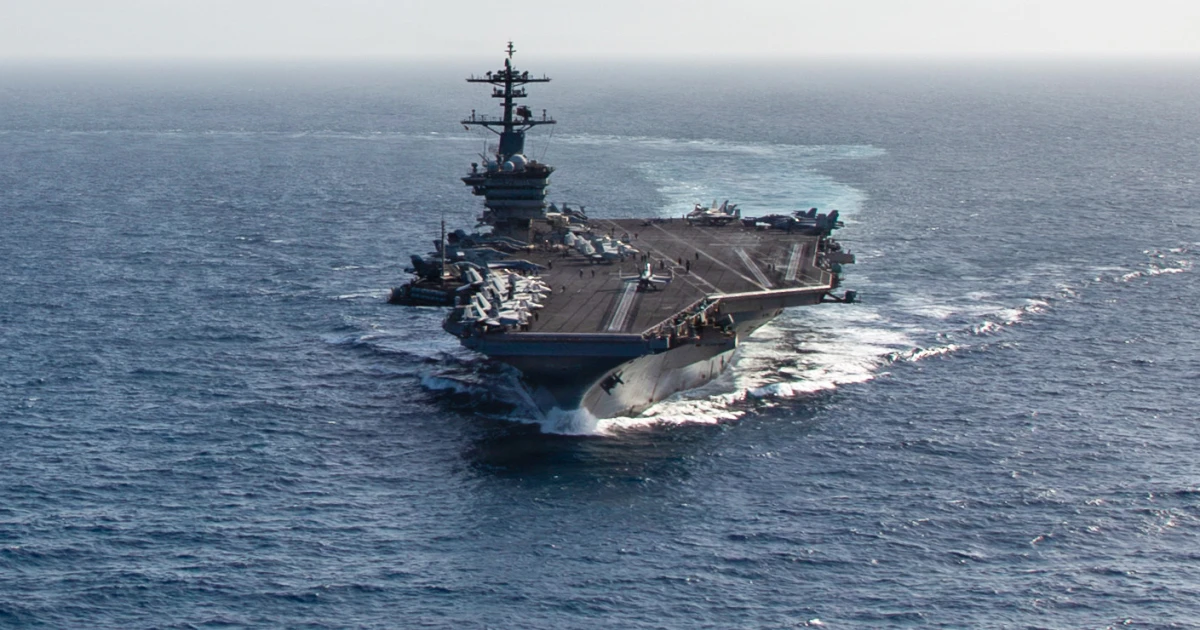
For families across San Diego, the expected return of the USS Abraham Lincoln is bringing a mixture of relief, anticipation and lingering concern. After an exceptionally long deployment that kept thousands of sailors and Marines away from home for most of a year, the aircraft carrier is nearing the end of its journey back to California.
The carrier is expected to return to the San Diego area after spending months deployed far from home. Its prolonged mission became one of the longest and most demanding deployments in the modern history of the US Navy, with the ship and its accompanying strike group spending hundreds of days at sea while supporting American military operations in the Middle East.
For relatives who have spent months waiting for calls, messages and eventually a homecoming, the return represents something deeply personal. One San Diego mother said she had already prepared a large welcome-home sign for her son, describing her anticipation of finally seeing him again after such a long separation.

The USS Abraham Lincoln left San Diego in November 2025 for what was initially expected to be a deployment focused largely on the Pacific. The mission changed dramatically after the United States and Israel launched military operations against Iran in February 2026.
The carrier was redirected toward the Middle East, where it became part of a major US naval force involved in combat operations. The deployment subsequently stretched far beyond the timeframe many families had expected.
The carrier strike group included thousands of sailors and Marines spread across the Lincoln and accompanying ships. US military officials have described the operational tempo as exceptionally demanding, with the strike group carrying out maritime security missions and combat operations during the conflict.
The extended deployment also created logistical difficulties. With the carrier operating far from its traditional support networks and spending long periods without port visits, replenishing food, equipment and other supplies became more complicated.
By August, the Lincoln had spent more than 250 consecutive days at sea. Later figures indicated that the deployment ultimately extended to more than 280 days, making it one of the longest uninterrupted periods at sea for a US aircraft carrier in the modern era.
For the sailors onboard, the extraordinary length of the mission meant that ordinary routines were repeatedly disrupted. Families were uncertain about when their relatives would return, while communication could sometimes become difficult or intermittent.
Some relatives said they went extended periods without hearing from loved ones. Others said their family members described exhaustion and difficult living conditions aboard the ship.
Reports about food and basic supplies also emerged during the deployment. Photographs circulated online that some families believed showed poor-quality meals, while Navy officials disputed claims that the ship experienced significant shortages. Navy leadership acknowledged that the war had disrupted traditional supply arrangements but maintained that sailors continued to have access to essential food, medical care and other supplies.
The conflicting accounts contributed to growing anxiety among families.
For relatives waiting thousands of miles away, uncertainty was often as difficult as the physical distance. When communication stopped for weeks, families had little direct information about how their loved ones were coping.
One mother said her 19-year-old son sometimes sent photographs of meals and spoke about changes in the behaviour of fellow sailors. She also described periods when she did not hear from him for an extended period, leaving her dependent on news reports and occasional communication to understand what was happening aboard the carrier.
The mental health consequences of the deployment have become one of the most serious issues surrounding the Lincoln’s return.
In September, Acting Navy Secretary Hung Cao disclosed that eight service members assigned to the USS Abraham Lincoln carrier strike group had attempted suicide during the deployment. The cases involved personnel connected to the carrier, its air wing and accompanying elements of the strike group. No suicide deaths were reported in connection with those attempts.
The disclosure intensified scrutiny of the conditions experienced by sailors during the prolonged mission. It also confirmed concerns that families and some military publications had raised earlier in the deployment about stress, exhaustion and mental health.
Earlier reports had described incidents in which sailors allegedly attempted to go overboard from the carrier. In at least some cases, fellow crew members intervened and prevented tragedy. The incidents prompted families to seek greater information from Navy leadership about the wellbeing of those serving aboard the ship.
More than 200 family members reportedly participated in a virtual town hall with Navy officials in August to discuss concerns about the deployment. Mental health, communication and the length of time at sea were among the issues that generated particular anxiety.
The Navy has defended its handling of the deployment while acknowledging that wartime circumstances created extraordinary logistical challenges. Officials have also rejected some of the more severe accounts of shortages and poor conditions that circulated publicly.
Defense Secretary Pete Hegseth previously said reports about the condition of the carrier had been seriously misrepresented. President Donald Trump also defended the continuation of the deployment when questioned about concerns raised by military families.
For relatives, however, the issue has never been only about military strategy. It has been about sons, daughters, spouses and parents who were away from home for months while serving in a conflict that repeatedly changed the expected timetable for their return.
One mother said she understood that her son was serving during wartime but remained deeply troubled by the length of the deployment and the uncertainty surrounding his return. She said that hearing reports about difficult conditions while being unable to speak with him regularly had been particularly stressful.
The Lincoln’s deployment also placed significant demands on the sailors themselves.
An aircraft carrier is effectively a floating community, with thousands of people living and working in confined spaces while aircraft operate from the flight deck. During combat operations, sailors may work extended shifts and face constant operational demands.
The prolonged mission meant that those pressures continued for many months.
The carrier eventually left the Middle East and began its journey toward the United States. Before the final leg home, the strike group made a port visit in Thailand, providing personnel with an opportunity to rest and allowing the Navy to carry out logistical support. Reports at the time said the carrier had already spent well over 250 days at sea.
The return to California now represents an important transition for the crew. After months of operational activity, sailors will be able to reunite with families, sleep in their own homes and begin adjusting to life away from the demands of deployment.
For relatives, the homecoming will also bring an emotional conclusion to months of waiting.
But the return is unlikely to end questions about what the deployment has revealed about the pressures facing the US Navy. The eight reported suicide attempts have placed renewed attention on the mental health consequences of extended wartime missions. The concerns about supplies, communication and morale have also raised broader questions about how the Navy prepares families and crews when deployments stretch far beyond their original schedules.

The Lincoln’s experience comes at a time when the US military is managing demanding operations across several regions. Extended deployments can provide commanders with important operational capabilities, but they also create significant demands on personnel, equipment and families.
For sailors who have spent much of the past year at sea, those questions may be less immediate than the simple prospect of coming home.
Families are preparing signs, arranging gatherings and waiting near the places where they expect to see their loved ones again. After months of uncertainty, the arrival of the carrier will provide a moment that many relatives have been anticipating since the ship left San Diego.
For one San Diego mother, the message is simple: she has been waiting for her son to come home.
After a deployment that lasted far longer and proved far more demanding than originally expected, thousands of sailors and Marines are finally approaching that moment. The homecoming will mark the end of an extraordinary chapter for the Lincoln and its crew, while the Navy and military families continue to reckon with the human costs and lessons of such an extended mission.
Related News:
 Trump’s Revenge Drive Deepens GOP Divide
 Is America Ready for an AOC Presidential Run?
 Trump to Recheck Green Cards from 19 Nations After DC Attack
 Trump Escalates Minnesota Immigration Surge Amid Rising Tensions
 Greenland Faces Pivotal Summit Over Arctic Power Struggle
 Trump Threatens Strong Action If Iran Executes Protesters
 EU Says US Ties Have Suffered ‘Big Blow’ After Greenland Crisis
 Thousands Protest ICE Operations in Nationwide US Day of Action
 Epstein Files Reveal Trump Officials’ Emails with Financier
 Thousands Protest ICE in New York Against Trump Deportation Campaign
 Trump Praises ‘Terrific’ Petro After White House Talks
 Clinton Testimony Erupts in Fiery Exchange
 UK Prepares Aircraft Carrier for Middle East Crisis
 Pete Hegseth Iran War Remarks Spark Alarm
 Melania Trump Epstein remarks spark survivor backlash
 Trump Faces Crisis as Iran Reopens Hormuz Tensions
 Canadian astronaut French words ease language row
 Charles Faces Trump Test in High-Stakes US Visit
 UK Stands Firm on Falklands Amid US Rift
 US Court Weighs Fate of TPS for Migrants
 US Court Ruling Reshapes Voting Rights Landscape
 US states redraw maps after voting rights ruling
 Trump orders US troop pullout from Germany
 Judge halts deportation of Yemeni refugees in US
 Trump approval plunges amid Iran war fears
 Giuliani hospitalised in critical condition
 Ohio’s Battle for Trust: Democrats Vying to Flip the Buckeye State
 Trump Threatens UN Budget Cuts as US Pushes ‘Trade Over Aid’ Agenda
 Trump warns Iran as Middle East tensions surge again
 US ‘Narco Boat’ Strikes Draw Global Outcry
 Ohio Primaries Set Stage for Crucial Midterms
 Afghan Families Left in Limbo Face Risk of Deportation
 Tensions Emerge in Netanyahu-Trump Alliance
 France Faces Record Presidential Crowded Race Amid Far-Right Surge
 US Awaits Iran Reply on New Ceasefire Proposal
 Immigration Judges Fear Pressure in Trump Era
 Hormuz Talks Near Critical Stage
 Former ICC prosecutor condemns US sanctions
 Gunman Killed After White House Security Shootout
 Trump Claims Iran Peace Deal Near Completion
 Farage and Reform UK Reshape British Politics
 Starmer Leadership Under Pressure After Setbacks
 US Midterm Primaries: Democrats Target Key Republican Seats
 House Curbs Trump’s War Powers in Rare Rebellion
 Trump’s Mount Rushmore Speech: A Divisive Anniversary
 Le Pen’s Popularity Holds Despite Conviction
 Dreyfus Statue Finally Gets Permanent Paris Home
 Mystery Grows Over Mitch McConnell’s Health
 Senate Halts Defense Bill Over Iran Clashes
 Houthis Strike Saudi Arabia as Middle East Tensions Rise
 Trump Orders Signs Criticising Smithsonian Museum
 Trump Calls Strait of Hormuz ‘American Territory’
 Trump Hardens Canada Trade Stance as Talks Stall
 Green Leader Targets Starmer’s Former Seat
 Trump Calls Iran War ‘Small Potatoes’ Despite US Deaths
 Masked Protesters Bring Dover Port Traffic to Standstill
 Susan Sarandon Says Palestine Stand Costs Roles
 Lib Dems Prepare for Election Amid Reform Challenge
 Middle powers seek new alliances amid Trump era
 Macron and Carney deepen France-Canada ties
 US Networks Suspend Trump White House Pool Coverage
 Trump and Mamdani Hold Cordial Gracie Mansion Meeting
 Trump Eyes Major Belarus Fertiliser Deal Amid Canada Trade Dispute
 Democrat Says ICE Restricted Detention Camp Oversight
 King Refers Jamaica Slavery Petition to Privy Council
 Elif Eralp Emerges as Berlin’s Next Political Force
 Xi urges Trump to avoid US-China military conflict
 Lula accuses Trump of seeking control over Brazil
 Republican Senator Questions Trump Ad Spending
 Three Die in Channel Crossing Attempt Near France
 Madrid Tent Camp Grows as Spain Housing Crisis Deepens
 French Student Protests Escalate Into Violent Clashes
 Burnham Opens Door to Possible UK Return to EU
 Drumcree Talks Falter as Legal Challenge Deepens
 UK-France Returns Deal Faces Expiry as Talks Stall
 Green Party faces dispute over Zionism motion
 Brazil Election Draws Religion Into Final Campaign
 Trump Immigration Policy Faces New Legal Tests
 French School Protests Escalate as 400 Schools Close
 Lula Warns of Bolsonaro Family Return as Brazil Votes