Published: 05 October 2026. The English Chronicle Desk. The English Chronicle Online
Spain is heading for an early general election after Prime Minister Pedro Sánchez announced a snap vote following the defeat of his government’s emergency housing measures in parliament. The election will take place on 29 November, giving voters an opportunity to decide the country’s political direction at a time of growing anger over rents, evictions and the rising cost of housing.
Sánchez announced the election during a televised address on Monday, a decision that had been widely anticipated after his minority Socialist government suffered a major parliamentary setback last week. The government had introduced emergency measures intended to ease pressure on tenants and improve access to affordable housing, but the proposals were rejected by a combination of conservative and rightwing parties.
The prime minister acknowledged that his government had made mistakes during its time in office but defended its wider record on social policy and humanitarian issues. He said the decision should now rest with Spanish voters as the country faces a period of profound political, economic and social change.

Sánchez, who has served as prime minister since 2018, presented the election as a choice between maintaining his progressive agenda and allowing Spain to move towards a more conservative and nationalist political direction. He warned that the country was entering an era marked by climate pressures, technological disruption, artificial intelligence and heightened international tensions.
The housing crisis, however, is expected to become one of the central issues of the campaign. Housing costs have risen sharply in many parts of Spain, particularly in major cities and areas experiencing strong demand from tourists, investors and new residents. For many tenants, rising rents and insecure contracts have created growing uncertainty about whether they can remain in their homes.
The government’s rejected housing package contained several measures designed to provide greater protection to tenants. Among the proposals were restrictions on evictions extending to 2030, as well as rules aimed at regulating temporary accommodation and rental arrangements involving individual rooms. The measures were presented by the government as an urgent response to the growing pressure on households.
But the proposals were defeated in Congress on Friday after the conservative People’s Party, the far-right Vox party and the Catalan pro-independence party Junts voted against them. The People’s Party argued that Spain needed to increase housing construction rather than rely primarily on regulation to resolve the shortage.
The parliamentary defeat was followed by an angry reaction from housing campaigners and demonstrators gathered outside Congress. Protesters accused politicians of failing to respond to the everyday difficulties faced by ordinary tenants, with anger directed particularly at political parties seen as opposing stronger protections for renters.
The issue has gained even greater emotional force following the eviction of Maricarmen Abascal, an 87-year-old woman who had lived in her Madrid home for seven decades. Her removal became a powerful symbol of Spain’s housing difficulties after an investment fund that had acquired the property demanded a substantial increase in rent. Abascal said she could not afford the proposed increase, which was reported to have been around 230 per cent.
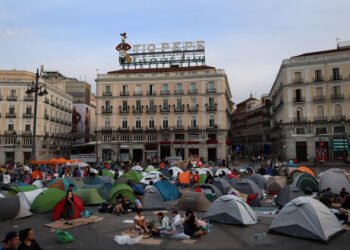
Her case triggered a wave of public anger and helped bring tens of thousands of people onto the streets. Demonstrations spread through Madrid and other parts of Spain, while a large protest camp appeared in the capital’s Puerta del Sol, recalling the spirit of the mass anti-establishment demonstrations associated with Spain’s 2011 indignados movement.
Large demonstrations were held across the country over the weekend. Authorities estimated that about 70,000 people participated in the Madrid protest, while organisers claimed the number was considerably higher, reaching around half a million. Regardless of the competing estimates, the demonstrations highlighted the political significance of housing and the depth of public frustration.
The timing of Sánchez’s election announcement suggests that his government hopes to turn the housing issue into a political advantage. Opinion polls have consistently placed the People’s Party ahead of the Socialist Workers’ Party, while support for Vox has also been growing. A rightwing government could therefore become a realistic possibility after the election, although the final balance of power will depend on the distribution of parliamentary seats and the willingness of parties to form alliances.
Sánchez will be hoping that the housing crisis can energise leftwing voters who may otherwise be discouraged by the government’s recent difficulties. By highlighting the opposition parties’ rejection of his housing measures, the Socialist leader is likely to argue that conservative forces are standing in the way of stronger protections for vulnerable tenants.
The prime minister has also sought to portray the election as a broader ideological choice. He has repeatedly argued that Spain must remain committed to social justice, environmental responsibility and individual freedoms, while accusing sections of the political right of seeking to reverse social progress.
The election campaign is also likely to revive several other controversies surrounding Sánchez’s government. One major issue has been the continuing crisis involving Spain’s North African enclave of Ceuta, following a major influx of people from neighbouring Morocco. The episode placed significant pressure on the government and generated criticism over its handling of border and migration issues.
At the same time, Sánchez and members of his political circle have faced a series of corruption-related controversies. These allegations have provided ammunition for opposition parties and could become an important element of the election campaign.
In July, Sánchez’s brother, David Sánchez, was barred from holding public office for nine years after being found guilty of administrative misconduct linked to his employment by a Socialist-led council in Extremadura. The case has been politically sensitive because of his relationship with the prime minister.
Sánchez’s wife, Begoña Gómez, is also due to face trial following a lengthy investigation into allegations including embezzlement, influence peddling, corruption in business dealings and misappropriation of funds. Both David Sánchez and Gómez have denied wrongdoing.
The prime minister has repeatedly rejected accusations against his family and described the legal and political pressure surrounding them as part of what he has portrayed as a campaign of harassment by political and media opponents.
With the election now set for 29 November, Sánchez faces one of the most important electoral tests of his political career. The Socialist leader will attempt to convince voters that his government can address the housing crisis while protecting the social policies he says have improved living standards.
For the opposition, the election represents an opportunity to capitalise on years of political instability, economic pressures and public dissatisfaction. The People’s Party is expected to campaign on the need for greater housing construction, stronger economic management and a change in government, while Vox is likely to push a more hardline position on immigration, national identity and social policy.
Housing, however, could remain the issue that dominates the campaign. For millions of Spaniards, the debate is less about political ideology than the practical question of whether they can afford to remain in their homes. Rising rents, limited supply and concerns about insecure tenancy arrangements have transformed housing from a policy issue into a defining social concern.

The coming weeks will therefore test whether Sánchez can turn public anger over the housing crisis into renewed support for his Socialist government or whether voters will use the election to demand a wider political change. With the People’s Party currently ahead in the polls and Vox gaining ground, Spain’s November election could produce a significant shift in the country’s political landscape.
For Sánchez, the decision to call the election is a gamble. His government has the opportunity to argue that the political right blocked urgent housing measures at a moment when public frustration was reaching a critical point. But voters will also judge his administration on its broader record, including its handling of migration, political controversies and allegations involving members of his family.
The result could determine not only who governs Spain but also how the country responds to its deepening housing crisis and the wider political tensions shaping Spanish society. As the campaign begins, Sánchez has placed the decision firmly in the hands of the electorate, asking Spaniards to choose the direction they believe their country should take in an increasingly uncertain era.
Related News:
 Athens Mayor Moves to Tackle Overtourism Crisis
 France Faces Record Presidential Crowded Race Amid Far-Right Surge
 Norway Doubles Down on Oil and Gas for Europe Energy Security
 Hybrid village stores fight rural decline
 Green Leader Targets Starmer’s Former Seat
 Macron and Carney deepen France-Canada ties
 Elif Eralp Emerges as Berlin’s Next Political Force
 Madrid Tent Camp Grows as Spain Housing Crisis Deepens
 French Student Protests Escalate Into Violent Clashes
 Burnham Opens Door to Possible UK Return to EU
 French School Protests Escalate as 400 Schools Close
 Bosnia’s Young People Look Beyond Election Hope
 Canada Passes Carney’s First Budget in Tight Parliamentary Vote
 India’s Labour Law Overhaul Sparks Fierce Debate
 Mark Carney Walks Diplomatic Tightrope on China Visit
 EU Says US Ties Have Suffered ‘Big Blow’ After Greenland Crisis
 Trump to Deploy “God Squad” Over Gulf Wildlife Protections
 Italian Town Buys Mussolini Villa to Keep Away Fascist Fans
 Hungary election: Orbán faces biggest test amid scandal
 Trump Slams UK Ties and Threatens To Rewrite Trade Deal
 Reform UK funding: mystery billionaire revealed
 Southeast Asia Turns to Russia Amid Energy Crisis
 Ukraine Urges UK to Seize Russian Oil Tankers
 US Calls Australia Media Law “Foreign Extortion”
 Capitalism ‘Suicidal’, Warns Petro at Climate Summit
 Oil Prices Surge Above $120 Amid Iran Blockade Fears
 Trump approval plunges amid Iran war fears
 Trump Threatens UN Budget Cuts as US Pushes ‘Trade Over Aid’ Agenda
 US Awaits Iran Reply on New Ceasefire Proposal
 Hormuz Talks Near Critical Stage
 UK Pushes for New EU Goods Trade Deal
 Pope Meets Families in Italy Toxic Waste Zone
 Former ICC prosecutor condemns US sanctions
 Farage and Reform UK Reshape British Politics
 Starmer Leadership Under Pressure After Setbacks
 Hungary Targets Oligarchs with Proposed Landmark Wealth Tax
 Deadly Russian Air Raids Strike Across Ukraine
 UK Nations Brace for Potential Breakup Amid Reform Surge
 Le Pen to Run for President Despite Embezzlement Conviction
 Ukraine Creates Long-Range Strike Command
 Le Pen’s Popularity Holds Despite Conviction
 England and Norway Fans Turn Miami Into World Cup Carnival
 Is America Ready for an AOC Presidential Run?
 Burnham unveils £65m drought aid for farmers
 Russian Missiles Intensify Pressure on Kyiv
 Ukraine Villagers Demand Answers After Deadly Arms Depot Strike
 Trump Hardens Canada Trade Stance as Talks Stall
 Bayeux Tapestry Revives Franco-British Ties
 Trump Calls Iran War ‘Small Potatoes’ Despite US Deaths
 Reform Faces Fresh Financial Controversy
 Masked Protesters Bring Dover Port Traffic to Standstill
 Swedish Mining Push Puts Sami Land Rights Under Pressure
 AfD election surge leaves Magdeburg residents deeply uneasy
 UK plans tougher Israel stance with settlement trade ban
 Europe’s democracies face a growing far-right threat
 Sweden Election Hangs on Far-Right Breakthrough
 Saudi Arabia Shuts Oil Pipeline After Drone Attack
 Lib Dems Prepare for Election Amid Reform Challenge
 Trump and Mamdani Hold Cordial Gracie Mansion Meeting
 Trump Eyes Major Belarus Fertiliser Deal Amid Canada Trade Dispute
 King Refers Jamaica Slavery Petition to Privy Council
 Iran Rejects Claims of Shift in US Talks
 Greece Pushes for Parthenon Marbles Reunification
 Tony Blair Calls for Britain to Rejoin EU Within a Decade
 Xi urges Trump to avoid US-China military conflict
 Lula accuses Trump of seeking control over Brazil
 Saudi intercepts Houthi missiles as oil fears grow
 Russia Targets Ukraine’s Digital Economy With Strikes
 National Rally makes historic gains in French Senate
 Economic growth and political strain reshape Benin
 Drumcree Talks Falter as Legal Challenge Deepens
 UK-France Returns Deal Faces Expiry as Talks Stall
 Green Party faces dispute over Zionism motion
 French Debt Fears Put Euro Markets Under Pressure
 Badenoch Raises Prospect of 2027 UK Election
 Families Await USS Abraham Lincoln Homecoming
 Rome Cracks Down on Rising Golf Cart Tours
 Pritzker’s National Profile Grows Ahead of 2028
 Germany Pledges €1bn Military Aid to Ukraine
 Latin America women fear rollback of rights