Published: 05 October 2026. The English Chronicle Desk. The English Chronicle Online.
The United Kingdom is considering whether to introduce tariffs on Chinese-made cars as it seeks closer alignment with the European Union and attempts to secure a place in new European legislation aimed at protecting domestic manufacturing, according to reports.
The potential policy shift could have significant consequences for Britain’s automotive sector, its relationship with China and the wider effort to rebuild economic ties with the EU following Brexit. It would also represent a notable change in the government’s previous approach, which has generally avoided imposing additional trade barriers on Chinese electric vehicles.
The issue has emerged during discussions between London and Brussels over the proposed Industrial Accelerator Act, an initiative intended to strengthen European manufacturing and reduce the vulnerability of key industries to overseas competition. The legislation is expected to place greater emphasis on European supply chains and encourage manufacturers to source components from within the continent.

The UK has been seeking inclusion in the planned framework because of the close integration between British and European manufacturing. The automotive industry in particular relies heavily on cross-border trade, with the EU representing the most important overseas market for many British manufacturers and suppliers.
However, Brussels is understood to believe that Britain would need to introduce measures comparable to those imposed by the EU on Chinese vehicle imports if the UK is to benefit from the new industrial arrangements. The EU has imposed substantial tariffs on Chinese electric vehicles following an investigation into state subsidies and concerns over competition within the European market.
The United States has adopted an even more restrictive approach towards Chinese electric vehicles, placing significant barriers on their entry into the American market. Britain, by contrast, has so far resisted following either model, maintaining that its own economic circumstances do not require the same level of protection.
That position is now reportedly being reassessed as policymakers examine the potential consequences of being excluded from the European industrial framework.
A major concern for Britain is that new European rules could disadvantage vehicles manufactured in the UK if British companies are treated as outside the protected European supply chain. Such an outcome could create additional costs and complications for manufacturers whose production networks depend on components and markets spanning both sides of the Channel.
The possibility of tariffs therefore presents the government with a difficult economic and political calculation. Introducing duties on Chinese vehicles could help Britain demonstrate greater alignment with European trade policy, but it could also provoke a response from Beijing and potentially raise prices or disrupt the growing presence of Chinese brands in the British market.
China has become increasingly important to the UK automotive sector, not only as a source of imported vehicles but also as a potential investor and manufacturing partner. Several Chinese automotive companies have expanded their presence in Britain, while established manufacturers have explored partnerships with Chinese firms to develop or produce vehicles.
The government’s previous strategy was based partly on the argument that closer engagement with China could support economic growth. Rather than treating Chinese trade and investment primarily as a threat to British industry, ministers had sought to develop stronger commercial relations with Beijing.
The government has also argued that Britain’s trade position differs from that of the European Union. Brussels is dealing with a substantial trade deficit with China, while British policymakers have maintained that the UK does not face the same level of imbalance and therefore does not necessarily require identical protective measures.
That argument is now facing pressure as the potential consequences of Europe’s planned industrial legislation become clearer.
The proposed European framework could encourage manufacturers to source more components from within Europe, particularly in strategically important industries such as automobiles and chemicals. If British companies are excluded, manufacturers operating in the UK could find themselves at a competitive disadvantage despite the country’s deep integration with European supply chains.
The automotive sector has warned that the issue needs to be handled carefully. Mike Hawes, chief executive of the Society of Motor Manufacturers and Traders, said any decision on tariffs should be based on strong evidence while preserving an open and competitive trading environment.
He also stressed the importance of securing recognition for the UK as a trusted partner under the European industrial framework. Excluding British-built vehicles, he warned, could seriously damage highly integrated industries and put a major trading relationship at risk.
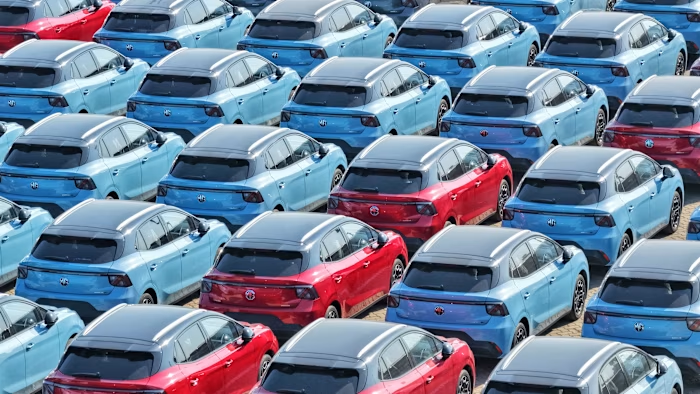
The challenge is particularly complicated by the rapid expansion of Chinese automotive brands in Britain. Companies including BYD, Leapmotor and Jaecoo have significantly increased their share of the UK new-car market during 2026.
Together, the brands have more than tripled their market presence during the year, reaching around 12% of new-car sales according to the latest industry figures. Their growth demonstrates the growing appetite among British consumers for competitively priced electric and hybrid vehicles from Chinese manufacturers.
BYD has recorded particularly strong growth. Its share of the British market in September was almost twice its level during the same month a year earlier, reaching 5.75%. Its share for the year so far has also increased substantially, with around 68,000 vehicles sold by the end of September.
That performance has brought the company closer to established premium manufacturers in terms of annual sales. BMW, for example, had sold around 91,000 vehicles during the same period.
Jaecoo has also expanded rapidly, with its share increasing by more than 200% and around 58,000 new vehicles sold during the year. Leapmotor has recorded an even more dramatic rise, with sales climbing from roughly 1,500 vehicles in 2025 to more than 13,000 during the first nine months of 2026.
The figures underline the central dilemma facing British policymakers. Chinese manufacturers are increasingly important competitors in the UK consumer market, but Chinese investment could also provide opportunities for British manufacturing and employment.
The distinction between imported Chinese-built vehicles and cars produced by Chinese-owned companies inside Europe is particularly important. Under the proposed European approach, Chinese manufacturers operating factories within the EU and employing European workers could receive more favourable treatment than vehicles imported directly from China.
BYD’s manufacturing operations in Hungary provide an example of this model. Vehicles produced there would not face the same import duties applied to cars arriving directly from China.
For Britain, that raises questions about whether it can attract similar investment while also protecting domestic manufacturers. The country has already seen discussions involving Chinese automotive companies and established manufacturers over potential production arrangements.
Nissan, for example, has been involved in talks with Chinese manufacturer Chery over the production of vehicles at its Sunderland plant. Such arrangements could allow Chinese technology and investment to contribute to British manufacturing while potentially fitting within the broader European industrial strategy.
Yet concerns remain within the European automotive industry that unrestricted imports could undermine domestic production. Nissan’s European leadership has warned against allowing Britain to become a route through which Chinese manufacturers could significantly increase their access to the European market.
Any British decision to impose tariffs would also have legal and procedural consequences. Introducing new trade measures could require a lengthy process under international trade rules, potentially delaying the implementation of any policy.
The European Union itself spent more than a year investigating Chinese state support for electric vehicle production and transport before introducing its tariffs in October 2024. A similar British process could therefore take considerable time.
The diplomatic consequences could be equally significant. Beijing could view British tariffs as a hostile trade measure, potentially complicating efforts to deepen economic relations with China. At the same time, closer alignment with Brussels could support Britain’s broader attempt to improve relations with the EU.
The government therefore faces a delicate balancing act between protecting domestic manufacturing, maintaining access to European markets, attracting Chinese investment and preserving commercial relations with one of the world’s largest economies.

A UK government spokesperson confirmed that Britain has not imposed tariffs on Chinese electric vehicles and said ministers continue to engage closely with the automotive industry to ensure that policy reflects both the sector’s needs and the wider national interest.
No final decision on tariffs has been announced. However, the reported reassessment signals that Britain’s approach to Chinese automotive imports could be entering a new phase.
As European countries seek to strengthen their industrial base and reduce dependence on vulnerable international supply chains, Britain must decide how closely it wants to align with that strategy. The outcome could shape the future competitiveness of the UK car industry, influence relations with China and determine how closely British manufacturers remain connected to the European market in the years ahead.
Related News:
 Oil nears $100 as Saudi attacks shake markets
 Thames Water Revises Oxfordshire Mega-Reservoir Plan
 UK Trade Losses Grow Without EU Product Deal
 Poundland Rescue Bid Could Protect 11,000 Jobs
 UK Diesel Reaches £2 as Inflation Surges Across Europe
 Minister Rejects Fears of UK Diesel Shortage
 Europe Faces Winter Gas Supply Anxiety
 UK House Prices Fall as Mortgage Rates Rise
 Billionaire Chris Rokos poised to leave UK
 JPMorgan Boss Warns Against UK Bank Tax Rise
 John Lewis Losses Widen to £124m as Confidence Falls
 UK Productivity Improves as Bank Weighs Interest Rates
 UK Retail Sales Rebound as Consumers Spend More
 UK Borrowing Hits £18.3bn Ahead of Budget
 Thinktank Calls for Abolition of UK State Pension
 MPs Defend UK Economic Watchdog Against Critics
 Chinese Hybrid Car Surge Raises EU Auto Industry Concerns
 AO Acquires Jessops in Camera Retail Expansion
 Should Savers Lock Into 5.25% Fixed Rates?
 Beaverbrooks Boss Calls for Relief on Business Costs
 UK Diesel Prices Hit Record High Amid Iran Conflict
 UK house price growth slows as mortgage rates rise
 UK borrowing costs surge as global bond sell-off deepens
 Boots Sale Nears as Weston Family Eyes $9bn Deal
 UK Assures Public Over Diesel Supply
 London Luxury Homes Face a Prolonged Property Slump
 UK Faces Calls to Review Bank Failure Bets
 North Sea Strike Threatens UK Fuel Supplies
 UK Doubles Steel Tariffs to 50% to Protect Domestic Plants
 BBC News Faces Deep Cuts in 2,000 Job Plan
 UK Pushes for New EU Goods Trade Deal
 Reeves Fights to Keep Treasury Role Amid Labour Turmoil
 UK rejects EV charging VAT cut amid Treasury clash
 UK firms accused of ‘AI washing’ boom
 EasyJet Takeover Sparks Fears Over Passengers’ Future
 Canada to Match Trump’s 50% Tariffs Dollar for Dollar
 Pubs and Hotels Face Business Rates Reform Review
 Firms on both sides fear damage from US-Canada trade war
 UK Risks Falling Behind in AI Race
 UK Households Could Save £173 on Fixed Energy Deals
 Burnham Faces Mounting Budget Challenges
 Trump Hardens Canada Trade Stance as Talks Stall
 Ukraine Moves to Seize Water Company
 UK Cost Squeeze Deepens as Mortgages and Gas Rise
 Swedish Mining Push Puts Sami Land Rights Under Pressure
 Spire Healthcare Agrees £1bn Takeover by Toscafund
 McLaren to Create 1,000 UK Jobs in £450m Investment
 Nats Boss Summoned as UK Flight Chaos Continues
 Iceland to Open First UK High Street Store in Falklands
 Oil Prices Surge as Saudi Pipeline Closure Deepens Crisis
 UK Retailers Accused of Breaking Refund Laws
 UK State Pension Set to Rise 3.9% as Triple Lock Holds
 UK Pay Growth Slows to 3.9% as Rate Decision Nears
 Bank Urged to Slow Bond Sales as UK Costs Rise
 UK Inflation Hits 3.1% as Household Pressure Grows
 Mayors Could Gain New Powers Over UK Water Firms
 Mayors Could Gain Greater Powers Over Water Firms
 Entain Plans 400 Job Cuts After Profit Update
 Next Raises Profit Forecast After Strong Summer Sales
 Barclays Staff Push Back Against Office Return Plan
 Japan Raises Rates to 31-Year High
 UK Rent Gap Puts Low-Income Families Under Pressure
 Calls Grow to Expand UK National Wealth Fund
 Labour Apprenticeship Scheme Faces Slow Start
 Trump Eyes Major Belarus Fertiliser Deal Amid Canada Trade Dispute
 Iran Rejects Claims of Shift in US Talks
 Tony Blair Calls for Britain to Rejoin EU Within a Decade
 Saudi intercepts Houthi missiles as oil fears grow
 TalkTalk Races to Sell Arms as Administration Looms
 Avanti West Coast Set for Public Ownership in March
 Why Americans Feel Ripped Off by Rising Prices
 Ukraine Faces $45m Hourly Cost From Missile Alerts
 Burnham Opens Door to Possible UK Return to EU
 Bank Chief Calls for Power to Intervene in AI
 Healey urged to act as UK energy bills rise 4%
 UK Bookmakers Linked to Offshore Casino Deal
 BBC Three and Scotland Face Online-Only Future
 French Debt Fears Put Euro Markets Under Pressure
 Badenoch Raises Prospect of 2027 UK Election
 BT Broadband Pauses Raise Digital Switchover Concerns