Published: 06 October 2026. The English Chronicle Desk. The English Chronicle Online.
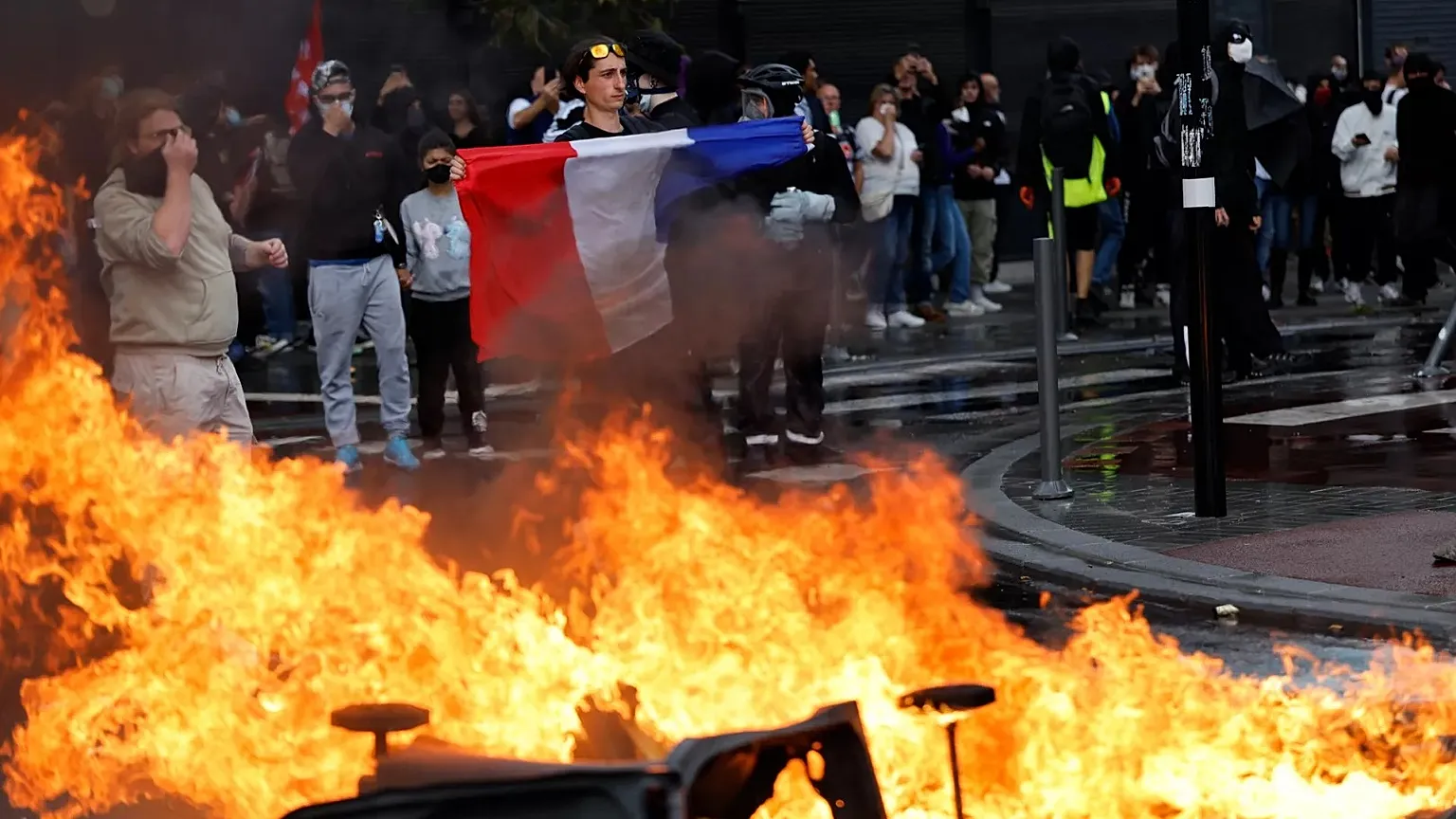
France is facing a major day of student mobilisation as thousands of high-school and university students take to the streets across the country, joined by teachers, trade unionists, public-sector workers and parents’ organisations demanding improvements to education and learning conditions.
The nationwide demonstrations, which have been described as a major escalation of the student movement, are expected to draw around 200,000 participants. Student representatives say about 1,800 high schools have been disrupted as pupils and supporters gather outside schools and prepare for marches in cities including Paris, Marseille, Lyon and Strasbourg.
The protests come amid growing frustration over staffing shortages, school infrastructure, long school days and concerns about the quality of education. Students and members of the wider educational community have increasingly sought government action, arguing that problems affecting schools cannot be resolved without significant changes to working conditions and public investment.

The mobilisation has also become a test for Prime Minister Sébastien Lecornu’s government, which has urged demonstrators to remain peaceful while signalling that ministers are prepared to examine some of the demands being raised by students.
Lecornu has called for peaceful gatherings and instructed ministers to consider measures addressing several of the protesters’ concerns. Among the issues under consideration are ensuring that absent teachers are replaced, reviewing the structure of the school day and examining whether students need longer lunch breaks.
The government has also indicated that it will look into repairs and improvements to ageing school buildings. Ministers have been asked to produce initial proposals by the end of October, although the financial resources required to carry out major improvements could prove difficult to secure.
The response reflects an attempt by the government to prevent the demonstrations from developing into a broader confrontation. With large numbers of young people expected to participate, authorities are under pressure to maintain public order while avoiding actions that could further inflame tensions between students and police.
Early demonstrations have already taken place in several French cities. Crowds gathered in Marseille, Strasbourg and Lyon, while students and political supporters also assembled in and around Paris. In some locations, parents have joined the demonstrations, signalling that concerns about education are extending beyond the students directly affected.
The scale of the mobilisation has also raised concerns about potential disorder. French media have reported early signs of tension in Paris and Lyon, although most demonstrations have remained largely peaceful.
Business owners in some areas have taken precautionary measures amid uncertainty over whether protests will remain calm. Some have reportedly secured or boarded up their premises, reflecting concerns about possible clashes, property damage or disruption as crowds grow throughout the day.
The prospect of confrontation has become particularly sensitive because of criticism surrounding the police response to earlier student protests. France’s National Consultative Commission on Human Rights has called on the government to strengthen dialogue with young people and ensure that protesters can exercise their fundamental rights.
The human rights body has raised concerns about what it described as disproportionate uses of force and procedural abuses by police. It has emphasised that freedom of expression and peaceful assembly are fundamental rights and warned that excessive restrictions could deepen distrust between young people and law enforcement.
The commission has urged public authorities to urgently restore communication with student organisations and representatives of the wider educational community. It has also called for restraint by police, saying any response to unrest should be targeted, necessary and proportionate to the circumstances.
The warning comes after a series of serious injuries among young demonstrators. The use of tear gas, arrests and crowd-control weapons against teenagers has become one of the most contentious aspects of the protests and has generated anger among some parents and teachers.
France’s interior minister, Laurent Nuñez, has defended the government’s security response, arguing that police action has been proportionate in almost all cases. He has pointed to the scale of the unrest and the risks faced by officers as justification for a strong security presence.
According to figures cited by the interior minister, more than 6,100 people have been arrested during the unrest, while 715 police officers have been injured. Those figures have intensified the debate over how authorities should respond to demonstrations involving large numbers of young people.
One of the most serious recent incidents involved a 15-year-old protester who lost a hand on Monday. The injury was reportedly associated with a police stun grenade, adding to concerns about the use of riot-control equipment during demonstrations involving teenagers.
For student groups and human rights campaigners, such incidents have become evidence of the risks created when large-scale protests are managed primarily through policing rather than dialogue. Government officials, however, argue that officers must respond when demonstrations become violent or when public safety is threatened.
The education minister, Édouard Geffray, has sought to distinguish between peaceful protesters and individuals he described as potentially violent elements. He has warned that what he called ultra-violent groups could become involved in the movement, raising concerns that incidents involving a small number of people could affect the wider protest.
That concern is being closely watched as demonstrations expand beyond individual schools into larger national marches. The involvement of trade unions, teachers and parents gives the movement a broader social base and could increase pressure on the government to deliver tangible changes.
The demands themselves largely focus on everyday experiences within the education system. Students have raised concerns about the reliability of teacher cover when staff are absent, the length and structure of the school day, insufficient breaks and the condition of school buildings.
For many pupils, the issue is not simply about individual policies but about the wider experience of spending long hours in schools that they believe are struggling with inadequate resources. Teachers and parents have also expressed concerns about the effect of staffing shortages and ageing facilities on learning and student wellbeing.
The government’s willingness to examine several of the demands could provide an opportunity for negotiations, but expectations remain high. Students are likely to judge the administration not only by its promises but also by whether proposed reforms are backed by funding and implemented within a meaningful timeframe.
The financial question could prove particularly challenging. Repairing ageing schools, increasing teacher cover and potentially changing the structure of the school day would require significant public resources at a time when governments across Europe are under pressure to control spending.
The protests therefore carry implications beyond the immediate demands of students. They have opened a wider discussion about the condition of France’s public education system, the treatment of young protesters and the relationship between the government and a generation increasingly willing to take its concerns into the streets.
The role of parents has also become increasingly visible. Their participation suggests that concerns about education are being viewed as household and community issues rather than solely as matters for teenagers. Parents have a direct interest in the quality and safety of schools, while teachers and public-sector workers see the demonstrations as part of broader debates about working conditions and public services.
The coming hours will determine whether the mobilisation remains largely peaceful or develops into a more serious confrontation. Authorities are preparing for large crowds, while student organisations are seeking to demonstrate the strength of their movement.
For the government, the challenge is particularly delicate. A heavy-handed response could deepen accusations that authorities are failing to listen to young people, while insufficient security measures could create risks if isolated incidents of violence spread.

The National Consultative Commission on Human Rights has made clear that dialogue should be central to the government’s response. Its intervention places additional pressure on officials to ensure that public order measures do not undermine the rights of those participating peacefully.
As students gather across France, the demonstrations have become a visible expression of dissatisfaction with the country’s education system. The government’s next steps could determine whether the mobilisation becomes the beginning of constructive negotiations or another chapter in a cycle of protests and confrontation.
For the thousands of young people participating, however, the message is straightforward: they want their concerns about schools to be taken seriously. Whether the government can turn promises of dialogue and reform into concrete improvements will now be closely watched by students, teachers, parents and the wider French public.
Related News:
 Asylum deal sparks fears over Syria deportations
 Immigration Judges Fear Pressure in Trump Era
 Former ICC prosecutor condemns US sanctions
 Ukraine Villagers Demand Answers After Deadly Arms Depot Strike
 Israel Accused of Undermining Palestinian Life
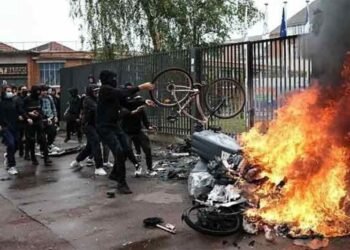 French Student Protests Escalate Into Violent Clashes
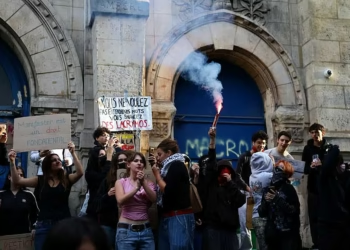 French School Protests Escalate as 400 Schools Close
 Latin America women fear rollback of rights
 China-critical UK academics face ‘extremely heavy’ pressure from Beijing
 Files Link Andrew to Epstein Dinner After Prison Release
 Labour Attacks Reform Candidate Over Tommy Robinson Backing
 Hungary election: Orbán faces biggest test amid scandal
 City & Guilds Sale Sparks Fees and Pay Uproar
 Police Suspect Help in Missing Alice Springs Girl Case
 FBI Links Brown University Shooting to Long-Term Grievances
 Cartel crackdown raises fears of fresh violence
 US states redraw maps after voting rights ruling
 Judge halts deportation of Yemeni refugees in US
 UK may ban protests amid rising antisemitism fears
 City & Guilds Faces Governance Crisis Over Sale
 US judge dismisses Kilmar Abrego Garcia indictment
 US green card applicants must apply from abroad, DHS says
 Irish Gangland Figure Fails in Dublin Election Bid
 Murder Probe Continues After Arrest Release
 New Footage Revives Peter Falconio Mystery
 Pradhan Resigns Amid Protests
 Israeli Strike in Southern Lebanon Kills Seven
 Cambridge Professor Jason Arday Found Dead at Home
 Five Years of Taliban Rule Leave Afghanistan in Crisis
 Exeter Approves Saudi Military Training Partnership
 Internal Exclusions Surge in England’s Schools
 Survivor Sues Musk’s xAI Over AI Abuse Images
 Argentina Orders Return of Nazi-Looted Painting
 Judge Allows Pentagon Firings at Stars and Stripes
 Reform Faces Fresh Financial Controversy
 UN expert urges UK to rethink Israel policy
 Councils spend £125m on illegal children’s care
 Europe’s democracies face a growing far-right threat
 Miliband Rejects Chief Rabbi’s West Bank Warning
 New Mexico Takes Facebook to Trial Over Data Scandal
 Sweden Election Hangs on Far-Right Breakthrough
 Patriot Platform Raises Concern Across Britain
 Reform UK Receives Record £36m Donation From Crypto Billionaire
 Election Candidate Abuse Raises Alarm in England
 Texas Transfers Raise Fears for Migrant Children
 Saudi Pact Raises Risk of Pakistan Entering War
 Trump Media Ban Triggers First Amendment Clash
 Harrods Faces Dispute Over Fayed Abuse Compensation
 US Deportation Deals Send Migrants to Unfamiliar Countries
 US Networks Suspend Trump White House Pool Coverage
 Democrat Says ICE Restricted Detention Camp Oversight
 Japan PM Backs International Criminal Court
 King Refers Jamaica Slavery Petition to Privy Council
 UK Pauses Chagos Deal Amid US Opposition
 Judge orders Trump to restore access for three media outlets
 Paris child pickpocketing gang leader jailed for eight years
 Elif Eralp Emerges as Berlin’s Next Political Force
 Republican Senator Questions Trump Ad Spending
 Free Speech Emerges as Key UK Election Issue
 Cornell Fraternity Assault Investigation Reopened
 Fayed Survivors Demand Inquiry Into Medical Regulator
 Trump Ads Trigger Fight Over Taxpayer Money
 UK University Strikes Spread as Financial Pressure Grows
 Drumcree Talks Falter as Legal Challenge Deepens
 UK-France Returns Deal Faces Expiry as Talks Stall
 Tennessee Execution Fails After Two Lethal Doses
 Russia Escalates Ukraine Energy Attacks as Winter Nears
 Senators warn US childcare policies could raise costs
 Hundreds of UK prisoners released early amid overcrowding
 Drumcree Talks End Without Agreement Ahead of Appeal
 Almost Half of Fayed Accusers May Be Trafficking Victims
 Badenoch Raises Prospect of 2027 UK Election
 New Prosecutor Takes Over Cornell Assault Case
 Musk’s DOGE Sparks Turmoil Inside US Government
 Germany Pledges €1bn Military Aid to Ukraine
 Lithuania Offers to Fund Permanent US Military Base
 Delhi Freezes Promotion of Police Officer After Allegations
 Former German Intelligence Chief Arrested Over Espionage
 Australia grants Asio powers to designate hate groups under new laws
 Unions Warn Labour Over Zero-Hours Contract Reforms