Published: 20 October 2026. The English Chronicle Desk. The English Chronicle Online
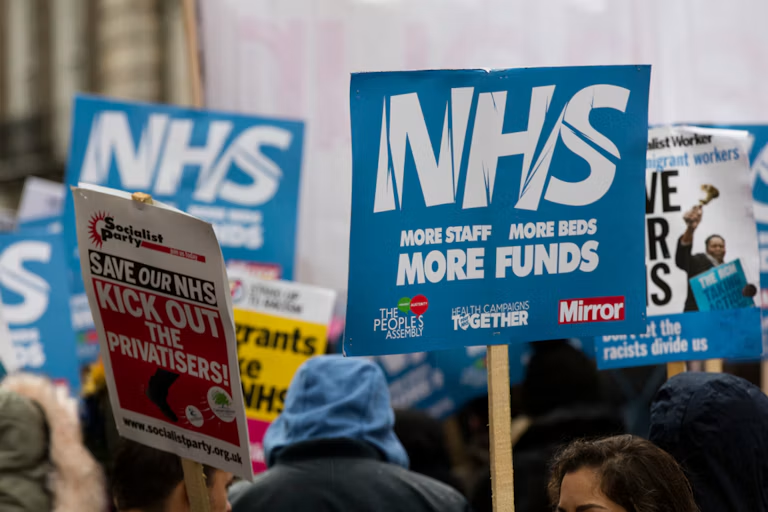
Public support for the founding principles of the National Health Service (NHS) has declined across much of the United Kingdom over the past five years, raising concerns about the long-term sustainability of the country’s publicly funded healthcare model. Although large majorities continue to believe that healthcare should remain free at the point of use and available to everyone, new research suggests that confidence in these long-established principles is weakening across different generations.
The findings, based on an analysis of British Social Attitudes survey data by the King’s Fund, indicate that support for the NHS being free, universal and funded through taxation fell between 2021 and 2025. The decline was recorded across almost all age groups, with younger adults showing particularly notable changes in their attitudes towards tax-funded healthcare. Researchers say economic pressures, dissatisfaction with public services and changing attitudes towards migration could all be contributing to the shift, although no single explanation accounts for the findings.
The development comes at a challenging time for the health service. The NHS is facing rising demand as the UK population ages, while ministers must also respond to competing spending priorities, including defence, social care and support for children with special educational needs. If public enthusiasm for the principles underpinning universal healthcare continues to weaken, future governments could find it more difficult to secure support for increases in NHS funding through taxation.

The NHS was established in 1948 with a commitment to providing healthcare according to medical need rather than a person’s ability to pay. Its founding model rests on the principle that services should be available to everyone, that patients should generally receive treatment without direct charges at the point of use, and that the system should be financed primarily through taxation. These principles have become central to the country’s social and political identity, making any sustained decline in public support significant beyond the health sector itself.
The King’s Fund examined attitudes among five generations: Generation Z, born between 1997 and 2012; millennials, born between 1981 and 1996; Generation X, born between 1965 and 1980; baby boomers, born between 1946 and 1964; and people born before the Second World War. The analysis found that support for the NHS being free and available to everyone had fallen across all five groups, even though the majority in each generation continued to endorse the underlying principles.
One of the most striking changes concerned the belief that the NHS should be available to everyone. Among people born before the Second World War, support fell from 87.1 per cent in 2021 to 73.2 per cent in 2025, a decline of 13.9 percentage points. Among baby boomers, the proportion fell from 83.1 per cent to 71.2 per cent over the same period, representing an 11.9 percentage-point reduction.
The figures suggest that the change is not confined to younger people who may have had limited experience of the NHS in earlier decades. Older generations, many of whom have lived through much of the health service’s history, also showed a considerable decline in their certainty that healthcare should be available to everyone.
Nevertheless, support for the principle of free healthcare remained comparatively strong. Depending on the age group, between 85 and 92 per cent of respondents continued to support the NHS being free at the point of use. This indicates that, despite changing attitudes, the central idea that patients should not face direct charges for NHS treatment continues to command widespread public backing.
The findings on taxation, however, revealed a more pronounced generational difference. The King’s Fund described the pattern as a generational fault line in attitudes towards NHS funding, with Generation Z expressing less support for the current tax-funded model than older groups.
Between 2021 and 2025, support among Generation Z for funding the NHS through taxation fell by 11.2 percentage points. The decline was greater than that recorded among Generation X, baby boomers and people born before the war. By 2025, only 74.1 per cent of Generation Z respondents supported the tax-funded principle, compared with at least 80 per cent in the other age groups.
Although almost three-quarters of young respondents still supported the existing approach, the difference has attracted attention because younger generations will help determine the future of public services and the tax policies needed to finance them. Their attitudes may also reflect the economic circumstances in which they are entering adulthood, alongside their experiences of accessing healthcare.
Danielle Jefferies, a senior analyst at the King’s Fund, said support for the NHS’s underlying principles remained strong 76 years after the service was established. However, she warned that politicians and the public should not assume that this backing would continue automatically.
She said the analysis showed a modest decline in support over five years against a background of record-low public satisfaction with the NHS and growing divisions between age groups and political perspectives. Because the health service is closely associated with British national identity, Jefferies said it was difficult to isolate the precise reasons behind the changes.
She suggested that wider shifts in public attitudes could be playing a role. In particular, changing views on migration may help explain why some people have become less certain about the principle that the NHS should be available to everyone. The research does not establish migration attitudes as the sole cause of declining support, and the relationship between public opinion on migration and views about universal healthcare remains complex.
Economic circumstances may offer another important explanation, particularly for younger adults. Jefferies pointed to analysis by the Institute for Fiscal Studies suggesting that younger people today are economically worse off than previous generations were at the same age. High housing costs, significant student debt and prolonged wage stagnation have placed pressure on many households, while the aftermath of austerity and the Covid-19 pandemic has shaped the economic environment in which Generation Z has grown up.
For young adults struggling to meet everyday expenses, the prospect of paying more tax to support public services may be increasingly difficult to accept, particularly when they feel that those services are not meeting their needs. Rising rents, housing affordability problems and pressure on household budgets can make additional tax contributions appear burdensome, even to people who value the NHS and its universal principles.
Dissatisfaction with healthcare itself may reinforce those concerns. Long waits for accident and emergency treatment, surgery, cancer care and mental health support can leave patients feeling that the service is failing to provide timely help. For younger people seeking mental health treatment, in particular, delays can have consequences for education, employment, relationships and overall wellbeing.
Jefferies suggested that some younger adults may feel they are not receiving adequate value from the public services they help fund. When living standards stagnate and patients struggle to access treatment, she said, support for paying higher taxes cannot be taken for granted.
This creates a difficult challenge for policymakers. The NHS needs sufficient funding to respond to growing demand, improve access to treatment and maintain its workforce and infrastructure. Yet public support for additional spending can be affected by whether people believe the service is delivering meaningful improvements. The debate is therefore not simply about the amount of money allocated to healthcare but also about the public’s experience of the system.
Ciarán Devane, chief executive of NHS Alliance, said it was understandable that people might question the funding model at a time when the health service faced sustained and substantial challenges. He nevertheless emphasised that a large majority of Generation Z respondents continued to support the existing approach.
Devane warned that any erosion of public support should be taken seriously. He said the NHS needed to continue delivering for patients and the wider public while making the case for continued financial backing through taxation.
The findings also raise broader questions about how the government balances competing demands on public finances. Healthcare spending is under pressure from an ageing population and the increasing complexity of medical needs. At the same time, ministers face calls to increase resources for social care, defence and other public services. These pressures make it more important for the NHS to demonstrate that public funding is being used effectively and that improvements are reaching patients.
The relationship between the NHS and social care is particularly significant. When people cannot access appropriate support outside hospitals, demand for hospital services can increase, adding further pressure to an already stretched system. A sustainable healthcare model therefore depends not only on hospital funding but also on effective coordination across health and social care services.
For younger generations, restoring confidence may require visible improvements in waiting times, easier access to mental health support and a clearer demonstration that the NHS is responding to patients’ needs. For older people, the decline in support for universal access suggests that policymakers must also understand why longstanding confidence in the service’s founding principles has weakened.
The research does not suggest that the British public has turned decisively against the NHS. Instead, it points to a gradual change in attitudes that could become more consequential if economic pressures and dissatisfaction persist. The continuing high level of support for free healthcare indicates that the founding principles remain deeply embedded in public opinion, even as views on universal access and taxation become less uniform.

The central challenge for the government and NHS leaders will be to protect those principles while addressing the practical problems that shape people’s experiences of healthcare. Improving access, reducing unnecessary delays and demonstrating the value of public spending could help rebuild confidence among people who remain committed to the NHS but are increasingly frustrated with its performance.
As the UK considers the future of its health service, the findings serve as a warning against treating public support as permanent. The NHS continues to enjoy broad backing, but that support depends partly on whether people believe the service can deliver timely, fair and effective care. Without sustained improvements, the gap between the principles the NHS represents and the experience of patients could become harder to reconcile, placing additional pressure on the political consensus that has supported the service for generations.
Related News:
 NHS Safety Fears as Nurses Cover Doctor Gaps
 Up to 20 English Maternity Units Face Possible Closure
 UK Schools Struggle as Classrooms Top 40C
 Reform UK Receives Record £36m Donation From Crypto Billionaire
 UK Youth Jobs Gap Reveals Deep Regional Divide
 Disabled Travellers Seek Fairer UK Care Rules
 Headteachers Warn New Ofsted System Is Harming Wellbeing
 Thinktank Calls for Abolition of UK State Pension
 Polanski Says Leadership Not Tied to By-election Result
 Milburn Proposes Pre-Apprenticeship Route for Young People
 Labour Fears Budget Will Fail to Lift Living Standards
 Greens Block Labor’s Health Rebate Cuts for Pensioners
 Celebrities and Charities Demand UK Government Act on Child Poverty
 London’s Childlessness Crisis: Schools Closing as Families Shrink
 Reeves rejects £1bn plea for NHS redundancy payouts
 England’s Special Needs Support Faces Breaking Point
 Welsh Government Christmas 2020 Lockdown Criticised
 Student Loan Crisis Sparks Outrage Among Graduates in England
 NHS Maternity Units Cover Up Harmful Childbirth Errors
 NHS Plans to Cut Overseas Workers Labeled Overambitious
 Farage Faces Backlash Over Crypto Cameo Endorsements
 UK Banks Maintain £100 Contactless Limit Despite FCA Rule Change
 Unions Raise Concerns Over Doctors’ Pay Dispute
 Wes Streeting Accuses Doctors of Torpedoing Pay Deal
 Student Loan Interest May Rise Despite 6% Cap
 Kezia Dugdale Warns of Possible Reversal of Equal Rights Gains
 John Terry Faces Backlash Over Political Posts
 Barrister Criticises Trial After Suicide Case Verdict
 Tractor Breakdown Tests Lincolnshire Farmers
 NHS Drug Deal Faces Legal Threat Over US Trade Agreement
 Farage and Reform UK Reshape British Politics
 Starmer Leadership Under Pressure After Setbacks
 Labour MP Revives Blocked Assisted Dying Bill in Commons
 UK Nations Brace for Potential Breakup Amid Reform Surge
 British Teens in EU Face Soaring UK University Fees
 London Tube Heat Reaches Dangerous Levels
 Three-Quarters of England’s Riverbanks Still Off Limits
 Weight-Loss Drugs Offer Food Savings Mainly to High Earners
 Burnham unveils £65m drought aid for farmers
 Ghent Professors Questioned Cofnas Appointment
 RAF Barnham Protests Fuel Tensions in Norfolk Town
 Internal Exclusions Surge in England’s Schools
 UK Subsidence Claims Surge After Record-Breaking Summer
 Reform Faces Fresh Financial Controversy
 UK House Prices Fall as Mortgage Rates Rise
 Councils spend £125m on illegal children’s care
 UK Retailers Accused of Breaking Refund Laws
 UK Pay Growth Slows to 3.9% as Rate Decision Nears
 Bank Urged to Slow Bond Sales as UK Costs Rise
 Mahmood Warns Far Right Over Asylum Protests
 NHS Breast Care Review Finds Serious Patient Harm
 UK Rent Gap Puts Low-Income Families Under Pressure
 Lib Dems Prepare for Election Amid Reform Challenge
 Reform UK Faces Internal Debate Over £72m Spending
 Labour Apprenticeship Scheme Faces Slow Start
 King Refers Jamaica Slavery Petition to Privy Council
 MPs Defend UK Economic Watchdog Against Critics
 GP List Policy Risks Cutting Off Vulnerable Patients
 Labour Urged to Rebuild Progressive Coalition
 Free Speech Emerges as Key UK Election Issue
 French Student Protests Escalate Into Violent Clashes
 UK University Strikes Spread as Financial Pressure Grows
 Burnham Opens Door to Possible UK Return to EU
 Poundland Rescue Bid Could Protect 11,000 Jobs
 Drumcree Talks Falter as Legal Challenge Deepens
 Healey urged to act as UK energy bills rise 4%
 Green Party faces dispute over Zionism motion
 Badenoch Raises Prospect of 2027 UK Election
 French School Protests Escalate as 400 Schools Close
 Experts Warn UK Food Security Is at Risk
 Gosport Protesters Clash With Police Over Migrant Rescue
 Labour Wins Key London By-election as Greens Fall Short
 French Students Protest Poor Conditions in Paris Suburbs
 UK Greens Face Crisis Over Zionism and Extremism Row
 Greta Thunberg Backs French Students in School Protests
 Millions Face Tougher Medicaid Rules From January
 Jenrick Defends Farage Amid Fresh Reform Racism Claims
 NHS Trusts Reject Palantir’s £330m Patient Data Platform
 UK Plans Higher Training Costs for Older Apprentices
 UK Pledges Stronger Protections for Disabled Air Passengers